
Are you investing your time and money into an affiliate program that has little to no impact on your business, or worse yet, is attracting the wrong type of affiliates?
Many who own WooCommerce stores have established affiliate programs, believing they will be successful, only to find that their programs generate low-quality traffic, inconsistent sales, and numerous disputes regarding commissions.
The issue isn’t the affiliate marketing industry; instead, it is the lack of a clear framework when running an affiliate program. When an affiliate program has no clearly defined rules, a way to properly track sales, or a method of recruiting quality affiliates, it can become an unnecessary drain on resources for the business and can negatively impact the business’s overall reputation.
If many of these mistakes occur, it can be nearly impossible for that business to scale its affiliate program. This is why mastering the Dos and Don’ts of Running a WooCommerce Affiliate Program is important.
This guide covers best practice strategies, real-world experience, as well as practical advice on creating a successful affiliate program that will attract qualified affiliates, allow you to produce qualified traffic to the store, and provide you with a consistent and sustainable stream of revenue without taking on too much risk.
What is the WooCommerce Affiliate Program?
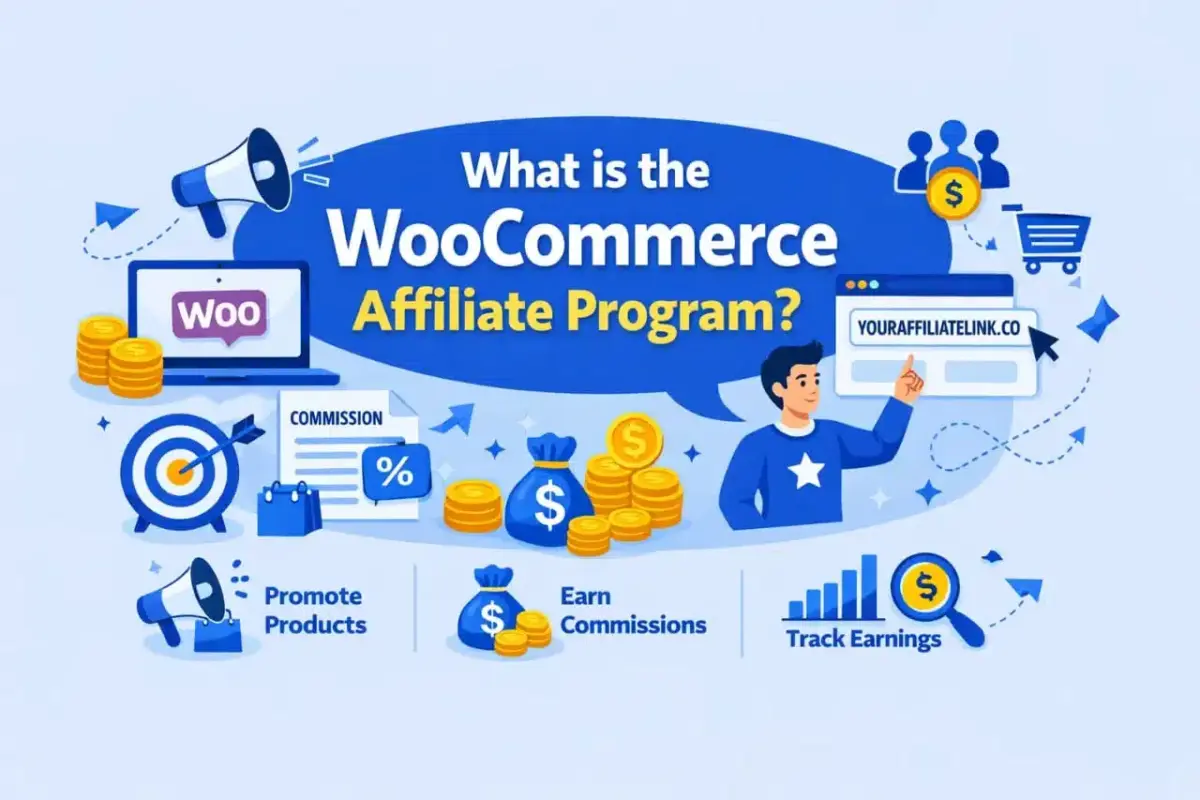
A WooCommerce affiliate program is an internet marketing system based on performance, where third-party collaborators, known as affiliates, are allowed to market your WooCommerce product offerings in return for a commission on every successful sale they generate.
Affiliate Marketing, by its nature, doesn’t require investment in advance; rather, the reward goes to the affiliate once they’ve helped in generating revenue. As such, this particular model has been regarded as having low risk with brilliant ROIs as far as WooCommerce website owners are concerned.
In the standard configuration, affiliates are provided referral links that track clicks, conversions, and sales. Once a customer buys through that referral link, the affiliate will receive a predetermined fee, and the sale will also be automatically recorded within your system.
How a WooCommerce Affiliate Program Works (Step-by-Step)
To aid understanding, this is a simplified explanation of how this process works:
- An affiliate program is established using the WooCommerce-compatible plugin.
- Affiliates sign up and acquire unique tracking links.
- They will advertise your product through blogs, social networking sites, emails, or videos.
- The customers click the affiliate link and make a purchase.
- The process is tracked by the system, and the affiliate receives a commission.
This whole process will run automatically once everything is set up properly. This will save you time and help you reach a larger audience.
Does WooCommerce Have Built-In Affiliate Features?
WooCommerce lacks affiliate marketing features on its own. However, it can be used alongside trusted affiliate marketing plugins available on the market. You can use the WooCommerce affiliate plugin on your site for advanced affiliate tracking and in-depth integration.
They also facilitate the management of affiliates, prevent fraud, and provide a clear understanding of performance, all without requiring manual processing.
Who Should Use a WooCommerce Affiliate Program?
A WooCommerce affiliate program is most suitable for:
- Stores where profit margins are clear.
- Companies that deal with niche or problem-solving products.
- Brands seeking scaled traffic without ad dependency.
- Store owners are interested in establishing long-term relationships over short-term ads.
A physically delivered product, a digital download, or subscription-based business – affiliate marketing can be an attractive passive income source if properly optimized.
Why This Matters for Long-term Growth?
Knowing how an affiliate program on WooCommerce functions is essential for applying the Dos and Don’ts of Running a WooCommerce Affiliate Program effectively. Without this understanding, it is simple to create flaws in the system that might have negative impacts down the line.
After mastering the fundamentals, the next areas of concentration would be:
- Hiring quality affiliates
- Setting the right commission structure
- Avoiding costly compliance and tracking errors
Benefits of Running a WooCommerce Affiliate Program
The goal of running an affiliate program is not just to generate additional revenue, but to create a more efficient growth model. Let’s break down the primary benefits of affiliate marketing.
- Cost-Effective Marketing: Unlike traditional methods like paid advertising, affiliates only earn commission once a sale is generated, which means that if no sales are completed, there is also no financial obligation to pay out. Therefore, this process makes affiliate marketing one of the least risky forms of advertising. Statista estimates that the global affiliate marketing industry will continue to grow and reach $15.7 billion by 2023 and continues to demonstrate its ongoing value.
- Increased Brand Exposure: Affiliates give your brand visibility by promoting products through many different mediums: blogs, YouTube, TikTok, Instagram, and through niche communities that you may not be able to reach on your own. The greater the brand exposure, the greater the level of trust consumers have towards your product, which results in an increase in traffic to your business.
- Quality Traffic: Affiliate partners tend to be more educated about their audience; therefore, when consumers are sent from affiliates, these consumers generally have a higher conversion rate than consumers who are coming from non-trusted (or cold) sources.
- Scalable Business Growth: After establishing your affiliate program, growth becomes natural. As the number of affiliates increases, the amount of content created and the number of backlinks created increase, and the number of potential customers who will see your brand also increases, all without increasing the internal workload associated with running the affiliate program.
- SEO Benefits: Many affiliates produce blogs and reviews that link back to your website. These backlinks create improved domain authority, which increases your overall organic ranking within search engines over time.
Dos and Don’ts of Running a WooCommerce Affiliate Program
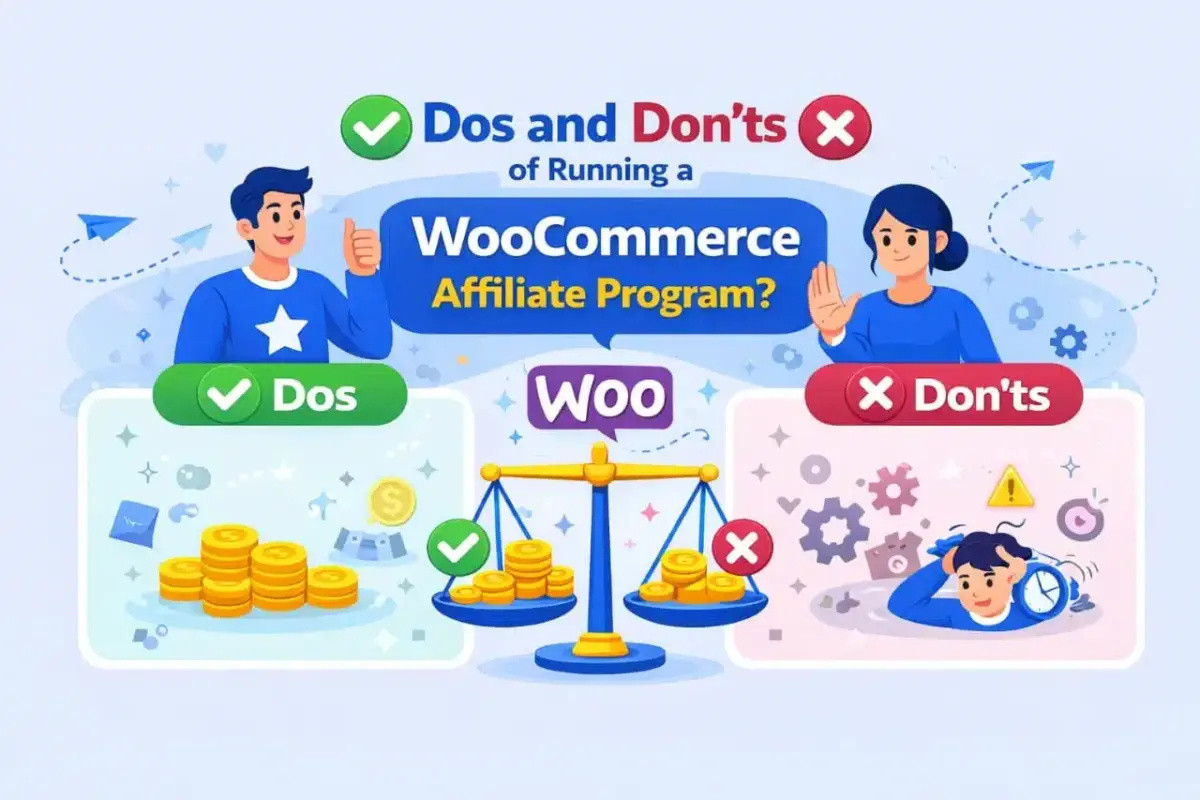
To operate a WooCommerce affiliate program successfully, you must have a clearly defined set of rules regulating how your affiliates can operate. Without these policies in place, you are essentially a “rolling-deadman” operating your WooCommerce affiliate program, and when the brakes (rules/policies) fail, it usually leads to disaster.
This section outlines the specific things you need to do and avoid to ensure your program continues to operate effectively, is compliant with applicable laws & regulations, and grows and scales profitably.
By understanding the dos and don’ts of running a WooCommerce affiliate program, you will be able to attract the right types of affiliates, protect your brand, and maximise your return on investment while minimising risk.
Dos of Running a WooCommerce Affiliate Program
Here is what one can do when running a WooCommerce Affiliate Program.
Do #1: Selection of a Dependable Affiliate Plugin
Your affiliate plug-in handles tracking accuracy and payment, and the wrong one can mess up your whole system.
An effective WooCommerce affiliate plugin should offer:
- Reliable referral tracing
- Cookie duration can be customized
- Fraud Detection features
- Detailed performance reports
Why this matters: It helps build trust. If affiliates don’t trust your system, they will never promote your products.
Do #2: Offer Favorable and Motivational Commission Schemes
The commission system will directly influence an affiliate marketer’s motivation. With low commission structures, no professional marketer will be interested in your program.
General benchmarks:
- Physical products: 5%–15%
- Digital products: 20%–50%
To boost performance:
- Provide commissions based on tiers
- Encourage the best affiliates by rewarding them with bonuses
- Raise prices of high-margin items
It promotes a long-term approach rather than a short-term, promotion-based approach.
Do #3: Recruit Quality over Quantity
Not all affiliates are good partners. Emphasize working with affiliates who:
- Design niche-specific content
- Have an engaged audience
- Share honest product reviews
Examples of good affiliate marketing sources include:
- Bloggers and Review Sites
- YouTubers and Teachers
- Existing Consumers who think favorably about your brand
This is where quality affiliates bring their qualified traffic – which is precisely when everything aligns perfectly with the principles outlined in the dos and don’ts of running a WooCommerce affiliate program.
Do #4: Establish Affiliate Policies
Well-Defined Terms Avoid Confusion and Protect Your Brand. Your agreement with your affiliate partners should include the following to avoid misunderstandings:
- Advertisements are allowed
- PPC and Coupon Use Guidelines
- Brand Name Bid Restrictions
- Payment Schedules
Use simple, straightforward language—not a single lawyerly term.
DO #5: Offer Ready-to-Use Marketing Resources
Your affiliates will perform well if you provide easy promotion.
Provide:
- Banner advertisements
- Product images
- Pre-written email templates
- Social Media Captions
This will make it easier for affiliates, and your messages will remain consistent.
Do #6: Monitoring and Optimizing Your Work
Monitor such key indices as:
- Conversion rate
- Average Order Value
- Refund percentage
- Best-performing affiliates
Utilize these key takeaways:
- Enhance Landing Pages
- Reforms Commission Schemes
- Identify high-potential partners
Data-informed decisions distinguish effective affiliate programs from mediocre ones.
Do #7: Communication and Relationship Building
Affiliates are not just traffic sources—they are partners
Keep the audience interested by:
- Providing regular updates
- Sharing new product launches
- Publicizing top performers
Effective communication promotes loyalty and encourages support.
Don’ts of Running a WooCommerce Affiliate Program
Here is what to avoid when running a WooCommerce affiliate program.
Don’t #1: Ignore Affiliate Fraud
Affiliate fraud can quietly destroy your profits. Common forms include:
- Self-referrals
- Bogus leads
- Cookie stuffing
Use fraud-detection tools and review reports regularly. If something looks suspicious, investigate immediately.
Don’t #2: Approve All Affiliates Automatically
Open signups may sound desirable, but they are often havens for low-quality or spam affiliates.
Instead:
- Manually approve applications
- Websites review and sources of traffic
- Decline affiliates that don’t align with your brand.
This one step can save you a world of headaches later.
Don’t #3: Set Unrealistic or Confusing Rules
Overly strict or vague policies discourage good affiliates. Avoid:
- Too many restrictions
- Unclear commission terms
- Hidden payout conditions
Transparency builds trust-and trust drives performance.
Don’t #4: Allow Brand Abuse or Deceptive Promotions
It could also be that some affiliates might:
- Promote counterfeit discounts
- Run deceptive advertisements
- Use false claims
Monitor and keep tabs on all promotions-ensure that when violations happen, the rules must be enforced. For this reason, protection of your brand is not open for negotiation.
Don’t #5: Delay Affiliate Payments
Late payments are one of the quickest ways to lose top affiliates.
Best practice:
- Automate payouts
- Establish a definite payment schedule
- Be transparent about delays
Reliable payment is a sure way of reinforcing professionalism and credibility.
Don’t #6: Expect Instant Results
Affiliate marketing is not a quick win; it is a long-term strategy.
It takes time to:
- Build relationships
- Publish content
- Earn audience trust
Stay consistent. Regularly optimize and let the compounding results do the work.
How to Run a WooCommerce Affiliate Program (Step-by-Step)
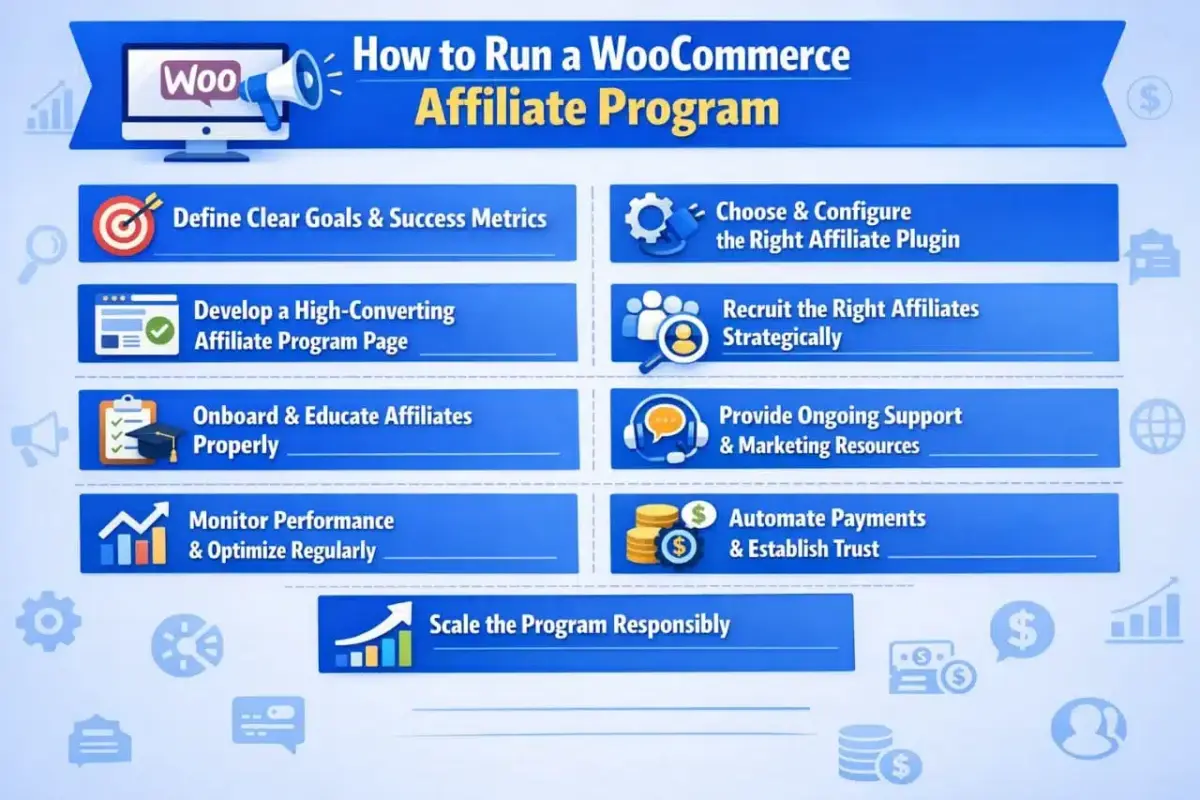
Now that you are familiar with the dos and don’ts of running a WooCommerce affiliate program, it’s time to roll up your sleeves and get started. This guide takes you step by step through how you can launch, run, and eventually expand a WooCommerce affiliate program in the right manner.
Whether you’re building entirely or enhancing an existing system, follow these steps to avoid high costs and create sustainability.
Step 1: Define Clear Goals and Success Metrics
Make sure you have a clear understanding of the reason why you are using an affiliate program before you even consider installing an affiliate plugin.
Ask yourself:
- Are you looking for more sales or more brand exposure?
- Are you pitching content creators, influencers, or bloggers?
- Is SEO traffic important or quick conversions?
After this, the following KPIs should be defined:
- Affiliate-driven revenue
- Conversion Rate
- Average Order Value
- Active affiliates per month
Specific goals help ensure that all commissioning and hiring decisions are congruent with the focus on growth.
Step 2: Choose and Configure the Right Affiliate Plugin
There isn’t an affiliate option for WooCommerce, so it is important to choose the correct extension.
While creating your plugin, the following should be set:
- Type of Commission (Percentage or Fixed)
- Cookie duration (30-90 days recommended)
- Manual or Automatic Affiliate Approval
- Payout Thresholds and Schedules
A good plugin is important for proper tracking, and this is the basic foundation for the dos and don’ts of running a WooCommerce affiliate program.
Step 3: Develop a High-Converting Affiliate Program Page
The affiliate landing page is the point where a new affiliate makes a decision.
A good affiliate page must contain:
- Detailed commission information
- Benefits of joining your program
- Payment options and schedules
- Easy registration system
- Rules and expectations within programs
Keep it transparent and benefit-driven. This automatically removes low-quality applicants and promotes serious affiliates.
Step 4: Recruit the Right Affiliates Strategically
Waiting for random people to sign up for you and your product or service isn’t a good choice. Instead of waiting for random signups, be proactive.
Strong recruitment options include:
- Outreach efforts to specialized bloggers and reviewers
- YouTubers related to your industry
- People who currently believe in your business
- Communities on Reddit and Quora related to your niche:
Personal contact is much more effective than bulk emails. Best recruitment practices ensure long-term success.
Step 5: Onboard and Educate Affiliates Properly
For the most part, most affiliate programs fail at onboarding.
Send an email welcoming new subscribers and include:
- Affiliate dashboard access
- Program regulations and compliance guidelines
- Top-rated products
- Tips for higher conversions
Well-educated affiliates are more confident and more ethical in their promotion of the business, which in turn reduces errors and
Step 6: Provide Ongoing Support and Marketing Resources
Effective programs do not end at enrollment.
Always provide:
- Updated banners and creatives
- Seasonal promotions
- Product launch announcements
- Tips and Examples for Conversion
When their support needs are met, affiliates become more active and perform better.
Step 7: Monitor Performance and Optimize Regularly
At least once a month, review the performance of the affiliate.
Track:
- Top-performing affiliates
- Traffic quality and conversion rates
- Refund and chargeback information
- Inactive affiliates
Use this data to:
- Higher commissions for high performers
- Remove poor-performing affiliates
- Optimize landing pages and offers
Optimization directly mirrors the dos and don’ts of running a WooCommerce affiliate program.
Step 8: Automate Payments and Establish Trust
Automation eliminates mistakes and wait times.
Best practices are:
- Automated Monthly Payments
- Transparent minimum payout thresholds
- Transparent reporting access for affiliates
Trust is the currency in the affiliate world. Trust once broken cannot be refixed.
Step 9: Scale the Program Responsibly
As your program increases:
- Introduce commission levels
- Designate VIP Affiliate Levels
- Partner with influencers for larger campaigns
Responsible scaling enables growth without sacrificing control or brand integrity.
Final Thoughts: Turning Strategy Into Sustainable Growth
An affiliate Program requires more than just a quick setup and expectation of sales; it requires an affiliation system based on the foundation of trust, clarity, and consistency. By understanding the dos and don’ts of a WooCommerce affiliate program correctly, you convert from the guesswork aspect into a more strategically based system.
The most effective and appreciated WooCommerce affiliate program models focus on:
- Good quality, not quantity
- Transparent guidelines and a fair commission structure
- Accurate tracking with timely payments
- Continual optimisation via real-life data to support continuous improvement
By following the right ways in affiliate marketing instead of making common mistakes—such as not onboarding properly, having an unengaged customer service department, or failing to monitor/pay close attention to fraud—you will save valuable time and money from lost sales.
The key to successful affiliate marketing lies in having a defined strategy to your approach by taking time to develop clear policies, building strong relationships with your affiliate partners, and regularly tracking affiliates’ performance; after completing all these steps, you will see your affiliate become a long-term partner in your growth strategy.
When you approach Affiliate Marketing with a structured approach, with time-bound patience, with consistency, your WooCommerce site will see consistent traffic, improved conversion rates, and large-scale revenue without relying completely on paid search ads. Start slowly, remain consistent, and let compound results take care of the rest!
FAQs: WooCommerce Affiliate Program
Q1. What commission rates should I use for affiliates?
Rates of commission are based on your profit margins and product types. Standard physical products pay 5%-15%, whereas digital products can handle 20%-50%. Better affiliates are drawn by higher rates of commission.
Q2. Does a WooCommerce affiliate program assist with SEO?
Yes, indirectly. Your affiliates may produce content in the form of blog posts, reviews, and tutorials that point back to your store. By doing so, you can have natural backlinks pointing toward your domain.
Q3. How do I prevent affiliate fraud in WooCommerce?
Fraud can be averted using legitimate affiliate plugins and monitoring tools, as well as manually approving affiliates and reviewing referrals. It is an integral part of the dos and don’ts of running a WooCommerce affiliate program, as rules and, above all, monitoring play a vital role in it.
Q4. How long does it take to see results from affiliate marketing?
Affiliate marketing takes time. Most eCommerce platforms like WooCommerce begin to show substantial results in as little as 2-3 months.
Q5. Is affiliate marketing a good fit for small WooCommerce stores?
Absolutely. Affiliate marketing is a pay-for-performance service, so you only pay for results, which is always a great business option, especially when budgets for such services are limited.