
Have you ever found yourself browsing a slick and professional-looking website and thought to yourself, “Hmm… is that made in WordPress?” If you have, you’re not alone — that’s a common question for anyone interested in web design or digital marketing.
Since WordPress is behind over 43% of all websites worldwide, being able to identify whether or not a website is built with WordPress could provide significant insight — whether it be for competitive analysis, gaining perspective from others, or developing your own website.
In this guide, I will outline how to know if a website is made with WordPress through six ridiculously simple methods — even if you’ve never touched a line of code.
Let’s dive in!
What Is a WordPress Website?
Before I tell you how to know if a website is made with WordPress, let’s first define what a WordPress website is.
A WordPress website is any website built using the WordPress Content Management System (CMS), which is one of the most widely used content management systems in the world. WordPress is known for its ease of use, flexibility, and extensibility, and is extremely popular with bloggers, small businesses, and even enterprise-level sites.
There are two versions:
- WordPress.com – A hosted solution where everything, including your site, is managed by WordPress.
- WordPress.org – An open-source, self-hosted solution that allows complete control over every aspect of your site.
No matter the type of site, whether a blog, portfolio, online store, or news site, if it is running WordPress, you will likely see some general features:
Features of a WordPress Website
- URLs may contain
/wp-content/or/wp-admin/. - Built using PHP and MySQL.
- Design/Layout is managed using themes.
- Functionalities are expanded using plugins.
- SEO-friendly design and structure, clean code.
Now that you have familiarity with the building blocks, it becomes more obvious when you come across a website that is running WordPress (and that is what we are about to do).
Why Use WordPress for Website Making?
Before we can dive into how to know if a website is made with WordPress, it is important to understand why WordPress has become the go-to for so many.
Spoiler alert: It is not all hype – WordPress is a legitimate powerhouse of a way to build just about any site you can think of. From personal hobby blogs to huge eCommerce stores, WordPress has you covered.
Here’s a reason WordPress is the number one choice for millions of creators and developers around the world:
- It’s Free and Open Source: WordPress is 100% free to download, install, and use. No subscription, no guarantee, no hidden fees. And because WordPress is open-source, you can customize and modify your site however you like – there is no gatekeeper here.
- Customizable Without Limits: With over 60,000 plugins and 10,000+ themes, WordPress allows you to go crazy and build virtually any kind of site without a single line of code. There are no limits, and it doesn’t matter if you are building a personal website, a business website, or an eCommerce store.
- Easy to Use Interface: WordPress was designed to be easy to use for a beginner user. Drag and drop editors like Elementor and block editors like Gutenberg make building beautiful websites easy – no coding experience necessary!
- Built-In SEO Power: WordPress has always been SEO friendly. Because it has clean code and semantic HTML, and now URLs are customizable, search engines can crawl your content more easily. With plugins such as Yoast SEO and Rank Math, you’ll be off to a great start from an SEO perspective.
- Scalability for Security: If you are working on your newly minted blog or a site with thousands of visitors a day, WordPress will scale for you. It has regular updates, good security with plugins such as Wordfence, and also a community that spans the globe. Regular updates, security, and community connections keep your WordPress site safer and effective.
- Huge Community Support: One of the greatest advantages of using the WordPress platform for website making is, you will never be alone. There are so many developers, designers, and content creators associated with and around WordPress. There are also forums, tutorials, and writings that detail everything you would want to search out or understand.
Once you understand why WordPress powers such a significant portion of the web, it makes even more sense to learn how to know if a website is made with WordPress — it’s everywhere for a good reason.
How to Know if a Website is Made With WordPress: 6 Foolproof Ways
If you saw a beautiful website and thought, “Is this a WordPress site?” — you’re in good company. Whether you’re spying on competitors, looking for ideas for a design, or just plain curious, there are many good ways to find out if a site is powered by WordPress.
Below are six sure ways to tell if a site is made with WordPress, from basic visual checks to more advanced technical tricks. Let’s get started!
1. Inspect The Page Source Code
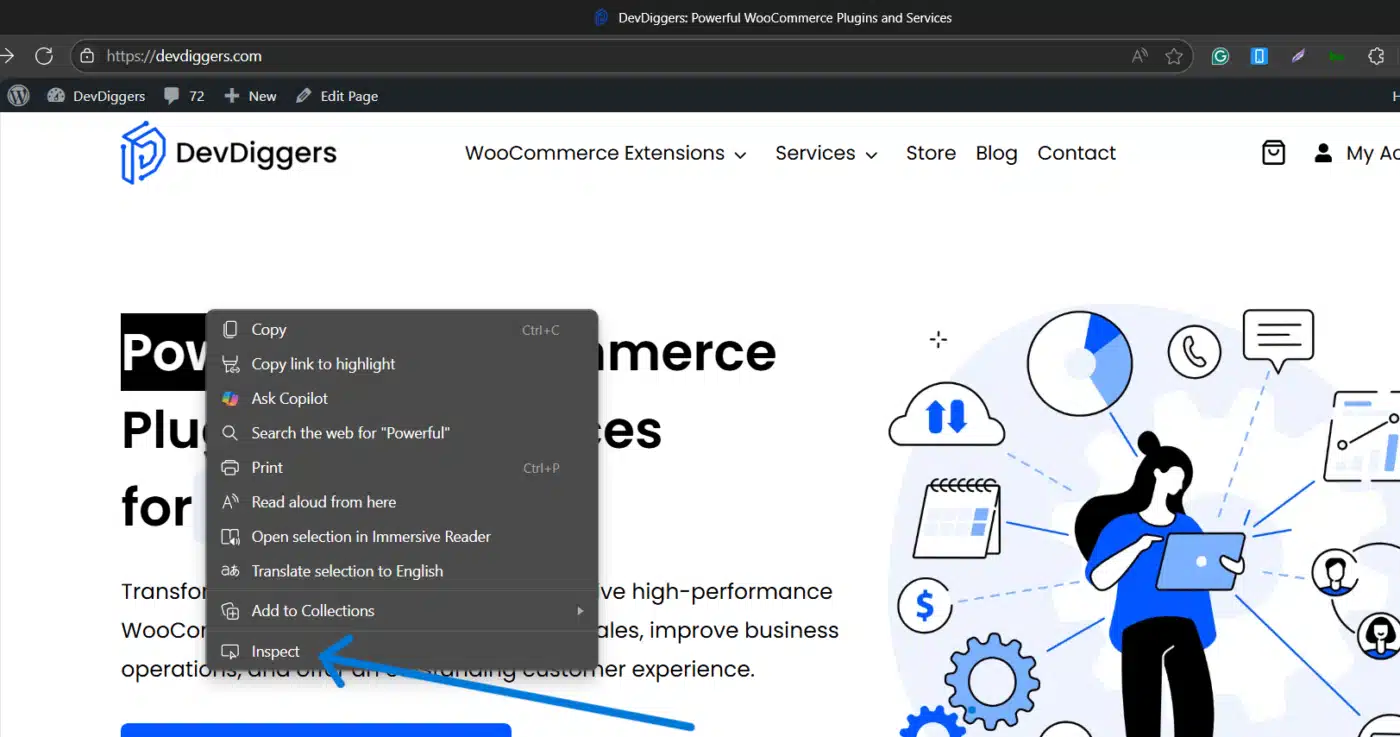
One of the best ways to find out whether a website is built with WordPress is to take a look at the source code.
How to Do It:
Right-click on an empty portion of the website. Select “Inspect” or press Ctrl + U (Windows) / Cmd + Option + U (Mac). Press Ctrl + F (Find), then search for anything.
Common WordPress Signatures:
/wp-content/— indicates assets (themes, images, plugins) are from WordPress./wp-includes/— core WordPress files.wp-json— which is a REST API that WordPress uses.wp-emoji-release.min.js— emoji script loaded by WordPress.
Example:
<link rel='stylesheet' id='twentytwentyone-style-css' href='https://example.com/wp-content/themes/twentytwentyone/style.css' />
Bam! That wp-content/themes/ tells us all we really need to know — this site is built with WordPress.
Best For:
- Intermediate users
- Developers
- The curious tinkerer
2. Use Online Detection Tools
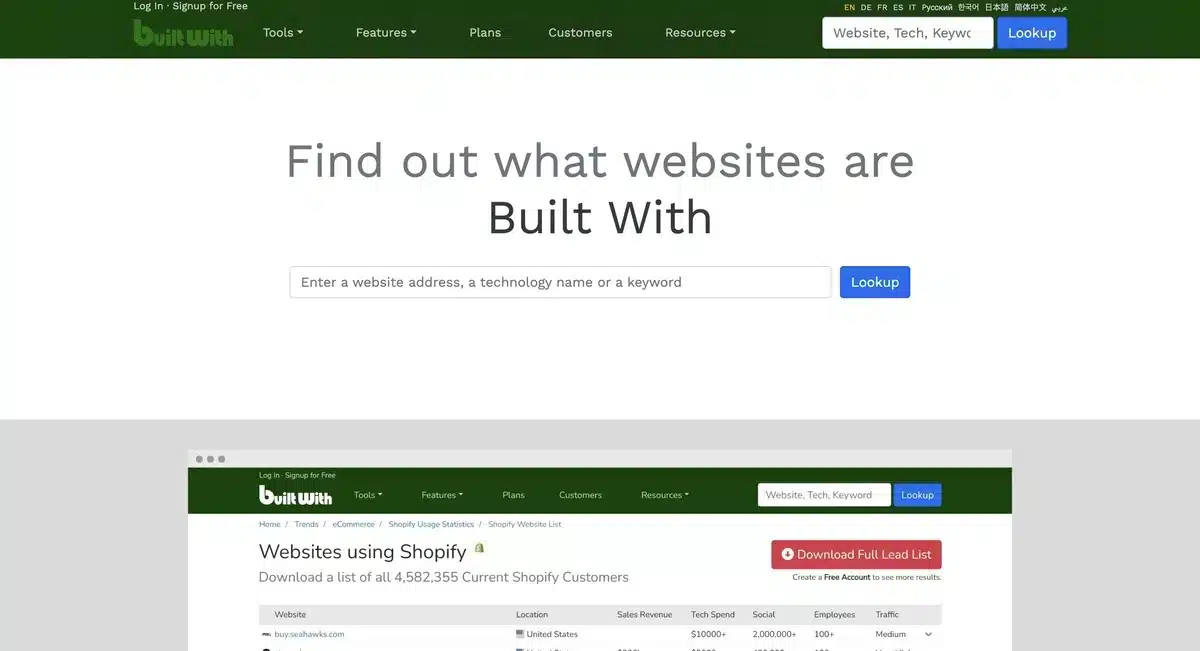
Do you not want to mess with code? Great! There are a number of free tools to analyze a website, and they will be able to tell you if it was made with WordPress.
Top Tools to Try:
| Tool | What It Does | Link |
|---|---|---|
| IsItWP | Identifies if the site uses WordPress and what theme it uses | Free |
| BuiltWith | Offers a full tech stack breakdown, including CMS, plugins, and analytics | Free & Paid |
| Wappalyzer | Chrome extension that shows the tech stack of any site | Free |
| WhatCMS | Detects the content management system | Free |
Pro Tip: Try cross-checking with 2-3 tools for accuracy. One tool may miss a detail, and another catches it.
Best For:
- Beginners
- Non-coders
- Quick technical analysis
3. Check the Standard WordPress Login URL
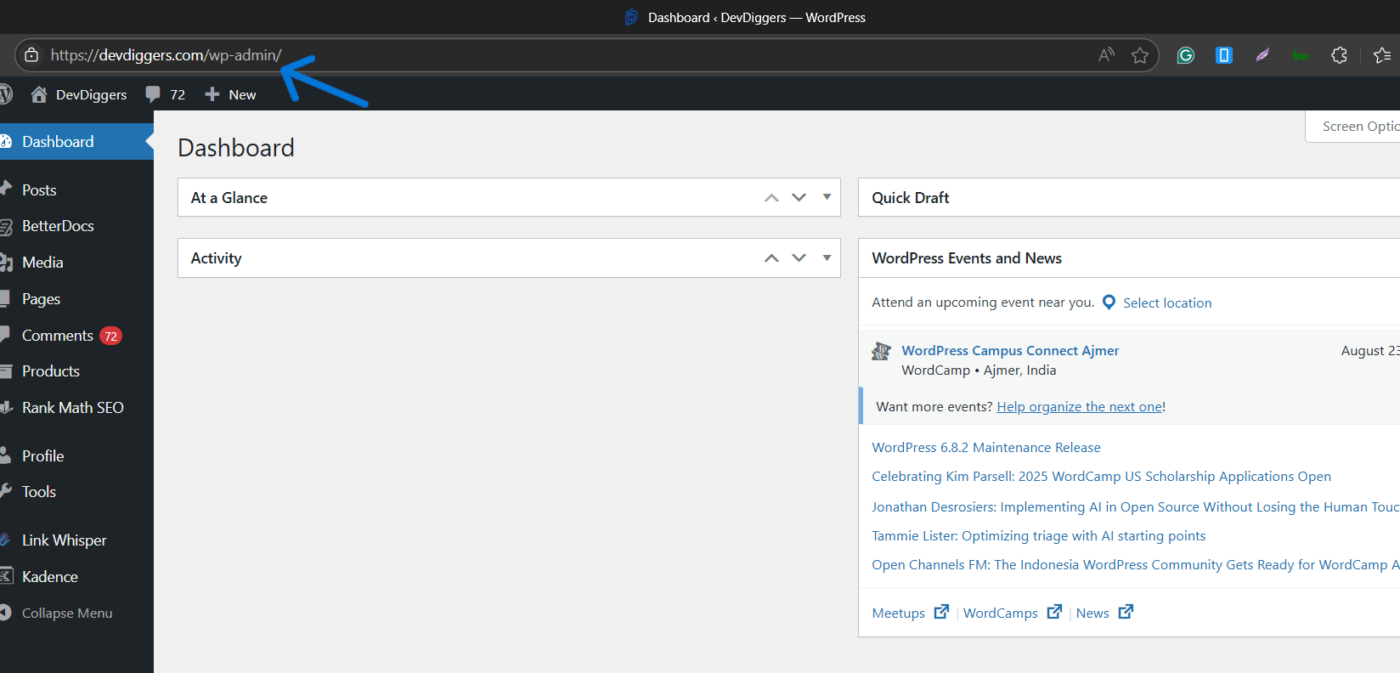
Standard WordPress installations use a defined URL format for logging in. If it has not been changed by the website, it will allow you to determine whether the website is built with WordPress.
How to Check:
Simply add one of the following to the domain URL:
/wp-admin
/wp-login.php
Example:
Visit https://examplesite.com/wp-admin.
- If your browser takes you to a login screen, and it has the WordPress logo in the login screen or takes you to a dashboard login for WordPress, then you have confirmation that it’s WordPress.
- If you are taken to a custom login page or a 404 not found page, then the website may have hidden the login page through a plugin (which is common and for security reasons).
Note: These days, it’s common for WordPress users to customize their login page using plugins like WPS Hide Login or iThemes Security, so not finding it doesn’t necessarily mean it’s not WordPress; you just cannot access it (and now you learn it’s more secure).
Best For:
- Anyone doing a quick check
- Basic confirmation without tools
4. Check the Footer or Credit Source
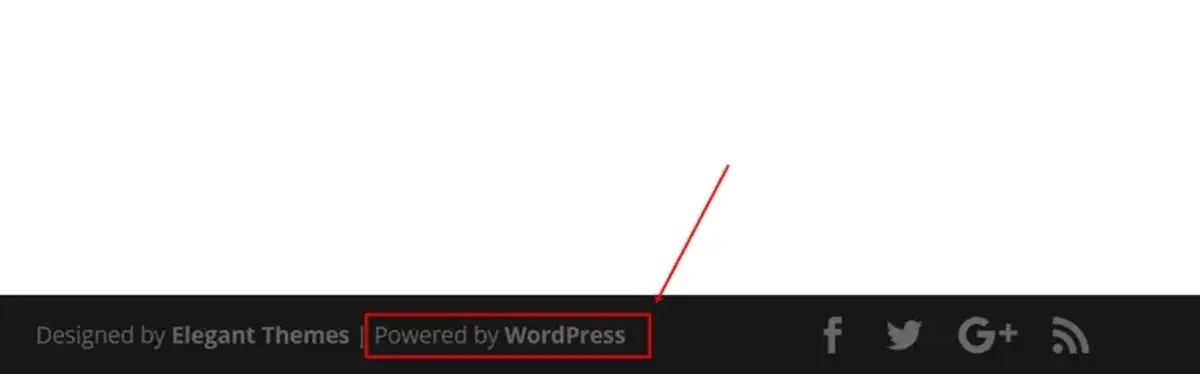
Sometimes you just need to scroll down to the bottom.
Various WordPress themes (especially free ones) have the “Powered by WordPress” message or a credit to the creator of the theme.
What to Look For:
- “Powered by WordPress.”
- “Designed with [Devs Name]”
- Directs to
wordpress.org - Credits like “Built with Elementor.”
Bonus Tip: Right click on the footer and click inspect to view any HTML comments! Developers are engaged and will leave notes or code to indicate WordPress or specific plugins.
Best For:
- Visual checks
- Non-developers
5. Check for WordPress Specific Files & Directories

There are specific file paths and folders that are unique to WordPress. If they are visible, they can give away the entire CMS structure.
How to do it:
Simply attempt to add the following paths to the website domain:
/readme.html— Many older WordPress sites will have this/license.txt— Typically includes WordPress license information/wp-content/— May display plugins, uploads, and themes
Example:
Go to https://examplesite.com/readme.html. If you see “Welcome to WordPress” – you’ve done it.
Note: Not all websites allow directory browsing or display these files; some choose not to disclose that information due to security.
Best For:
- Semi-technical users.
- If other methods are not working.
6. Utilize Extensions for Easy Detection
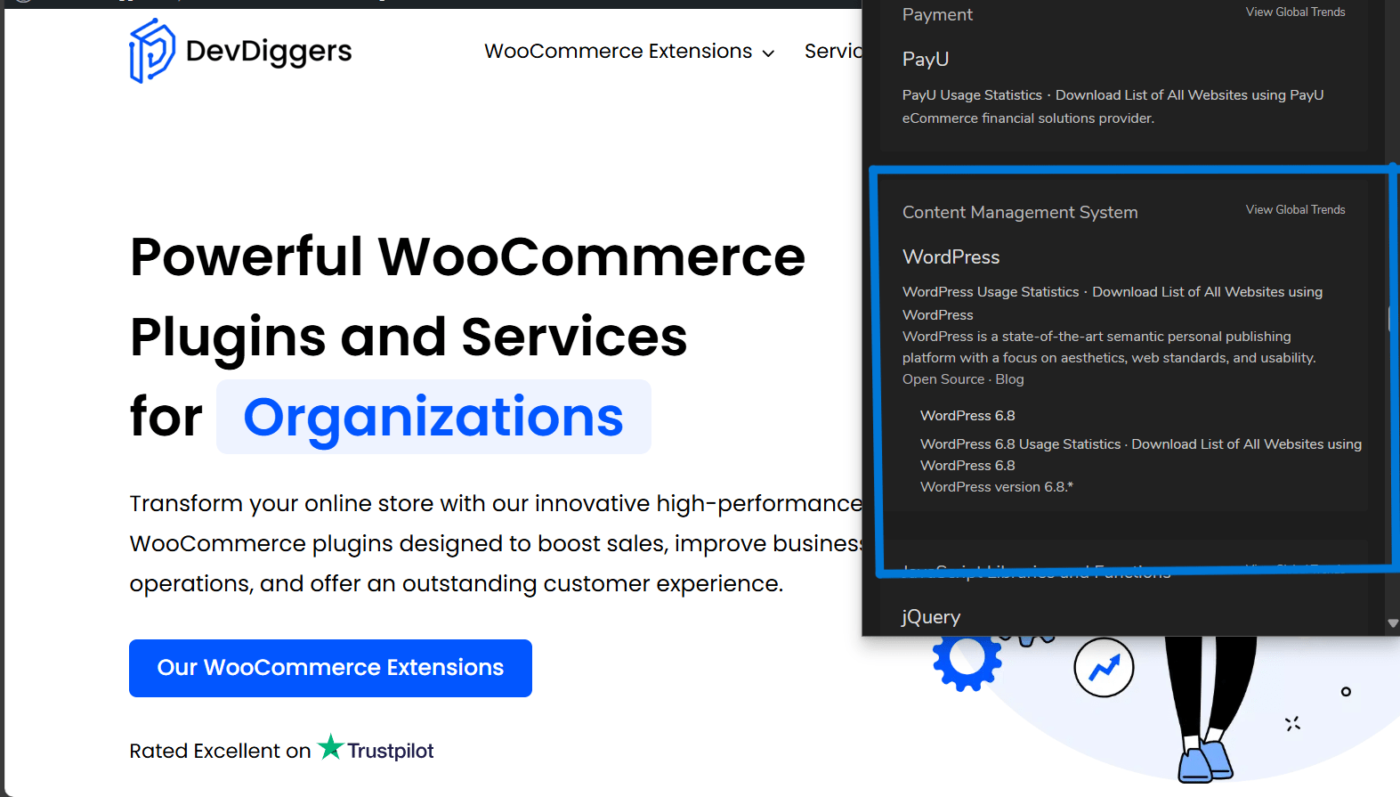
If you’re an avid user of site tech or an analyzer of sites, extensions are going to save you a lot of time. A one-click and bam — you know the CMS a site is using.
Best Extensions
- Wappalyzer (Chrome/Firefox): Displays CMS, plugins, and analytics implementation.
- BuiltWith: Displays platform details with one click.
- Library Sniffer: picks up on JavaScript libraries and WordPress signatures.
Bonus: These tools do not only show WordPress. They also tell you if WooCommerce is being used, or if a site is utilizing WPBakery, Elementor, Google Analytics, and more.
Best For:
- Digital marketers
- SEOs
- Power users
Quick Checklist
| Method | Ease | Accuracy |
|---|---|---|
| View Page Source | Moderate | High |
| Online Tools | Easy | High |
| Login Path Test | Easy | Medium |
| Footer Check | Easy | Medium |
| File Path Access | Moderate | Medium |
| Browser Extensions | Easy | High |
Final Thoughts
Now that you know exactly how to know if a site is made with WordPress, you have the power to identify a WordPress website when you see one — whether it’s for pleasure, competitor analysis, or inspiration for your website.
The best aspect of WordPress is not only that it is so widely used, but it is also transparent. With a couple of clicks, tools, or peeks at the source code, we can usually see if the site is using this impressive CMS. And once you can start to identify some of the clues — like the login URLs, hints at plugins, footprints of themes — it becomes an easy habit.
As WordPress continues to run almost half of the web, being able to identify if you’re looking at WordPress is a positive skill for developers, marketers, designers, and curious onlookers.
The next time you’re on a website that you find inspiring, take a second. Ask yourself: “Could this be WordPress?” — and now you will know how to find out.
Frequently Asked Questions (FAQ)
Q1. How can I tell if a website is built using WordPress?
You have the option of checking the page source, looking for “wp-content” in the URLs, or using IsItWP or BuiltWith (amongst others), which will help you determine whether a website is using WordPress.
Q2. Can websites hide their WordPress usage?
Some websites can hide their WordPress usage using plugins or custom coding that hides the path and identifiers.
Q3. If WordPress is a theme, is it true that all WordPress websites look the same?
No, WordPress is customizable, so not only can the website look different the functionality can also look and work differently, depending on the theme (which can also be customized) the website is using.
Q4. Is WordPress only useful for blogging?
No, WordPress has been used for all types of websites, including but not limited to business websites, portfolios, online stores, and news portals.
Q5. Are there tools that will tell me if a website is using WordPress?
Yes, Wappalyzer, WhatCMS, and IsItWP will determine for you whether a website is built on a WordPress framework.