

You can make money with ChatGPT right now, but most people doing it are earning far less than the headlines suggest, and a few specific approaches are quietly responsible for most of the real income.
The problem isn’t the tool. It’s that most guides hand you a list of ideas without telling you which ones are already flooded, which ones require real skill to pull off, and which ones can get you to a first paycheck within a week.
Here’s the thing most posts skip entirely: ChatGPT doesn’t make money. You do by using it to deliver something people will pay for.
In this guide, you’ll get seven methods ranked by earning potential, an honest look at what’s oversaturated, a simple framework for choosing the right path based on your existing skills, and a first-week action list to get moving.
Can You Actually Make Money With ChatGPT?
Yes, but the answer depends entirely on what you’re selling.
ChatGPT is a large language model built by OpenAI. It can write, summarise, research, brainstorm, translate, generate code, and help structure almost any type of content or workflow. What it cannot do is replace the judgment, expertise, or client relationships that make a service worth paying for.
The freelancers and side hustlers making consistent income with ChatGPT have figured out one thing their competitors haven’t: they sell outcomes, not outputs. A client doesn’t pay you for a blog post generated by AI. They pay you for higher search rankings, more email subscribers, or a product page that converts. ChatGPT helps you deliver that faster. That’s the distinction.
Worth knowing before you dive in: the methods below vary a lot in how quickly they pay and how high the ceiling goes. Here’s a quick overview.
| Method | Difficulty | Time to First $ | Monthly Income Ceiling |
|---|---|---|---|
| Freelance content and copywriting | Low to Medium | 3 to 7 days | $2,000 to $8,000 |
| AI automation services | Medium to High | 2 to 6 weeks | $5,000 to $20,000+ |
| Digital products (eBooks, templates) | Low | 4 to 6 weeks | $500 to $3,000 |
| Custom GPTs | Medium | 4 to 8 weeks | $500 to $5,000 |
| Prompt engineering as a service | Medium | 1 to 3 weeks | $1,000 to $4,000 |
| Niche blog or YouTube channel | Low to Medium | 2 to 6 months | $500 to $5,000+ |
| Affiliate marketing with ChatGPT | Low | 1 to 3 months | $500 to $3,000+ |
These ranges reflect real practitioner data, not best-case projections. Beginners typically start at the lower end of each band and grow from there as they build a client base or audience.
7 Ways to Make Money With ChatGPT, Ranked by Earning Potential
1. Freelance Content and Copywriting Services
This is the fastest path to your first dollar with ChatGPT and still one of the most practical if you approach it correctly.
The mistake most people make is offering “AI-written content” as the service. That’s a dead end. Clients can open ChatGPT themselves. What they can’t do easily is brief it well, edit for their brand voice, structure content for SEO, or know when the output is wrong. Those are the skills they’re paying for.
AI-related work on Upwork grew 60% year-over-year in 2024, and freelancers doing projects powered by AI earn 44% more on average than everyone else on the platform. The opportunity is real. The angle is what matters.
A practical setup: use ChatGPT to produce first drafts in 10 to 15 minutes, then spend 30 to 45 minutes editing, sharpening, and aligning with the client’s tone. You can take on three to four times more work per week without burning out. At $50 to $150 per article, that math changes fast.
Fiverr is the other strong starting platform, particularly for fixed-price packages such as blog post bundles or social media caption packs. Direct outreach to small businesses and eCommerce stores that publish regularly also works well. If you’re targeting WooCommerce store owners specifically, using AI to write product descriptions is one of the most in-demand services right now. Store owners dislike writing them, and thousands of stores need the help.
According to a GOBankingRates breakdown of ChatGPT income methods, freelance writing or editing through platforms like Upwork pays between $25 and $75 per hour, depending on skill level. At five to seven hours of billable work per week, that puts $500 to $2,000 a month well within reach alongside a regular job.
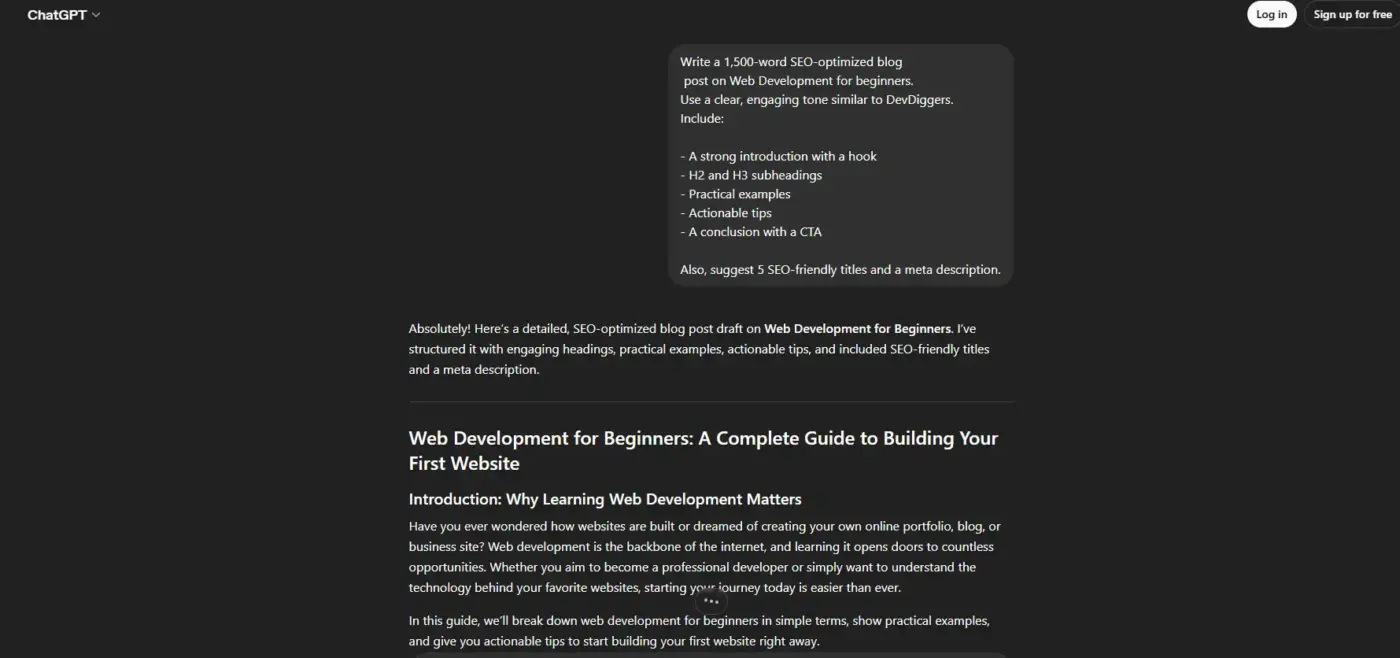
Prompt Example:
"Write a 1,200-word SEO-optimized blog post on [topic] for a [target audience].
Use a clear, engaging tone similar to [brand style].
Include:

A strong introduction with a hook
H2 and H3 subheadings
Practical examples
Actionable tips
A conclusion with a CTA

Also suggest 5 SEO-friendly titles and a meta description"
2. AI-Powered Automation Services for Businesses
This is the highest-ceiling method on this list, and the one most guides underexplain.
Small businesses waste enormous amounts of time on repetitive tasks: writing weekly newsletters, answering the same customer service questions, producing social media content, and summarising reports. ChatGPT, paired with tools like Zapier or Make, can automate most of these workflows. You build the system once, and the business uses it indefinitely.
A common model for these services is a $500 to $2,500 setup fee plus $100 to $800 per month in retainer fees. Higher retainers are typical when you also manage integrations, analytics, and ongoing optimization.
The good news is you don’t need to be a developer to offer this. No-code tools let you connect ChatGPT to most business software without writing a line of code. What you need is the ability to identify a business’s specific pain point, scope the solution clearly, and deliver it reliably. This is also where integrating ChatGPT into WordPress becomes a real service offering. Setting up an AI assistant on a client’s WordPress site is a concrete, billable deliverable that takes a few hours and can command $300 to $800 as a one-off.
Most beginners can land their first paying client in two to six weeks if they focus on a single narrow outcome, for example, lead qualification for a local clinic or weekly content automation for a restaurant’s social media.
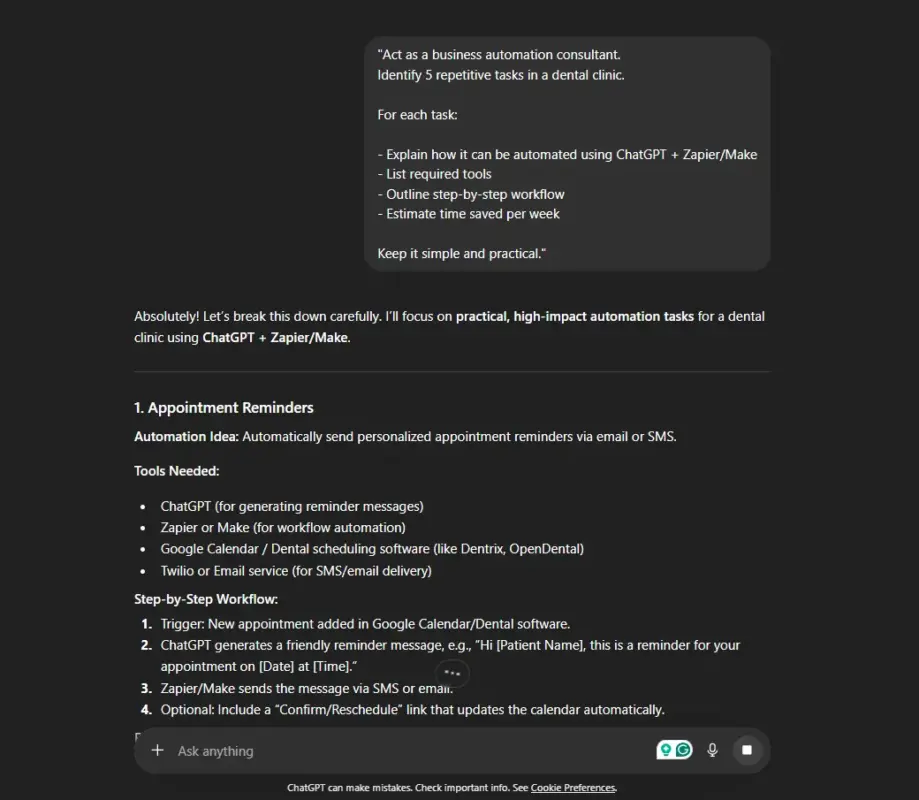
Prompt Example:
"Act as a business automation consultant.
Identify 5 repetitive tasks in a [type of business, e.g. dental clinic].

For each task:

- Explain how it can be automated using ChatGPT + Zapier/Make
- List required tools
- Outline step-by-step workflow
- Estimate time saved per week

Keep it simple and practical."
3. Selling Digital Products (eBooks, Templates, Courses)
Digital products are appealing because they can sell while you sleep. The reality is slightly more complicated, but the opportunity is real if you pick the right niche.
ChatGPT can help you produce an eBook in a weekend. Amazon KDP and Gumroad are the two strongest distribution platforms for self-published digital books. The problem: generic AI-written eBooks on popular topics, productivity, money, and mindset are flooding the market. The ones that sell consistently are niche-specific, based on real expertise, or solve a very particular problem a defined audience has.
A template business is often more reliable than eBooks at the start. Notion dashboards, Canva social media kits, Excel trackers, and structured prompt workflow packs sell at $9 to $49 per unit and require no ongoing work once created. Etsy has become a surprisingly strong channel for digital templates targeting small business owners and creators.
According to the same GOBankingRates analysis, selling digital templates through Gumroad or Etsy typically requires four to six weeks of setup time before generating $100 to $500 monthly. That’s an honest timeline, not overnight, but consistent.
For courses, the same rule applies: your expertise is the product. ChatGPT helps you script, structure, and produce the content faster. But a course on using ChatGPT, built entirely with ChatGPT, is not something people will pay for unless it solves something specific for a real audience.
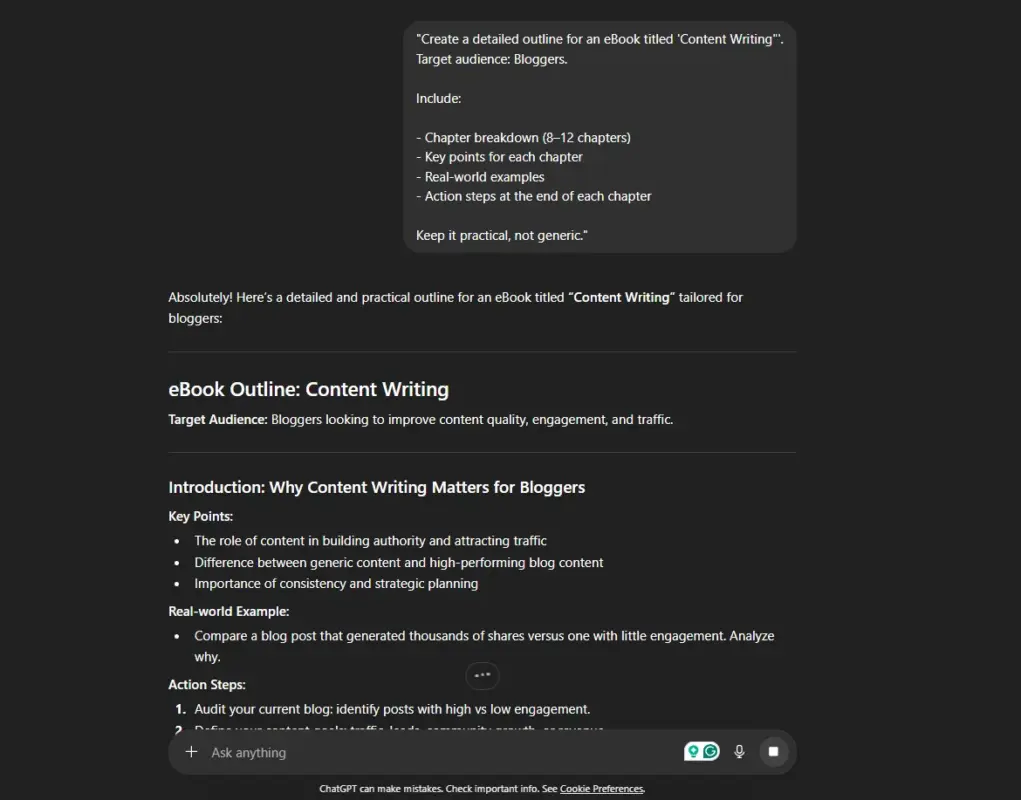
Prompt Example:
"Create a detailed outline for an eBook titled '[topic]'.
Target audience: [specific group].

Include:

- Chapter breakdown (8–12 chapters)
- Key points for each chapter
- Real-world examples
- Action steps at the end of each chapter

Keep it practical, not generic."
4. Building and Selling Custom GPTs
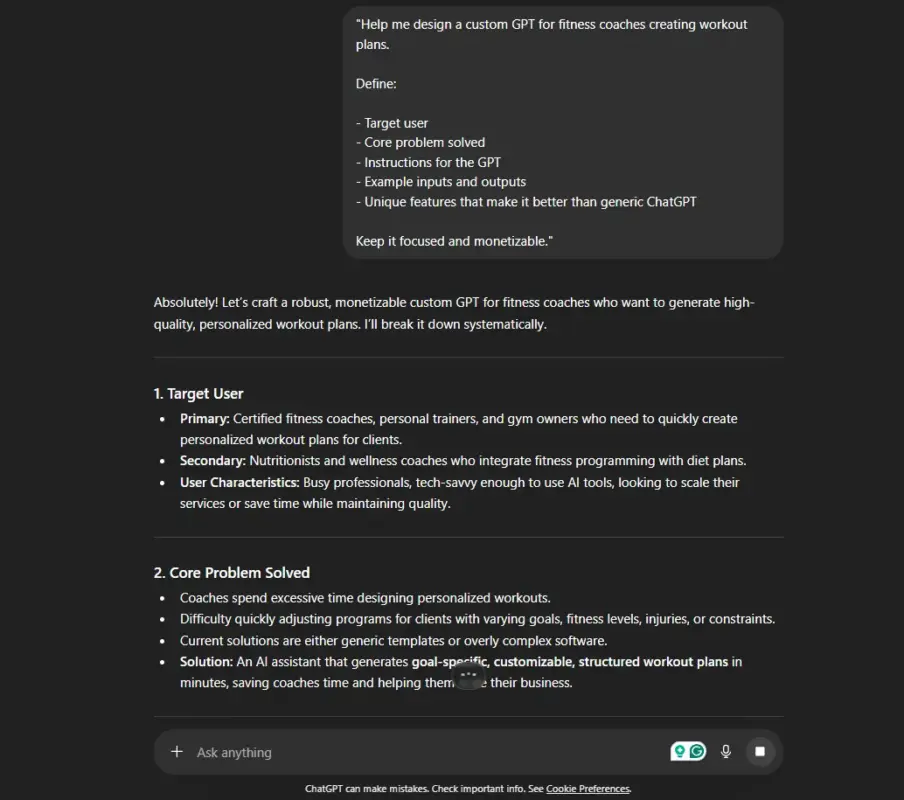
OpenAI’s GPT Store lets anyone build a custom version of ChatGPT without any coding. You give it a name, a set of instructions, and optionally some uploaded documents, and it behaves like a specialist tool for a specific purpose.
The monetization side is more complicated. According to OpenAI’s GPT sharing documentation, there is currently no direct payment system for GPT Store creators. However, a revenue-sharing programme is in development, expected to compensate creators based on user engagement metrics.
What works right now: build a custom GPT and sell access to it through your own payment setup like Gumroad, Stripe, or a simple membership site. Charge a monthly fee for ongoing access. The GPT needs to solve a specific problem well enough that people won’t just recreate it themselves. A lawyer’s contract review assistant, a personal trainer’s workout planner, or a niche research tool for a specific industry all fit this model.
The ceiling here is real but limited for most creators. Custom GPTs on the OpenAI marketplace put you in direct competition with OpenAI’s own distribution, constraining growth. It works best as a supplementary income stream layered on top of another method, not a standalone business.
For a full look at ChatGPT’s model capabilities across versions, the ChatGPT version history breakdown is worth reviewing before you decide which model to build on.
Prompt Example:
"Help me design a custom GPT for [specific use case, e.g. fitness coaches creating workout plans].

Define:

- Target user
- Core problem solved
- Instructions for the GPT
- Example inputs and outputs
- Unique features that make it better than generic ChatGPT

Keep it focused and monetizable."
5. Prompt Engineering as a Service
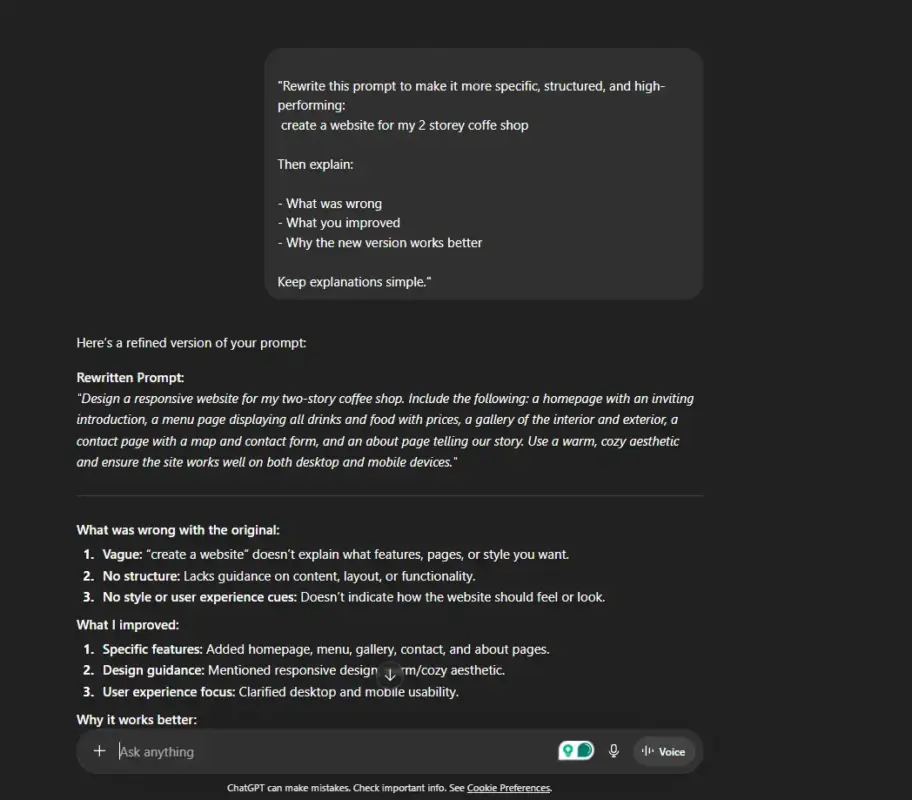
Prompt engineering sounds technical. It isn’t, really. It’s the skill of knowing how to instruct ChatGPT precisely enough to get consistently useful output and packaging that skill as a service.
Businesses and content teams that use ChatGPT daily often produce mediocre results because they write vague, generic prompts. If you can audit their workflow, build a library of tested prompts for their specific use case, and train their team to use them, that’s a billable engagement worth $500 to $2,000.
A one-day audit and prompt library for a marketing team is a realistic starting offer. The turnaround is fast, the deliverable is clear, and the client sees immediate value.
One honest view: as ChatGPT models improve, prompt quality matters slightly less than it did in 2023. The method is still viable, but the ceiling has compressed compared to two years ago. Pair it with content strategy consulting for a stronger, higher-value offer.
Prompt Example:
"Rewrite this prompt to make it more specific, structured, and high-performing:

[Insert weak prompt]

Then explain:

- What was wrong
- What you improved
- Why the new version works better

Keep explanations simple."
6. Starting a Niche Blog or YouTube Channel
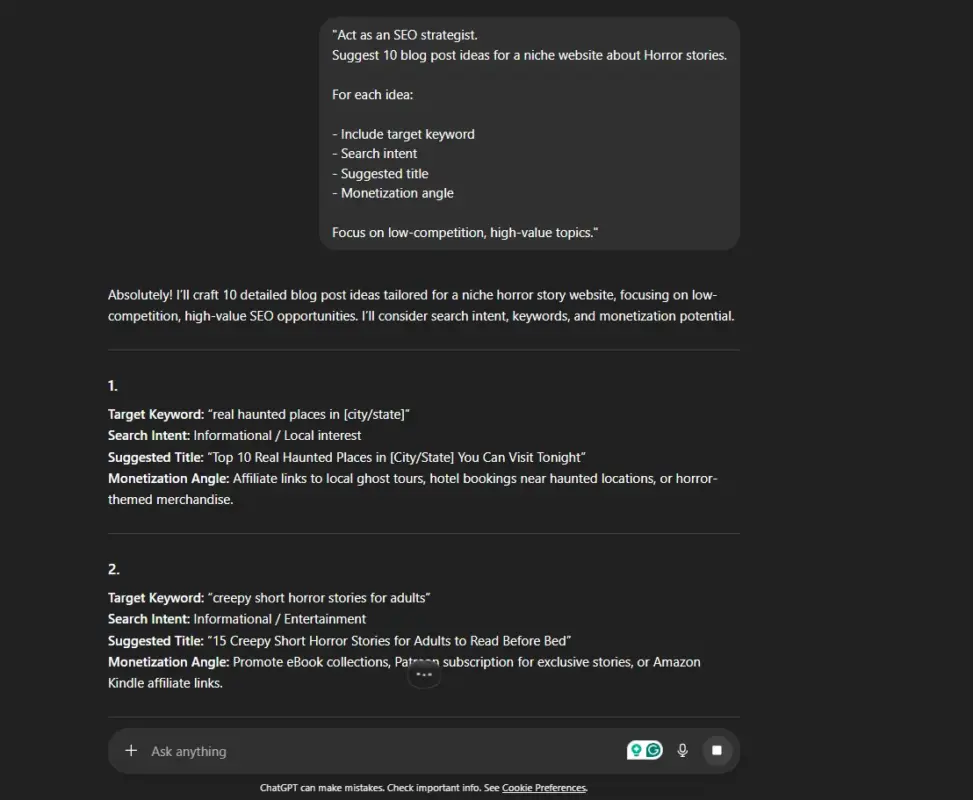
This takes the longest to pay off, typically two to six months before you see meaningful income, but it builds a real asset that compounds.
ChatGPT can help you produce content at a pace that would have taken a full team years ago. Scripts, outlines, SEO research, social media cuts, and email newsletters all of it moves faster with AI in your workflow. For the strategic side of building high-performing content with AI, the approach matters as much as the tool.
Income from a blog or channel comes through affiliate commissions, ad revenue (YouTube monetization kicks in at 1,000 subscribers and 4,000 watch hours), or selling your own products to an audience you’ve built. None of these happens quickly, but they compound over time.
The critical mistake: publishing generic AI content with no clear niche or real perspective. Google has become much better at detecting thin, undifferentiated content. The blogs and channels winning from 2025 to 2026 combine AI-assisted production with a human point of view. For tips on creating engaging videos with AI tools, the guide covers the production side practically.
Prompt Example:
"Act as an SEO strategist.
Suggest 10 blog post ideas for a niche website about [topic].

For each idea:

- Include target keyword
- Search intent
- Suggested title
- Monetization angle

Focus on low-competition, high-value topics."
7. Affiliate Marketing Powered by ChatGPT
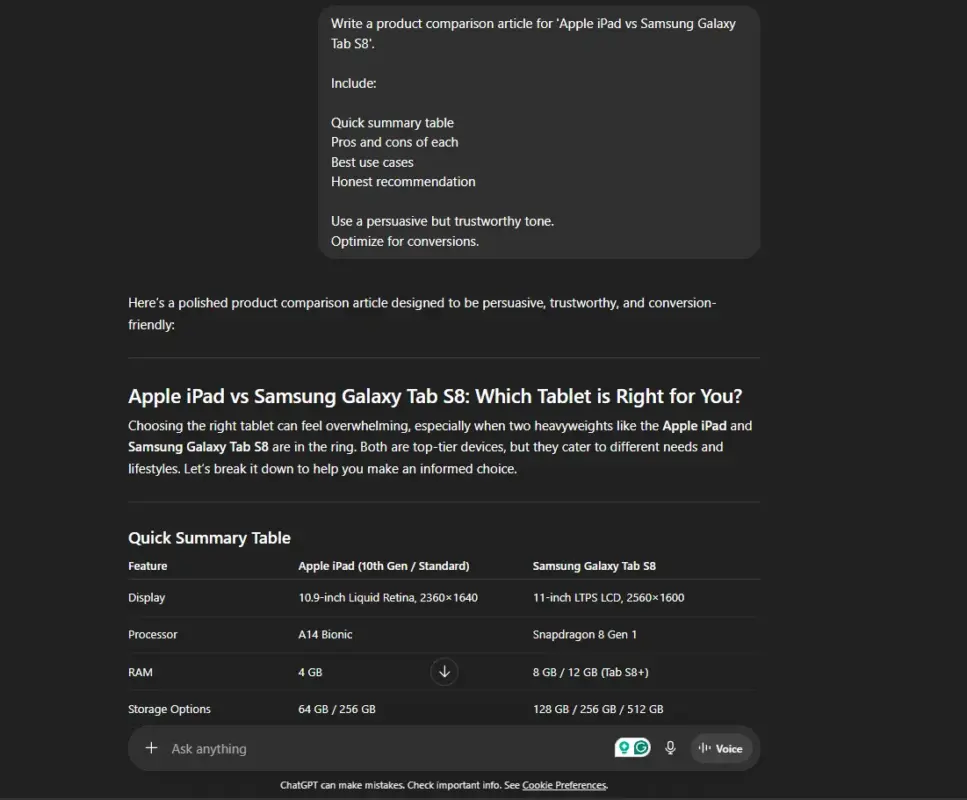
Affiliate marketing means earning a commission by recommending products and services through your content. ChatGPT speeds up the content production side considerably comparison articles, product reviews, email sequences, and landing page copy all come together faster.
The catch is that affiliate marketing requires traffic. Without an audience, a blog, an email list, a YouTube channel, or a social following, there’s nowhere to send the links. That’s why this method pairs well with Method 6, not as a standalone starting point.
ChatGPT’s practical role here: helping you produce enough content volume to build organic search traffic over time, and helping you structure comparison posts and buying guides that rank for commercial intent keywords. Amazon Associates is the most common starting point for beginners. Digital product affiliate programmes, including SaaS tools, online courses, and plugin marketplaces, typically pay 20 to 40% recurring commission, which is where the real money sits.
Commission rates vary widely by niche. Physical products pay 2 to 10%. The math only works if you’re in a niche with strong commercial intent and reasonable search volume.
Prompt Example:
"Write a product comparison article for '[Product A vs Product B]'.

Include:

- Quick summary table
- Pros and cons of each
- Best use cases
- Honest recommendation

Use a persuasive but trustworthy tone.
Optimize for conversions."
What’s Already Oversaturated (And What to Do Instead)
Here’s what most guides won’t tell you: several of the most-promoted ChatGPT income methods have already peaked.
- Prompt packs are the clearest example. In 2023, people were selling PDFs of ChatGPT prompts for $27 to $97 and doing well. Willingness to pay for prompt packs dropped from $27 to $9 to $3 as ChatGPT’s own memory feature and custom instructions made bespoke prompting easier for regular users. The margin essentially disappeared.
- Generic AI blog writing is under similar pressure. Clients noticed that the output from a $10-per-article AI writer and a $50-per-article one often looked identical. Rates have compressed on platforms like Fiverr for undifferentiated writing services. What still commands good rates: writing with demonstrated SEO results, writing in a specific technical niche, or writing that requires genuine expertise the client doesn’t have.
The real issue, and this is what most tutorials completely miss, is that ChatGPT amplifies what you already know. If you bring strong skills to it, it multiplies your output. If you bring nothing, it mostly makes mediocre content faster. Most people who try making money with ChatGPT and get nowhere are selling the AI’s output, not their own expertise, delivered more efficiently.
The methods that hold up are the ones where your judgment, positioning, or domain knowledge creates something clients can’t easily replicate themselves. Automation services, niche consulting, specialized content, these all pass that test.
How to Choose the Right Method for Your Situation
Start with what you already know, not with what sounds most profitable.
- If you write well, Freelance content and copywriting are your fastest path. Add a niche like SaaS, eCommerce, finance, or health, and you can charge meaningfully more than generalists.
- If you have a technical or process-oriented mindset, AI automation services fit your strengths. You don’t need to code, but you need to be comfortable scoping problems, building workflows, and troubleshooting when things break.
- If you have deep knowledge in a specific field, Prompt engineering consulting or custom GPT development for your own industry is the fastest route to a premium charge. A nurse building healthcare workflow tools, a marketer building campaign automation, a teacher building tutoring assistants, these work because the expertise is real.
- If you want passive income and have patience, Digital products or affiliate marketing paired with a niche blog make sense. Know the timeline is months, not weeks.
The fastest path to a first dollar is always active income: freelancing or a service. Passive income takes longer but compounds. Don’t start with passive income if you need results soon.
What You Need to Get Started
You don’t need much.
The free tier of ChatGPT is enough to test most methods. If you’re doing volume work, multiple articles per day, automation workflows, or custom GPT development, a ChatGPT Plus subscription at $20 per month is worth it. Access to GPT-4o and GPT-5 models makes a real difference in output quality on complex tasks.
Platform accounts to set up:
- Upwork or Fiverr profile for freelancing
- Amazon KDP, Gumroad, or Etsy for digital products
- A Stripe account for automation service clients
- A free WordPress.com or Substack for blogging
Your first-week checklist:
- Pick one method based on your existing skills
- Set up the relevant platform account
- Build one sample deliverable using ChatGPT, like a sample article, a demo automation, or a template to show potential clients or customers
- Send five to ten outreach messages or publish your first piece of content
- Get feedback before scaling anything
The setup is not the hard part. Picking a niche, getting specific, and staying consistent long enough to see results is the actual work.
Conclusion
Making money with ChatGPT is real, but it works differently than most guides suggest. The tool doesn’t generate income, your expertise, paired with the speed and scale ChatGPT provides, does.
Freelance content services and AI automation are the two strongest entry points for most freelancers, with the highest ceiling and the clearest path to a first client. Selling digital products and building custom GPTs are solid supplementary streams once you have momentum.
Start with one method, pick a niche you already know something about, and treat ChatGPT as a way to work faster, not as a shortcut around doing real work.
Frequently Asked Questions
Q1. Do I need to disclose that I use ChatGPT when selling services?
For most freelance services, there is no legal requirement to disclose AI use, but client contracts increasingly include clauses about it. Check your agreements carefully. For published content, some platforms and publications have their own policies. Transparency is the safer long-term choice: audiences in 2025 and 2026 largely expect AI to be part of the stack, and hiding it creates more trust issues than disclosing it.
Q2. How much does ChatGPT Plus cost, and is it worth paying for?
ChatGPT Plus costs $20 per month. The free tier is sufficient for casual testing. If you’re doing volume content work, building automation workflows, or developing custom GPTs, Plus gives you access to GPT-4o and GPT-5, which produce noticeably better output on complex tasks. For most income-focused use cases, it pays for itself quickly.
Q3. Can I make money with ChatGPT without any existing skills?
You can get started, but your ceiling will be lower without a background in something specific. The methods with the lowest skill bar, like prompt packs and generic content, are also the most oversaturated. Pick a skill to develop alongside ChatGPT: SEO writing, copywriting, workflow automation, or a specific industry niche. That combination is what separates consistent earners from people who try it once and quit.
Q4. Is the GPT Store a good way to make passive income?
Not reliably, not yet. OpenAI has not launched a direct payment system for GPT Store creators as of 2025. Creators who earn from custom GPTs do so by selling access independently through their own payment setup. The GPT Store helps with discovery, but it is not a passive income engine on its own for most creators.
Q5. How do I stop my ChatGPT-assisted work from getting flagged as AI-generated?
Edit every output before submitting. ChatGPT’s default tone is recognizable by formal, symmetrical sentence lengths and certain repeated phrases. Read the draft aloud, rewrite anything that sounds stiff, add your own examples, and cut anything generic. The human editing layer is the actual service most clients are paying for, whether they realize it or not.


2 responses
Very Informative and Helpful for students looking for a way to earn
Thank you so much for your kind words! I’m delighted to hear that you found the information helpful. If you have any more questions or if there’s anything specific you’d like to know more about, feel free to ask. Your feedback is truly appreciated!”