
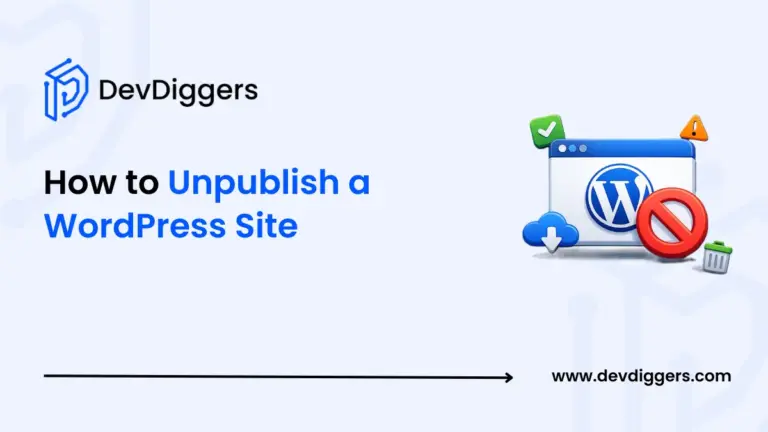
Unpublishing a WordPress site takes less than five minutes if you pick the right method. The wrong one can quietly damage your search rankings or leave your site stuck in a broken state long after you think you’ve fixed it.
Most guides walk you through the steps but skip the part that actually matters: what each method signals to Google, and why one wrong checkbox can haunt you for weeks.
This post covers every working method, the SEO consequences of each, a fix for the most common mistake we see in support, and a built-in WooCommerce option almost nobody knows exists.
What “Unpublishing” Actually Means in WordPress
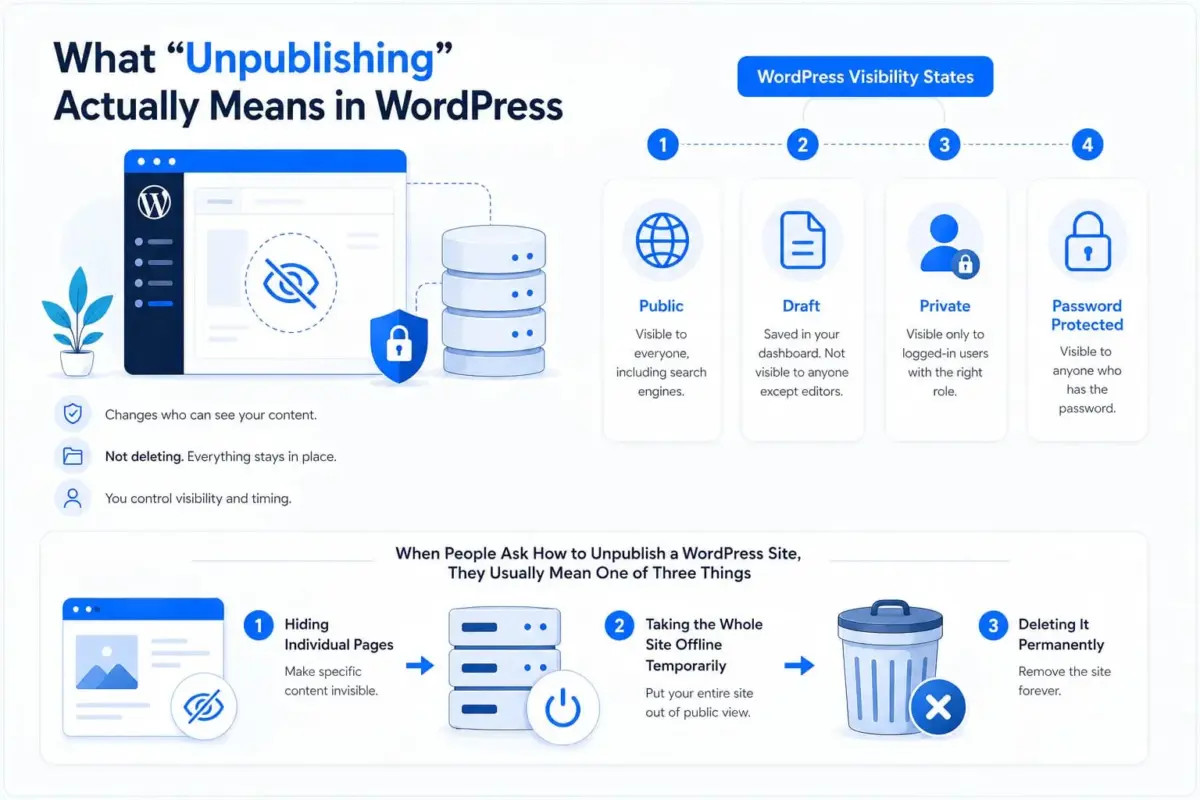
Unpublishing a WordPress site means changing its visibility so that visitors, search engines, or both can no longer access your content. It does not mean deleting your site. Your files, posts, pages, and database stay exactly where they are. You are simply controlling who can see them and when.
WordPress gives you four visibility states for any piece of content:
- Public: live and visible to everyone, including search engines
- Draft: saved in your dashboard but not visible to anyone except logged-in editors
- Private: visible only to logged-in users with the right role
- Password Protected: visible to anyone who has the password
When people ask how to unpublish a WordPress site, they usually mean one of three things: hiding individual pages, taking the whole site offline temporarily, or deleting it permanently. Each of those needs a different approach.
Back Up Before You Do Anything Else
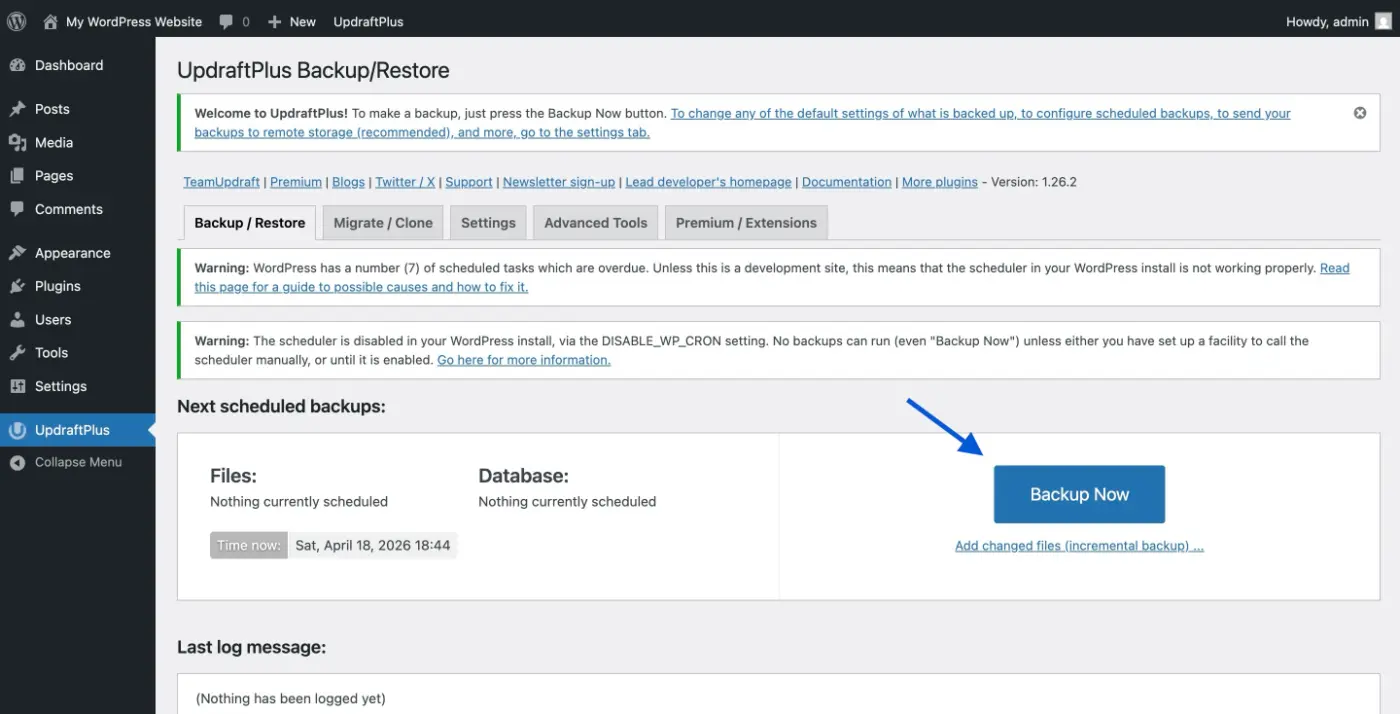
Before you change a single setting, take a full backup of your site. This means your files and your database. If something goes wrong during any of the steps below, a backup is the only thing that gets you back to where you started.
The easiest way to do this in WordPress is with UpdraftPlus. Install it, run a manual backup, and download the files to your computer or a cloud storage location. The whole process takes about three minutes.
If you are running WooCommerce, also follow our guide to back up your WooCommerce database before making any changes to the site. Order data and customer records do not always survive a poorly handled rollback.
Worth doing once. Never fun to skip.
How to Temporarily Unpublish a WordPress Site
The fastest and most search-engine-safe way to take your whole WordPress site offline temporarily is to use a maintenance mode plugin. This keeps your files intact, shows a clean page to visitors, and, when set up correctly, tells Google to come back later rather than removing your pages from its index.
Here are the steps using SeedProd, which has a free version and takes about five minutes to configure:
- Go to Plugins > Add Plugin in your WordPress dashboard.

- Search for SeedProd and click Install Now, then Activate.
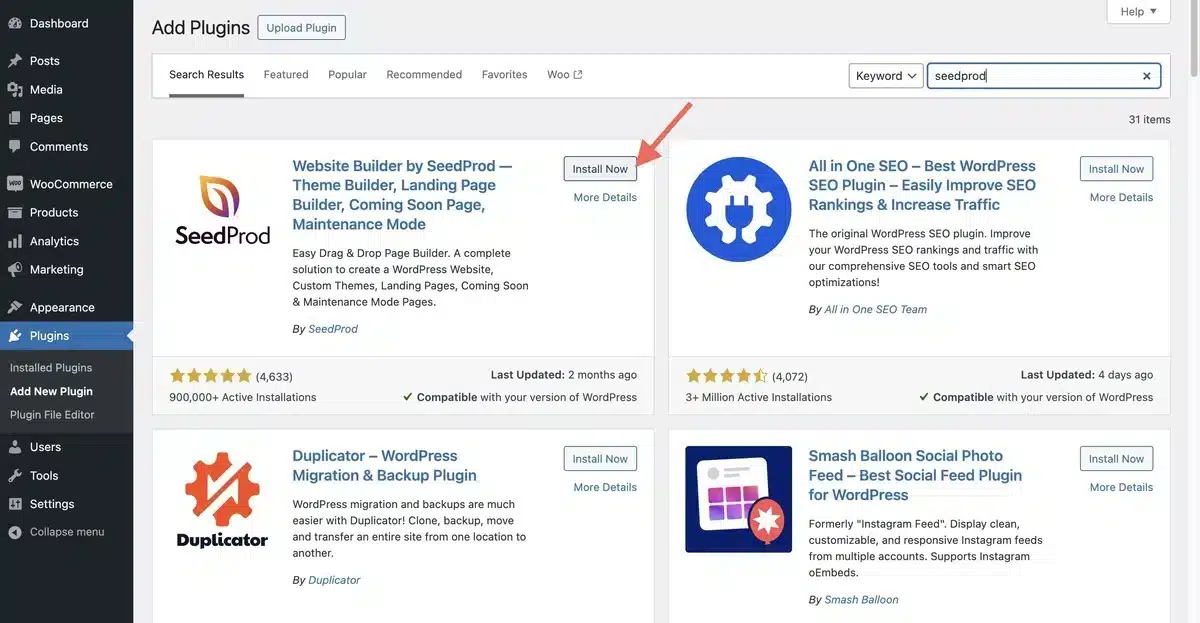
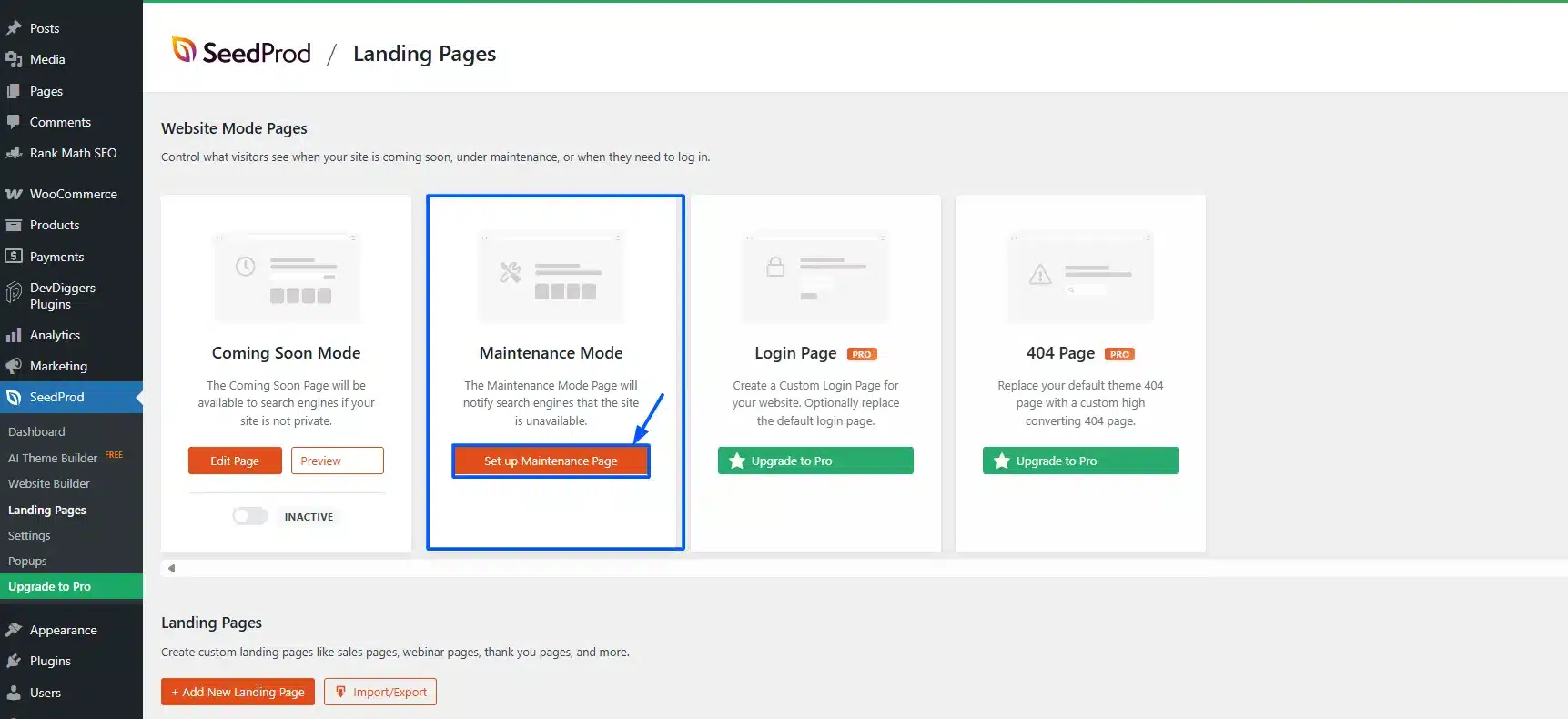
- In the left menu, go to SeedProd > Landing Pages.
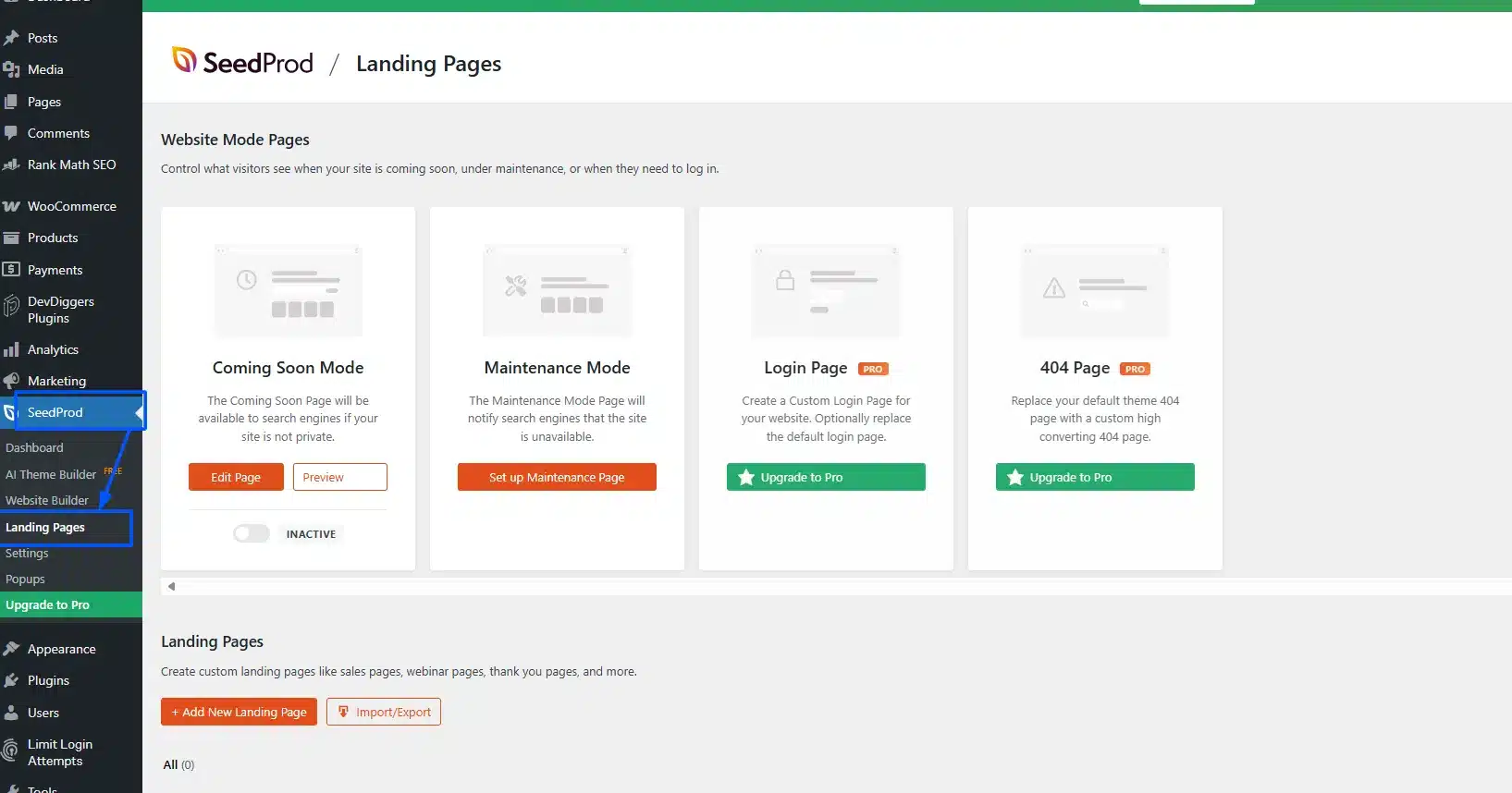
- Under the Maintenance Mode section, click Set Up a Maintenance Page.
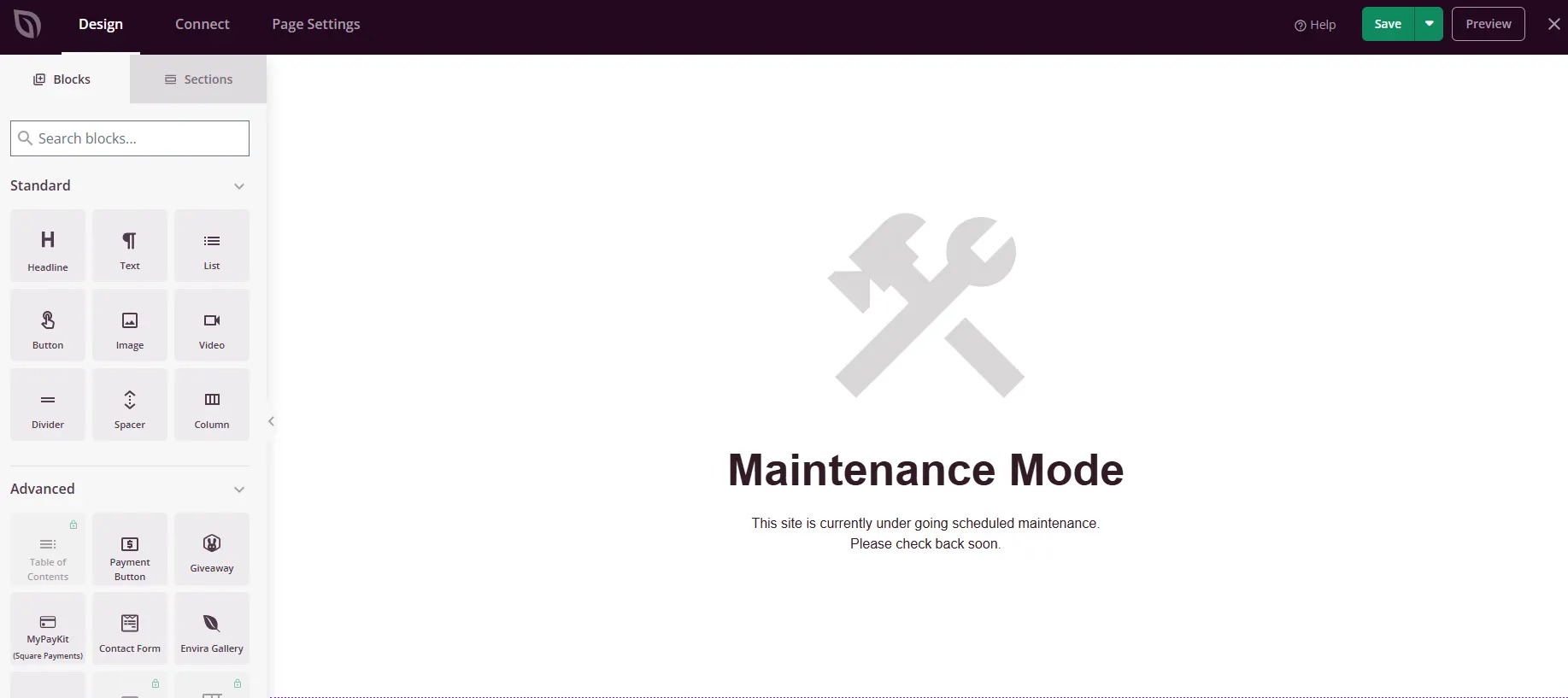
- Choose a template from the library (or start blank)and edit the page title and message to explain why the site is down.
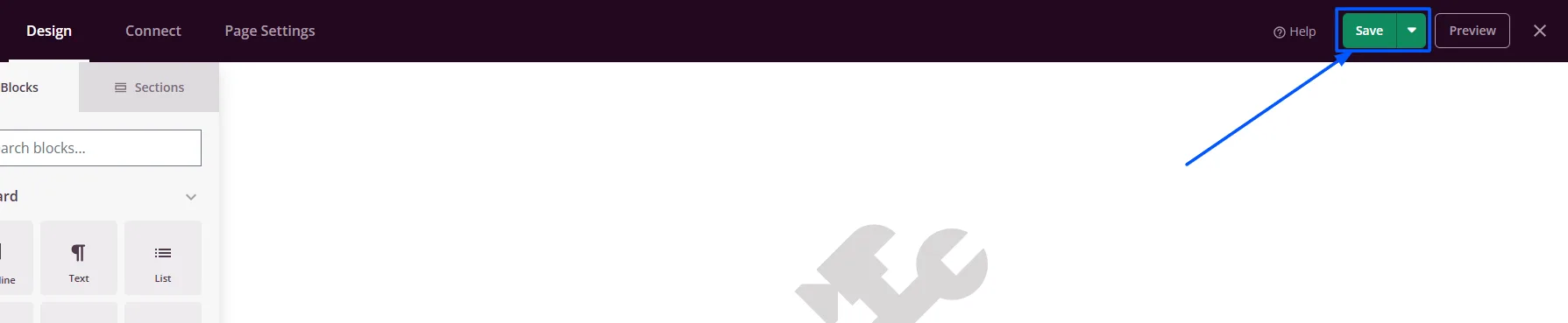
- Click Save when done.
- Back on the Landing Pages screen, click the Inactive toggle under Maintenance Mode. It will turn green and become Active.
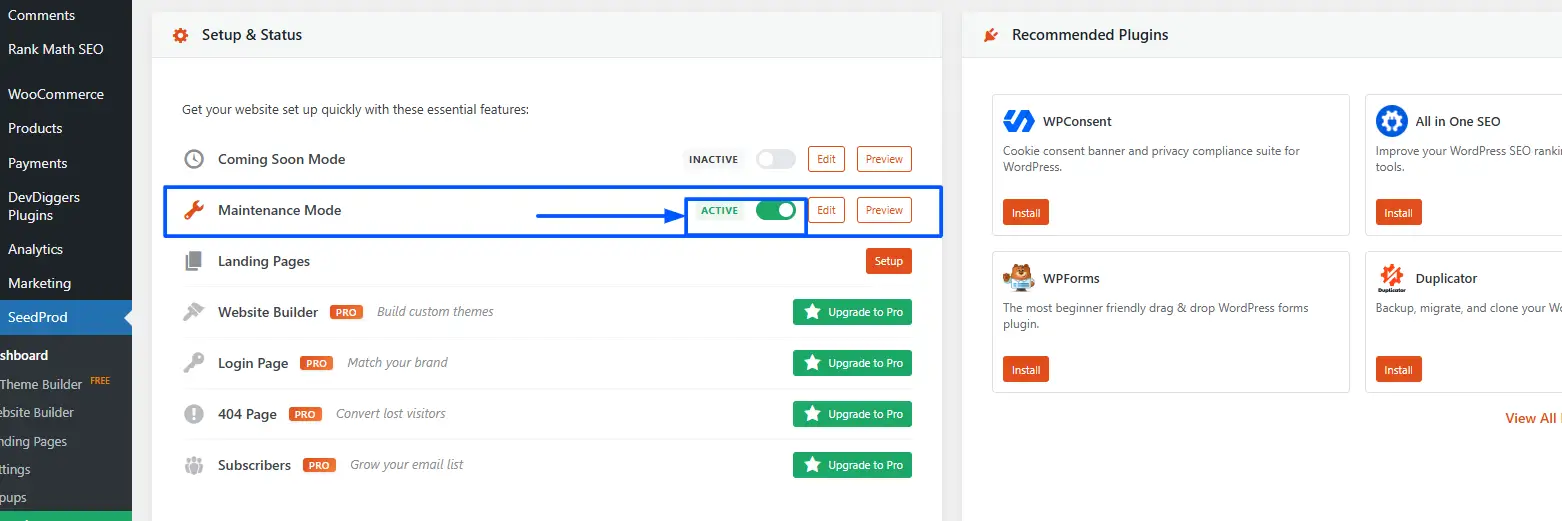
To bring the site back, just click that toggle again to set it to Inactive.
Maintenance Mode vs. Coming Soon: Which One Should You Use?
This is where most guides gloss over something important. These two modes send different HTTP status codes to Google, and that difference affects your rankings.
Maintenance Mode sends a 503 Service Unavailable code. This tells Google your site is temporarily down and that crawlers should come back later. Your pages stay indexed. According to Google’s own guidance, brief 503 downtimes of a few hours are not a problem for rankings.
Coming Soon sends a 200 OK code. This tells Google the page it found is the actual page to index, meaning your coming soon page could start ranking instead of your real content. Use this only for brand-new sites that have never been indexed before.
If your site is already live and you need to take it down temporarily, always choose Maintenance Mode, not Coming Soon.
How to Check It’s Actually Working
Open an incognito window in your browser and visit your site. You should see the maintenance page, not your normal homepage. If you still see your normal site, check that the toggle in SeedProd is green, not grey.
To confirm the correct HTTP status code is being sent, paste your URL into a free tool like httpstatus.io. It should return a 503 response. If it returns 200, your plugin is not configured as maintenance mode, it may have defaulted to Coming Soon mode.
How to Unpublish Individual WordPress Pages or Posts
You do not always need to take the whole site down. If you just need to hide one page or post, WordPress handles this without any plugin.
To unpublish a single page:
- Go to Pages > All Pages (or Posts > All Posts for blog posts)
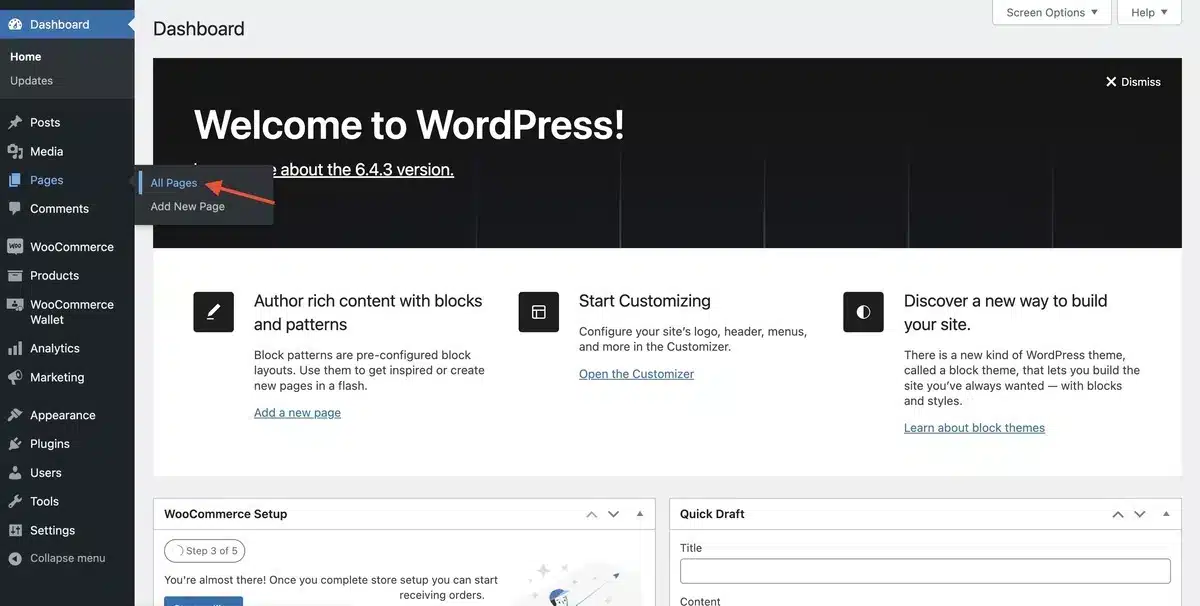
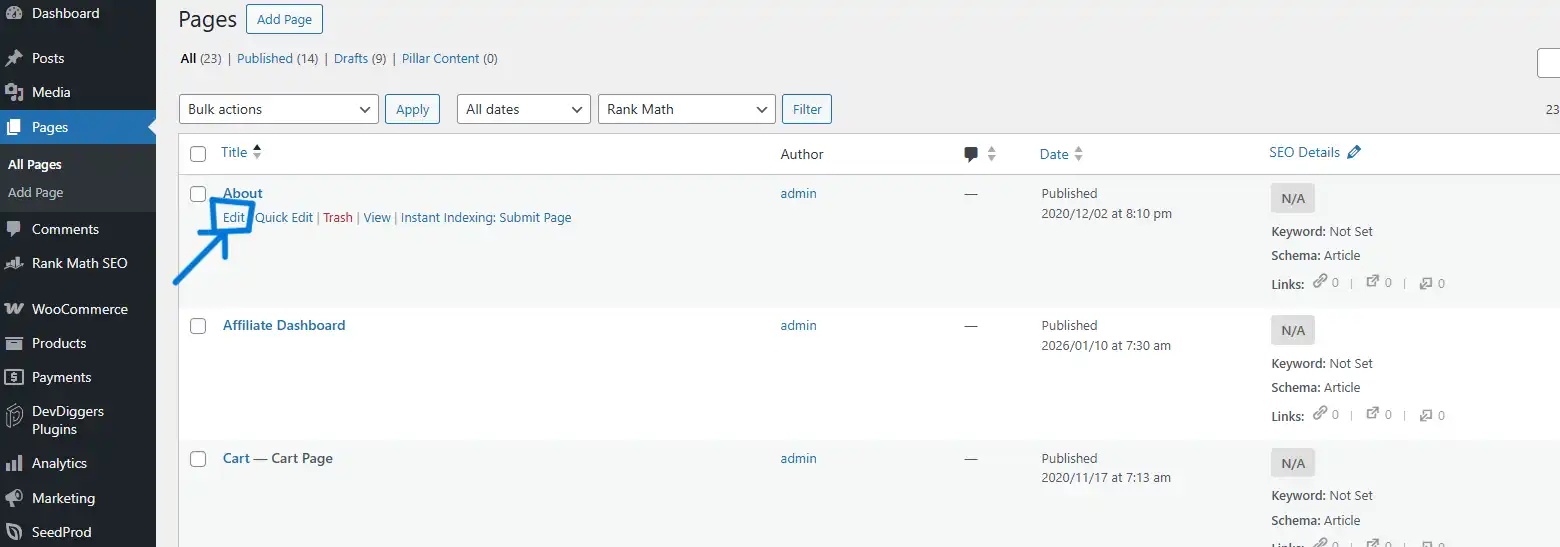
- Hover over the page you want to hide and click Edit.
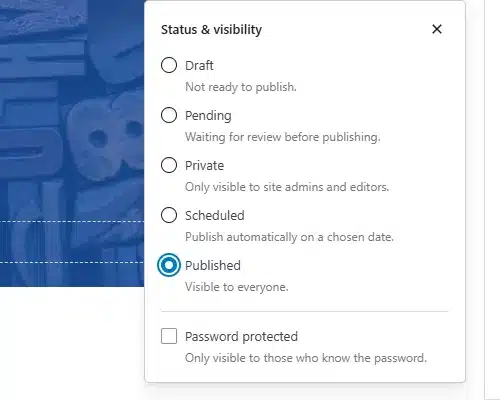
- In the right sidebar, find the Status & Visibility panel
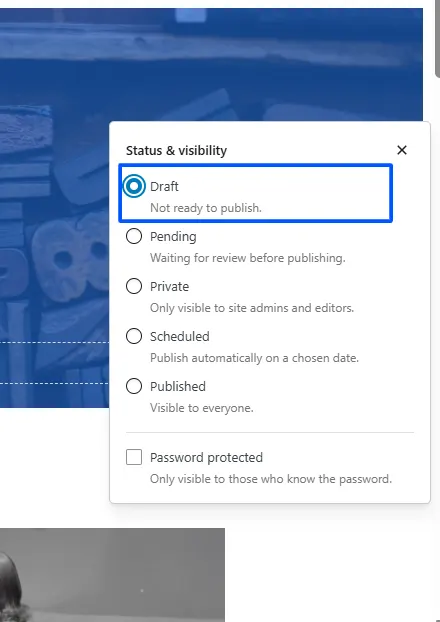
- Set to Draft
- Click Save
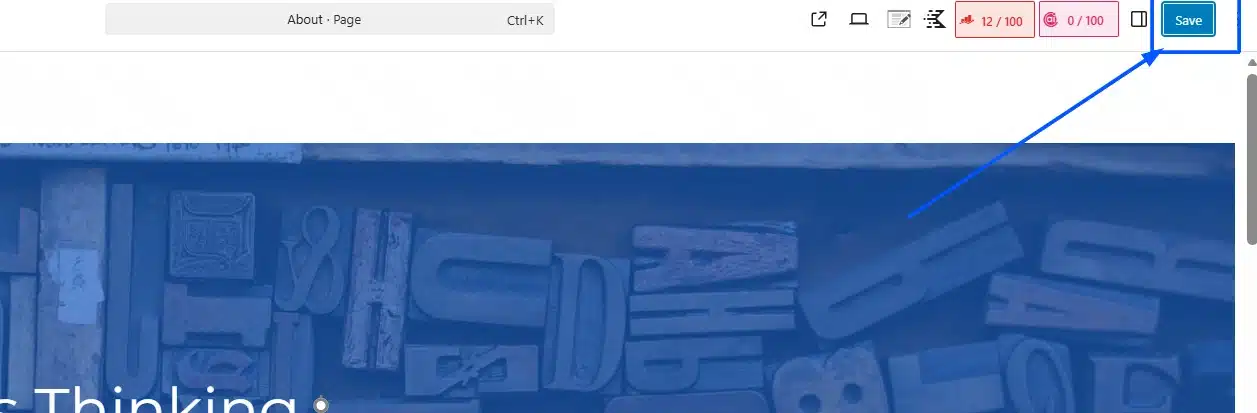
The page is now removed from public view. It stays in your database and can be republished at any time.
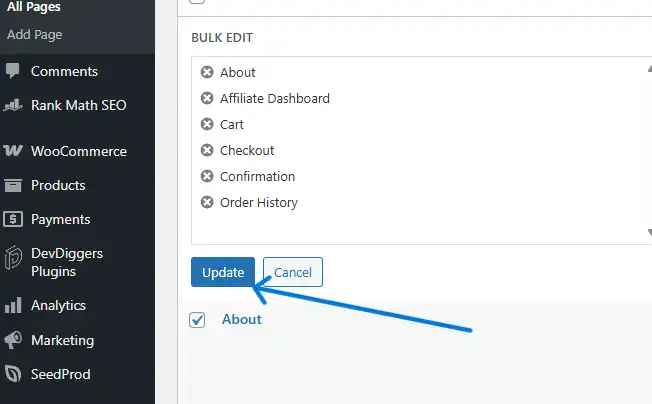
To unpublish multiple pages at once:
- Go to Pages > All Pages
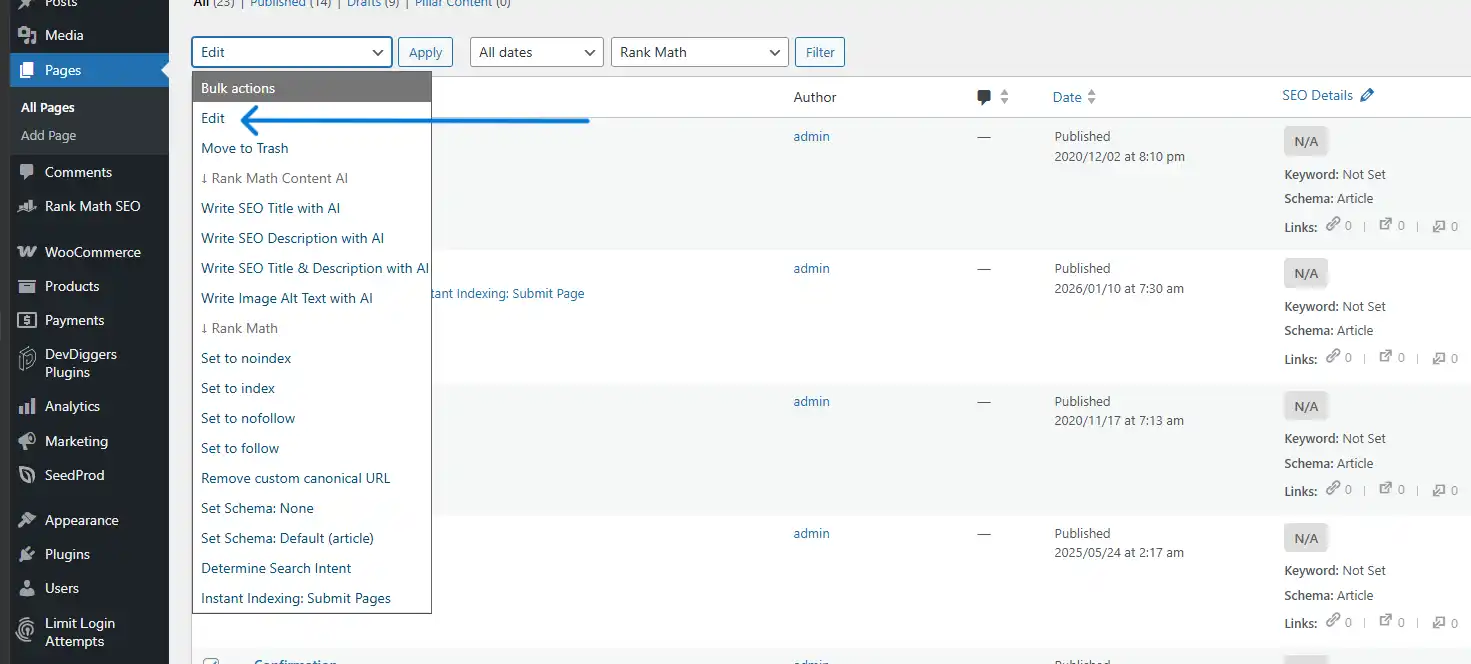
- Check the box next to each page you want to hide, and open the Bulk Actions dropdown and select Edit
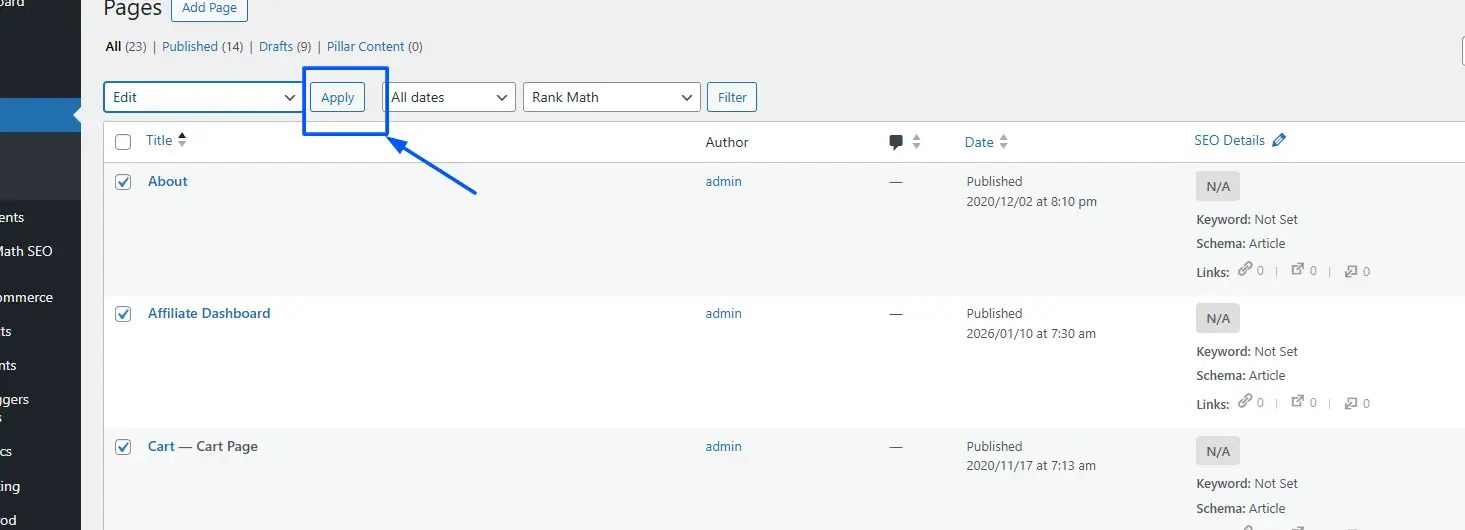
- Click Apply
- In the bulk edit panel, set Status to Draft
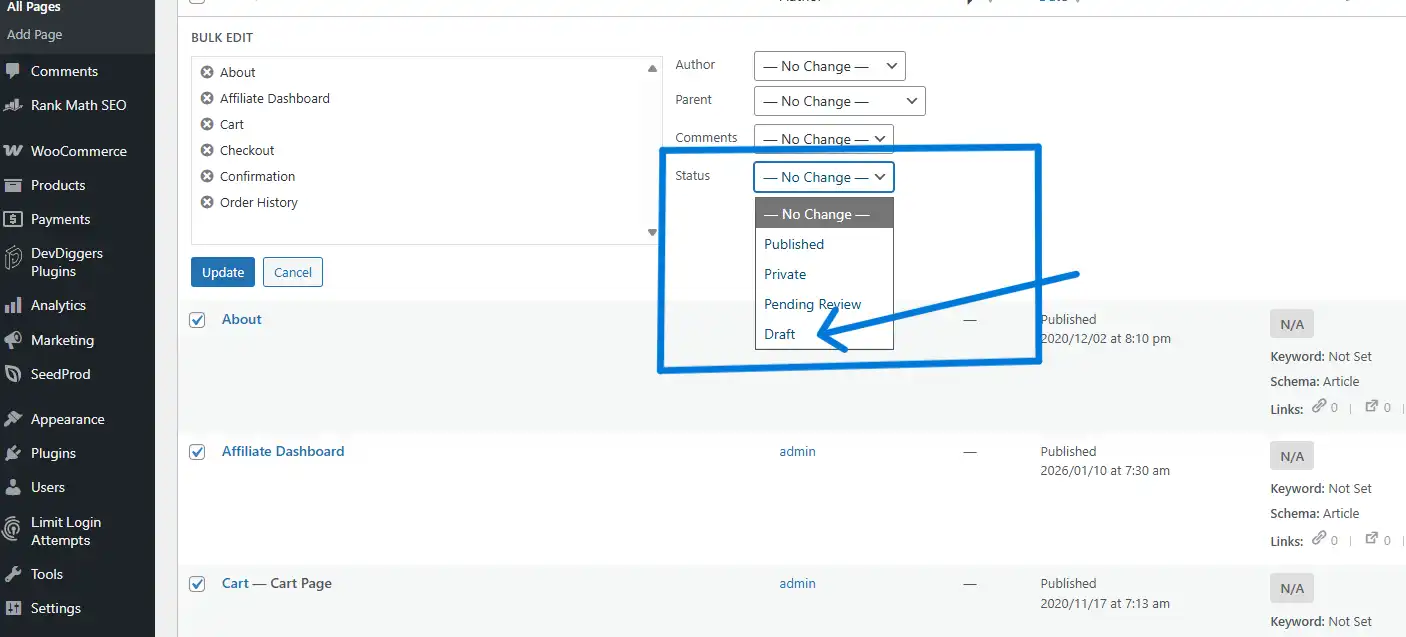
- Click Update
Making a Page Private or Password Protected
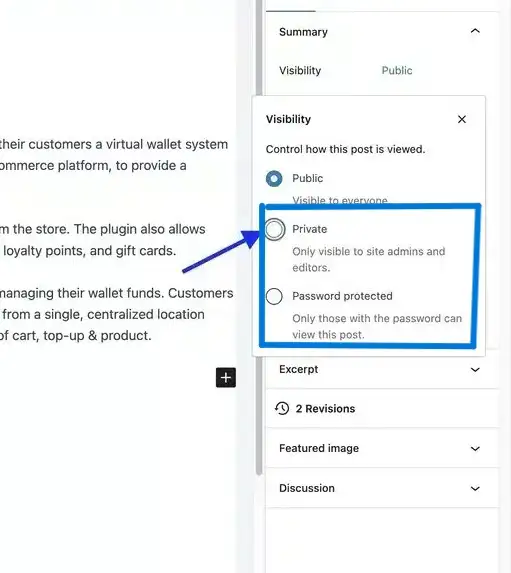
Switching to Draft hides a page from everyone. But sometimes you want to share it with specific people before it goes live. WordPress has two options for that.
Private makes the page visible only to logged-in users with Editor or Administrator roles. Anyone else who tries to access it gets a 404 error.
Password-protected lets anyone view the page as long as they have the password. This works well for sharing a draft with a client or making a page visible to a small group without full login access.
To set either: open the page editor, go to Status & Visibility, click Public, and change it to Private or Password Protected. If you choose password-protected, enter a password and click Update.
One thing to know: A WordPress password-protected page still sends a 200 HTTP status code. Google can technically crawl the login screen, but it cannot read the content behind it. For most purposes, that’s fine. For a full site lockdown, it’s not the right tool, use maintenance mode instead.
The Setting That Trips People Up: Search Engine Visibility
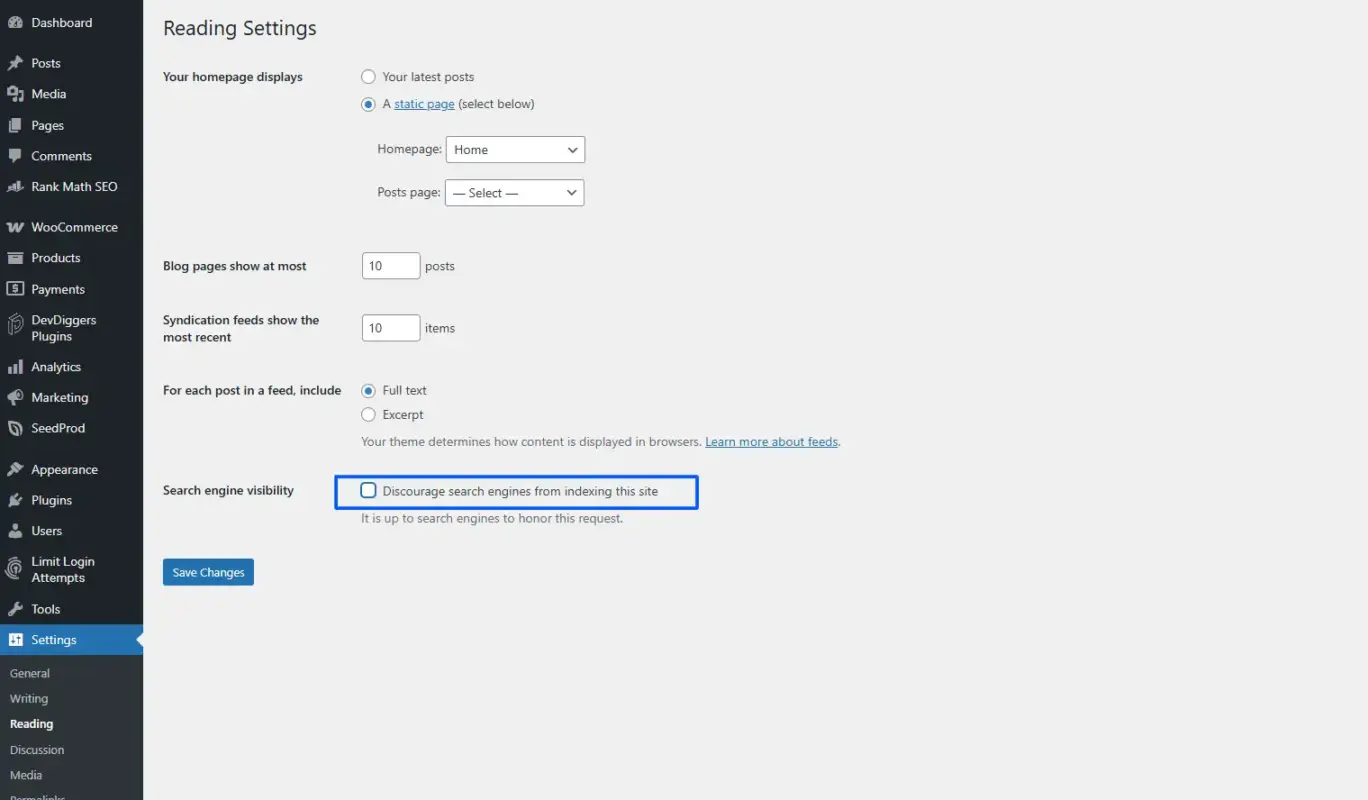
There is a built-in WordPress setting under Settings > Reading called Search Engine Visibility. It has a checkbox that reads: “Discourage search engines from indexing this site.”
This sounds like a safe way to hide your site. It is not.
Here’s what it does: it adds a noindex directive to your pages and sends a signal in your robots.txt file asking search engines not to index your content. Google usually respects this, eventually. But it does not send a 503 status code. Visitors can still see your site. And Google may take days or weeks to remove your pages from search results once you uncheck them.
The bigger problem is what happens after you relaunch. This is something we see often in support: a site goes through a redesign, maintenance mode is switched off, everything looks fine, but the Search Engine Visibility box was never unchecked. The site is visible to visitors, but Google is still being told not to index it. Traffic drops, and nobody can figure out why.
After any maintenance period, go to Settings > Reading and confirm the Discourage search engines box is unchecked. Then save the page. It takes one second, and it’s easy to miss.
When should you use this setting at all? Only when you’re building a brand new site and want to keep it hidden from Google during development. Once the site launches, uncheck it immediately. Do not use it as a maintenance mode substitute for an established site.
Unpublishing a WooCommerce Store: The Built-In Option Most People Miss
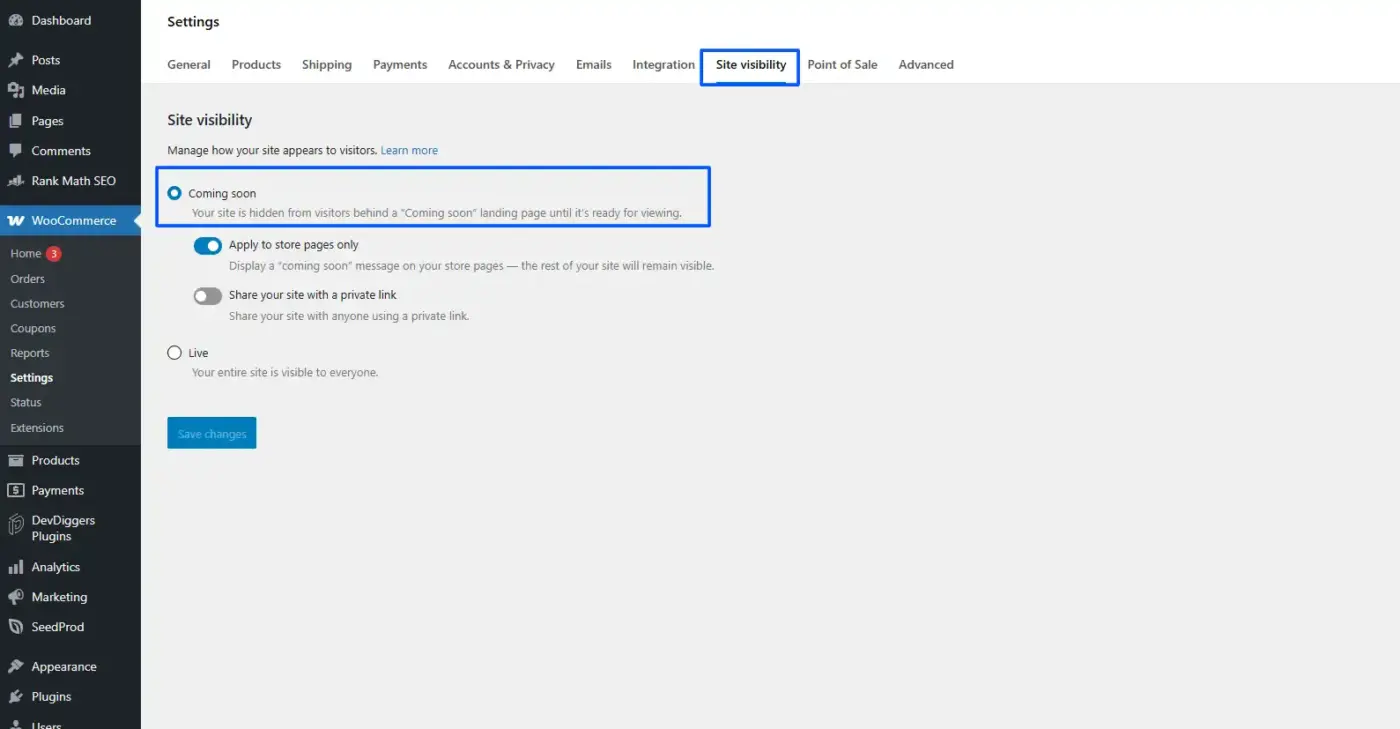
If your site runs WooCommerce, you have an option that most store owners don’t know exists: a built-in Coming Soon mode that hides your shop from public visitors without touching the rest of your WordPress site.
To find it, go to WooCommerce > Settings and look at the top of the General tab. You’ll see a Site visibility option with a toggle for Coming Soon mode. Switch it on and save.
When this is active, visitors to your shop see a simple coming soon message. You and logged-in admins can still access everything. The rest of your WordPress site, like blog posts, pages, and menus, remains fully accessible.
This is particularly useful when you need to do a payment gateway switch, a major product catalogue rebuild, or a shipping zone overhaul. You can work on the store without interrupting the rest of the site, and without installing a separate plugin.
One limitation worth knowing: this WooCommerce coming soon mode sends a 200 status code, not a 503. It’s fine for short-term work on a store that’s not yet live. If your store is already established and ranking, and you’re taking it offline for more than a day or two, use a proper maintenance mode plugin with a 503 response instead.
If you need help with more advanced WooCommerce configuration during a rebuild, our WooCommerce development services cover exactly that.
Also worth reviewing before any major store changes: our WooCommerce security checklist to make sure your setup is solid before you go back live.
How to Permanently Delete a WordPress Site
Permanent deletion removes your site’s files and database from your hosting server. There is no undo. Only do this if you’re finished with the site.
Most hosting control panels (cPanel, Plesk, or similar) give you a one-click delete option inside the WordPress management area. Log in to your hosting dashboard, find the site, and look for a Delete or Remove option. Confirm when prompted.
If you want to do it manually:
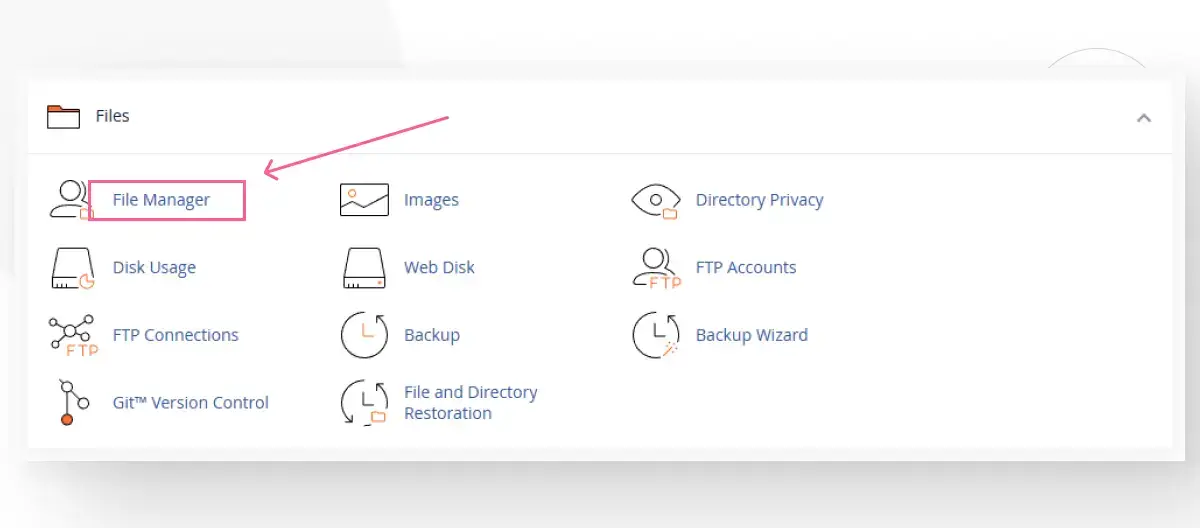
- Log in to your hosting control panel and open File Manager
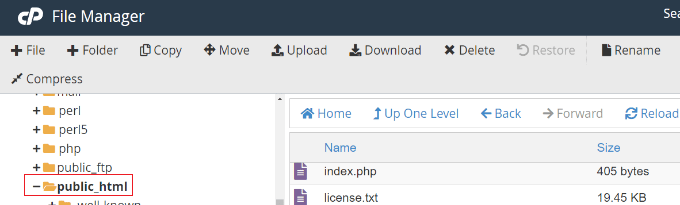
- Navigate to the public_html folder (or the subfolder where your site lives)
- Select all files in the folder and delete them and then go to your hosting panel’s Databases section and delete the WordPress database
After deletion, your domain name still exists. Visitors will see a blank page or a hosting default page, not an error. If you want the domain to point somewhere else, update your DNS settings.
One practical note: deleting the WordPress files does not cancel your hosting plan. If you no longer need the hosting, cancel that separately.
The SEO Impact of Each Method: A Quick Comparison
Not all unpublishing methods treat Google the same way. Here’s a clear breakdown:
| Method | HTTP Code Sent | What Google Does | Safe Duration | How to Undo |
|---|---|---|---|---|
| Maintenance Mode (plugin) | 503 | Holds rankings, crawls again later | Days to weeks | Toggle off in the plugin |
| Coming Soon (plugin) | 200 | May index the coming soon page | New sites only | Remove password in the editor |
| Switch to Draft | None (page removed) | Eventually de-indexes the page | Short-term only | Switch back to Published |
| Search Engine Visibility | noindex signal | Stops indexing over time | Development only | Uncheck the box in Settings > Reading |
| Password Protection | 200 | Can crawl the login screen, not the content | Fine for restricted content | Requires a full reinstall |
| Permanent Deletion | None (site gone) | Remove the password in the editor | Permanent | Drops all pages from the index |
The Key Takeaway: If your site is already ranking, and you need to take it offline for any length of time, maintenance mode with a 503 response is the only method that actively protects your rankings. Google’s own guidance confirms that short 503 downtimes do not trigger ranking drops. Extended use of any other method carries real risk.
Conclusion
Unpublishing a WordPress site is straightforward once you know which method fits your situation. For temporary downtime, maintenance mode with a proper 503 response is the right call. For individual pages, switching to draft is fast and reversible.
For WooCommerce stores, the built-in coming soon mode handles short-term work cleanly. And for permanent removal, delete the files and database through your hosting panel, but only after a backup.
The one thing most people miss: always check the Search Engine Visibility box in Settings > Reading after any maintenance period. One unchecked box can quietly block Google from seeing your site for weeks without any obvious sign that something is wrong.
If you need hands-on help setting any of this up, our WordPress development services team can handle it for you.
Frequently Asked Questions
Q1. Will taking my site offline in maintenance mode affect my Google rankings?
Not if you use a plugin that returns a 503 Service Unavailable status code. A 503 tells Google the downtime is temporary and that it should return later rather than remove your pages from its index. Google’s own team has confirmed that short periods of 503 downtime do not cause ranking drops. Extended downtime of several weeks is a different matter, so plan to keep maintenance windows as short as possible.
Q2. What is the difference between unpublishing and deleting in WordPress?
Unpublishing hides your content from public view while keeping all files and data intact on your server. You can republish at any time. Deleting removes the files and database permanently. There is no built-in restore option after deletion unless you have a backup.
Q3. Can I unpublish a WordPress site without a plugin?
Yes, for individual pages and posts. Switching a page to Draft status or marking it Private requires no plugin and takes about 30 seconds. For taking the entire site offline, the built-in Search Engine Visibility setting in Settings > Reading is the only plugin-free option, but it does not hide the site from human visitors and does not send a 503 to Google, so it is not recommended for established sites.
Q4. Why is my WordPress site still showing a coming soon page even after I disabled maintenance mode?
Two common causes. First, your browser may be serving a cached version of the page. Open the site in an incognito window to check. Second, if you used a different plugin or method to set up the coming soon page, disabling one plugin does not disable another. Check all active plugins for anything related to maintenance mode, coming soon, or site visibility. Also, check the Search Engine Visibility setting in Settings > Reading.
Q5. Does switching a WordPress page to Draft remove it from Google search results?
Yes, over time. When a page is switched to Draft, it becomes inaccessible. The next time Google crawls that URL and finds the content gone, it will remove the page from search results. This can take anywhere from a few days to several weeks, depending on how often Google crawls your site. If you plan to republish the page with the same URL, do so as quickly as possible to avoid losing rankings.