You install CodeCanyon WordPress plugins by downloading the zip file from your Envato account and uploading it under Plugins > Add Plugin. You update them the same way or with the Envato Market plugin.
We ran every WordPress step in this guide on a WordPress 7.1.3 test site in October 2026. The Envato Market plugin version 2.0.14 went through the same site, and we used a small sample plugin for the uploads.
You get four install steps, a second route by file manager, two ways to update and fixes for the errors we triggered on purpose. A short section covers license codes for DevDiggers plugins.
What You Get When You Buy CodeCanyon WordPress Plugins
A CodeCanyon plugin arrives as a zip file that you download from your Envato account and install yourself. It does not come from the WordPress.org plugin directory like most free plugins do. WordPress therefore offers no one-click install or normal update button for it.
We saw this on our test site. A plugin that we uploaded from a zip showed an empty Automatic Updates cell on the Plugins screen. A directory plugin next to it showed an Enable auto-updates link.
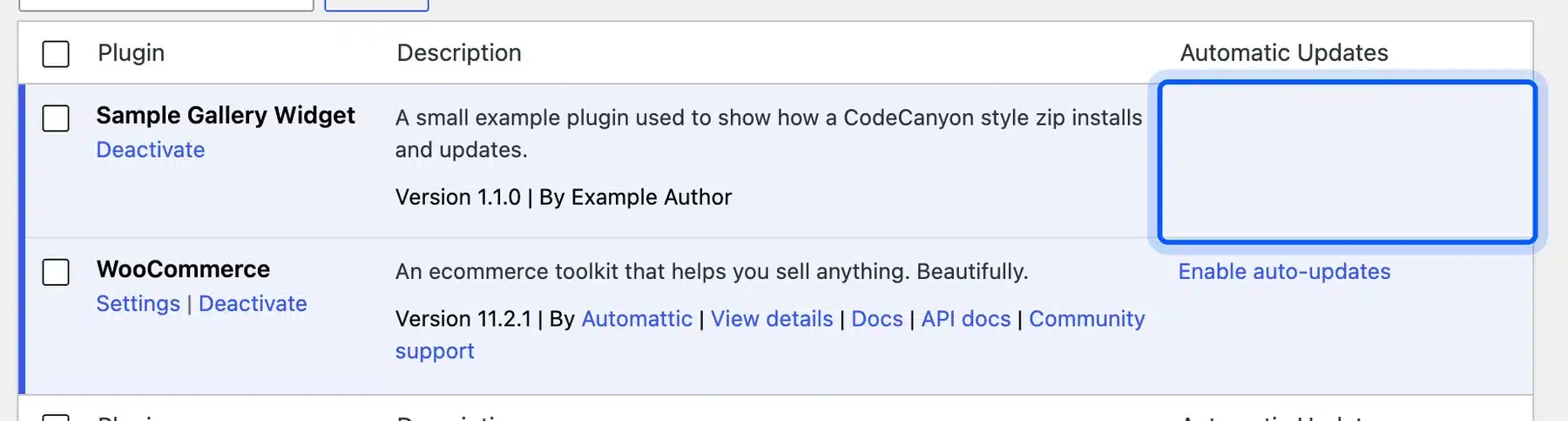
That gap decides how you keep the plugin current. You either upload each new zip by hand or connect your Envato account to the Envato Market plugin. Both routes are covered below, with the steps we tested.
Have three things ready before you start:
- A WordPress admin login: You need it for the Plugins screen.
- Your Envato login: The download and the purchase code both live there.
- A recent backup: Updates change files. Keep a copy you can restore.
Note: This guide covers plugins you bought. Do not install copies of paid items from other sites. They can carry code you never reviewed.
How to Install CodeCanyon WordPress Plugins
You install CodeCanyon WordPress plugins in four short steps. First download the file from your Envato account and check what is inside the zip before you touch WordPress. Then upload it under Plugins > Add Plugin and click Activate once WordPress has installed it.
Step 1: Download the Plugin From Your Envato Account
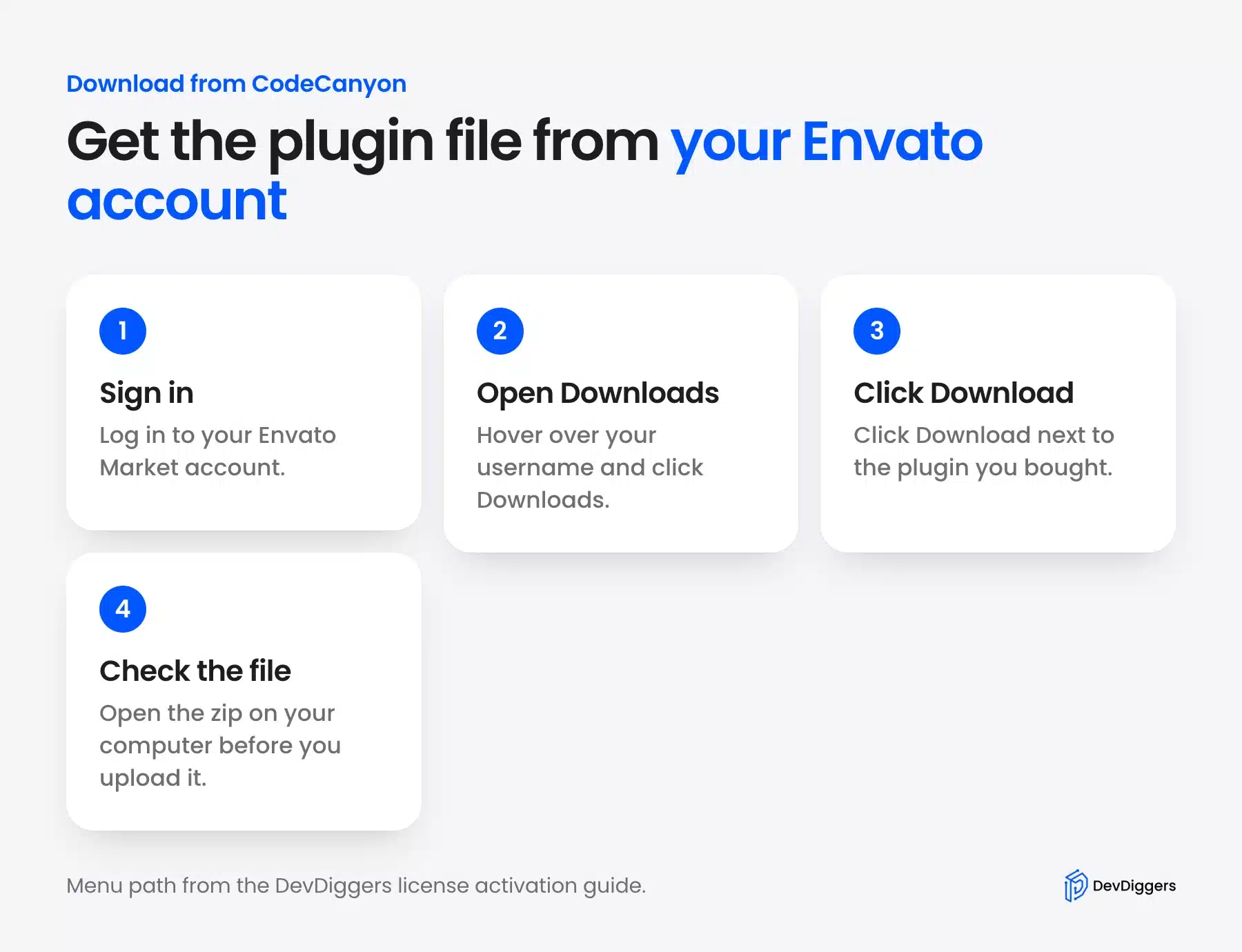
Sign in to your Envato Market account, open Downloads from the menu under your username and click Download next to the plugin. The DevDiggers license activation guide lists that exact path. It is the same screen where you find your purchase code later.
The Downloads screen sits behind your Envato login. We describe it and do not show it. Save the file to a folder you will find again.
Do not rename it.
Download the newest file each time you update. Keep the old zip until the new version runs without problems.
Step 2: Check the File Before You Upload It
Open the zip on your computer before you upload it. A plugin zip holds one plugin folder with a PHP file inside. A full package holds documentation and the plugin zip as a second file.
Authors package their items differently. A full package cannot install as it is, because WordPress looks for a plugin header in the top level of the folder. If you see a documentation folder next to a second zip, upload the inner zip.
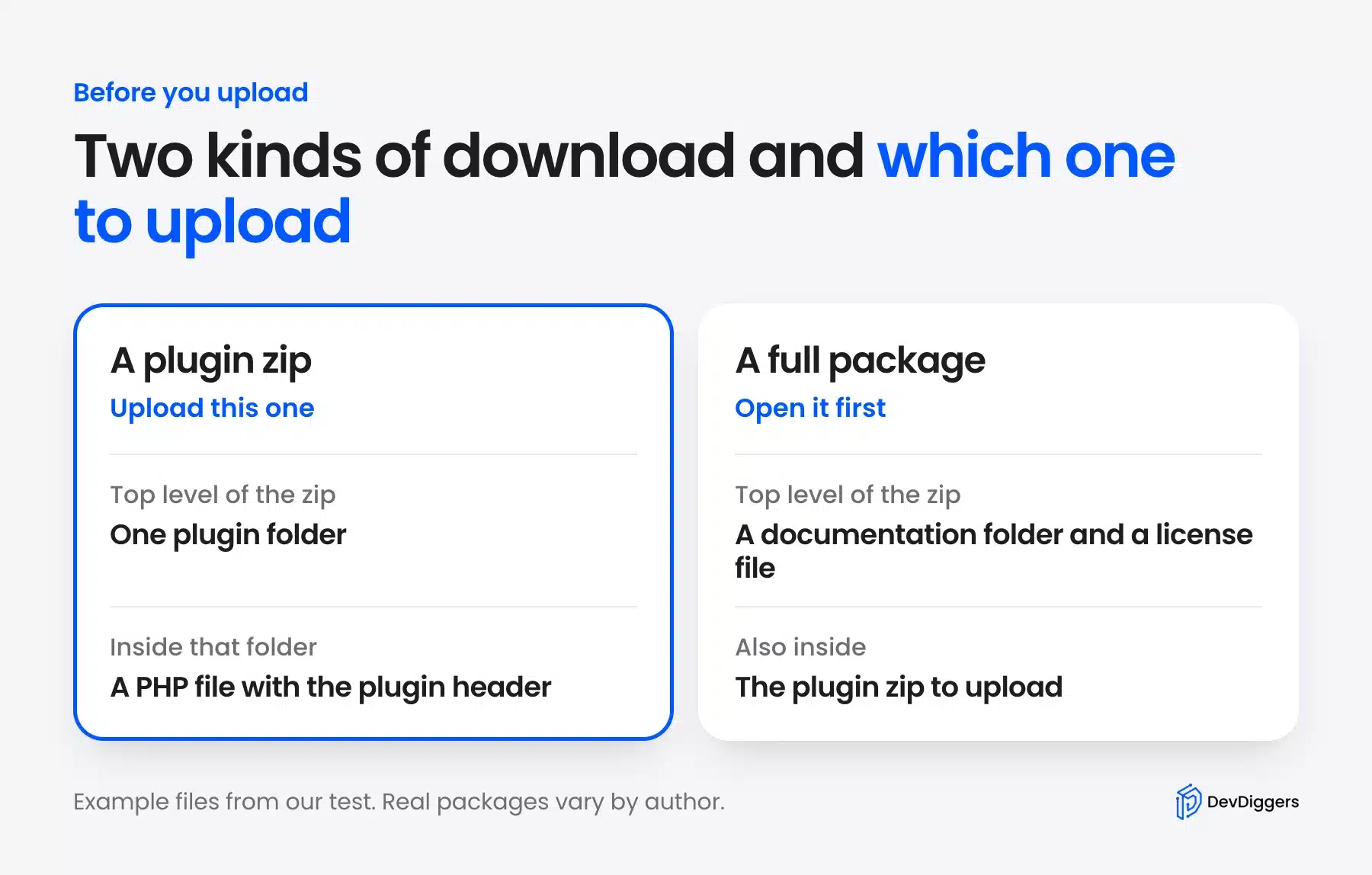
We tested the wrong choice on purpose. We built an example package with a documentation folder, a license file and the plugin zip inside. Uploading that outer file failed, and the error is shown in the troubleshooting part below.
Step 3: Upload the Plugin in WordPress
Go to Plugins > Add Plugin and click Upload Plugin at the top of the screen. Choose the zip, check that the file name shows beside the button and click Install Now. WordPress unpacks the file and installs the plugin into your plugins folder.
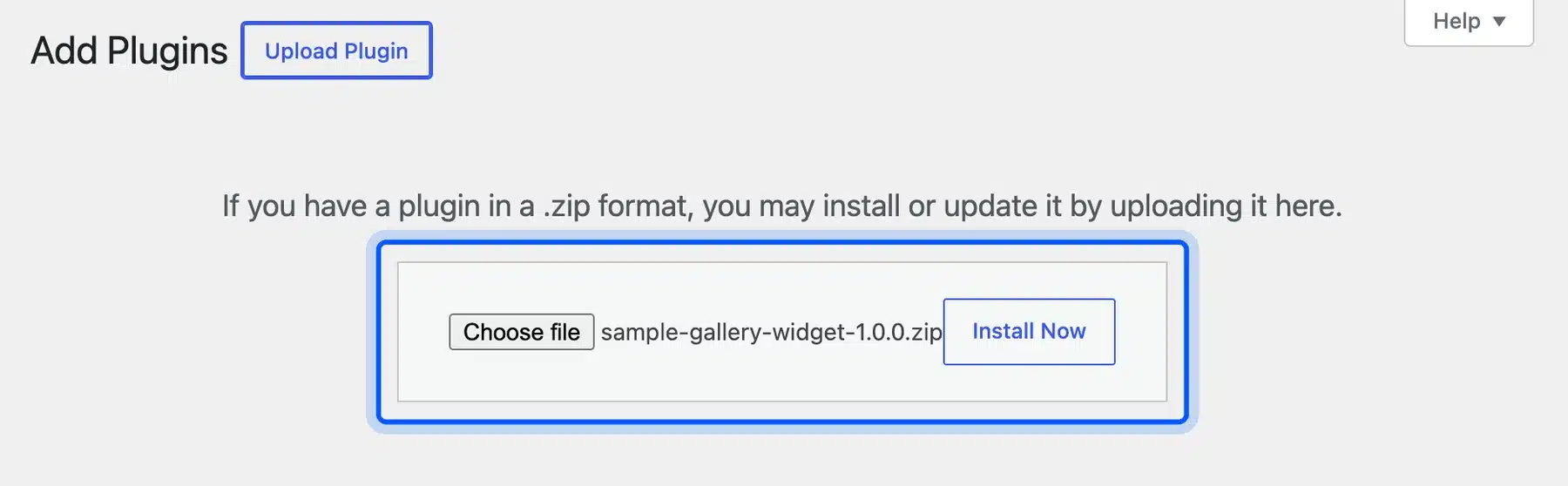
Your host can set a limit on file size. Some plugins bundle demo files and the zip can grow large. If WordPress refuses the file, jump to the upload limit fix below.
Step 4: Activate the Plugin and Enter the License Code
After the upload, WordPress shows “Plugin installed successfully” with an Activate Plugin button. Click it. The plugin is installed but does nothing until you activate it, and it may ask for a license code on its own settings screen.
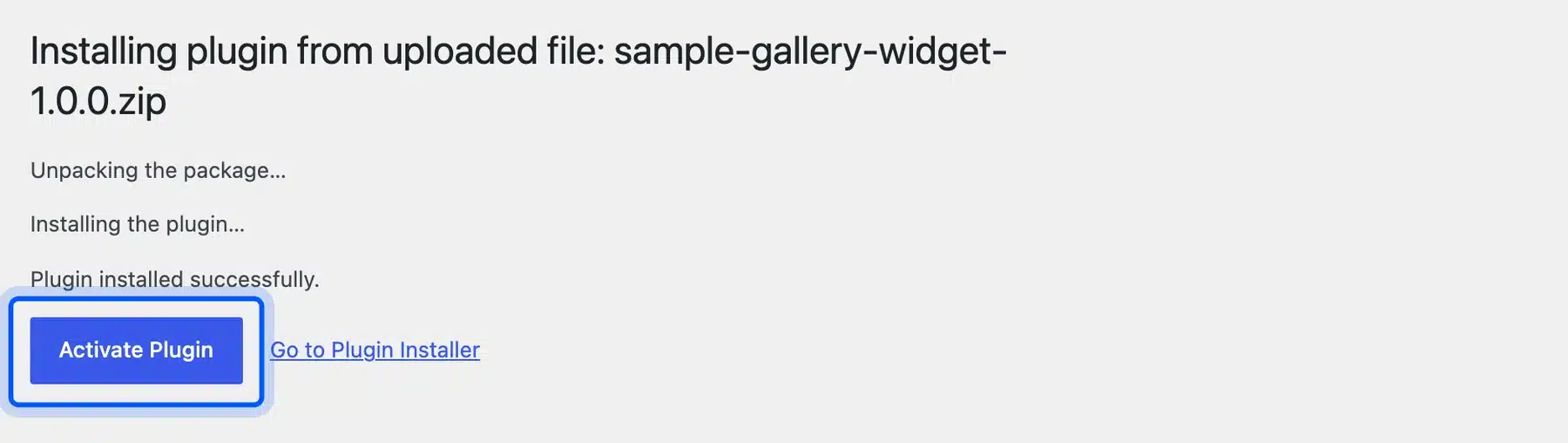
After you activate, look for the plugin’s menu item in the left sidebar. Authors place settings in different spots. Check the Plugins screen for a Settings link if no new menu appears, and open that screen once to confirm the plugin loads.
Keep your purchase code ready. You find it in the same Downloads area by choosing the license certificate and purchase code option, as the DevDiggers license activation guide explains. If activation shows a fatal error, read our guide on how to fix a plugin that triggered a fatal error.
Install CodeCanyon Plugins by File Manager or SFTP
You can skip the uploader and copy the plugin folder into wp-content/plugins yourself. Unzip the file on your computer and upload the plugin folder with SFTP or your host’s file manager. Then click Activate on the Plugins screen, a route that also works when uploads are blocked or too large.
This route works when uploads are blocked or too large.
We tested it on our test site. We copied an unzipped sample plugin folder into the plugins directory. It appeared on the Plugins screen as an inactive plugin with Activate and Delete links.

The Envato Market plugin README describes the same route for its own files. It says to upload the plugin folder to /wp-content/plugins/ and activate it. Upload the folder itself and never the zip, because a zip file in that directory does nothing.
Check the folder name after the copy. The plugin folder must sit directly inside wp-content/plugins. A folder inside another folder, such as plugin/plugin, does not show up on the Plugins screen.
How to Update CodeCanyon WordPress Plugins
You update a CodeCanyon plugin by replacing its files with the newest zip. You can do that yourself or let the Envato Market plugin fetch the update for you. Back up the site first, whichever route you choose, and test the plugin once the update finishes.
Before any update, run through this short list:
- Back up the site: Copy your files and database before you change anything.
- Read the changelog: The author lists fixes and breaking changes there. Look for notes about your WordPress or PHP version.
- Download the newest zip: Get it from your Downloads page and check it as in Step 2.
- Test on a copy: If the site takes orders, try the update on a staging copy first.
Stores should add one more item. Take a fresh database backup before touching a plugin that handles orders, prices or payments. Our guide to back up the WooCommerce database shows how.
Method 1: Replace Current With Uploaded
Upload the new zip through the same Upload Plugin screen and click Replace current with uploaded. WordPress compares the two versions and swaps the files. This update method needs no extra plugin and works for any plugin zip, including one from a developer outside CodeCanyon.
The method exists since WordPress 5.5. The WordPress core team’s developer notes say that, starting in 5.5, you can update a plugin or theme by uploading a zip file. The upload shows a comparison table between the uploaded zip and the installed version.
We tested it with an installed version 1.0.0 and an uploaded version 1.1.0. WordPress showed “This plugin is already installed” with a Current column and an Uploaded column. Both columns listed the plugin name, the version, the author and the required WordPress and PHP versions.
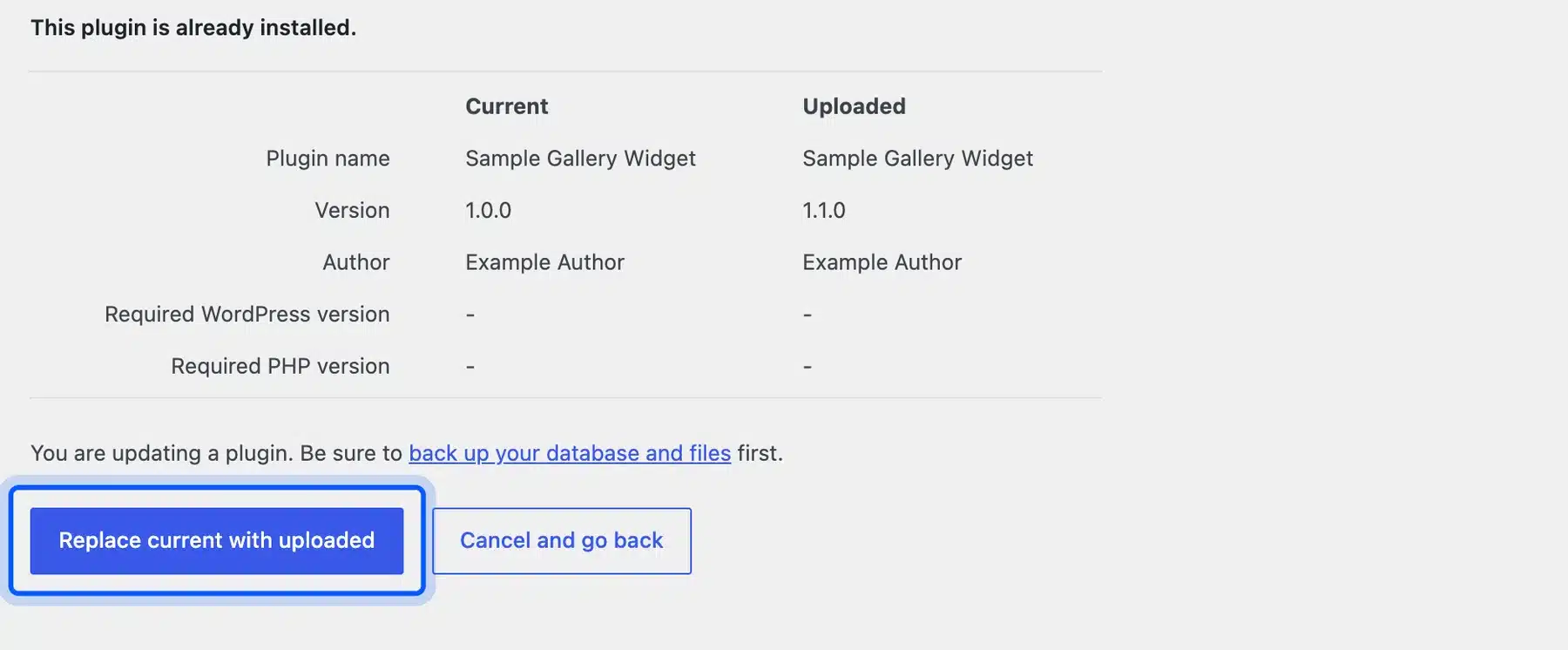
The same screen reminds you to back up your database and files first. Below it sit two buttons: Replace current with uploaded and Cancel and go back. Check the version numbers in the table.
Then click Replace current with uploaded.
Our run unpacked the package, updated the plugin, removed the current copy and ended with “Plugin updated successfully.” The Plugins screen then listed version 1.1.0 and the plugin stayed active.
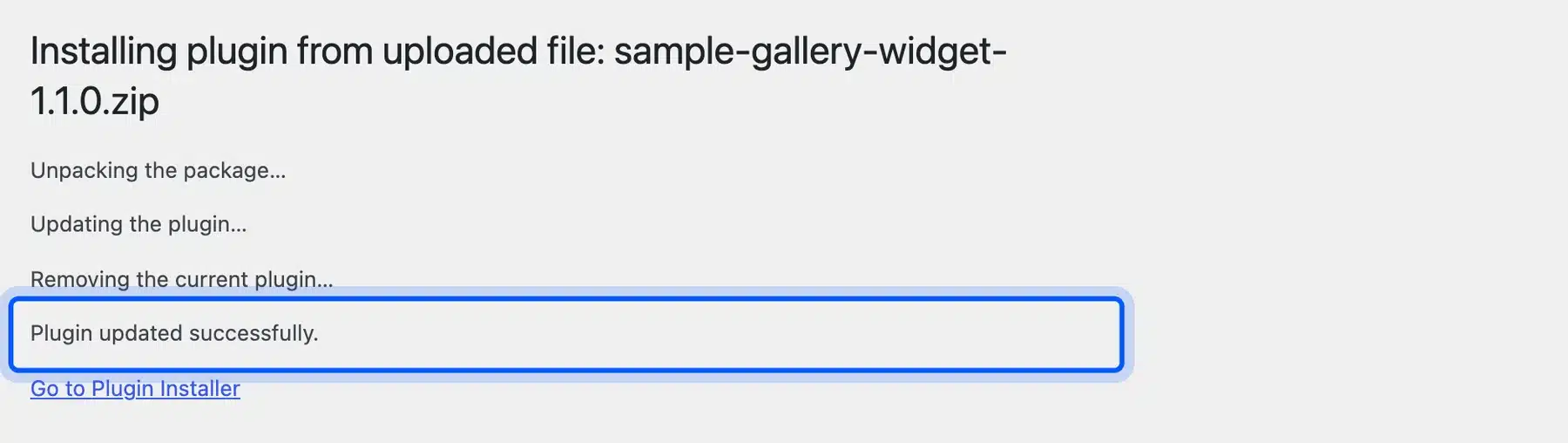
After the update, open the plugin’s settings screen and the front page of your site. Check the one feature you use most. A quick look catches a broken layout while your backup is still fresh.
WordPress also prints “Destination folder already exists” above the comparison table. That line is expected on a replace screen and is not a failure.
One older habit is no longer needed. Guides used to say you must deactivate and delete the old version before you upload the new one. WordPress now handles the swap itself.
You only deactivate the plugin when the author tells you to.
If you look after many sites, doing this by hand adds up. Our WordPress maintenance services cover plugin updates, backups and checks for sites you cannot check by hand.
Method 2: Update With the Envato Market Plugin
The Envato Market plugin connects your site to your Envato account and shows updates for items you bought on ThemeForest and CodeCanyon. You install it once, paste a personal token and then update from the WordPress dashboard. Envato says to install the plugin manually from its zip, because it is not in the WordPress.org directory.
Envato’s plugin page describes it as a way for customers to receive updates to their premium themes and plugins. It says to install the plugin manually using the zip file it provides. Download that zip from the Envato page, upload it as in Step 3 and activate it.
We installed version 2.0.14. Its file header lists WordPress 5.1 as the minimum and 6.9 as the tested version. It ran on our WordPress 7.1.3 test site without errors.
We did not connect it to an Envato account. The update flow itself stays untested.
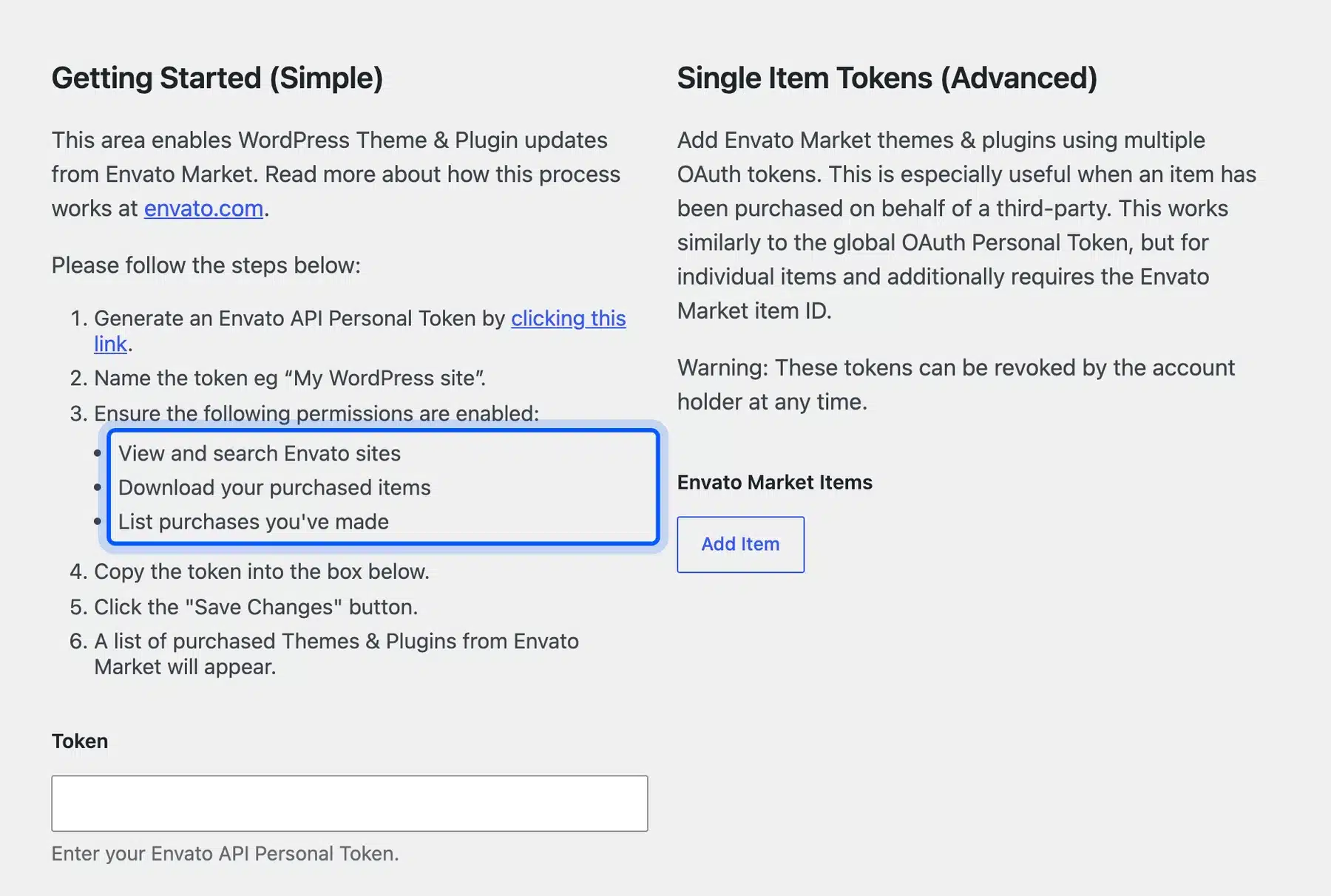
The settings screen lists the steps. You generate an Envato API personal token from the link on the screen and name it. Make sure these permissions are enabled: View and search Envato sites, Download your purchased items and List purchases you’ve made.
Copy the token into the Token box and click Save Changes. The screen says a list of your purchased themes and plugins appears once the token works. The plugin README says WordPress then checks for updates periodically.
Treat the token like a password. Anyone who holds it can download the items on your account. The settings screen also warns that the account holder can revoke tokens at any time.
The README offers single-use tokens for one item.
Choose Method 1 when you own one or two plugins and want full control of each file. Choose Method 2 when you hold several items on one Envato account and want their update notices in one place.
An update notice does not install itself. When one appears on the Plugins or Envato Market screen, back up the site and then run the update. If an item does not appear in the Envato Market list, fall back to Method 1.
Fix Common CodeCanyon Install and Update Errors
Most failures come from the file you chose or from a host limit. Both show a clear message in WordPress that tells you what to change next. We triggered two errors on our test site on purpose and show each one below with its fix.
The Package Could Not Be Installed: No Valid Plugins Were Found
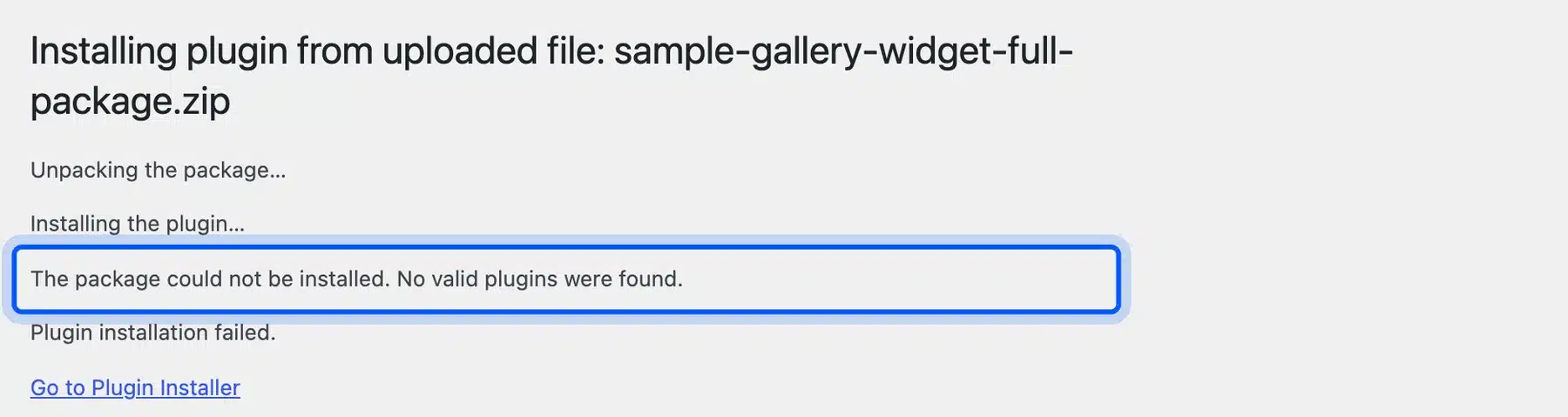
This error means the zip does not hold a plugin at its top level. It usually means you uploaded the full package from CodeCanyon instead of the plugin zip inside it. Unzip the package on your computer and upload the inner plugin zip.
We uploaded our example package with a documentation folder, a license file and the plugin zip. WordPress ran through “Unpacking the package” and “Installing the plugin” and stopped with “The package could not be installed. No valid plugins were found.”
Open the downloaded file and look for the folder that holds the plugin PHP file. Upload the zip that contains it. If you only find a folder, compress that folder and keep its name unchanged.
The Uploaded File Exceeds the upload_max_filesize Directive
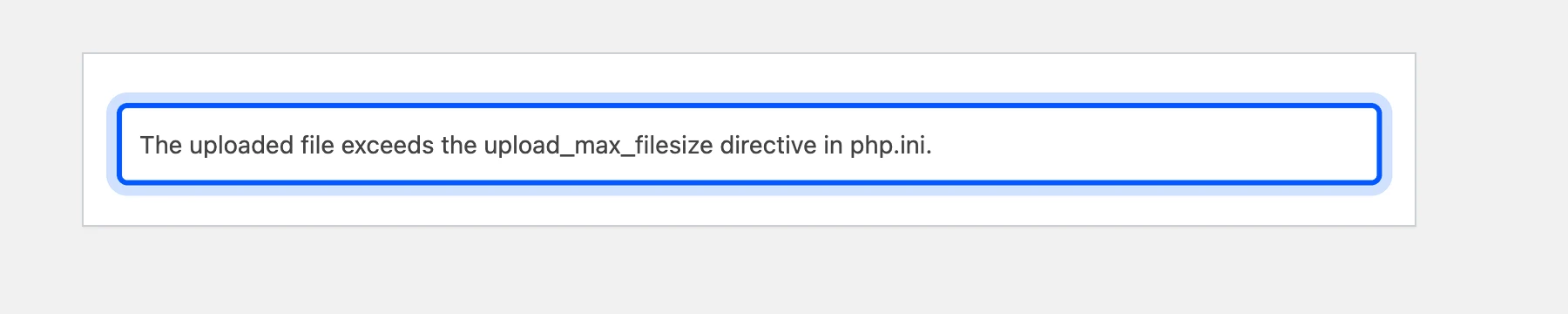
This error means the zip is larger than your PHP upload limit. Raise upload_max_filesize and post_max_size in your host panel or php.ini file, or install the plugin by file manager. PHP’s default upload limit is 2M.
The PHP manual lists upload_max_filesize as the maximum size of an uploaded file with a default of 2M. It adds that post_max_size must be larger than that value. We built a 3 MB zip and WordPress answered “The uploaded file exceeds the upload_max_filesize directive in php.ini.”
Many hosts let you change both values in a PHP settings page. After you raise them, upload again. If your host refuses, use the file manager route above, because it has no size limit from PHP.
Upload forms face the same PHP limits, and you can build a file upload form in WordPress with Contact Form 7 or Forminator.
Two more problems come up now and then. An update that stalls halfway can be a timeout. See our guide on how to fix a WordPress timeout during updates.
A new plugin that breaks the site may clash with another one. Our guide to checking for plugin conflicts on WordPress walks through the steps.
Activate Your License on DevDiggers Plugins
If your CodeCanyon plugin is one of ours, the license step is short. Enter your purchase code and email on the extension’s configuration page and click Activate. The system checks the request and activates the license on your site, and the plugin is then ready to use.
The license activation guide covers extensions bought on CodeCanyon or on our own store. It also shows where to find the purchase code in your Envato account. To move a license, deactivate it on the old site first and activate it on the new one.
Conclusion
You install CodeCanyon WordPress plugins by uploading the right zip under Plugins > Add Plugin and clicking Activate. You update them with Replace current with uploaded or with the Envato Market plugin. Back up before every update.
The two errors we triggered show what goes wrong most often. A full package and an oversized zip both fail with a clear message, and each has a short fix. Download the newest zip and try Method 1 on your next update.
Frequently Asked Questions (FAQs)
Q1. Where do I find my CodeCanyon purchase code?
Sign in to your Envato Market account, open Downloads and click Download next to the item. Then choose the license certificate and purchase code option. The DevDiggers license activation guide lists the same steps.
Q2. Do I need the Envato Market plugin to update CodeCanyon plugins?
No. You can update by uploading the newest zip and clicking Replace current with uploaded. The Envato Market plugin is optional.
Envato says it must be installed manually from its zip file.
Q3. Will updating a CodeCanyon plugin delete my settings?
Back up first, because WordPress itself warns you to on the replace screen. Read the author’s changelog for breaking changes before a major version. Do not delete the plugin folder yourself unless the author tells you to.
Q4. Can I install a CodeCanyon plugin by FTP?
Yes. Unzip the file on your computer, upload the plugin folder to wp-content/plugins and activate it from the Plugins screen. We tested this on our test site.
Upload the folder and not the zip file.
Q5. What does a CodeCanyon plugin need to run?
Check the requirements on the item page and in the plugin’s own documentation first. WordPress itself recommends PHP 8.3 or greater according to the WordPress requirements page. A plugin that needs an older PHP version is a risk to your site.
Q6. Can I get CodeCanyon plugins for free?
Paid items on CodeCanyon need a purchase. We only cover plugins you bought, and we do not recommend copies from other sites. Look at the item’s demo or the author’s free edition if you want to try before buying.