
For most stores, picking the right Best WooCommerce Buy Now Pay Later plugins comes down to setup speed versus control. Fastest to launch differs from most control over risk and fees. Ten options are compared below on cost, setup, and fit, so you land on the right one for your store type.
Shoppers abandon cart moment total feels too high. Baymard Institute puts average cart abandonment above 70%. Price shock top reason buyers walk without paying. BNPL plugin breaks total into smaller chunks, sticker price stops killing sale.
Not every store same setup. Furniture shop selling $2,000 sofas differs from skincare brand selling $40 bundles. Some want household-name provider at checkout. Others keep the whole transaction and fee in-house. That’s the point here: 10 real WooCommerce BNPL plugins, mechanics under the hood, fee structure behind each. Pick fit before install.
“Buy Now Pay Later” covers three different setups. Provider-run financing (Affirm, Klarna, Afterpay), where a lender handles approval. Self-hosted instalments, where your own gateway charges the card over time. And deposit-plus-balance tools, built for bookings or custom orders. All three show up below, sorted by which job they solve.
What is Buy Now Pay Later (BNPL)?
What is Buy Now Pay Later? A checkout option letting shoppers split a purchase into smaller, usually interest-free instalments instead of paying upfront.
The eCommerce BNPL market hit an estimated $12.84 billion, growing 34% a year. It’s now an expected checkout option, not a niche one.
Klarna’s merchant data shows BNPL lifting average order value by roughly 41% in some categories, with a real bump in checkout completion. Affirm reports similar gains above $150. Catch: providers charge 2-8% per transaction, so conversion lift must beat that fee.
Around 380 million people worldwide have used BNPL, projected to reach 670 million by 2028, with North America holding over half of global volume.
What most guides skip: Rules around BNPL are getting stricter, and more users report missing payments than before. That means the plugin you choose, and how clearly you explain the terms, matters more than it used to.
Best WooCommerce Buy Now Pay Later Plugins: Reviewed for 2026
Each of the picks below made this list of the best WooCommerce Buy Now Pay Later Plugins for a specific reason, not just because it exists. Here’s the full breakdown.
1. WooCommerce PostPaid: Self-Hosted BNPL Without A Credit Check
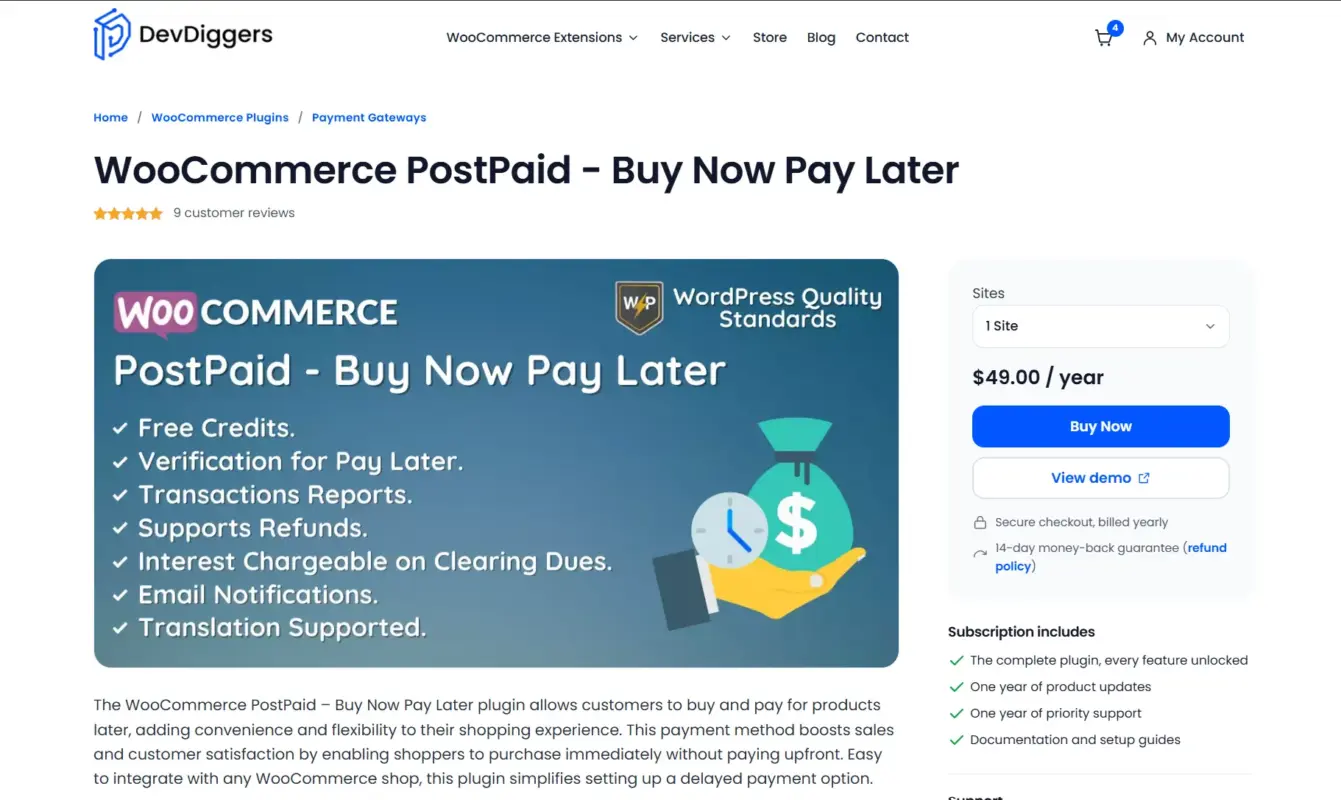
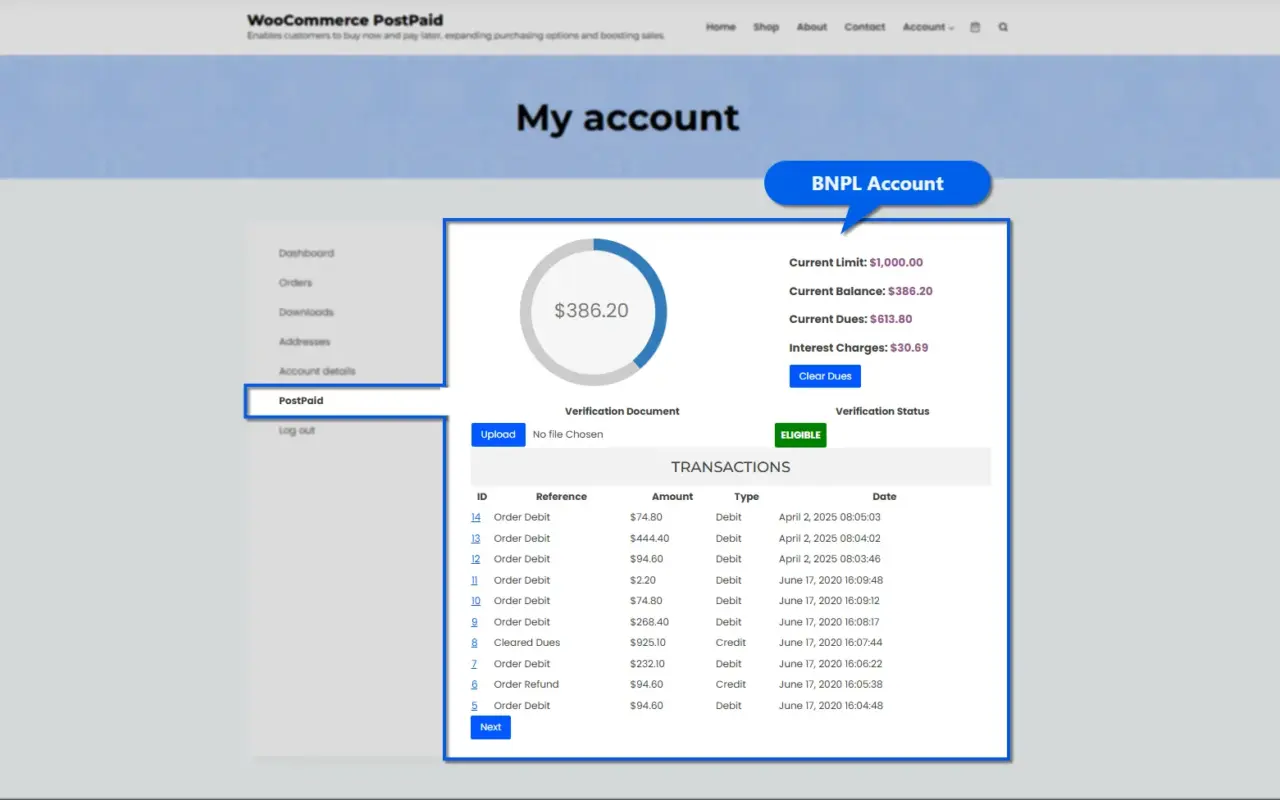
Not every store wants to hand its checkout over to a third-party lender. WooCommerce PostPaid plugin, built by DevDiggers, lets customers buy now and settle up later against a limit you set yourself. No outside credit check, no provider fee eating into your margin.
Admins set a spending limit per customer. Shoppers clear their dues from their account whenever they’re ready, through any payment gateway already connected to the store. You can even charge interest on outstanding balances if that fits your business model. This is a different mechanic from Klarna or Affirm. You carry the risk, but you also keep 100% of the transaction and full say over who qualifies for credit.
Honestly, this setup takes more thought than flipping a WooPayments toggle. You’re deciding who gets credit and how much, not outsourcing that call to a third party. Admins can set reminder rules for customers approaching their limit and view outstanding balances at a glance. Stores selling outside English-speaking markets can translate the front end using the included .pot file.
Best for
Stores that want BNPL on their own terms, without a third-party credit check or per-transaction fee cutting into revenue.
Pricing
- 1 Site: $49/year
- 5 Sites: $199/year
- 10 Sites: $299/month
Pros
- No third-party credit check or provider fee
- Optional interest on outstanding balances
- Full admin control over spending limits and eligibility
Cons
- Your store carries the default risk, not a lender
- Requires manual judgment on customer limits, especially early on
- No built-in automated underwriting
2. WooPayments BNPL: Simple Stores
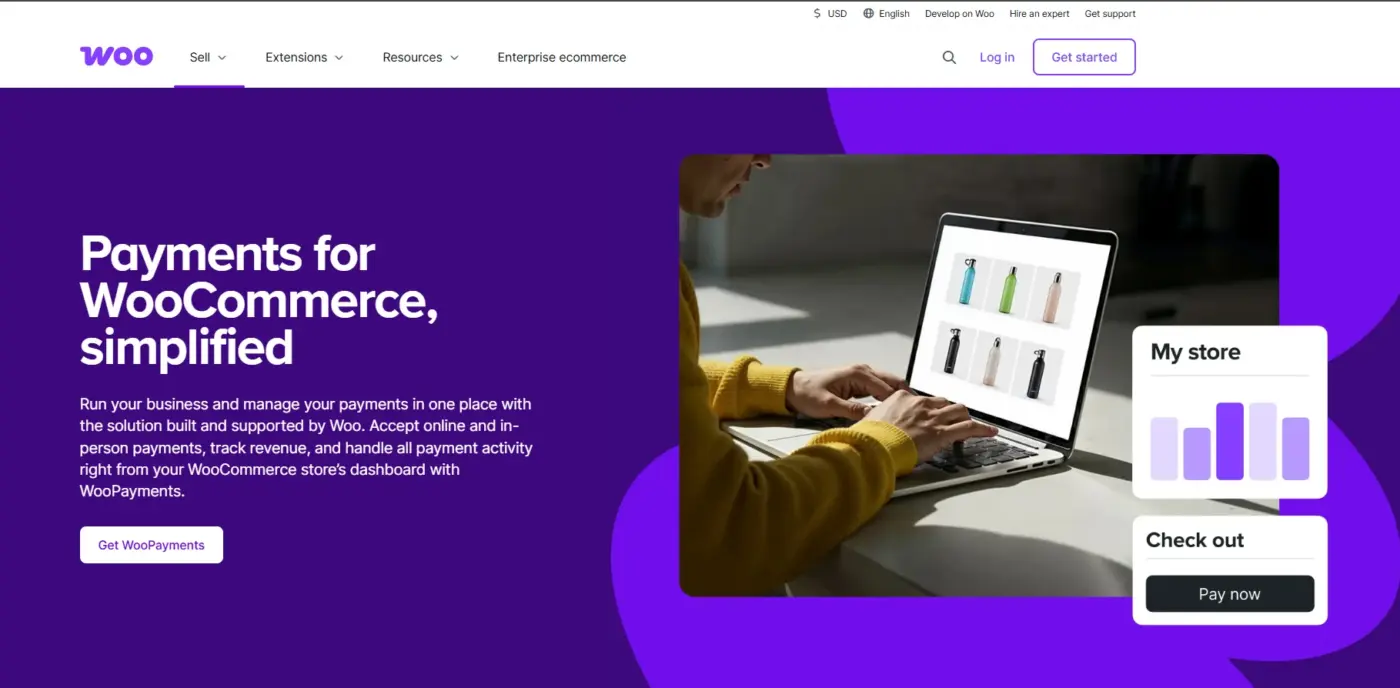
If your store already runs on WooPayments, this is one of the quicker paths to offering Buy Now Pay Later. Turn on Affirm, Afterpay, and Klarna from one settings screen. No separate merchant accounts, no extra plugin fees stacked on top of your normal processing rate.
The widget shows up automatically at checkout, and payment matching happens through the same WooPayments payout you already track. Setup takes minutes, not days. Each provider runs its own credit check behind the scenes. Your store carries zero default risk if a customer misses a payment down the line.
What most stores get wrong here is stopping at the checkout badge. The bigger lift comes from turning on the product-page messaging too, the small “4 payments of $X” line under the price. That’s where a shopper decides whether they can afford the item, long before they reach the cart.
All three BNPL providers are available from a single toggle, with no extra integration fee beyond your standard WooPayments processing rate, and coverage spans the US, Canada, UK, Australia, and several EU countries. It’s a solid pick specifically for stores already inside the WooPayments ecosystem, less so if you’re not.
Best for
Stores with $50 or higher average order value that already process through WooPayments and want the lowest-friction launch.
Pricing
- WooPayments base rate: 2.9% + $0.30.
- BNPL surcharge(Afterpay/Affirm): 6.00% + $0.30
- BNPL surcharge(Klarna): 5.99% + $0.30.
Pros
- One toggle turns on three providers at once
- No separate merchant accounts to manage
- Automatic checkout badge and payout payment matching
Cons
- Only works if you are already on WooPayments
- Limited to the US, Canada, UK, Australia, and a handful of EU countries
- Less brand customisation than a direct Klarna or Afterpay integration
3. Payment Plans For WooCommerce: Custom Schedules
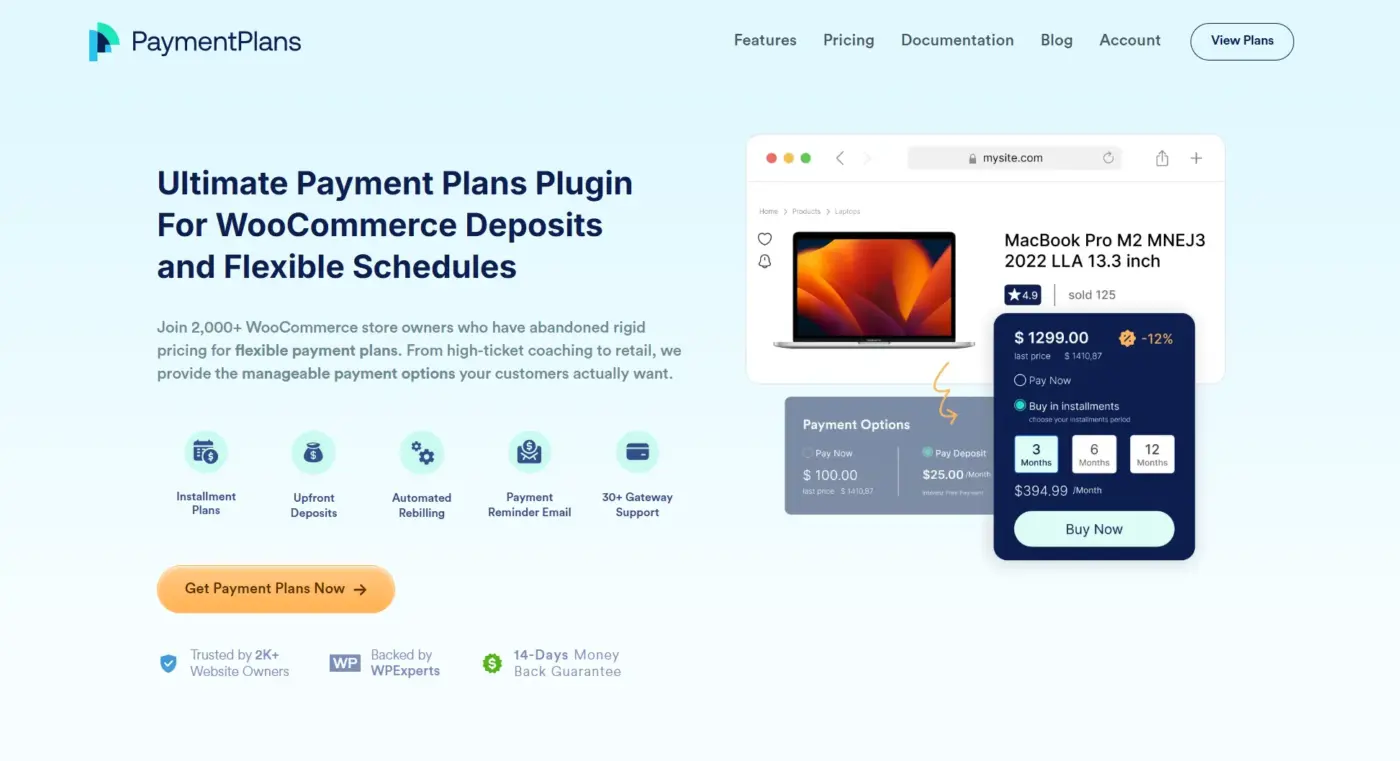
This plugin skips outside financing entirely. Payment Plans for WooCommerce lets you define the schedule yourself: pay in 2, pay in 4, weekly, monthly, whatever fits. Your existing gateway (Stripe, PayPal, Square, WooPayments) charges the saved card on each due date. It connects to 30+ processors, so almost any store already accepting cards can add it without switching gateways.
Tradeoff: If a card fails on instalment three, you’re the one chasing the customer, not a lender’s collections team. In exchange, no BNPL fee and no third-party brand is showing up at your checkout. Automatic retry rules handle most declined cards without manual follow-up, which softens that downside somewhat.
Best for
Stores selling memberships, custom quotes, or B2B orders where routing customers through Affirm or Klarna would slow down the sale.
Pricing
- 1 Site: $59/year
- 3 Sites: $99/year
- 100 sites: $149/year
Pros
- Connects to 30-plus payment processors
- No BNPL fee, just your normal gateway rate
- Automatic retry rules for declined instalments
Cons
- You carry the decline risk, not a lender
- No built-in credit assessment before approving a plan
- Setup takes more configuration than a toggle-based option
4. Klarna Payments For WooCommerce: Klarna-First Markets
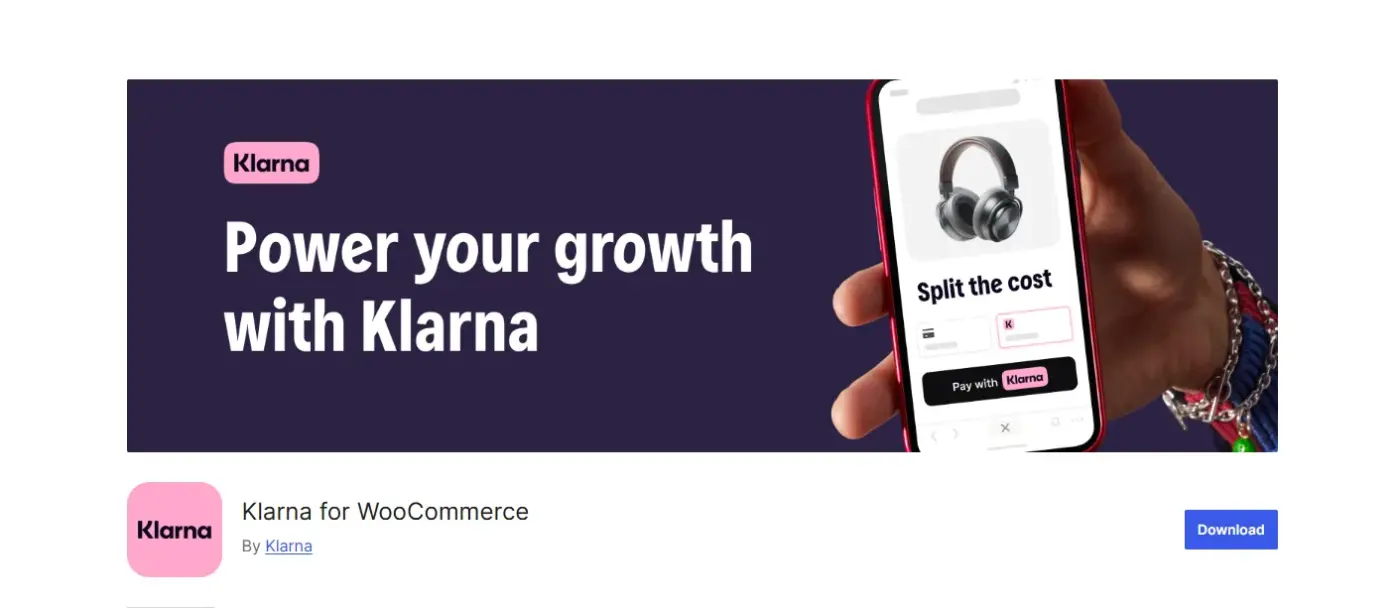
Selling into Sweden, Germany, the Netherlands, or the UK? Shoppers there expect the pink Klarna button. Klarna Payments for WooCommerce gives deeper access to Klarna’s product set than a bundled toggle does. Pay in 3, Pay in 30 days, and longer financing terms for bigger purchases are all included.
The on-site widget pre-qualifies customers before they even reach checkout, which cuts down on declined attempts later in the flow. Setup is free to install, though standard transaction fees apply once a plan connects to a live Klarna merchant account. Approval for new merchant accounts can take a few business days, so plan the launch timeline accordingly.
Best for
Nordic, German, UK, and Dutch stores where Klarna carries real brand trust with shoppers.
Pricing
Klarna transaction fees apply once live: 3.29% to 5.99% + $0.30/transaction.
Pros
- Pre-qualification widget cuts down on declined attempts
- Interest-free Pay in 3 option for eligible orders
Cons
- Only available in selected countries
- Price varies by country, product, and volume
- New merchant account approval can take a few business days
- Limited customisation of how instalment plans display on-site
5. Affirm Payments For WooCommerce: Big-Ticket Items
Most stores already have a PayPal button somewhere on checkout, which is exactly why WooCommerce PayPal Payments makes sense for the big-ticket slot. Its Pay Later feature covers two tiers: Pay in 4 for smaller orders, and Pay Monthly for purchases between $199 and $10,000, split across 6, 12, or 24 months.
Because it rides on a PayPal account most shoppers already trust and use elsewhere, there’s less hesitation at the “apply for financing” moment than with a lender they’ve never heard of. The plugin adds pay-later messaging directly on product and cart pages, so the monthly breakdown shows up before checkout, not after.
Best for
Stores that want big-ticket financing backed by a payment brand shoppers already recognise and trust.
Pricing
Pay Later rate: 4.99% + a fixed fee.
Pros
- High brand trust since most shoppers already have a PayPal account
- Pay Monthly extends financing up to $10,000, well past the standard four-payment split
- Built-in messaging widget for product and cart pages
Cons
- Exact rates can vary by volume and account type.
- Pay Later offers are US-only for now; other regions get standard PayPal Checkout without the extended terms
- Some merchants report the plugin adding noticeable page-load weight from PayPal’s scripts
- Customer approval is handled entirely by PayPal, so you have no visibility into who gets declined
6. Zip: Fashion And Lifestyle
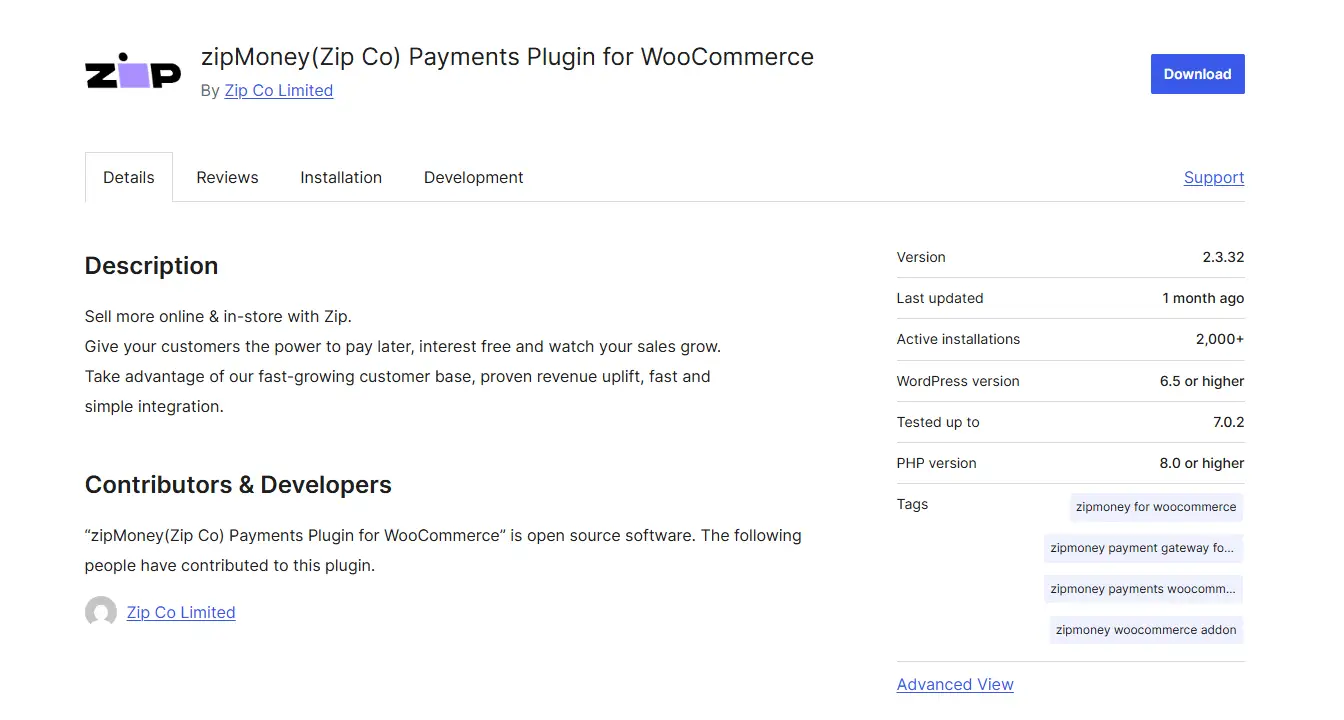
zipMoney (Zip Co) Payments runs the same Pay in 4 model as Afterpay and Sezzle, but Zip’s fee structure works differently underneath. Instead of the merchant absorbing the cost entirely, Zip charges the customer a per-instalment convenience fee on top of the purchase price, alongside the standard merchant transaction fee.
That trade-off matters for fashion and lifestyle stores specifically, since Zip’s brand still carries strong recognition among the same under-35, mobile-first shopper Afterpay and Sezzle chase, but its “pay later, interest-free” pitch comes with fine print worth surfacing to customers upfront rather than letting them discover it at their second payment.
Best for
Fashion, beauty, and lifestyle stores wanting another established BNPL brand in the mix, particularly for customers already using Zip elsewhere.
Pricing
Merchant transaction fees apply per order, and customers may be charged a separate convenience fee per instalment.
Pros
- Strong existing brand recognition among younger, mobile-first shoppers
- Merchant receives the full order value upfront, same as other BNPL providers
- Simple four-payment structure, familiar to shoppers who already use Zip on other sites
Cons
- Give queries to Merchant every time you make small or big payments
- Smaller US footprint than Afterpay or Klarna, with stronger recognition concentrated in Australia and select other markets
- Customers can be charged a convenience fee per instalment, on top of the purchase price
- Late fees apply to missed payments, which can create a rougher customer experience than fee-free competitors
7. Wallet System For WooCommerce: Repeat Customers
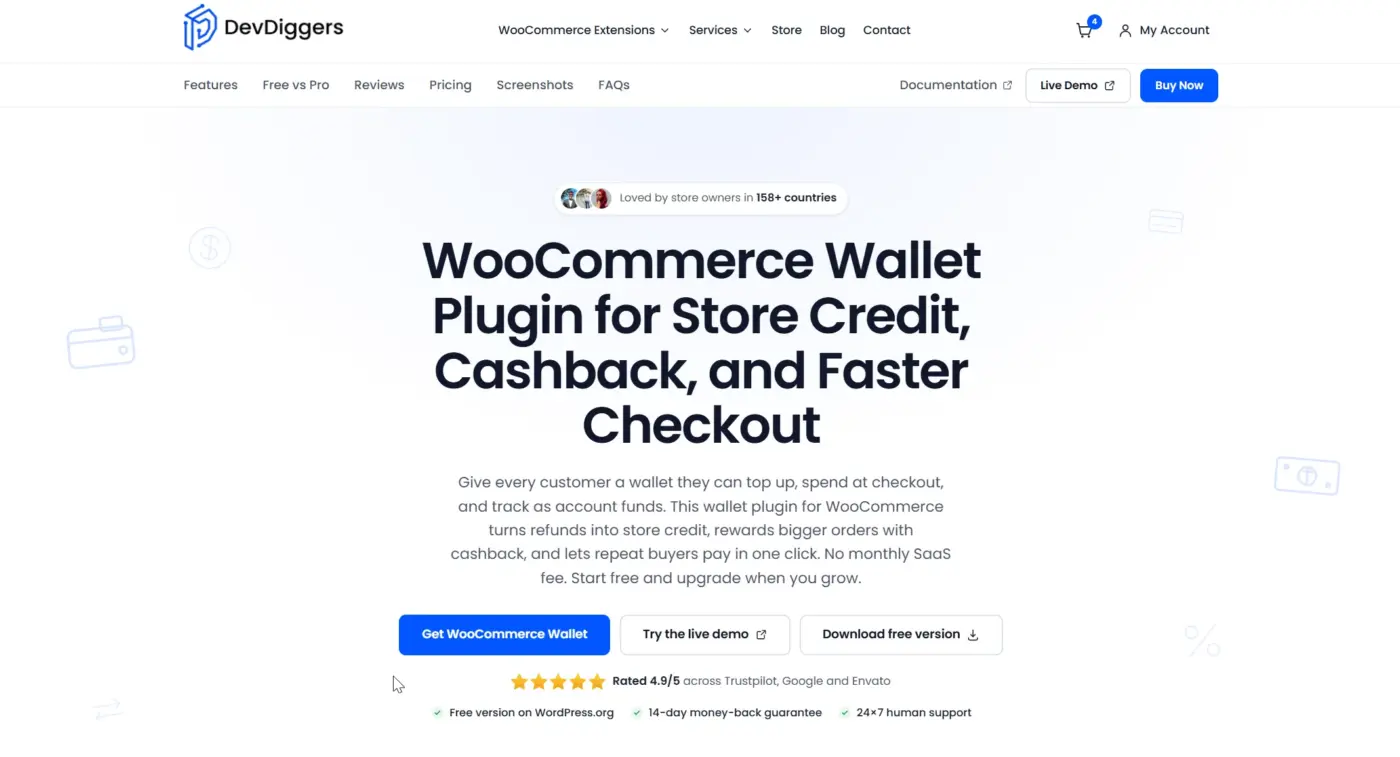
This one bundles BNPL into a broader wallet setup. WooCommerce Wallet plugin by DevDiggers lets customers top up a balance, earn cashback into it, or get referral credit. The wallet handles both instant purchases and delayed payments from one dashboard.
It’s not a traditional credit-check tool the way Affirm or Klarna are. Think of it as a delayed-payment wallet instead. For subscription boxes, repeat-purchase products, or membership stores with high repeat-purchase rates, it can replace an external BNPL provider outright. Customers who shop often build up wallet history you can extend credit against. Related read: our full breakdown of the best WooCommerce wallet plugins if this direction interests you.
Best for
Stores with strong repeat-customer numbers where loyalty and delayed payment work better combined than separate.
Pricing
- 1 Site Licence: $89/year
- 5 Sites Licence: $379/year
- 10 Sites Licence: $699/year
Pros
- Combines cashback, referrals, and BNPL in one system
- Negative-balance carry lets customers check out even short on funds
- Strong fit for subscription and repeat purchases stores
Cons
- Free version does not include the BNPL feature
- More setup than a standalone BNPL plugin since it is a full wallet system
- Not a traditional credit-check tool, so approval logic is entirely on you
8. Splitit: Card-Based Instalments
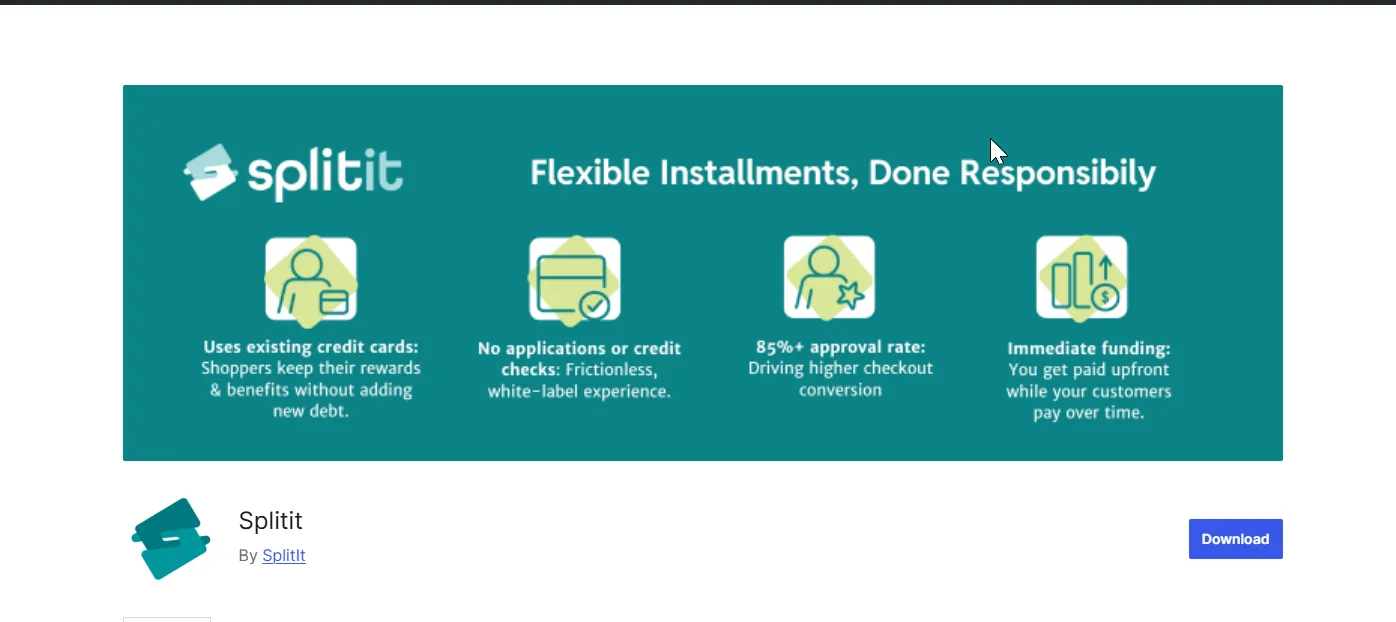
Splitit skips the credit application step altogether. Customers split a purchase into interest-free monthly payments using a Visa or Mastercard they already own. The checkout stays fully on your site, with no redirect to a lender’s page, and the branding stays yours throughout.
Behind the scenes, the full amount gets authorised on the card upfront, then charged one instalment at a time. That means the customer’s available credit takes a hit immediately, even though they’re paying gradually. It’s PCI DSS Level 1 compliant, so card data handling isn’t something you need to worry about separately.
Best for
Stores selling higher-ticket items to buyers who would rather use their own card than apply for new financing.
Pricing
Splitit transaction fee: 2.9%-6%/transaction + $15/month minimum-volume fee.
Pros
- No new loan or credit application needed
- PCI DSS Level 1 compliant card handling
- Checkout stays fully on-site, no lender redirect
Cons
- Comes with many Hidden Charges
- Exact rate is set per merchant contract based on volume, industry, and risk.
- Only supports major credit cards, not debit or prepaid
- Full purchase amount gets held on the card upfront
- Merchant account setup takes more steps than a simple toggle
9. WooCommerce Deposits: Custom Orders
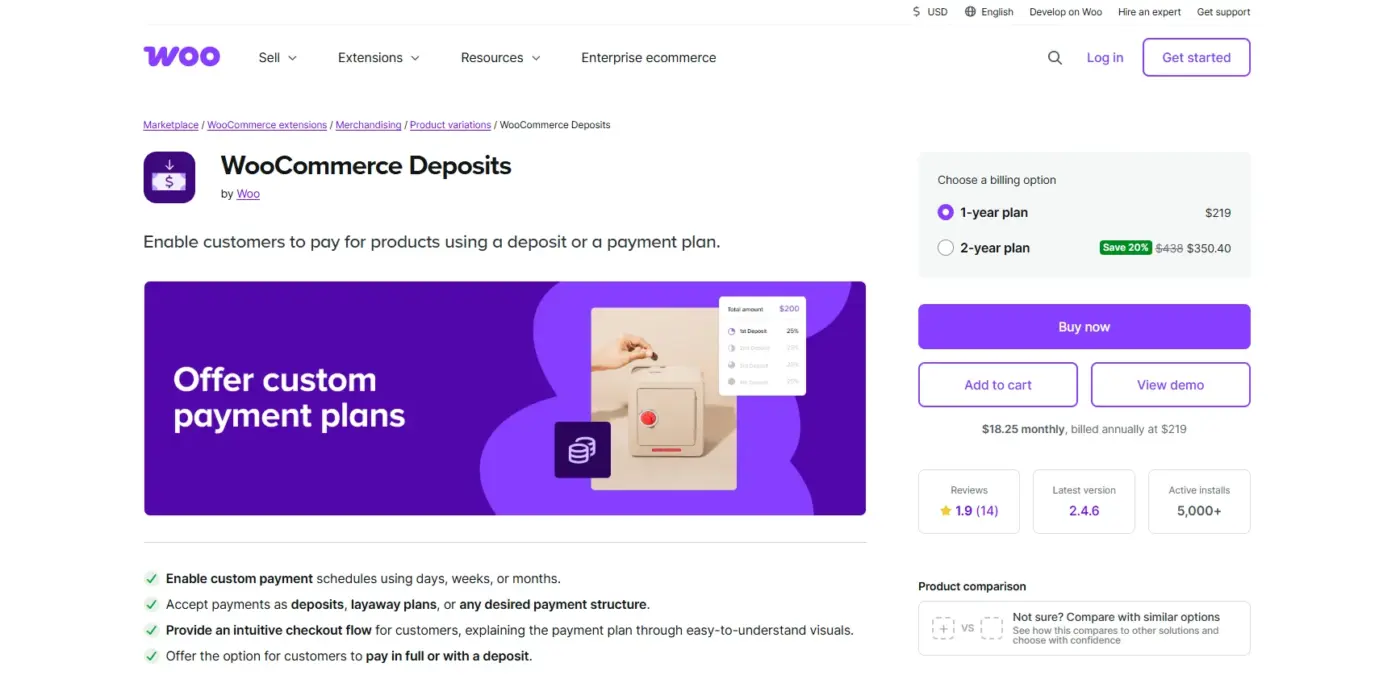
Unlike the BNPL-branded options above, WooCommerce Deposits is about collecting a deposit now and the rest on a schedule you define. No third-party lender is involved anywhere. Set a percentage or fixed amount, choose the timing in days, weeks, or months, and the balance comes due automatically without you tracking spreadsheets.
It works well for made-to-order products, custom furniture, or service deposits where you need commitment before you start the work. Every active payment plan shows up in one dashboard view. You can see at a glance who still owes a balance and when it’s due.
Tradeoff: Product-page design customisation is fairly basic, so don’t expect a heavily branded widget out of the box.
Best for
Stores taking custom or made-to-order products that need a deposit locked in before production starts.
Pricing
- 1 Year Plan: $219
- 2 Year Plan: $350.40
Pros
- Full control over deposit percentage and payment timing
- Works natively inside WooCommerce, no external accounts
- Dashboard view of every active payment schedule
Cons
- No free version available
- Product-page design customisation is fairly basic
- No option to shift default risk onto a third-party lender
10. YITH WooCommerce Deposits Payments: Bookings
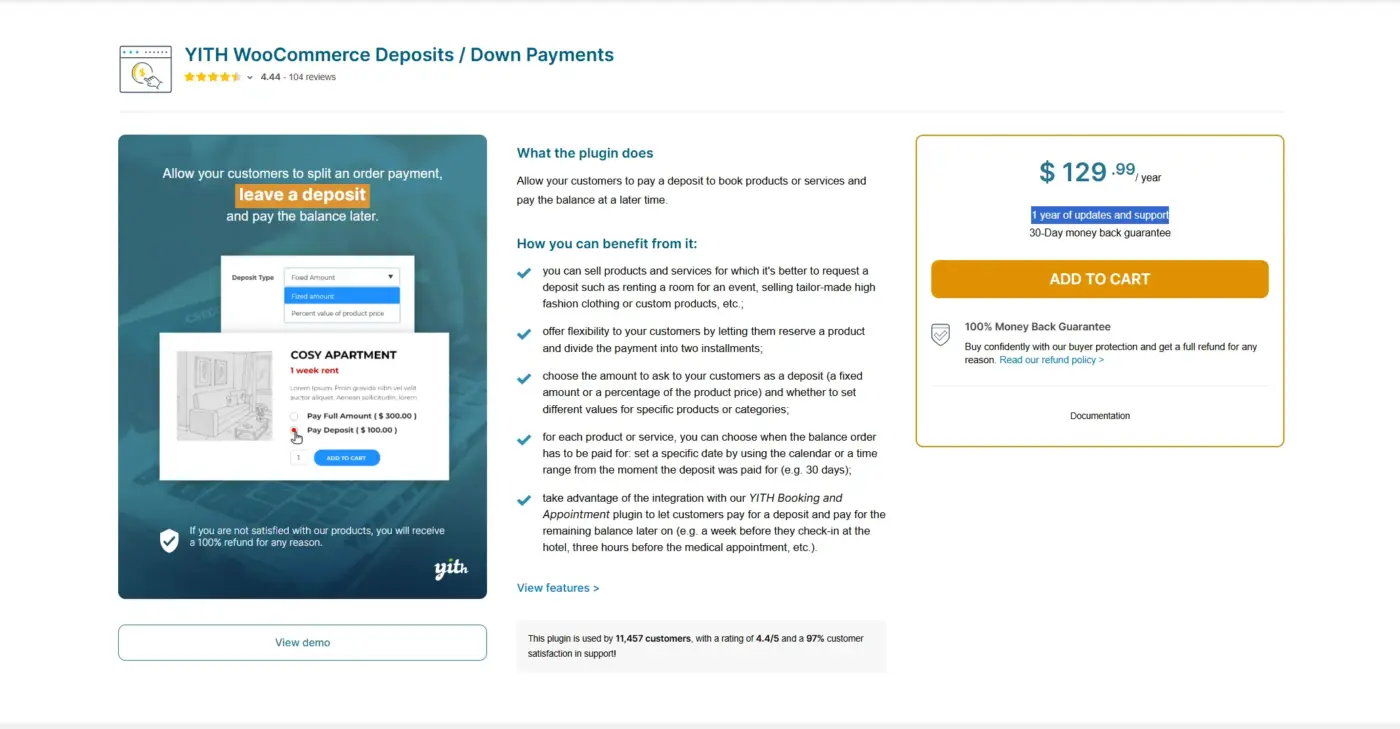
YITH WooCommerce Deposits and Down Payments suits reservations and bookings better than multi-instalment BNPL. Most booking businesses only need that one split, not four or six payments spread across weeks.
Category-level rules mean you can apply a deposit percentage across an entire product category in one move, rather than editing each listing by hand. Automatic reminder emails go out before the balance is due, which cuts down on no-shows for event and appointment bookings specifically.
Tradeoff: if your business model needs three or more instalments, look at Payment Plans for WooCommerce instead.
Best for
Stores taking reservations, event bookings, or custom orders that need one deposit and one final payment, nothing more complex.
Pricing
1 year of updates and support: $129.99/year
Pros
- Category-level deposit rules save time on large catalogues
- Automated reminder emails cut down on no-shows
- Simple setup, beginner-friendly dashboard
Cons
- Capped at two payments, deposit plus balance only
- No free version available
- Fewer third-party gateway integrations than larger instalment plugins
Quick Comparison: WooCommerce Buy Now Pay Later Plugins
Here is the short version before the full breakdown.
| Plugin | Model | Credit Check | Free To Start | Best For |
|---|---|---|---|---|
| WooPayments BNPL | Affirm, Afterpay, Klarna toggle | Provider-handled | Yes | Most stores on WooPayments |
| WooCommerce PostPaid | Self-hosted, admin-set limit | None | No | Stores wanting full control, no third party |
| Payment Plans for WooCommerce | Self-hosted schedules | None | No | Custom instalment schedules |
| Klarna Payments for WooCommerce | Direct Klarna | Provider-handled | Yes | Nordic, German, UK stores |
| Affirm Payments for WooCommerce | Direct Affirm | Provider-handled | Yes | Big-ticket items over $150 |
| Afterpay direct integration | Direct Afterpay | Provider-handled | Yes | Fashion and lifestyle brands |
| Wallet System for WooCommerce | Wallet plus BNPL | None | Yes (free tier) | Repeat-customer stores |
| Splitit | Existing credit card | Soft, card-based | Yes | Higher-ticket, card-based buyers |
| WooCommerce Deposits | Deposit plus balance | None | No | Custom orders, service stores |
| YITH Deposits/Down Payments | Two-payment deposit | None | No | Bookings and reservations |
How To Choose The Right BNPL Plugin For Your Store
Three questions, worked through in order, get you to the right pick faster than reading ten reviews end to end.
- What is your average order value and category? Under $100 in fashion or beauty leans toward Afterpay. Above $150 in big-ticket categories favours Affirm. A mixed catalogue does fine with the WooPayments bundle covering all three providers at once.
- Where do your customers shop from? Nordic, German, or UK traffic points to Klarna direct. US, Canadian, or Australian traffic works well with the WooPayments toggle. Want to skip third-party credit checks and keep the transaction in-house? WooCommerce PostPaid or Payment Plans for WooCommerce are the better fit.
- Do you want a credit-check BNPL or a self-hosted plan? Provider-run options (Affirm, Afterpay, Klarna) shift default risk onto them. You pay 2-8%/transaction for that. Self-hosted tools (PostPaid, Payment Plans, Deposits) keep more of the revenue, but you carry the decline risk yourself.
For most stores starting a first BNPL rollout, WooPayments BNPL is the simplest launch point: three providers, one toggle, lowest setup friction. Give it 30 days and check which provider drives the most volume. Then decide whether to stay on the bundle or move to a direct integration with the winner. Stores that would rather never send a customer to a third-party lender should start with WooCommerce PostPaid instead. That skips the migration step entirely.
Who Should Skip BNPL Entirely?
Not every store needs this. If your average order value sits under $30, be careful. The per-transaction fee on provider-run BNPL will often eat more margin than the conversion lift brings back. Subscription boxes with tight unit economics run into the same math problem. Even a self-hosted option like Payment Plans for WooCommerce may not clear that bar once you factor in the time spent chasing declined cards.
There is also a simpler test. If your current cart abandonment is mostly happening at shipping cost, not total price, BNPL will not fix that. Check your checkout analytics before adding another payment method. Sometimes the fix is showing shipping cost earlier, not splitting the total into 4 pieces.
One more case worth naming directly. Stores selling regulated or age-restricted products should talk to a payments lawyer before adding any BNPL option, provider-run or self-hosted. Extending credit in those categories can create compliance headaches. The fee savings from a self-hosted plugin are not worth a regulatory problem down the line.
Conclusion
For most WooCommerce stores in 2026, WooPayments BNPL is still the fastest path to offering Affirm, Afterpay, and Klarna without juggling three separate plugins. Keeping the transaction fully in-house matters more than provider brand recognition for some stores. If that describes yours, the WooCommerce PostPaid plugin gives you that control with no credit check and no third-party fee.
Whichever one you pick, turn on the product-page instalment messaging, not just the checkout badge. That is where the buying decision gets made. It is also the step most stores skip. Browse the full WooCommerce plugin catalogue for checkout tools beyond BNPL. Our guide to WooCommerce loyalty and rewards plugins covers various top plugins that pair well with flexible payments too.
Frequently Asked Questions (FAQs)
Q1. What is the best WooCommerce Buy Now Pay Later plugin for most stores?
WooPayments BNPL, since it bundles Affirm, Afterpay, and Klarna into a single toggle with no extra plugin fee. Stores wanting full control instead of a third-party provider should look at WooCommerce PostPaid.
Q2. Do WooCommerce BNPL plugins require a credit check?
Provider-run options like Affirm, Afterpay, and Klarna run a soft credit check, usually instant and invisible to the shopper. Self-hosted tools like WooCommerce PostPaid and Payment Plans for WooCommerce skip that step since you set the terms yourself.
Q3. How much do WooCommerce Buy Now Pay Later plugins cost to run?
Provider-run BNPL charges 2 to 8% per transaction, paid by the merchant, not the customer. Self-hosted plugins like WooCommerce PostPaid have no per-transaction BNPL fee, just your normal payment gateway rate.
Q4. Can I offer BNPL without sending customers to a third-party provider?
Yes. WooCommerce PostPaid and Payment Plans for WooCommerce both keep the entire transaction on your site. Your own gateway and your own credit terms handle it, instead of Affirm, Klarna, or Afterpay.
Q5. Do these plugins work with WooCommerce HPOS?
The options covered here are actively maintained for High-Performance Order Storage. Always check the plugin’s changelog before activating on a live store, since compatibility gets updated as WooCommerce core releases new versions.
Q6. Will adding BNPL hurt my existing Stripe or PayPal sales?
Some shoppers who would have paid in full will choose BNPL instead, which shifts a slice of margin into the provider fee. The bigger effect is usually incremental: shoppers who would have abandoned the cart complete the purchase instead. Track BNPL orders separately in your reporting to see the real before-and-after difference in abandonment rate.