
A WooCommerce rewards plugin gives shoppers points for buying, then lets them spend those points on a discount. Done well, it turns a one-time buyer into a regular. Done badly, it hands discounts to people who were going to buy anyway.
That second outcome is the whole game, and most comparison posts skip it. Picking the plugin is the easy part. The reward rate is the decision that makes or costs you money, and nobody helps you with it.
We build WooCommerce plugins and run our own store on WooCommerce, so we have set these up and watched the margin move. Below are ten rewards and loyalty plugins checked in September 2026, with what each one costs.
There is also a short section on picking a points rate that does not quietly eat your profit. Read that one even if you skip the rest.
What a WooCommerce rewards plugin does

It tracks a balance against each customer account and moves that balance in two directions. Points go in when someone does something you want, usually placing an order. Points come out when they redeem for a discount at checkout.
Everything else these plugins advertise is built on that ledger. Tiers, birthday bonuses, referral points, expiry rules, all of it is just different ways to add to or subtract from the same balance.
How the points move
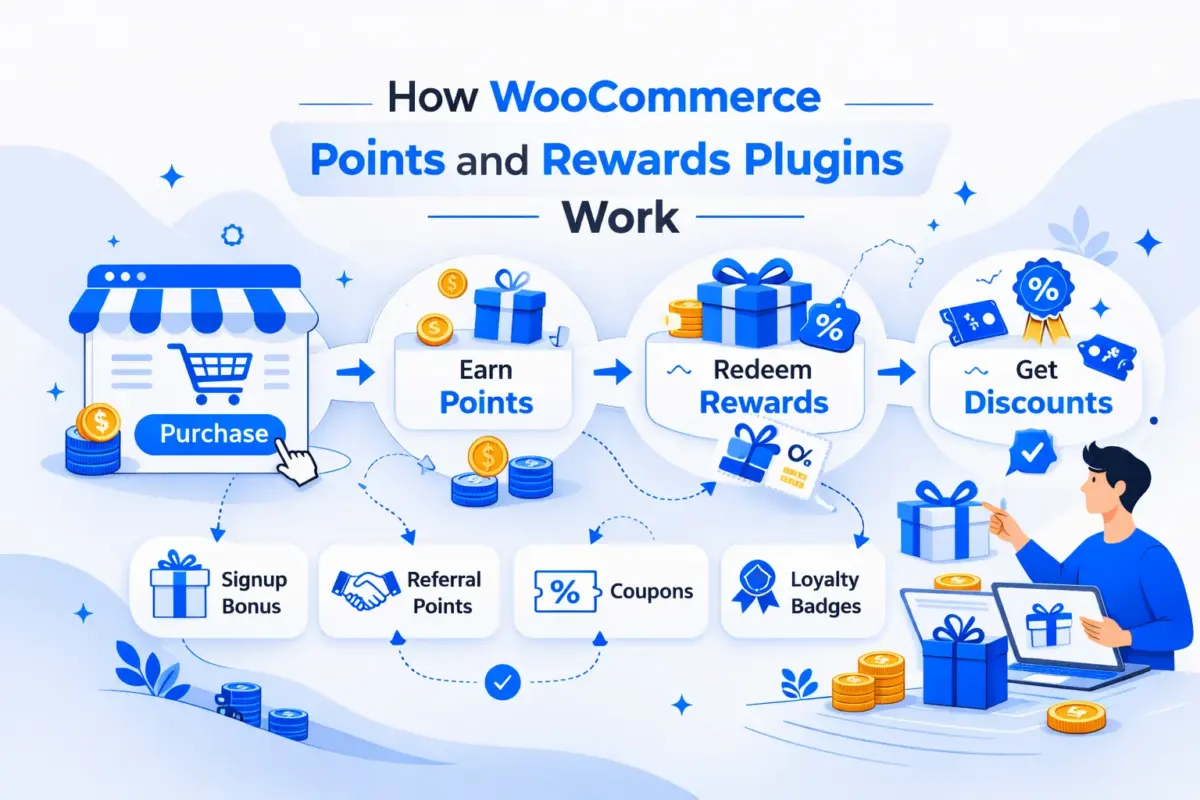
A normal setup runs like this:
- Earning: points are credited per unit of currency spent, when the order completes and not when it is placed.
- Holding: the balance sits on their account and shows in My Account, and usually on the cart page as a nudge.
- Redeeming: at checkout they convert points into a discount, either a fixed amount or a slider up to some cap.
- Expiring: unused points lapse after a set period, which protects you from a large balance being redeemed all at once years later.
Set the earning trigger to order completion, not order placement. Otherwise a cancelled or refunded order still mints points, and that is the most common setup mistake we see.
Choose the reward rate before you choose the plugin
This is the section we would keep if we had to delete the rest of the article.
Work out what the discount really costs you
A common default is 1 point per $1 spent, with 100 points worth $1 off. That is a 1 percent discount. It sounds harmless. On a store running a 20 percent gross margin, 1 percent of revenue is 5 percent of your profit on every order, forever.
That can be a fine trade. It is only a fine trade if you chose it, instead of accepting a plugin default.
Reward the behavior you want more of
Points for spending reward people who already spend. The money is usually better spent on behavior you do not get enough of. Points for a second order, for a product review, for referring someone, or for choosing a slower shipping option that costs you less.
A tiered structure does this well. Small reward at the first order, a better rate once someone crosses a threshold that marks them as a repeat customer.
Cap redemption per order
Without a cap, a customer with a large balance can take a big discount on one order and never come back. A cap of 10 to 20 percent of order value keeps the program working as a reason to return.
Set an expiry, and say so on the page
Twelve months of inactivity is a normal expiry. It limits your liability and creates a genuine reason to email dormant customers. Put the rule in plain words on the account page, because a surprise expiry costs more goodwill than the points were worth.
10 best WooCommerce rewards and loyalty plugins for 2026
Prices checked in September 2026. All of these handle the basic ledger competently, so the differences below are about pricing model, tiers and how much else comes bundled.
1. LoyaltyX by DevDiggers
Overview
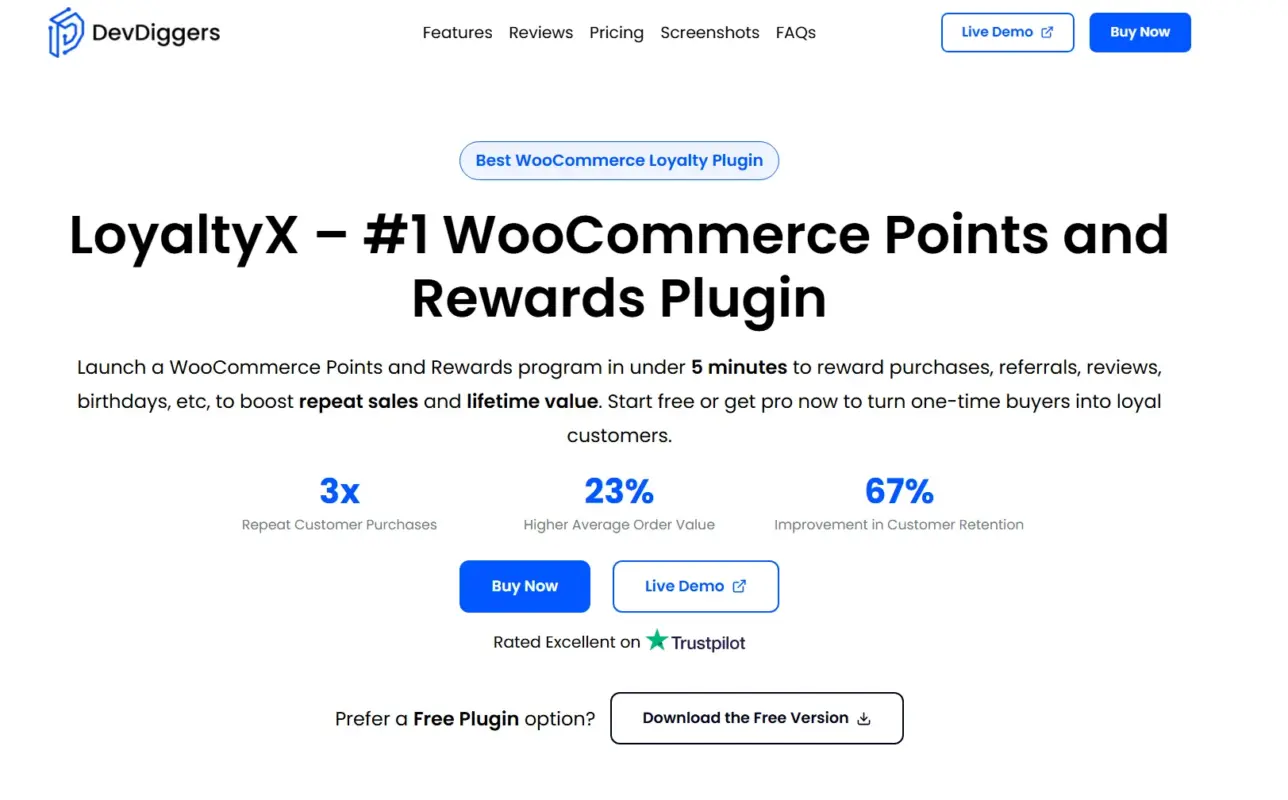
Our own plugin, so read the other nine before you decide anything. We built it after setting loyalty programs up for client stores and hitting the same wall each time. Tiers, referral points and expiry were always on a higher plan. There is a real free build on WordPress.org, not a locked trial, and one Pro price that carries every feature.
Key Features
- Eight ways to earn: purchases, signup bonus, product reviews, daily login streaks, referrals, birthdays, level-ups, and rules you write yourself.
- Seven ways to redeem: points-to-discount at your own rate, fixed and percentage discounts, free shipping, free products, buy X get Y, and bundles. Partial redemption is built in.
- A referral program with a unique link per customer and 30-day cookie tracking, so late referrals still count. Both sides get rewarded.
- Unlimited loyalty tiers from point thresholds, each with its own badge, level-up bonus and points multiplier.
- Points expiry that redeems oldest first, with reminder emails before the deadline. Manual adjustments are excluded, so a goodwill gesture never vanishes.
- A floating rewards widget on every page plus a dashboard in My Account, and you can rename points to Stars, Credits or anything else.
- CSV import and export of balances, so moving from another plugin does not cost you your customers’ history.
- HPOS ready, works with block and classic checkout, every payment gateway, and multilingual sites.
Pricing
- Free on WordPress.org, with no time limit. The floating rewards widget is in the free build too.
- Pro from $97 for the first year on one site, $419 for five sites, $559 for ten. Regular price is $139 for one site.
- Every reward feature is in every plan. There are no add-ons to buy later, and no cut of your orders.
Best For
Stores that want tiers, referrals and expiry rules without three upgrades to get there. Start on the free build, then move up when redemption proves itself. See the WooCommerce points and rewards plugin.
2. WPLoyalty
Overview
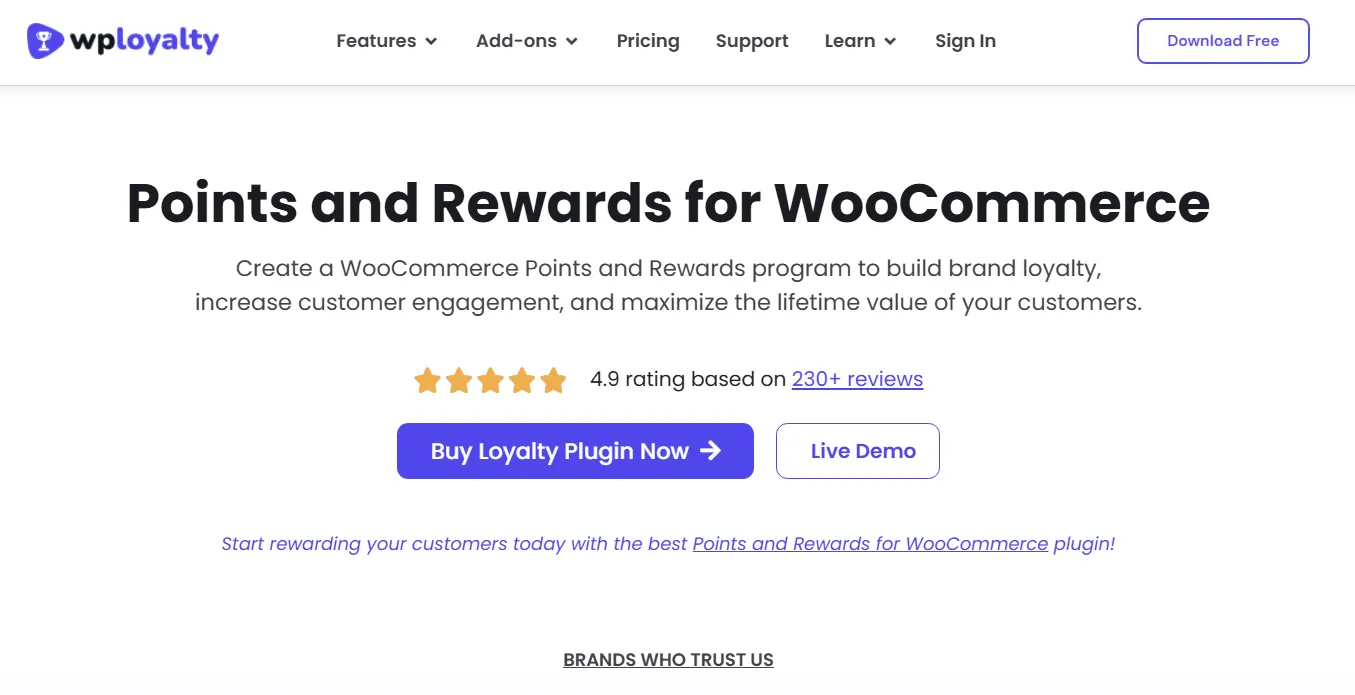
WPLoyalty is the strongest all-round option in this list if you are happy paying yearly. It covers points, tiers, referrals, birthday rewards and expiry in one plugin instead of spreading them across add-ons, and it is actively maintained.
Key Features
- Points, tiers, referrals and birthday rewards in the core plugin.
- Free Lite version on the WordPress directory.
- Clean customer-facing loyalty widget.
- Campaign scheduling for double-point periods.
- Point expiry with reminder emails.
Pricing
- Free Lite version available.
- Paid plans from around $105 per year.
Best For
Stores that want one plugin covering every loyalty mechanic and prefer a directory plugin with regular updates.
3. YITH WooCommerce Points and Rewards
Overview
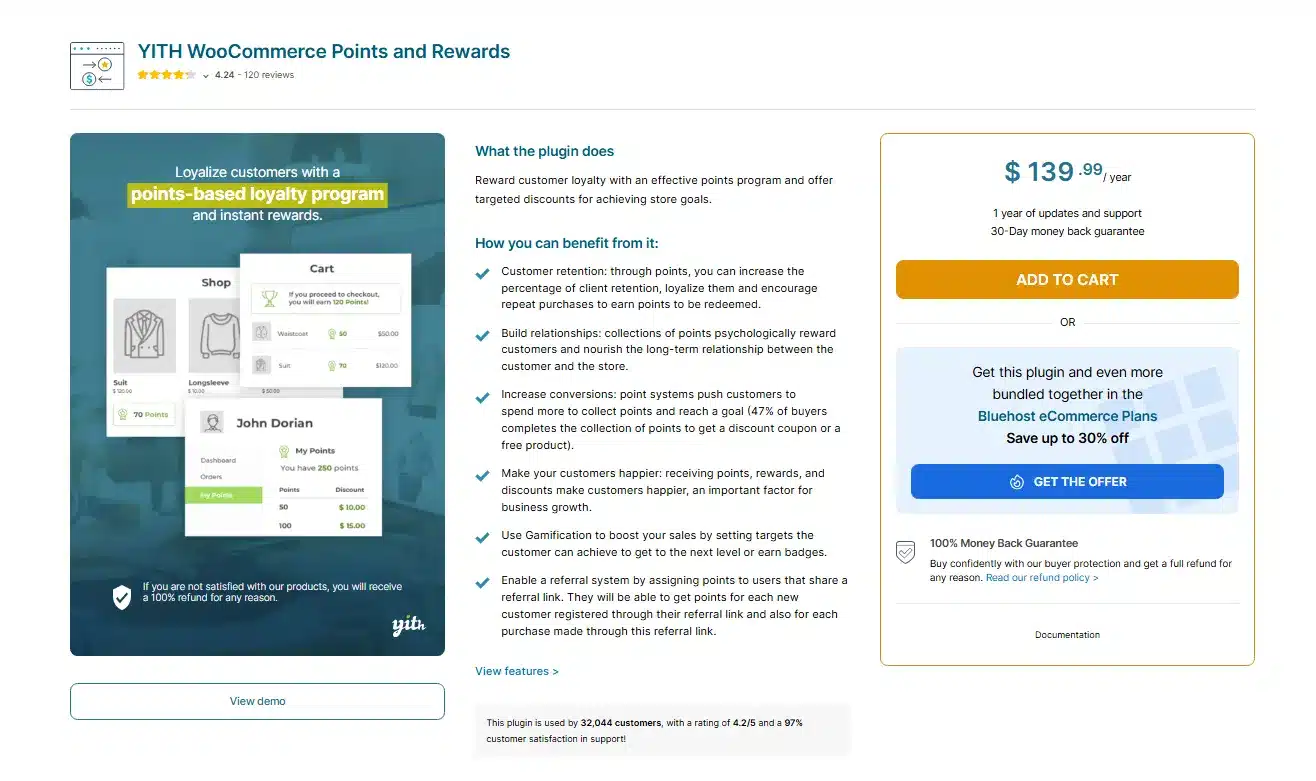
A dependable, conservative choice that fits neatly if you already run other YITH plugins. Tier support is partial, and referrals or cashback mean buying another YITH extension.
Key Features
- Points per purchase with per-product overrides.
- Points assigned for reviews and registration.
- Works closely with YITH Wishlist, Subscriptions and Membership.
- Familiar WooCommerce admin screens.
- Bulk point assignment for existing customers.
Pricing
- Around $140 per year for a single site.
- No free version.
Best For
Stores already running several YITH plugins that want one vendor and one support contact.
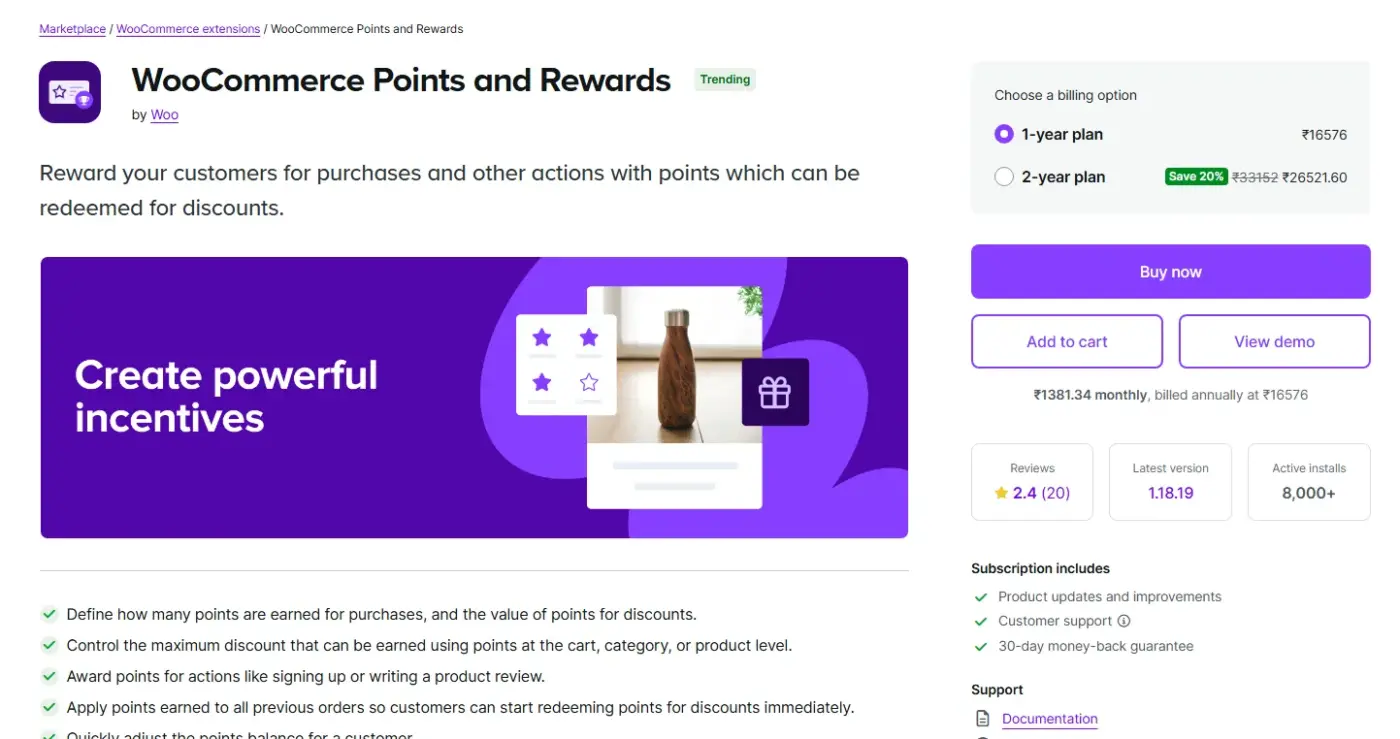
4. WooCommerce Points and Rewards
Overview
WooCommerce Points and Rewards is the official extension from WooCommerce. It is the most basic option here and does the core ledger without fuss. No tiers, no referrals, no birthday rules. For some stores that restraint is exactly right.
Key Features
- Official extension, billed through WooCommerce.com.
- Points per purchase and manual adjustment.
- Redemption at cart or checkout.
- Maximum discount setting per order.
- Updates through your WooCommerce.com account.
Pricing
- Around $129 per year for a single site.
Best For
Stores that want points only, from the official source, with no extra mechanics to configure.
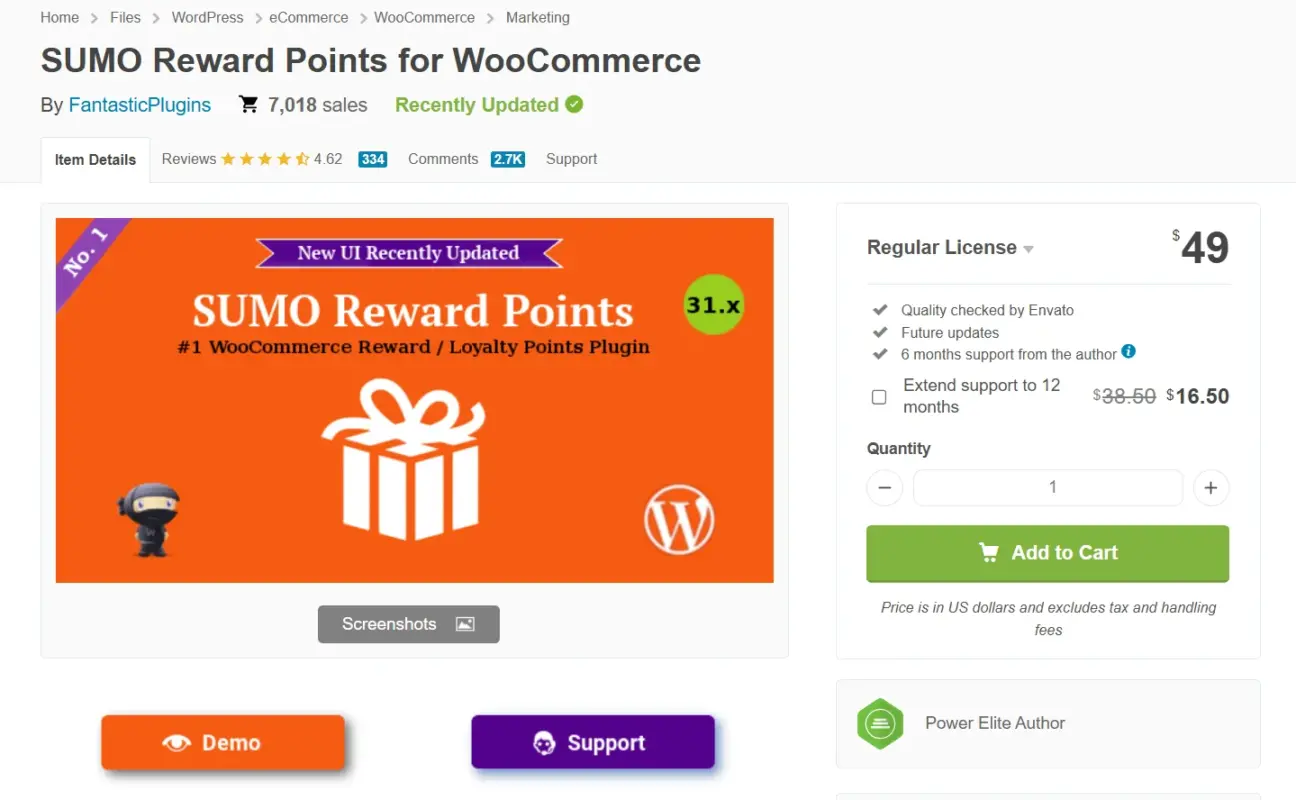
5. SUMO Reward Points
Overview
SUMO Reward Points is the only plugin here with a one-time price this low, and the only one that lets customers transfer points to each other. It is sold on CodeCanyon, so updates arrive by manual download, not through the WordPress updater.
Key Features
- One-time purchase, no renewal.
- User-to-user point transfer, which nothing else here offers.
- Points for a long list of actions, including social shares.
- MLM-style referral chains supported.
- Detailed per-user point log.
Pricing
- Around $49 once, on CodeCanyon.
Best For
Budget-conscious stores, and any store where customers might gift points to each other. Accept the manual update workflow.
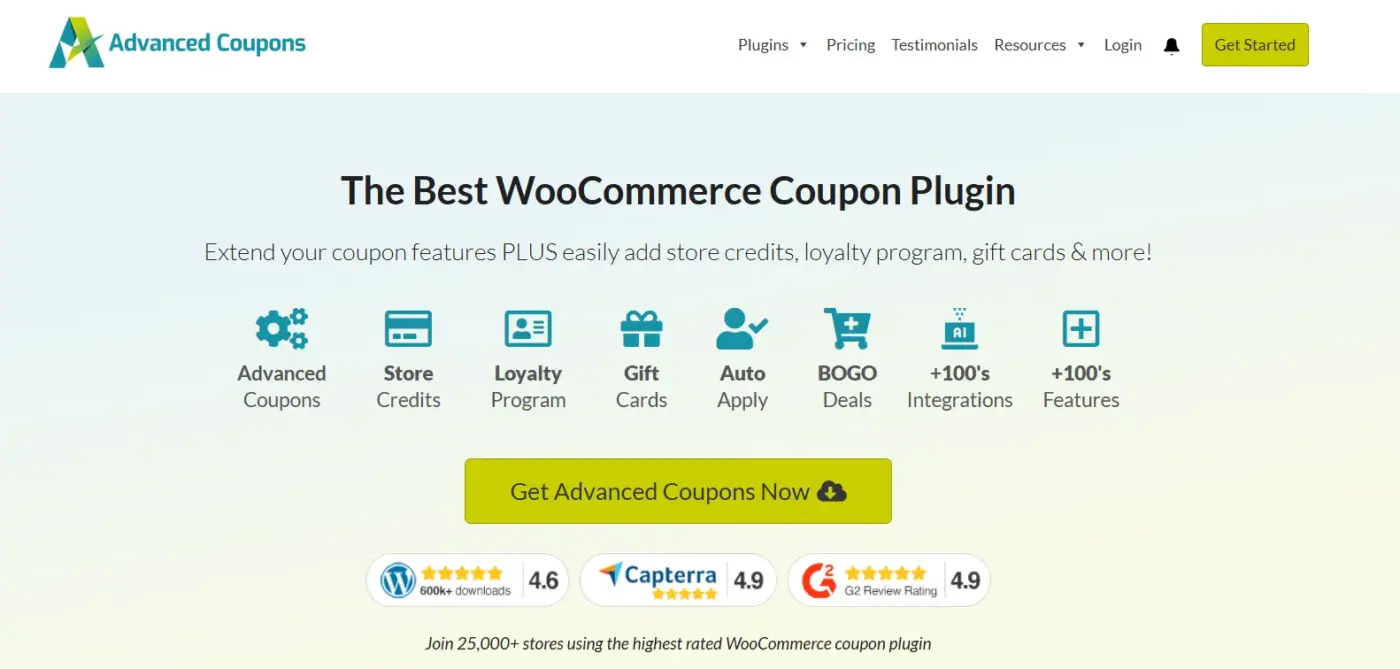
6. Advanced Coupons Loyalty Program
Overview
Worth a look mainly if you already run Advanced Coupons. Loyalty then sits alongside store credit, gift cards and BOGO deals in one system. It also ships a migration tool that imports balances from several rivals, which matters if you are switching.
Key Features
- Loyalty bundled with store credit, gift cards and BOGO rules.
- Migration tool that imports from YITH, SUMO and the official extension.
- Points expiry and per-tier earning rates.
- Ties into their coupon rule engine.
- Strong documentation.
Pricing
- Sold as an add-on to Advanced Coupons Premium.
- Plans priced per year, with the loyalty add-on on top.
Best For
Stores that promote aggressively and already use Advanced Coupons for discounts and store credit.
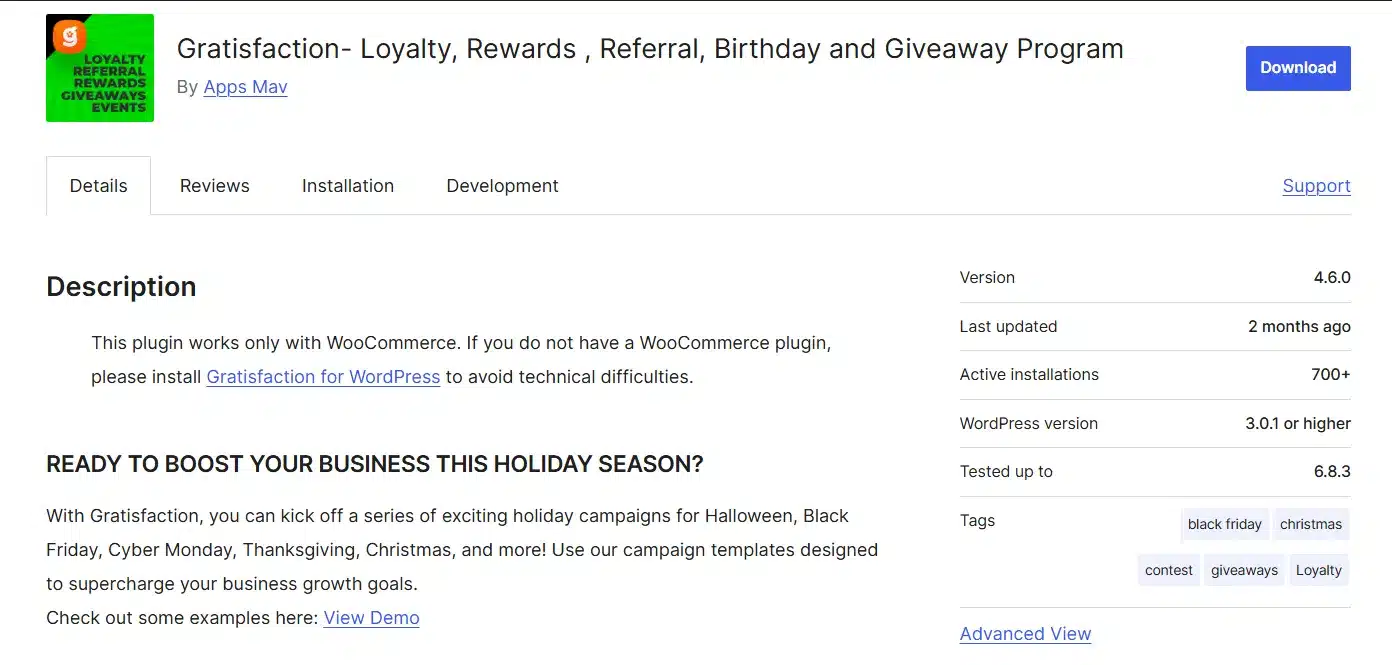
7. Gratisfaction
Overview
Gratisfaction aims at competitions and social actions more than at a points ledger. If your goal is a giveaway or a referral campaign more than long-term loyalty, this fits better than the others.
Key Features
- Contests, giveaways and sweepstakes built in.
- Points for social follows, shares and birthdays.
- Referral campaigns with shareable links.
- Instant win and scratch-card mechanics.
- Free tier for small stores.
Pricing
- Free plan with limits.
- Paid plans from around $19 per month.
Best For
Stores running campaigns and giveaways, where the loyalty ledger is the side dish and not the main course.
8. myCred
Overview
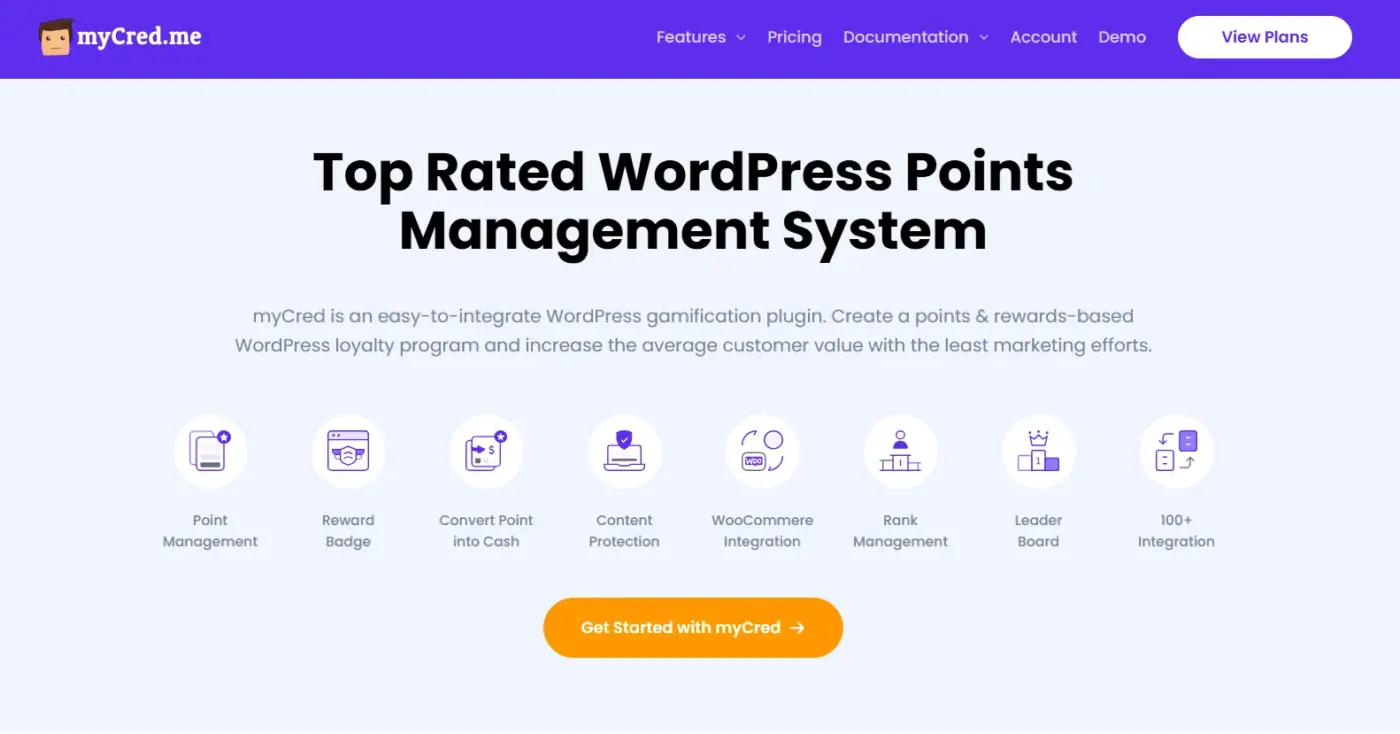
myCred is a points structure, not a shopping plugin. It is free, endlessly configurable, and the most work to set up. If you want points to mean something across a membership site, a forum and a store at once, nothing else here comes close.
Key Features
- Free core plugin with a large add-on library.
- Multiple separate point types at once.
- Ranks and badges as well as balances.
- Hooks into BuddyPress, LearnDash and forums.
- Full control over every earning and spending rule.
Pricing
- Free core plugin.
- Paid add-ons for WooCommerce-specific features.
Best For
Membership sites and communities where points span more than the store. Too much configuration for a simple shop.
9. Loyalty Points and Rewards by WP Swings
Overview
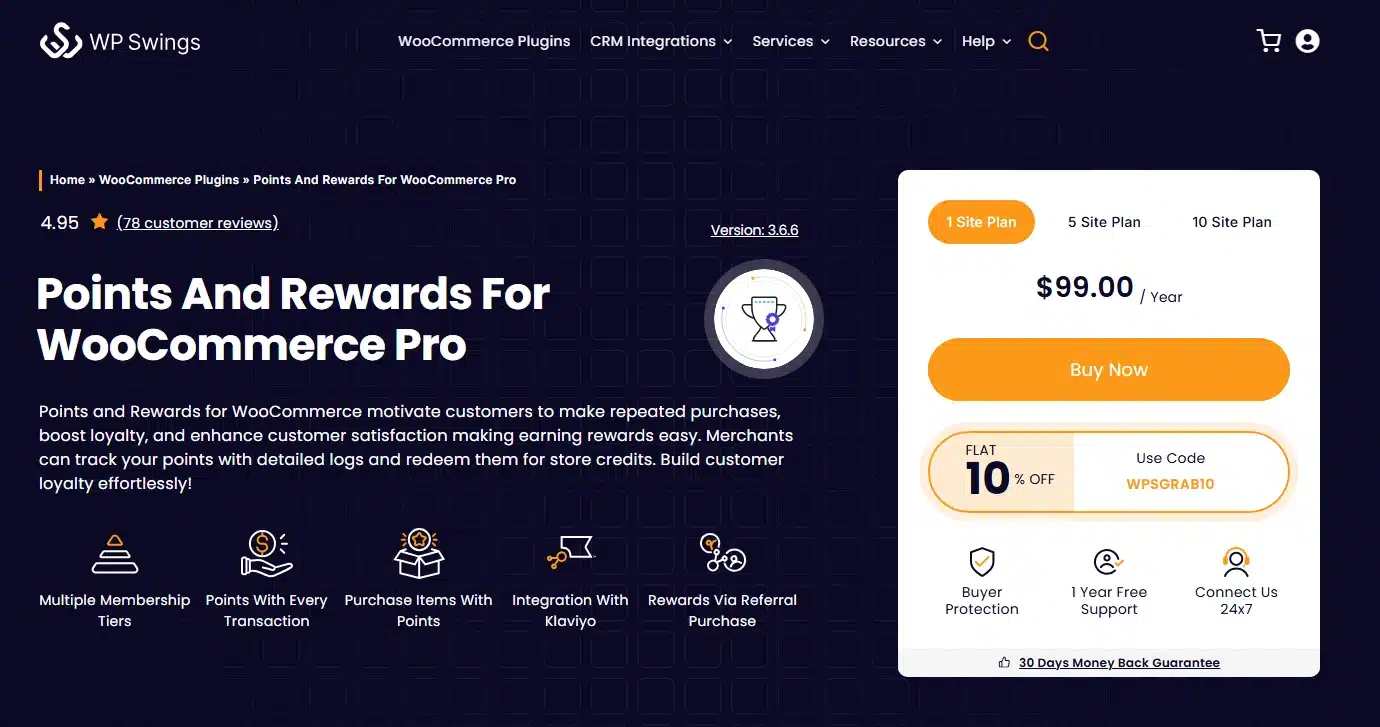
Loyalty Points and Rewards by WP Swings is a solid middle option with a usable free version. That makes it a low-risk way to test whether your customers redeem at all before you commit money.
Key Features
- Free version covering points on purchase and redemption.
- Referral points in the paid version.
- Per-product and per-category earning rules.
- Point expiry with notification emails.
- Import of existing customer balances.
Pricing
- Free version on the WordPress directory.
- Paid plans from around $79 per year.
Best For
Stores that want to trial a rewards program free and upgrade only once it proves itself.
10. FunnelKit Cart and Rewards
Overview
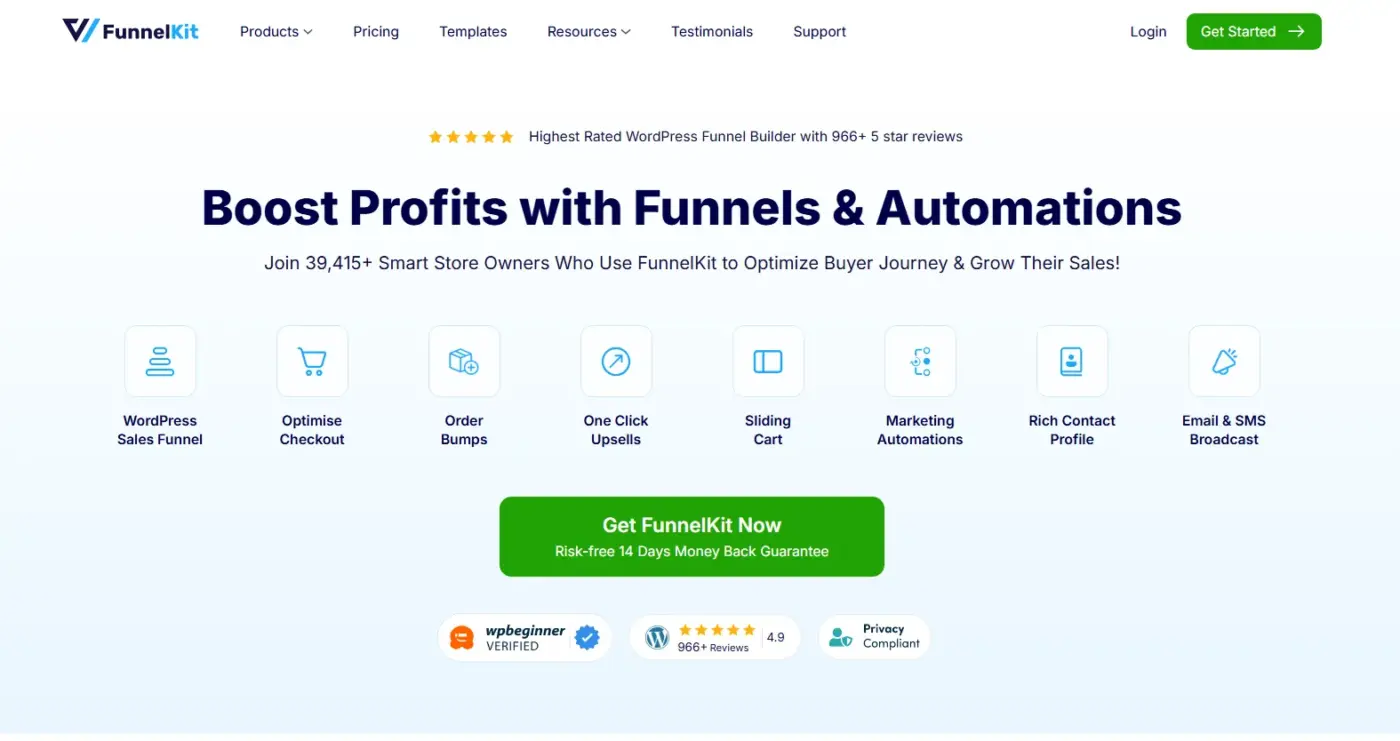
Rewards here are one part of a wider conversion toolkit built around the cart and checkout. Choose it for the funnel work, and treat the loyalty features as a bonus, not the reason to buy.
Key Features
- Rewards tied to a slide-out cart with progress bars.
- Reward milestones that open up as the cart grows.
- Integrates with FunnelKit checkout and automations.
- Automated point reminder emails.
- Strong reporting on cart behavior.
Pricing
- Paid plans, priced per year.
- Sold as part of the wider FunnelKit suite.
Best For
Stores already using FunnelKit for checkout and automation that want rewards inside the same system.
Do you need a WooCommerce plugin or a WordPress loyalty plugin?
They are not the same tool, and picking the wrong one wastes a month. A WordPress loyalty plugin awards points for site activity: comments, logins, course progress, forum posts. A WooCommerce rewards plugin awards them for orders and spends them at checkout.
If money changes hands, you want the WooCommerce kind. Points that cannot become a discount on an order are just a scoreboard, and customers stop caring about scoreboards fast.
myCred is the exception worth knowing. It started as a general WordPress points system and has a WooCommerce bridge, which is why it keeps showing up on both lists. That flexibility costs you setup time, so pick it for a community site, not a shop.
One more case we get asked about often. If you also sell over the counter, check that points earn and redeem in person too. Our own WooCommerce POS plugin reads the same balance as the website, so a customer does not lose points for walking in.
Quick comparison of WooCommerce rewards plugins
| Plugin | Price | Tiers | Referral points | Best for |
|---|---|---|---|---|
| LoyaltyX | Free / from $97/yr | Yes, unlimited | Yes | Everything in one price |
| WPLoyalty | Free / from ~$105/yr | Yes | Yes | Best all-rounder |
| YITH Points and Rewards | ~$140/yr | Partial | Add-on | YITH plugin family users |
| WooCommerce Points and Rewards | ~$129/yr | No | No | Official and minimal |
| SUMO Reward Points | ~$49 once | Yes | Yes | Lowest cost, point transfers |
| Advanced Coupons Loyalty | Add-on, yearly | Yes | Yes | Stores already on Advanced Coupons |
| Gratisfaction | Free / from ~$19/mo | No | Yes | Contests and giveaways |
| myCred | Free core | Yes | Yes | Communities and membership sites |
| WP Swings Loyalty | Free / from ~$79/yr | Limited | Yes | Trying free first |
| FunnelKit Cart and Rewards | Yearly suite | Limited | No | Cart and funnel optimization |
Which one we would choose
- You have never run a rewards program: start on a free build. WP Swings, WPLoyalty Lite or our own free version all work. Spend nothing until you know your customers redeem. Plenty of stores find they do not.
- You want the full set of mechanics: WPLoyalty or LoyaltyX. Both cover tiers, referrals and expiry. LoyaltyX puts all of it in the base price instead of splitting it across plans.
- You want the cheapest thing that works: SUMO at around $49 one-time, as long as you can live with manual updates.
And the advice we give every client before any of this. Run the numbers on your reward rate first, cap redemption per order, and set an expiry. No rewards plugin can save a program whose numbers were wrong on day one. Two guides worth reading next: how to add a referral program to your WooCommerce store, and how to reward customers for writing reviews.
Two neighbours worth knowing about. To pay rewards as spendable store credit instead of a coupon, you want a WooCommerce wallet plugin. When the people recommending you are partners and not customers, you want a WooCommerce affiliate plugin instead, because the commission maths is a different problem. Our roundup of the best WooCommerce affiliate plugins covers those, and WooCommerce wallet vs store credit explains which payout type suits which store.
If none of these fit how your store works, we build custom WooCommerce extensions for exactly this kind of requirement.
Frequently Asked Questions (FAQs)
Q1. Are WooCommerce rewards programs worth running?
They work when you sell something people buy repeatedly, like consumables, supplies or fashion. They rarely pay for themselves on high-value one-off purchases, because nobody buys a second mattress to use their points. Check your repeat purchase rate before you set one up.
Q2. Can customers redeem points at checkout?
Yes, every plugin here supports it. What differs is the control you get. Look for a cap on how much of one order can be paid with points, because without it a large balance can wipe out the margin on a single sale.
Q3. Can I give points for things other than purchases?
Most plugins do. Common triggers are account signup, product reviews, referrals, birthdays and social shares. Rewarding a review or a referral is usually better value than rewarding spending, because it buys behavior you would not otherwise get.
Q4. Will a loyalty plugin slow down my WooCommerce store?
A little, since the balance is read on cart and checkout pages. It is rarely noticeable on a normal store. If you already run several cart plugins, measure before and after, because those pages are the ones you cannot afford to make slower.
Q5. Are these plugins GDPR compliant?
The plugin stores a balance against an existing customer account, so it adds little new personal data. Your obligation is to include point balances in data export and erasure requests. Check that the plugin supports the WordPress privacy tools before you buy.
Q6. What is a good points-to-currency rate?
Start by deciding the discount percentage you can afford, then work backwards. If 2 percent is your limit and you award 1 point per $1, set 50 points to equal $1. Never pick the rate by copying another store, because you do not know their margin.
Q7. Should points expire?
Usually yes. Twelve months of inactivity is a fair rule. It caps the liability sitting on your books and gives you a real reason to contact lapsed customers. State the rule plainly at signup so nobody is surprised.
Q8. Can I move my points balances to a different plugin later?
Sometimes. Advanced Coupons ships a migration tool that imports from several rivals, and a few others accept a CSV import. Most do not. Ask about migration before you start, because balances are the one thing customers will notice losing.