


Finding it difficult to make your WordPress site shine? You are among many stuck in a world of dull text colors, or colors that don’t relate too closely to your brand and design. The biggest issue is that default theme colors have no personality at all, and they even suck the life out of the web page (legibility and readability).
And here’s the most important part: font color will have an effect on user experience, accessibility, and how long they actually stick around on your site. If the color reflects poorly on users’ eyes and makes it difficult to read, however, the right font color combination will stand out in a user-friendly way, bring attention to areas, emphasize text, and build your brand identity.
That’s why it’s necessary to learn how to change your font color in WordPress, because you can develop a professional skill as a blogger, business owner, and designer. I’ve got you covered in this full guide, with five simple ways to change your site text coloring (with the Block Editor, through widgets, and with CSS).
Why Change Font Color in WordPress?
Before we get to learn how to change font color in WordPress, it is helpful to start off with an understanding of why font color is so important. It’s not just about how the website looks; it’s about usability, engagement, and even conversions.
Here are some of the main reasons changing font color is important:
- Better readability: If the text fades into the background, the visitor will leave sooner or later. Contrast will ensure that your content is easy on the eyes.
- To highlight important information: A change of font color for headlines or CTAs in ‘call to action’ instances helps to draw attention to the important information.
- Strong brand identity: The font color should not stray from the palette of your brand. For instance, a tech blog might prefer blue, while a health brand might choose green.
- Accessibility: An accessible color contrast is a requirement. In this case, you have to be cognizant that some visitors might be visually impaired, and colors, along with contrast, will have a direct impact on the reading and/or engagement.
- Looking professional: A consistent color scheme creates a professional look between the body text, headings, and links in your website design.
How to Change Font Color in WordPress: 5 Methods
With the importance of text color established, let’s get into the five best ways to change font color in WordPress. Each method is appropriate for a different situation, whether you want to change the color of one single line of text, customize the colors across your whole site, or use a page builder for total creative control.
Method 1: Change Font Color Through the WordPress Block Editor
The WordPress Block Editor (Gutenberg) is pretty much the default editor on most WordPress sites today. Fortunately, customizing font colors is easy peasy. You can style text to your liking on a block-by-block basis without writing any code.
Step-by-Step Instructions:
- Open the page or post you want to edit from the WordPress dashboard.

- Click on the text block (paragraph, heading, or list) that you want to style.

- In the settings panel on the right, scroll to the Color button.
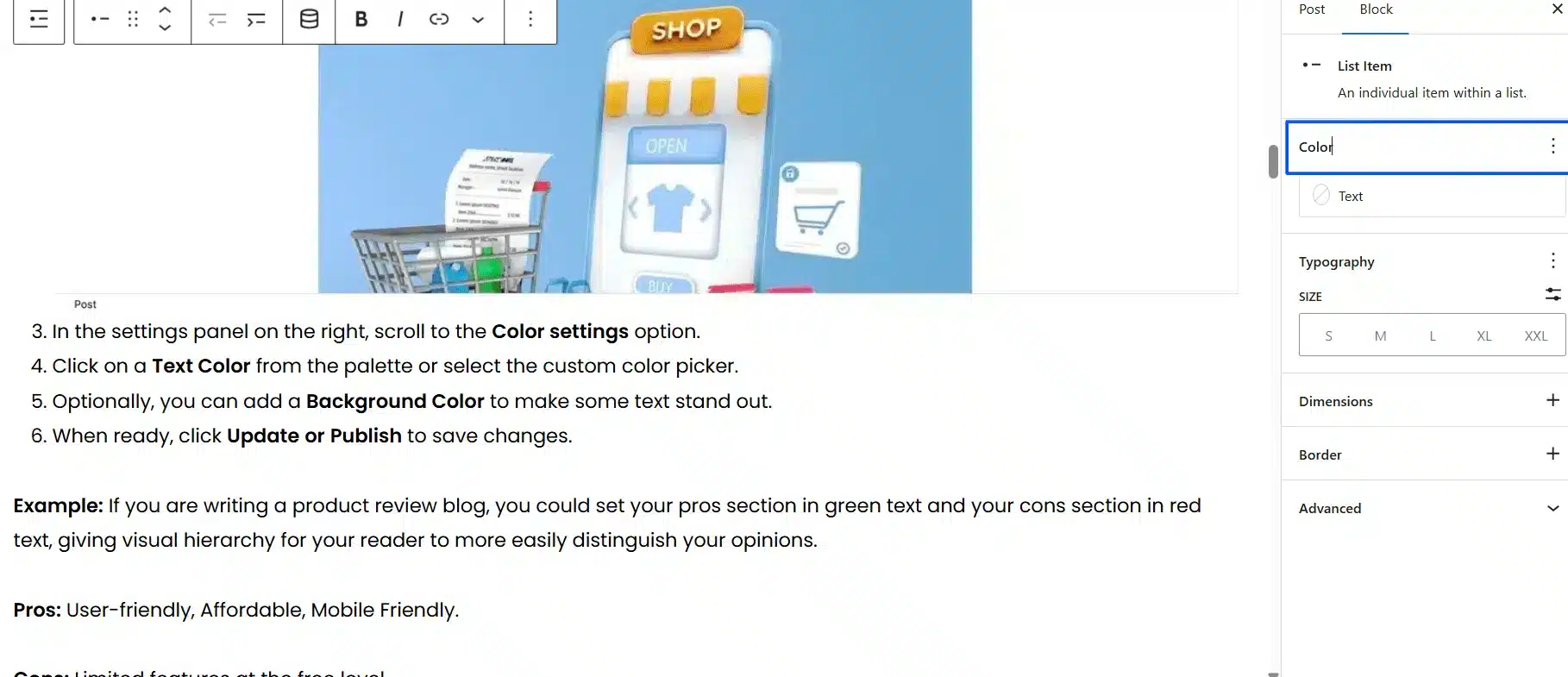
- Click on Text and select a color from the palette or select the custom color picker.
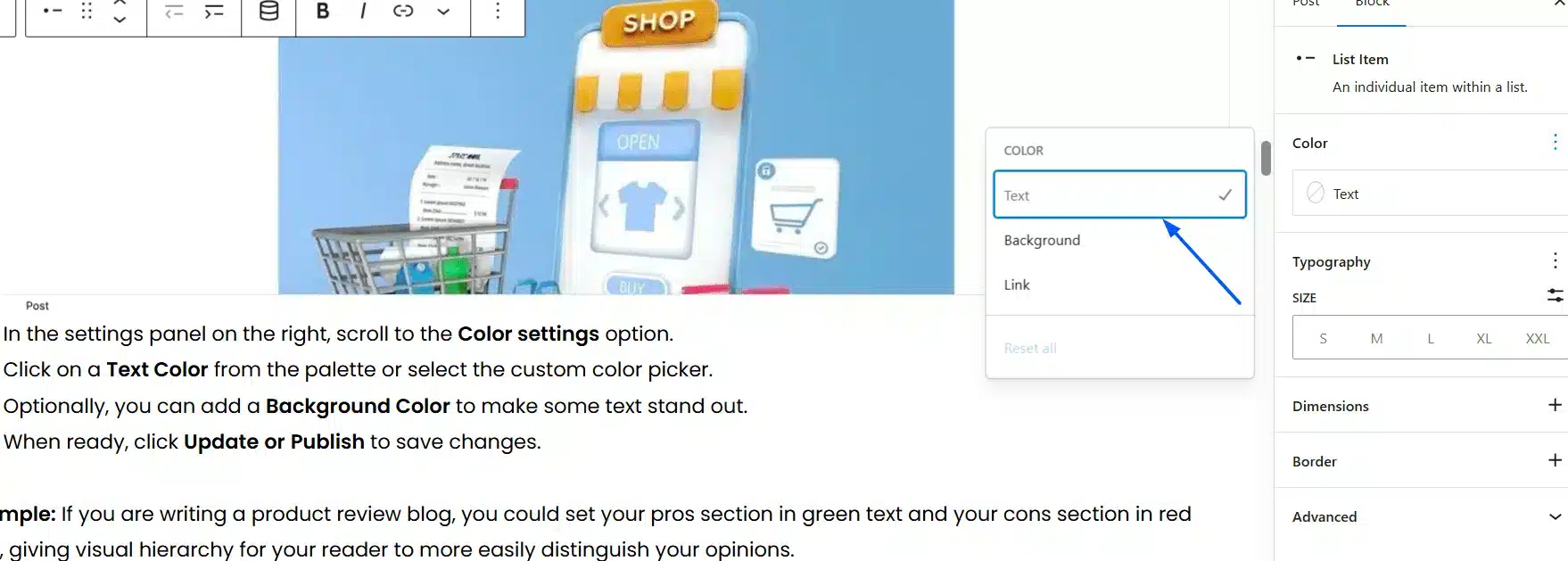
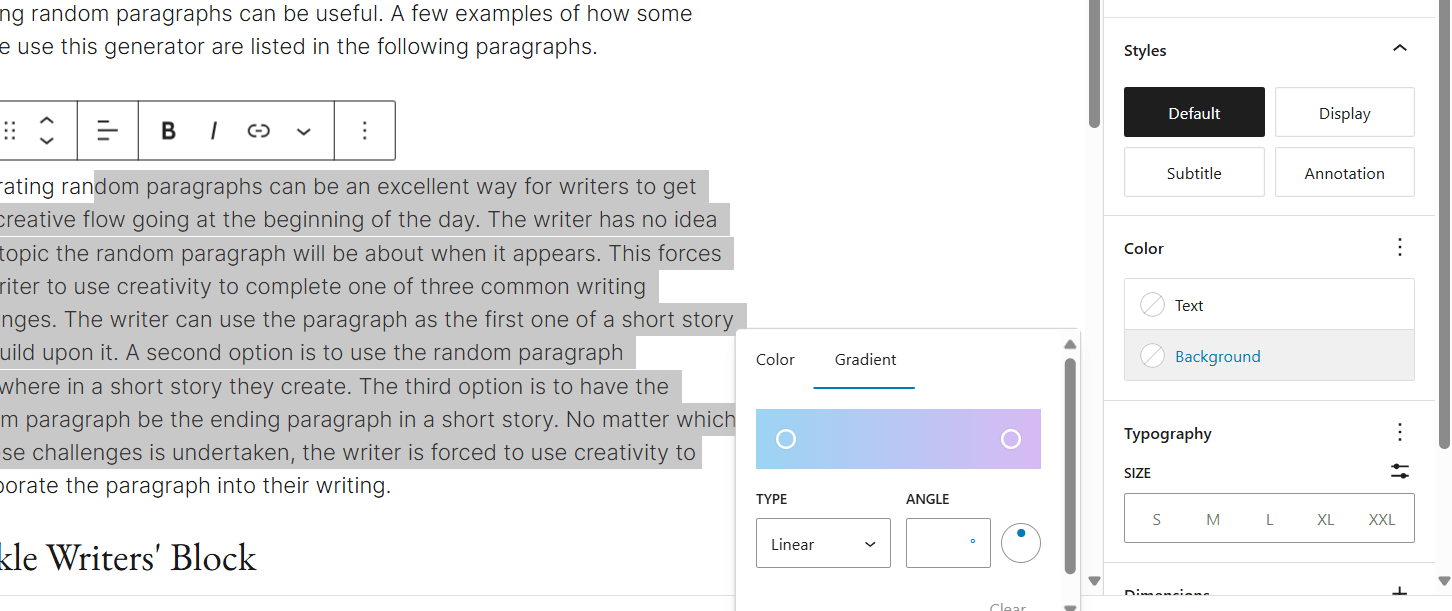
- Optionally, you can add a Background Color to make some text stand out.
- When ready, click Publish to save changes.
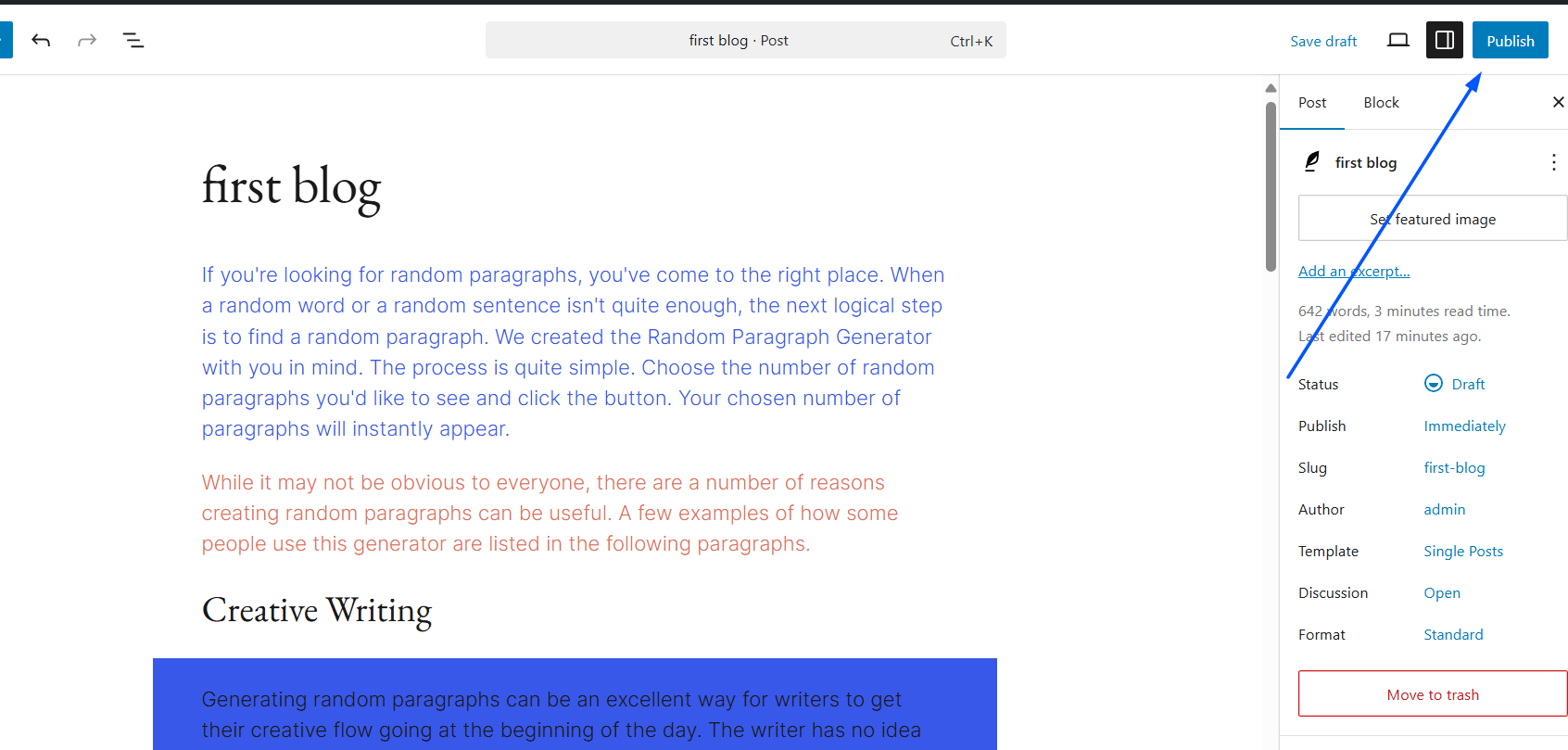
Example: If you are writing a product review blog, you could set your pros section in green text and your cons section in red text, giving visual hierarchy for your reader to more easily distinguish your opinions.
Pros: User-friendly, Affordable, Mobile Friendly.
Cons: Limited features at the free level.
Best For: Beginners, bloggers, and small businesses who want quick, no-code customization.
Method 2: Change Font Color Using the WordPress Classic Editor
Even though the Block Editor came out in 2018, many users of WordPress still use the Classic Editor plugin because it is simpler and familiar. If you’re one of those users, you’re in luck because you can still find out how to change font color in WordPress with the Classic Editor—though it is slightly less flexible than it was in Gutenberg.
Step-by-Step Guide:
- Open the Post or Page in the WordPress Classic Editor.
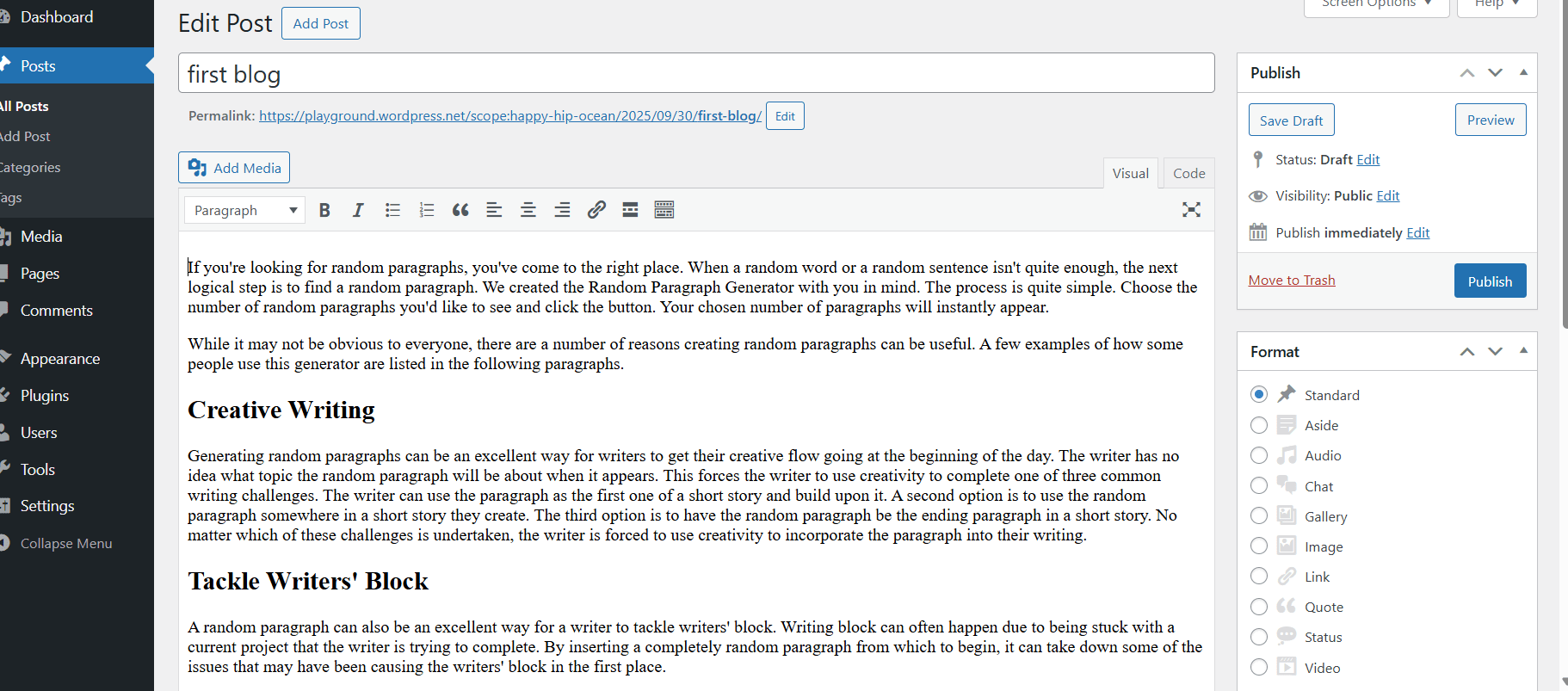
- Highlight the text that you want to modify.
- Click the Toolbar Toggle button (the small, round icon shaped like a row of three dots) to display the complete menu of editing tools.

- Find the Text Color button (a letter “A” with a colored bar below it).Choose a color from the options in the dropdown palette, or, to customize your own color, click the Custom button to access a window where you can enter your HEX/RGB code for your desired color.

- Once you have added the color of your choice, click Save Draft and publish the Post.
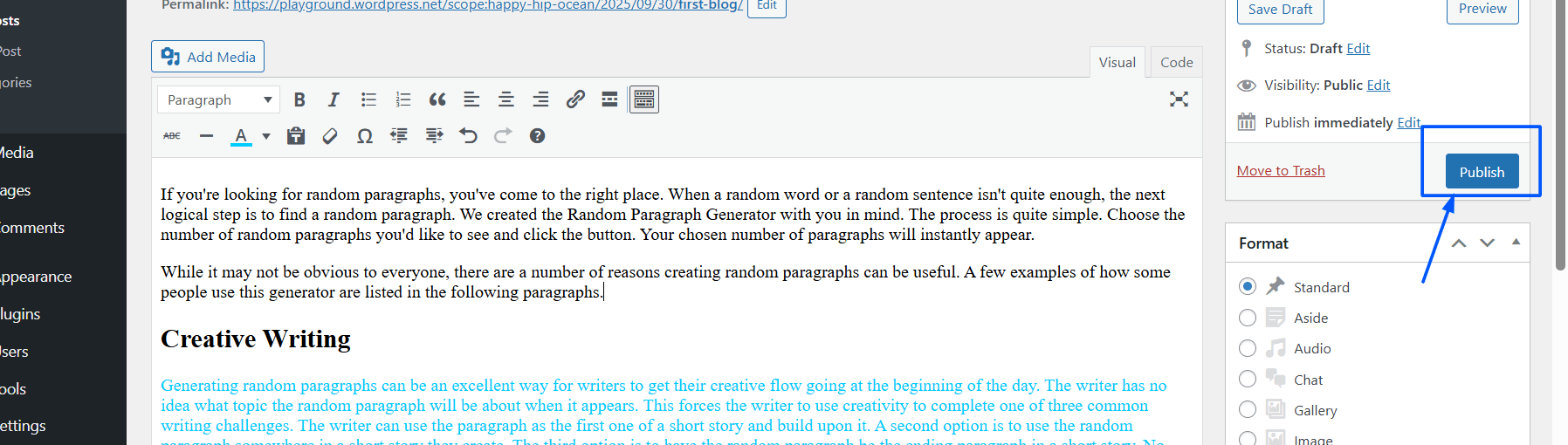
Example: Let’s say you have a tutorial post and want to call out commands or code. You could set your commands in blue and warnings in red for attention scanning:
Run this command: sudo apt-get update
Warning: Don’t close the terminal while it’s installing.
Classic Editor Limitations:
- You can’t set global font colors (you’re adjusting colors on the chosen text only).
- Fewer styling controls than the Block Editor or today’s modern page builders.
- If you want advanced typography controls, you’d need to use extra plugins.
Classic Editor Pro Tips:
If you find yourself constantly making color adjustments, you might want to install a TinyMCE Advanced plugin (found in the Advanced Editor Tools now). It gives you some additional formatting choices that include better color pickers.
- Be consistent. Having too many different colors in one post will look unprofessional.
- Always preview your post to make sure your color choices look fine in both the desktop and mobile versions of your site.
Best For: WordPress stalwarts who prefer the old school classic editor experience and simply need to change font colors without dealing with Gutenberg.
Method 3: Change the Font Color With the WordPress Theme Customizer
If you’d prefer not to individually change colors for each heading or paragraph, then the Theme Customizer is your new best friend. The Theme Customizer offers the ability to set global font colors for your body text, headings, and links – making sure your entire site nests comfortably under your designs.
This is one of the simpler ways to learn how to change font color in WordPress without touching code.
Step-by-Step Instructions:
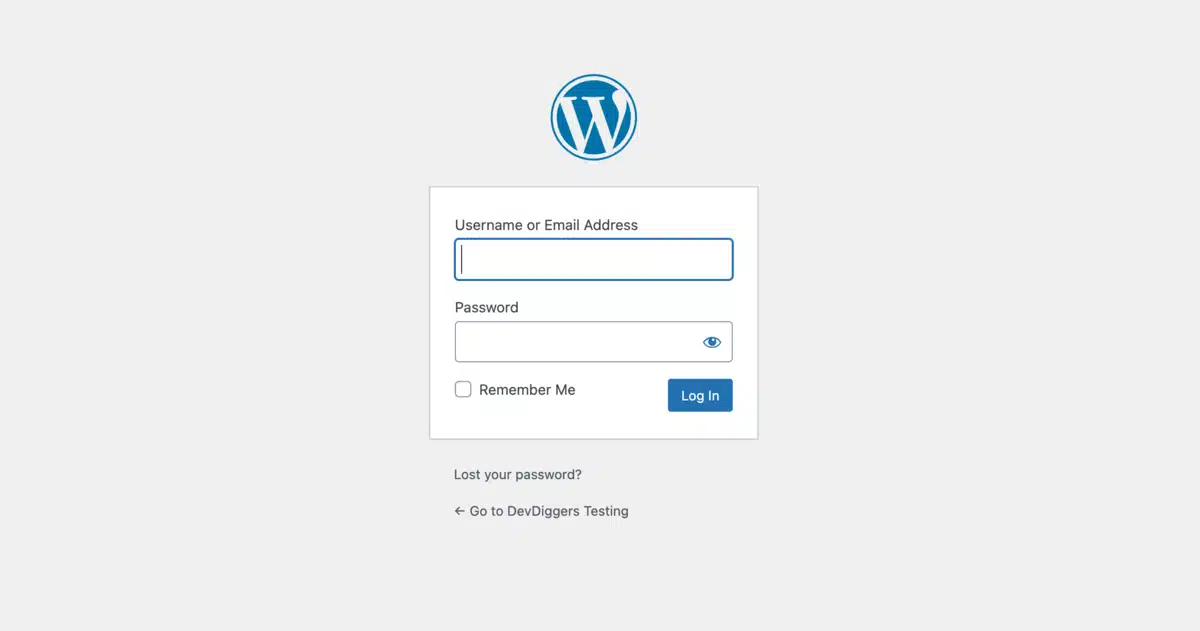
- Log in to WordPress.
- Navigate to Appearance > Customize.
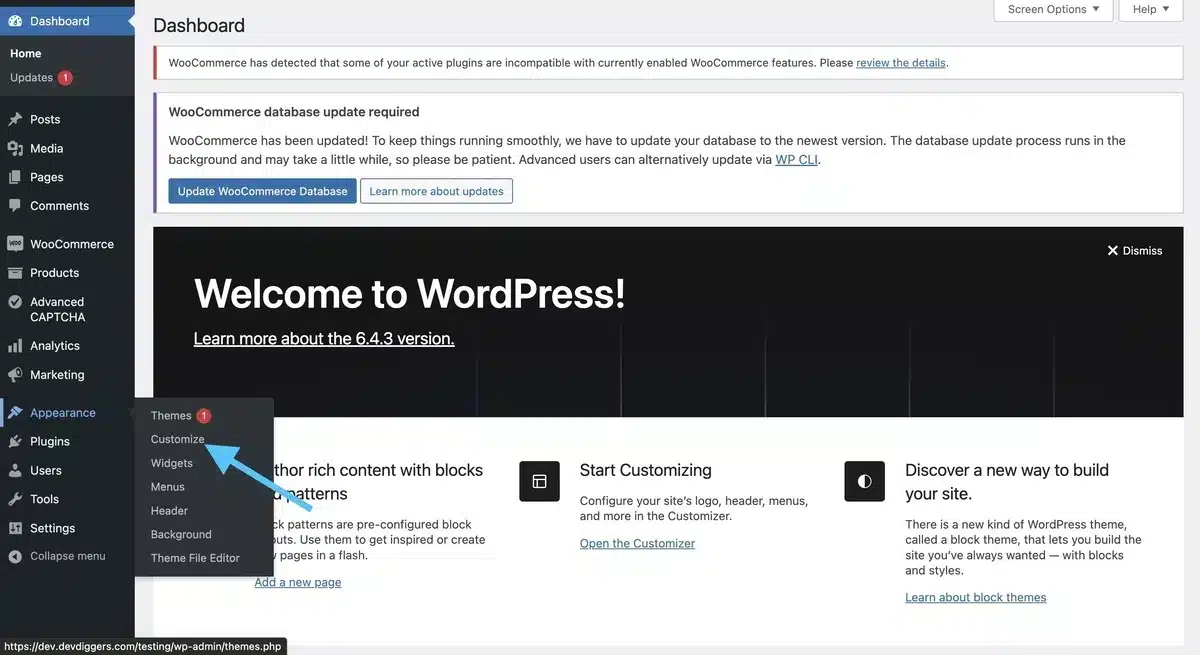
- In the Customizer panel, look for Typography.

- You may now select Body Text, Headings, or Links from which to apply a font color.
- Choose a color from the color picker, or another custom color like a HEX or RGB color code.
- Preview changes instantly in the live preview panel.
- Click Publish to apply changes site-wide.
Example: Let’s assume you own a personal finance blog. You could:
- Set the headings (H1, H2, H3) in a dark green color, so they reflect financial growth.
- The body text is in a standard dark gray for reading clarity.
- Style for links in brighter green or blue, so they stand out.
This will ensure that your design stays consistent on every post without having to manually change colors each time.
Advantages of Using Theme Customizer:
- Consistency: Great for maintaining a cohesive brand look across your entire site.
- Previewable: You can view changes in real-time before saving your adjustments.
- Accessible: You do not need coding experience to make changes.
Disadvantages of Theme Customizer:
Your options depend on your theme. Premium themes (Astra, GeneratePress, OceanWP, etc.) afford advanced control of typography, while free themes only permit some limited color options.
If your theme does not have very many color options, you might have to try to find a different theme or add some custom CSS.
Pro Tips for Theme Customization:
- Use a color palette from your brand design for an overall professional look.
- Consider using Coolors or Adobe Color to get complementary palettes.
- Always check color contrast in some accessibility cross-check tool to maintain coherence in your text.
Best For: Website owners only wishing to change font color globally once, or for alignment with Branding, without needing to change the color of each and every post/block.
Method 4: Change Font Color in WordPress Using CSS Code
If you ever feel constrained by the limitations of your theme’s customizer, CSS will be your best chance. CSS (Cascading Style Sheets) is the language that styles how your website looks. A few lines of code can change the font colors globally, style specific elements, or even target unique classes and IDs.
This may sound a bit technical, but this is the most powerful and flexible way to learn how to change font color in WordPress.
Step-By-Step Instructions:
- Log in to your WordPress dashboard.
- Go to Appearance > Customize > Additional CSS.

- Copy and paste your CSS code into the editor.
- Check the changes in the live preview panel straight away.
- Hit Publish when you’re happy with your custom styles.
Some common CSS to change font colors:
Here are some CSS codes that you can use right away:
/* Change the default body text color */
body {
  color: #333333;
}

/* Change all heading colors */
h1, h2, h3, h4, h5, h6 {
  color: #1a73e8; /* Google blue */
}

/* Change only H1 color */
h1 {
  color: #d62828; /* Red for main headings */
}

/* Change paragraph text inside posts */
.entry-content p {
  color: #444444;
}

/* Change link colors */
a {
  color: #e63946;
}

/* Change link hover color */
a:hover {
  color: #ffb703;
}
Example: You have a tech blog. You can:
- Utilize body text in dark gray (#333333) for optimal readability.
- Use blue (#1a73e8) for H1s to display trust and authority.
- Assign links to red (#e63946) to draw instant attention from your readers.
- And finally, use yellow (#ffb703) for the hover effect, in order to assist readers in visiting links when they mouse over them.
With a few lines of CSS, your site now has the appearance of a professional, branded look, and that look will be reflected across the entire site.
Advantages of using CSS for text colors
- Control: You can change the colors for any element, anywhere, anytime.
- Theme-independent: It will work even if your theme doesn’t support color changes.
- Reusable: Your snippets can be used in the entire content of your site.
- Scalable: You can use CSS for larger sites with hundreds of posts.
CSS Disadvantages and Limitations
- Requires a basic understanding of coding.
- Any misplaced inclination (e.g., missing semicolon) will effectively break formatting.
- The changes will be overridden with any updates to your theme or inline style, unless you add the important instruction.
Pro Tips for CSS Users
- Use the browser inspection tools (right click > Inspect) to find the exact classes and IDs of elements you want to style.
- If you are concerned that children and grandchildren may update the theme, use a child theme and/or a plugin like Simple Custom CSS.
- Before you finalize an announcement of color, use it on multiple devices and multiple screen layouts.
Best For: Developers, advanced users, and anyone who wants precise control over how to change font color in WordPress beyond theme limitations.
Method 5: Change Font Color in WordPress With a Page Builder
If you utilize a WordPress page builder such as Elementor, Divi, or Beaver Builder, it is even easier to change your font color. Page builders provide a visual drag-and-drop interface and allow you to design your whole site without touching any code. Everything about your site is simple to customize, including typography, colors, and layout.
Knowing how to change a font color in WordPress using a page builder is helpful to beginners (who want less hassle) and designers (who prefer precision).
Step-by-Step Instructions:
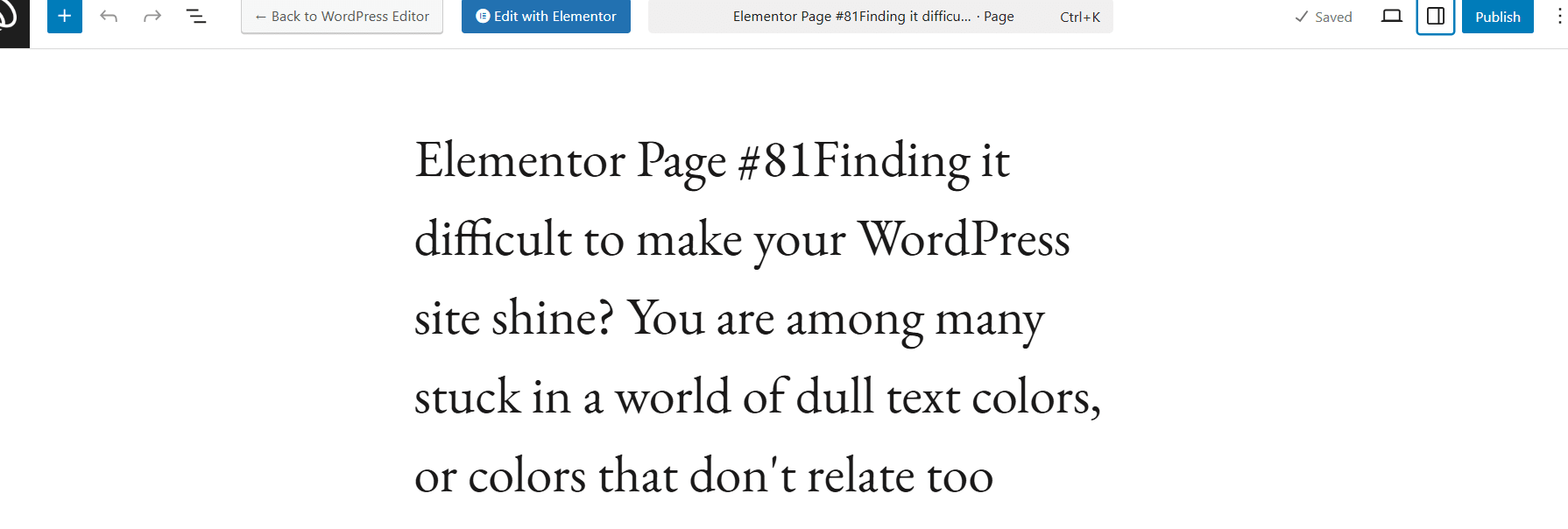
- Open your page with the Elementor editor.
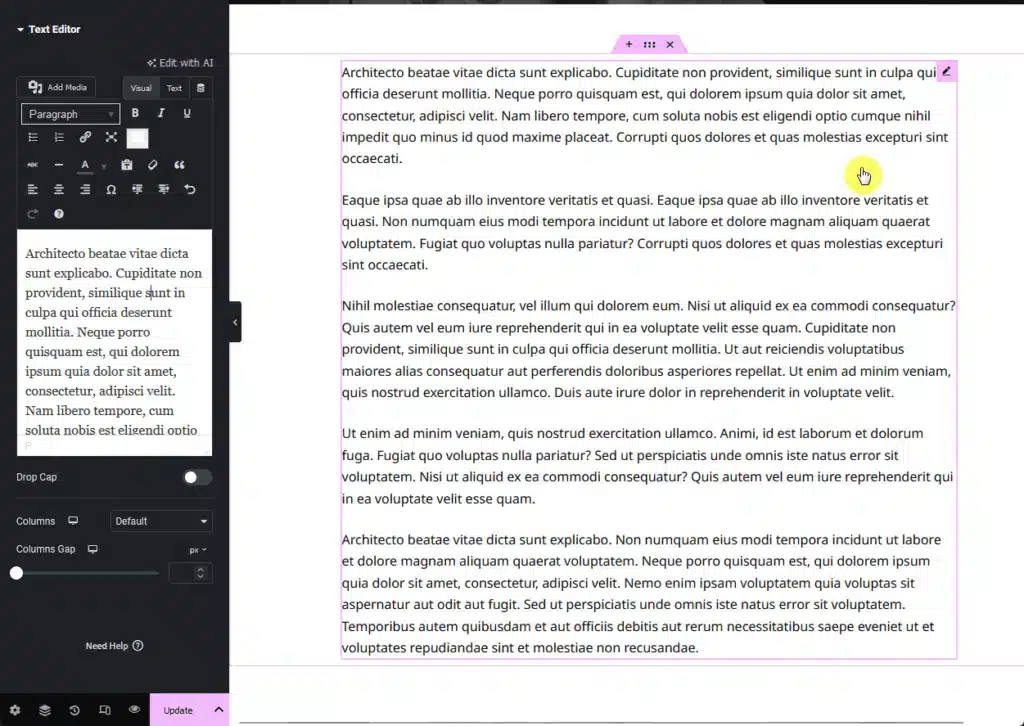
- Click on the text widget or heading widget that you want to edit.
- In the left-hand Style panel, navigate to the Typography section.
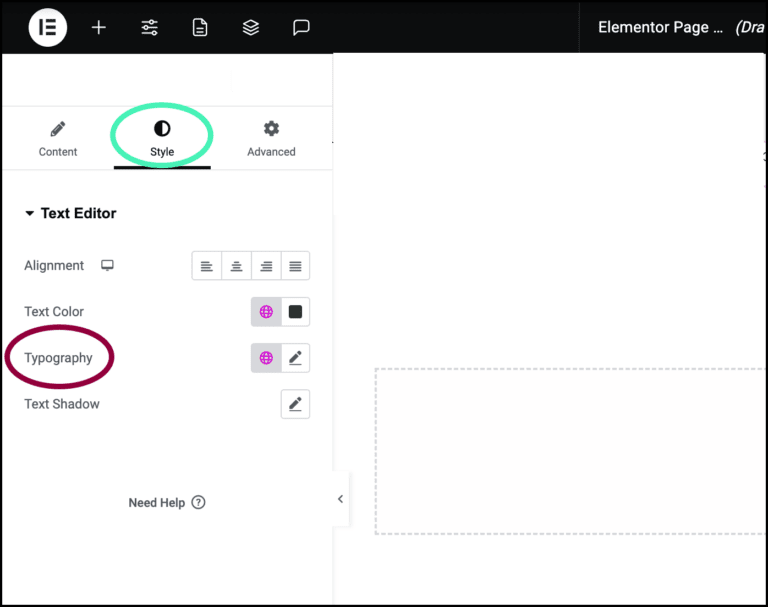
- Under Text Color, select a color using the color palette or enter your HEX/RGB color code.
- If desired, you can set different colors for hover states or responsive views (mobile, tablet, desktop).
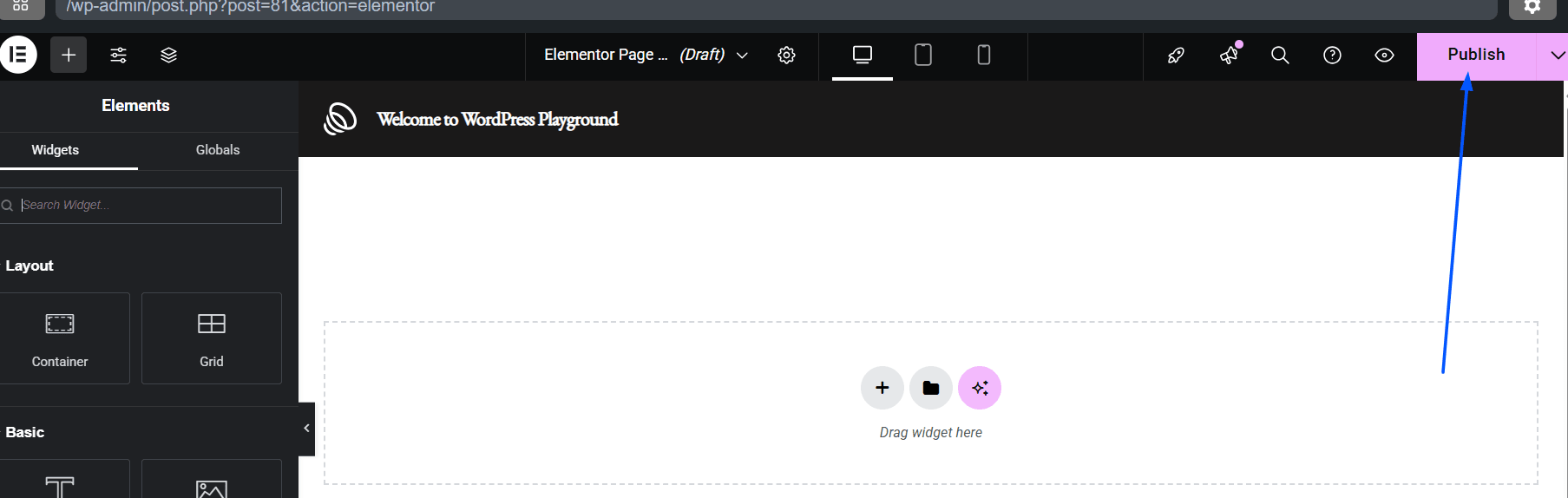
- Click Publish.
Example using Divi Page Builder:
- Open your page within the Divi editor.
- Select the module (text, heading, or button) that you need to style.
- In the on-page tab, scroll down to find the Text option > Text Color option.
- Choose your preferred font color or enter the HEX/RGB code of your liking.
- Save your changes and check the preview.
Example: You’re building a landing page using Elementor. You might:
- Make your headline (H1) bold and red to ensure instant attention.
- Leave your body text dark gray for reading.
- Stylize your Call to Action button text in white in front of a bold blue background.
This not only looks professional but helps your audience see what you want them to see: your Call to Action.
Benefits of Page Building for Font Colors
- Live Preview editing: You can see what you are making updates to.
- Responsive Controls: You can change the colors separately on mobile versus desktop.
- Global Settings: You can define a palette site-wide / and reuse it site-wide across all modules.
- Easy to use: There is no experience needed.
Pro Tips for Page Builder Users
- Establish a global color palette for your site.
- Use 3-4 brand colors at most (having too many may confuse your audience).
- Preview for mobile or tablet view, as the contrast colors may look different.
- Consider pairing changes to the color of the font with the adjustment of typography (font weight, size, and line height) to create a nice overall visual.
Best For: Users’ checklist is looking for drag-and-drop convenience as a great and easy way to design visually appealing websites without the need to write CSS.
Final Thoughts
Learning how to change font color in WordPress is an easy skill to learn and will give you a lot of value. Whether you are a blogger trying to showcase certain takeaways, a business owner trying to match your website with your brand, or just a designer who wants more pixel-perfect control, changing font color will make your site look and feel completely different for your users.
Let’s recap available options:
- If you want a quick edit: Use Block Editor or Classic Editor.
- If you want to stay on brand, Use Theme Customizer for global style.
- If you want to have control, use Custom CSS and add your own rules.
- If you want the most flexibility, Use Page Builders like Elementor or Divi.
Just keep in mind: keeping the site visually appealing isn’t the only reason to change font color. Good font choices also consider accessibility, readability, user engagement, and reinforce the personality of your brand, all very important features your users will notice when visiting your site.
If you are not sure where to start, just start with your headings and your links. Those are great, small edits for even bigger impact. Once you are comfortable, start flexing your skills with CSS or utilizing global palettes in your page builders to work toward a clean and consistent design.
In reality, learning how to change font color in WordPress gives you the freedom to create an overall more appealing site, and it allows you to have a deeper connection with your audience.
FAQs About Changing Font Color in WordPress
Q1. How can I change font color in WordPress without writing code?
You can do this using either the WordPress Block Editor (Gutenberg), Classic Editor, or WordPress Theme Customizer.
Q2. Can I change the font color of my entire site in WordPress?
Yes. You can do this with the WordPress Theme Customizer or a page builder’s global options menu.
Q3. Why is my font color not changing in WordPress?
This is often caused by your theme overriding color settings. In this case, you will want to use Custom CSS to force the changes you want.
Q4. What’s the best font color for readability?
For readability, a dark text color (like black or dark gray) on a light background is best. Always have a strong contrast between the text color and background color for the best results.
Q5. Do any page builders allow you to customize the font color?
Yes. Page builders will let you easily choose font colors for text, headings, and links. This is true for Elementor, Divi, and Beaver Builder as prime examples.