

Duplicate title tags in WordPress happen when two or more pages on your site share the same <title> element, or when a single page outputs that element more than once in the HTML <head>.
If you’re trying to figure out how to remove duplicate title tags in WordPress, you’re dealing with one of the most common SEO issues flagged in Google Search Console — one that store owners and site managers often spend hours chasing without ever fixing the actual root cause.
Having built WordPress sites across dozens of industries, we’ve seen this problem appear quietly and do real damage before anyone notices. Most guides jump straight to solutions without helping you figure out which type of duplicate you’re dealing with.
This one is different. By the end, you’ll know how to find duplicate title tags, diagnose exactly what’s causing them, and fix them using Yoast SEO, Rank Math, or a small code edit.
What Are Duplicate Title Tags in WordPress?
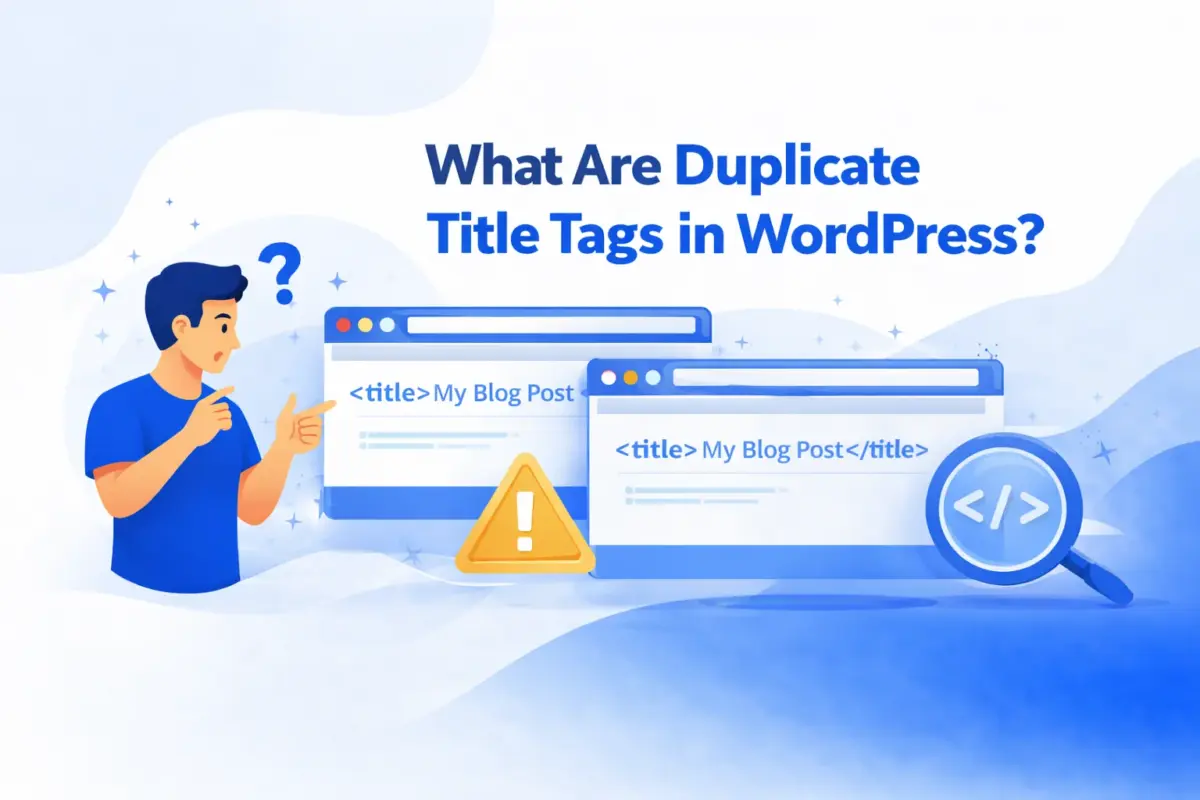
The title tag (HTML) is what tells browsers and search engines about your page. The title tag will be displayed in <head> a section of your web page.
<title>Your Page Title Here</title>
Having duplicate Title Tag issues can occur for two reasons:
- When two different pages within your website have identical title text.
- The second reason is when the same page contains duplicate title tags twice inside the
<head>.
Both problems present issues because Google uses title tags to help determine the topic of a web page and its purpose. If two or more web pages on your website have identical titles, it gets confusing because there is no clear indication of which of the web pages should be ranked for that search term.
If you have a single page with two <title> Tags, the web crawlers will not be able to process both, causing unpredictable behavior.
As much as 76% of title tags get rewritten by Google before they appear in search results. That doesn’t mean your title tags don’t matter. Google still reads them as one of the strongest on-page signals for topical relevance. Letting duplicates exist weakens that signal, which affects how well your pages compete.
You can find more context on how title tags fit into a broader optimisation strategy in our WooCommerce SEO guide.
Why WordPress Creates Them More Often Than You’d Think?
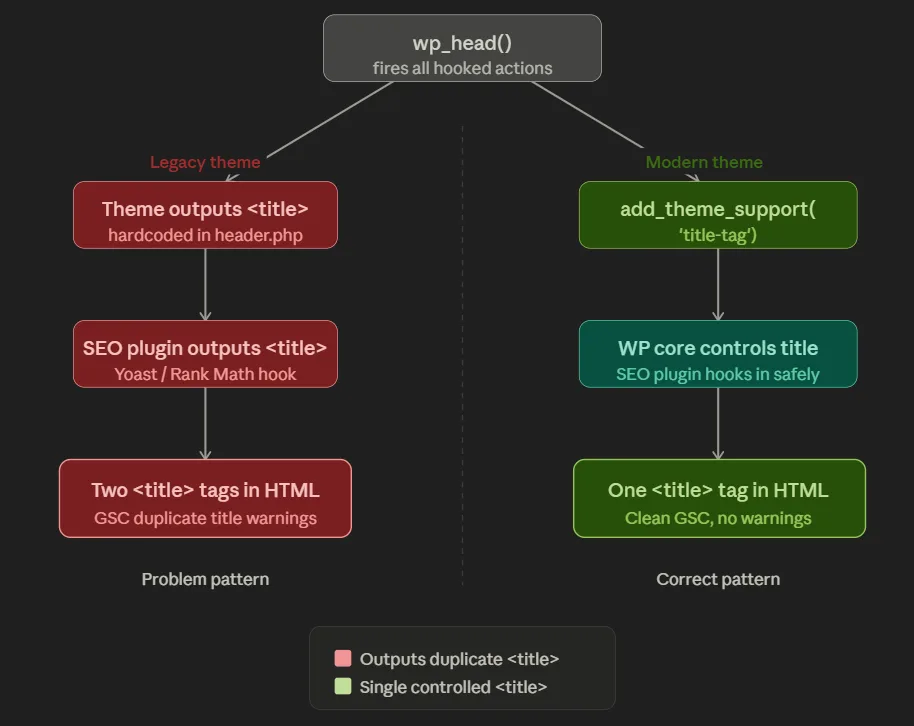
WordPress uses a function called wp_head() to output everything inside the HTML <head> tag. This is where scripts, stylesheets, meta tags, and the title tag all get added.
The problem is that both themes and SEO plugins hook into wp_head() the output of the title tag. If your theme includes built-in SEO features and you also install a dedicated SEO plugin like Yoast or Rank Math, both may try to write an <title> element. The result is two title tags on every page and a GSC report full of warnings.
WordPress introduced a cleaner system for this via the add_theme_support('title-tag') function. Themes that declare this correctly hand title tag control over to WordPress core and any active SEO plugin. Themes that don’t declare it, or that add their own title output on top, are a common source of duplicates.
How to Find Duplicate Title Tags Using Google Search Console
Google Search Console is an important free source of detailed information that can help identify existing issues with a website’s indexing via actual indexing data rather than relying on simulated crawls.
What to Look for in the Pages Report
The old “HTML Improvements” report no longer exists in Search Console. Here’s where to find the issue in the current interface:
- Log in to Google Search Console.
- Select your property (website).
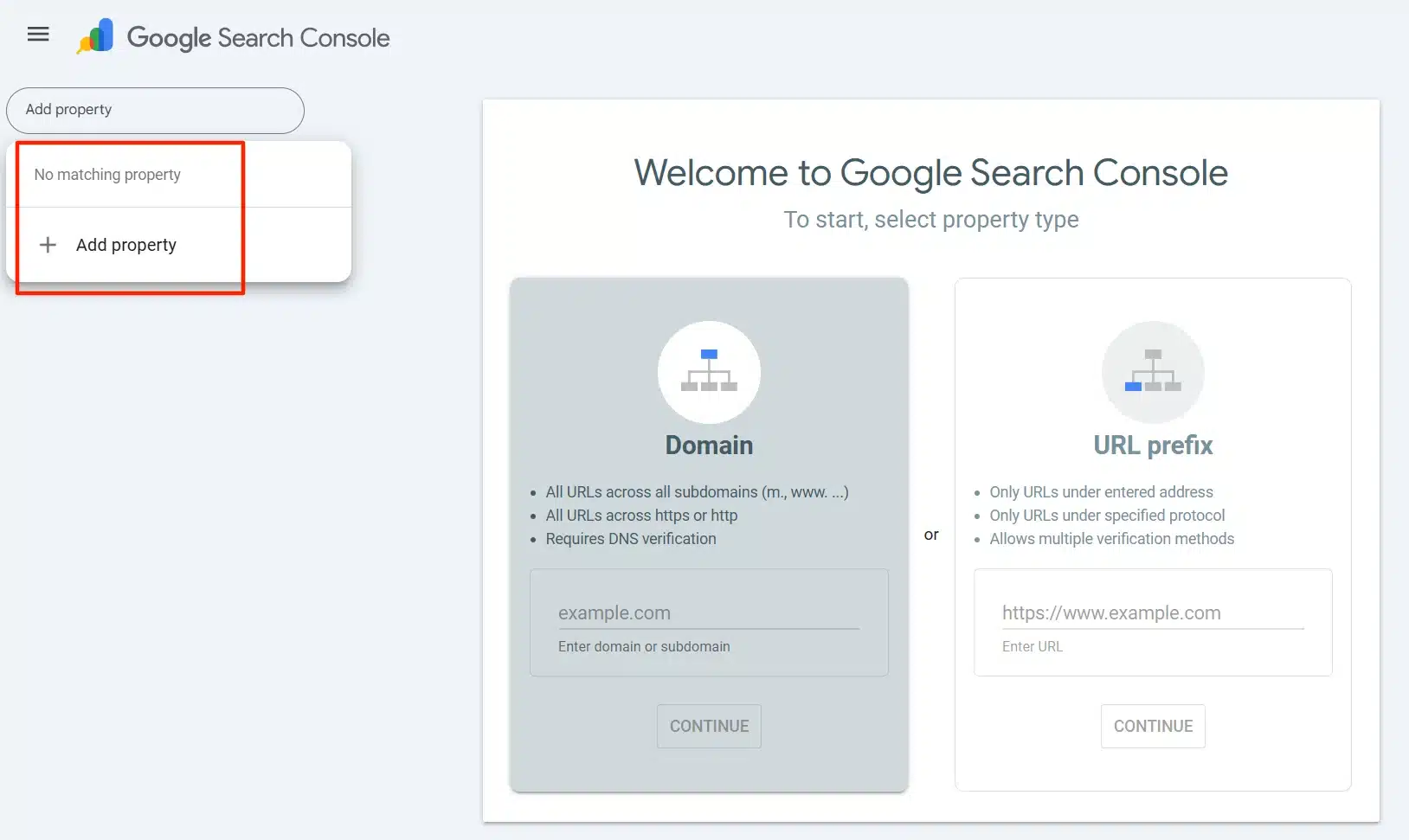
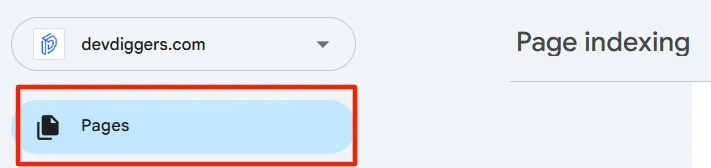
- In the left sidebar, go to Indexing and click Pages.
- Scroll through the “Why pages aren’t being indexed” section.

- Look for entries labelled “Duplicate, Google chose a different canonical than the user” or “Duplicate without user-selected canonical.”
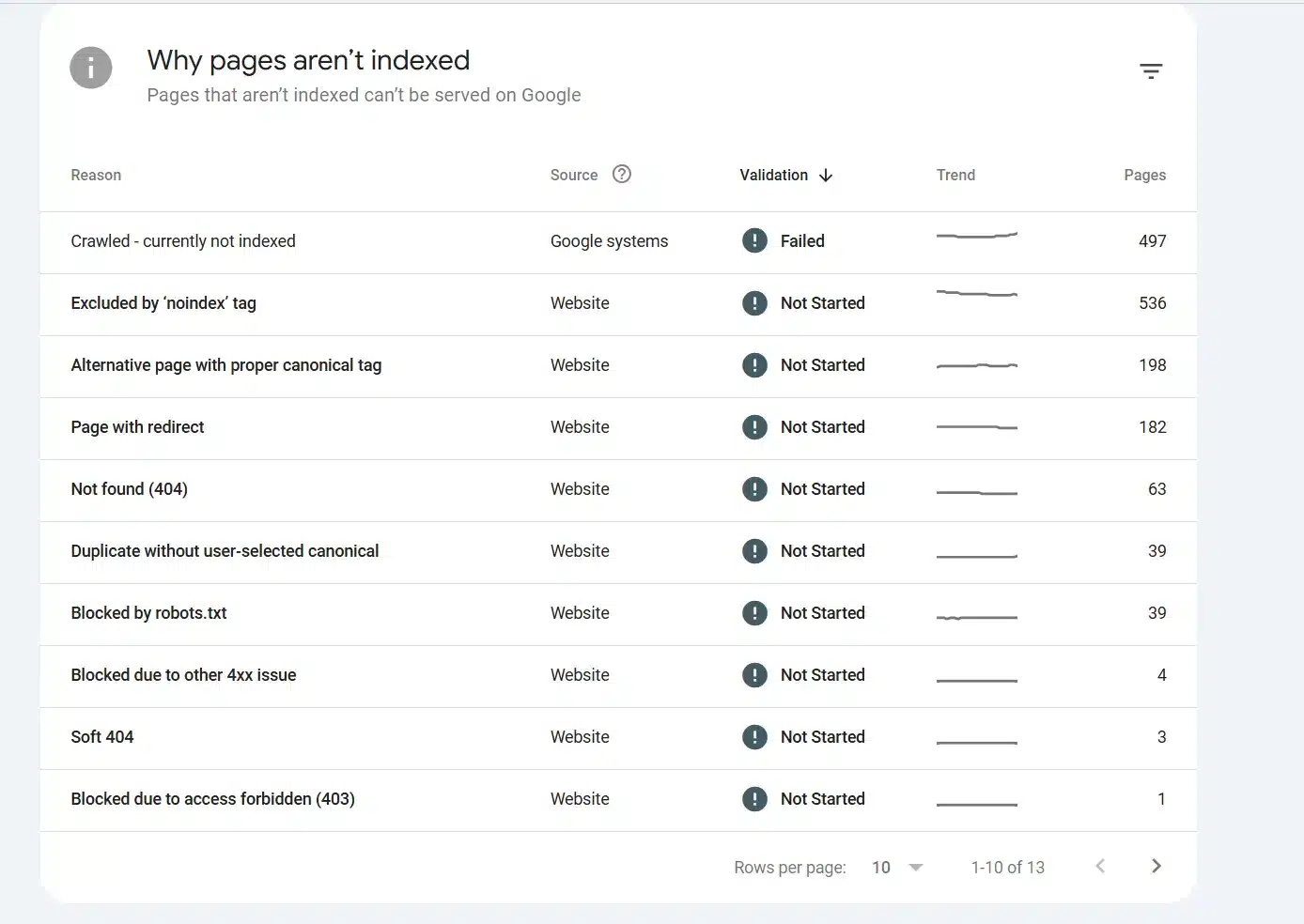
When Google detects duplicate content patterns or a duplicate title tag, these are the two descriptors you will see to describe this. Click on either entry to see a list of the affected URLs.
The affected URLs will not always all drop in, but you can view them all with another craw tool such as Screaming Frog: enter your domain; once the crawl completes, go to the Page Titles tab, and in the filter bar, choose Duplicate, and it will return a complete list of where you have duplicate titles.
How to Remove Duplicate Title Tags in WordPress: A Quick Diagnostic
Before jumping to a fix, spend two minutes identifying the actual cause. Different causes need different solutions, and applying the wrong one wastes time.
Here’s a simple diagnostic table:
| Symptom | Most Likely Cause |
|---|---|
Every page on the site shows two <title> tags in source code | Theme conflict with SEO plugin |
| Multiple pages share identical title text | Pagination or taxonomy archives |
| Started after installing a new plugin | Plugin SEO module conflict |
| WooCommerce shop/product pages flagged | WooCommerce archive title issue |
| A few specific pages have the same title | You (or a previous editor) entered the same title manually |
To check your source code, open any page on your site in a browser, right-click, and choose View Page Source. Press Ctrl+F (or Cmd+F on Mac) and search for <title>. If you see the tag appear twice, that’s a structural duplicate caused by conflicting outputs. If you only see it once, but multiple pages share the same text, that’s a content-level duplicate.
How to Fix Duplicate Title Tags in WordPress
Now that you know your root cause, here are the fixes. Work through the one that matches your situation.
Fix 1 — Resolve Plugin Conflicts (Two SEO Plugins Active)
The most common issue we encounter is installing more than one WordPress plugin that handles input from the browser. For example, first, you installed Rank Math, then you installed a theme pack or page builder that includes its own SEO capabilities. Both of these plugins are now helping you with title tags.
The solution is very simple: You should only be using one SEO plugin to manage your title tags. To do this, you need to check all your active plugins to see if they are providing anything related to SEO titles or metadata.
Many plugins provide SEO functions to their users, and three of the most common plugins that provide such functions are All in One SEO, SEO Framework, and Page Builders with built-In SEO modules.
To fix the conflict, follow these steps:
- Log in to your WordPress dashboard.

- Go to Plugins > Installed Plugins.

- Look for any SEO-related plugin other than your primary one (Yoast or Rank Math).
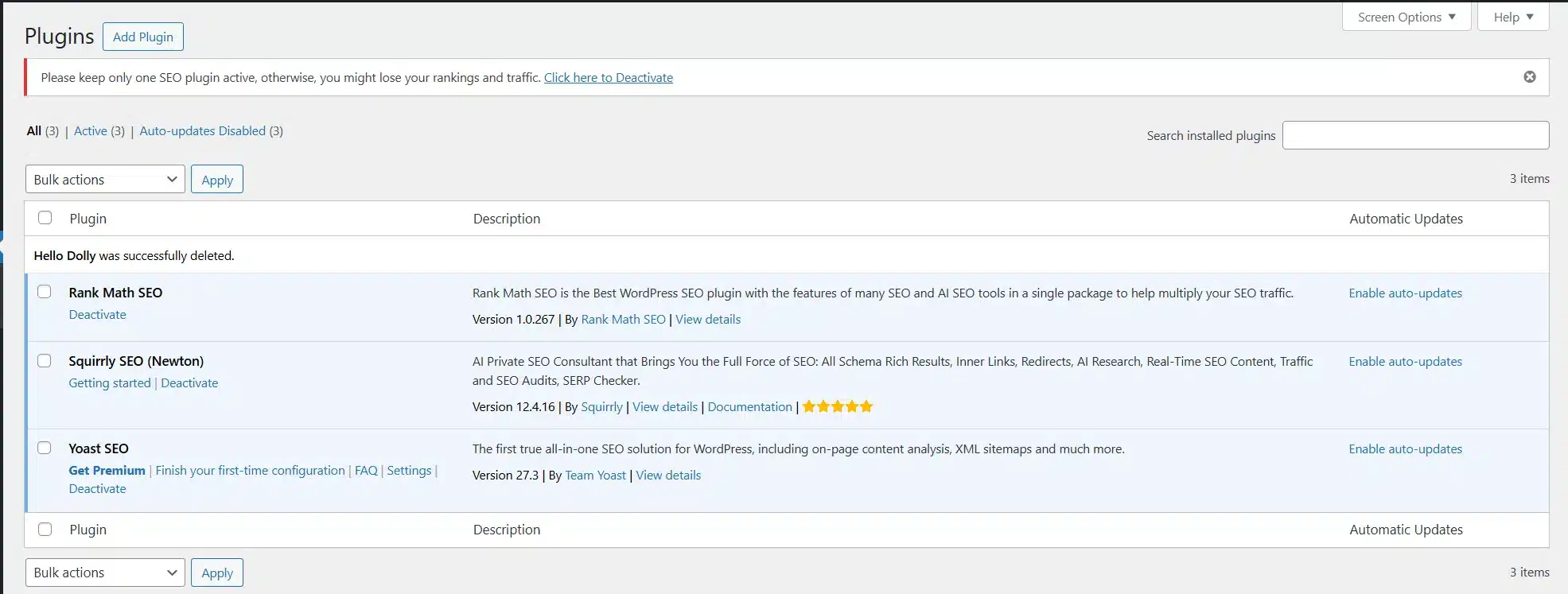
- If you find a secondary SEO plugin, deactivate that plugin.

- Go back to your page source code and ensure you now only have one
<title>tag appearing.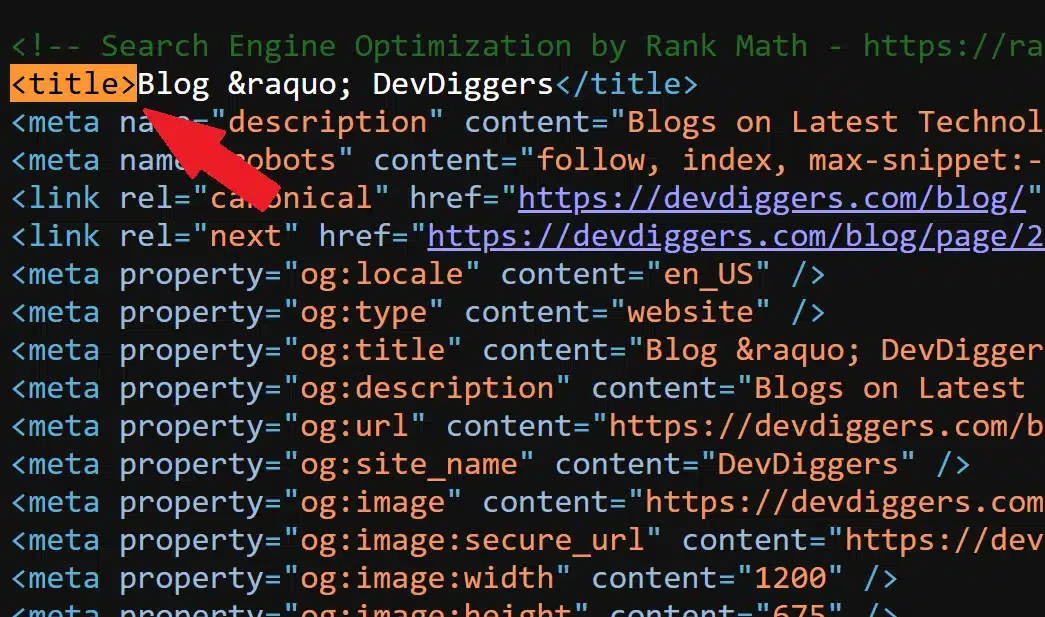
</li>
Fix 2 — Turn Off Title Tag Output in Your Theme
If you are only running one SEO plugin at a time, and yet you still get two title tags, then most likely the problem lies with your theme. Many high-end premium themes contain their own title tag functionality, which will override whatever settings you set in your SEO plugin.
Steps:
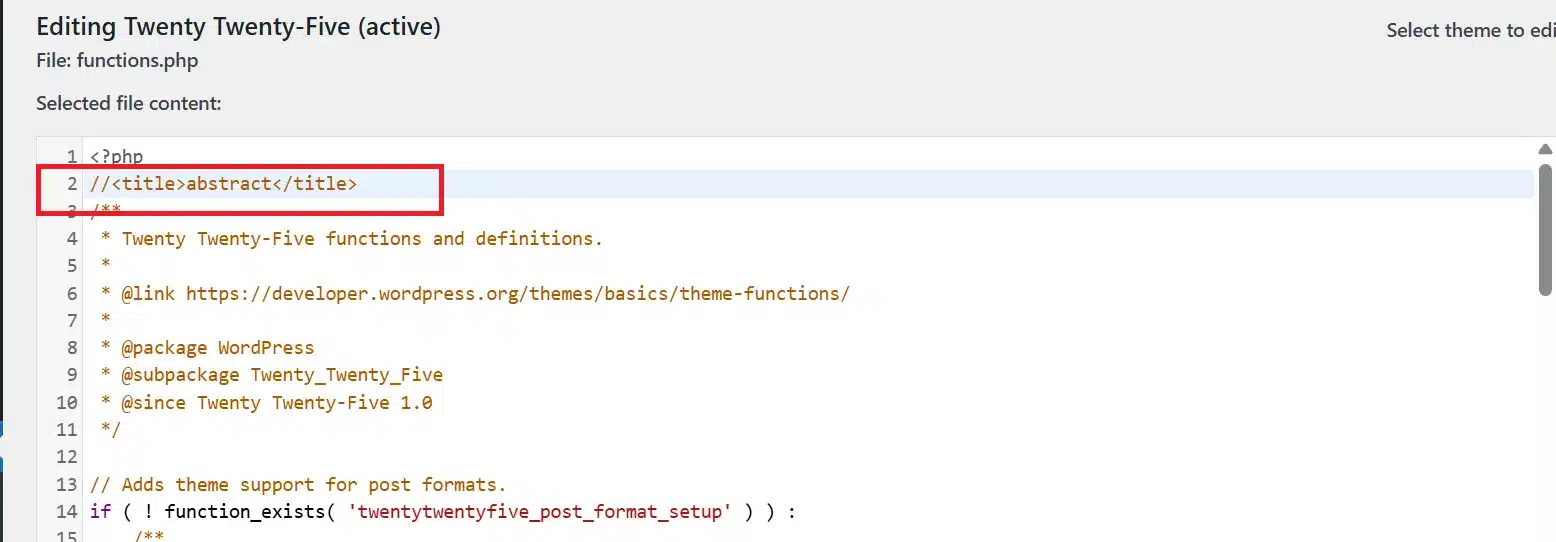
- Go to Tools > Theme File Editor.
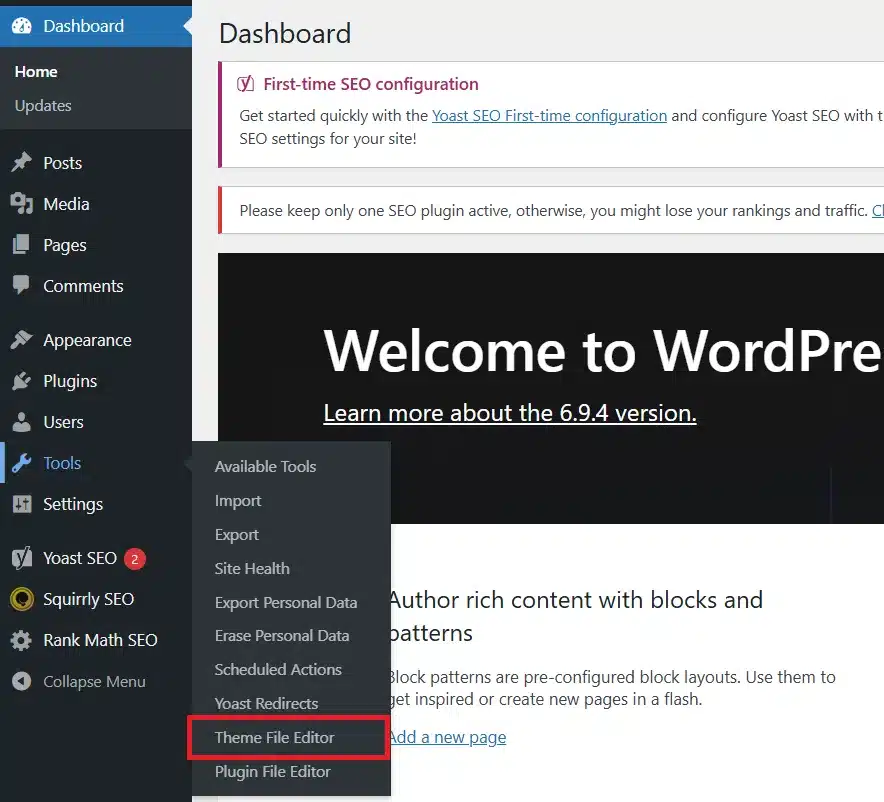
- Open up the
functions.phpfile for your current theme.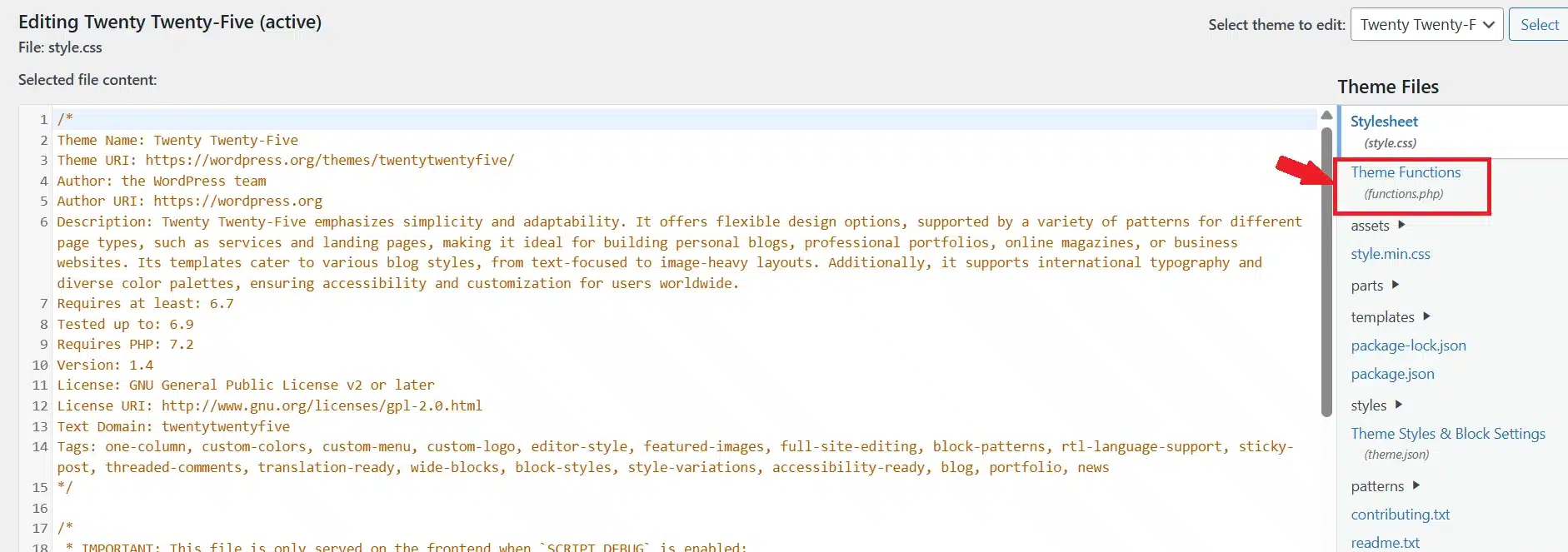
- Search for anything like
wp_titleor a direct<title>echo.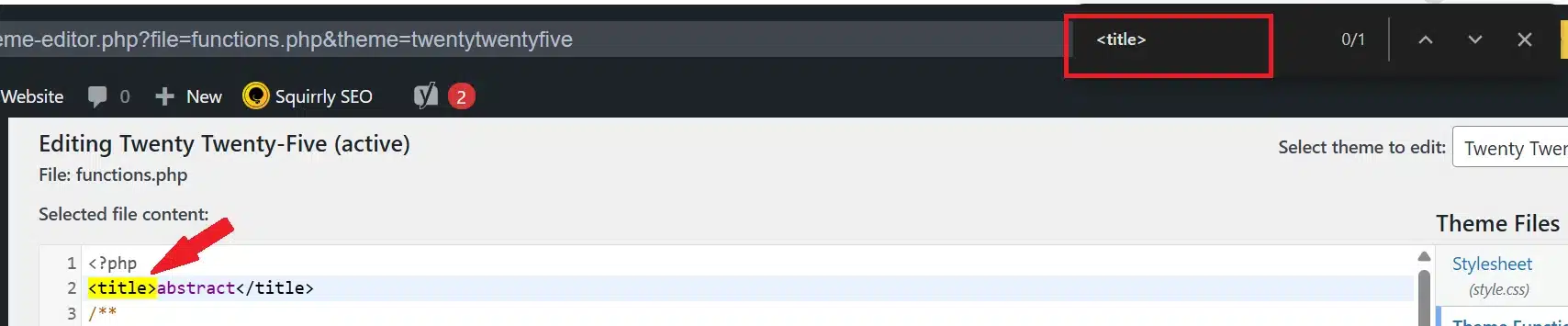
- If you find something hard-coded into your theme, you can either comment it out or delete it.
- Check if the
header.phpA portion of your theme has a section written directly in the HTML instead of being output through thewp_head().
Note: I also want to add that many times when making these kinds of edits directly to a theme, they could be lost upon updating the theme itself. That’s why using a Child Theme is usually the best option when you need to make modifications.
Fix 3 — Fix Duplicate Titles For Paginated Pages With Yoast SEO
WordPress will give each post on an archived blog the same title tag unless you have configured your SEO tool to distinguish them if that archive has been split into several pages of postings.
Steps in Yoast SEO:
- In your admin dashboard, go to Yoast SEO > Settings.

- Click Content Types and select Posts or whatever other type of content may be duplicated.
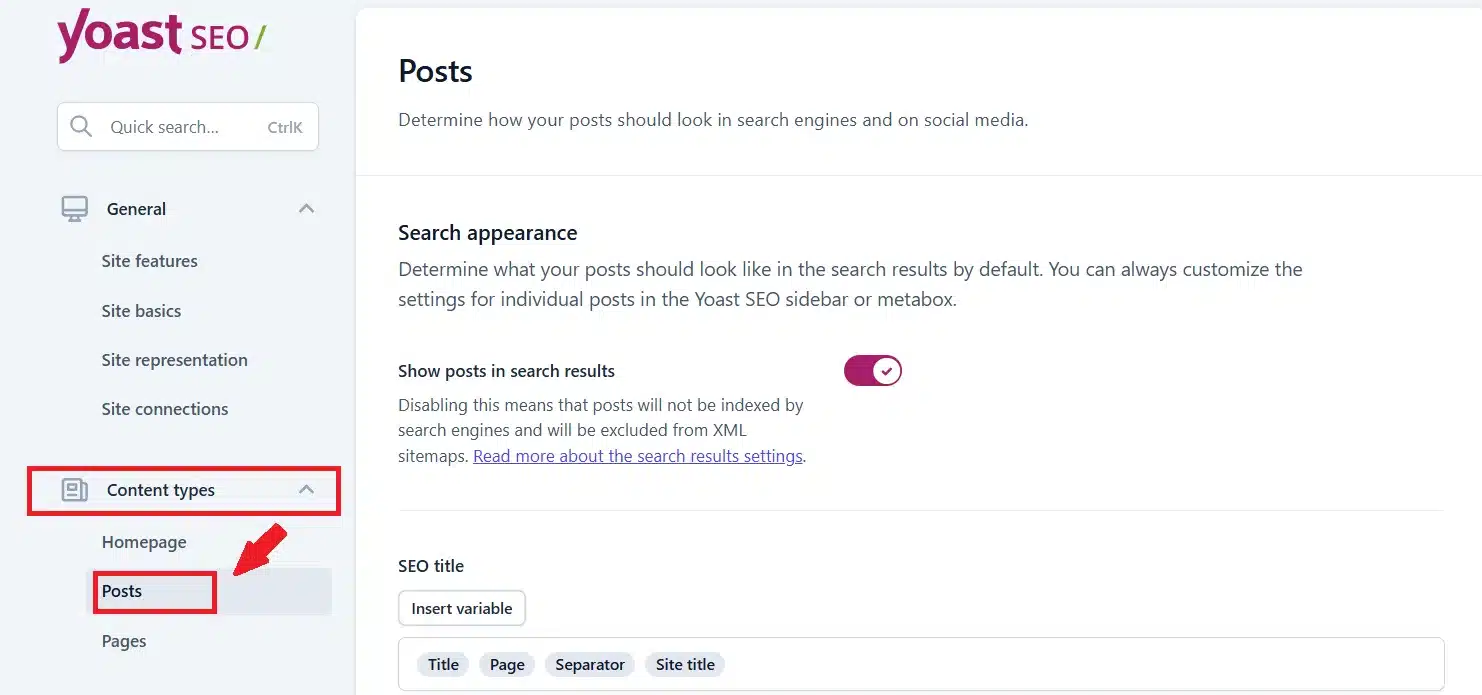
- In the SEO Title field, you should see the
%%page%%variable. This variable will add the current page number to the end of the title of the paginated posting.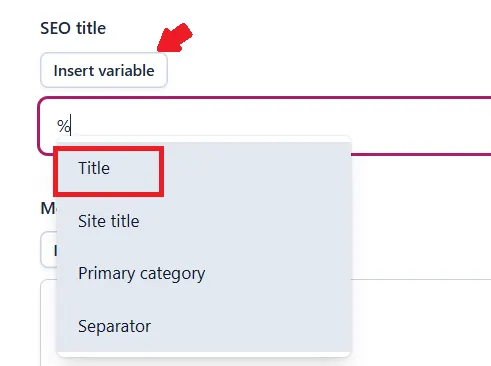
- Your title template might look like this:
%%title%% %%page%% %%sep%% %%sitename%%
- Click Save Changes.

Paginated posts and archives are a major source of duplicate titles. When a blog archive splits across multiple pages, WordPress often gives all of them the same title tag unless your SEO plugin is configured to differentiate them.
Fix 4 — Fix Pagination Duplicates Using Rank Math
Steps:
- Open the Rank Math dashboard. Navigate to Titles & Meta.
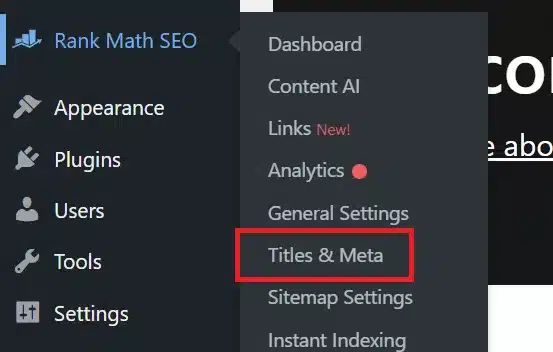
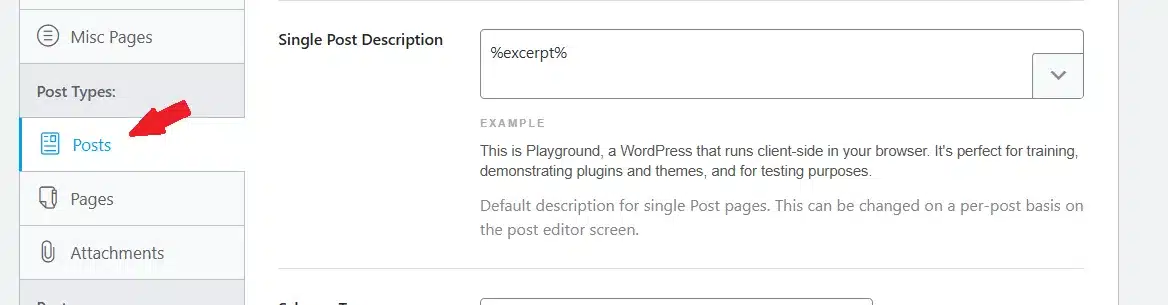
- Click on Posts on the left-hand side.
- Add
%page%variable to the Title field at the end of the Title Template.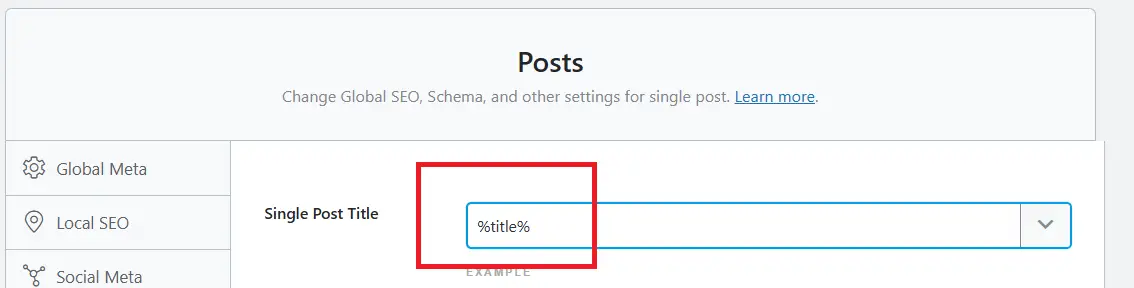
- Final Template Example:
%title% %page% %sep% %sitename%.
- Click Save Changes and Repeat for archives, categories, and all other paginated content types showing duplication issues.

Fix 5 — Fix WooCommerce Archive Title Duplicates
This one trips up a lot of store owners. When you install WooCommerce on an existing WordPress site, it creates several new archive pages: the Shop page, product category archives, product tag archives, and pagination across all of them. If your SEO plugin isn’t properly configured for WooCommerce post types, these archives often end up sharing title tags.
In Yoast SEO:
- Go to Yoast SEO > Settings > Content Types.
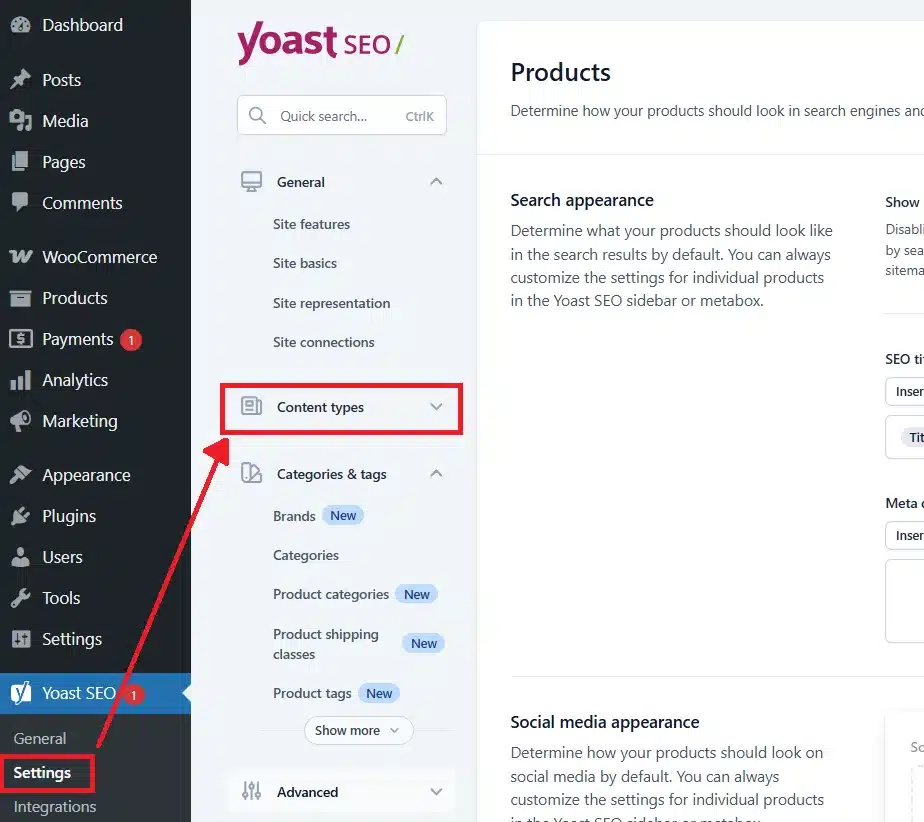
- Click Products and ensure the
%%title%%%%page%%variables are in the SEO title field.
- Then go to Categories & tags in the left sidebar and configure the title template for Product Categories and Product Tags separately.
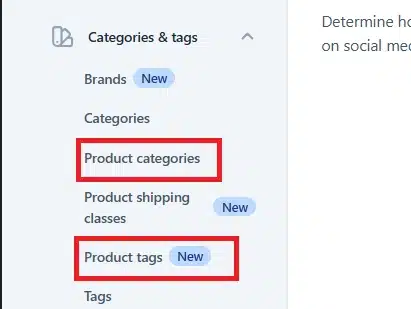
In Rank Math:
- Go to Rank Math > Titles & Meta > Products.
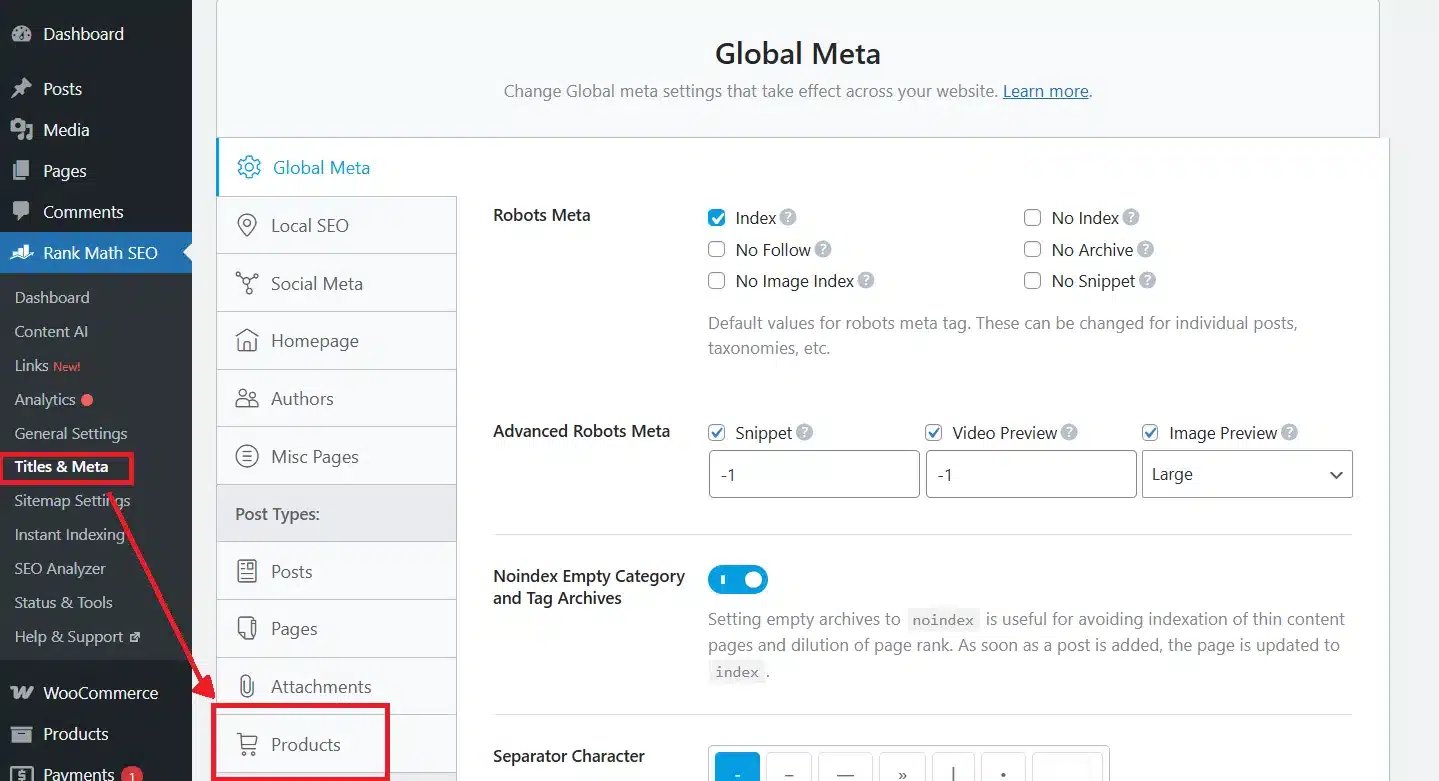
- Add
%title%%page%to the title template.
- Repeat under Product Categories and Product Tags in the same settings panel.
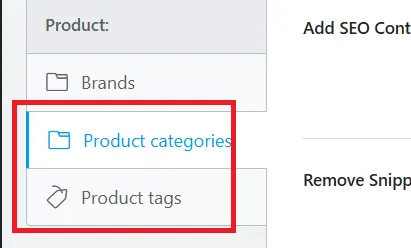
If your Shop page itself has a duplicate, check under Rank Math > Titles & Meta > WooCommerce to ensure the Shop page title template is unique from your homepage template.
How to Verify the Fix Is Working
Don’t just assume the fix worked. Check it properly.
First, view the page source on one of the affected URLs and search for <title>. Confirm it appears once and contains the correct text. If you’ve fixed pagination duplicates, check both the “page1” URL and the “page2” URL and confirm the titles are different.
Second, clear your site’s cache. If you’re using a caching plugin (WP Rocket, W3 Total Cache, LiteSpeed Cache), purge the cache after making any SEO plugin changes. GSC reads your live cached pages, and stale cache can make it look like the issue is still present.
Third, go back to Google Search Console and request re-indexing for the affected URLs. Use the URL Inspection tool, enter the page URL, and click Request Indexing. GSC won’t update the report instantly, but changes typically reflect within a few days to a couple of weeks.
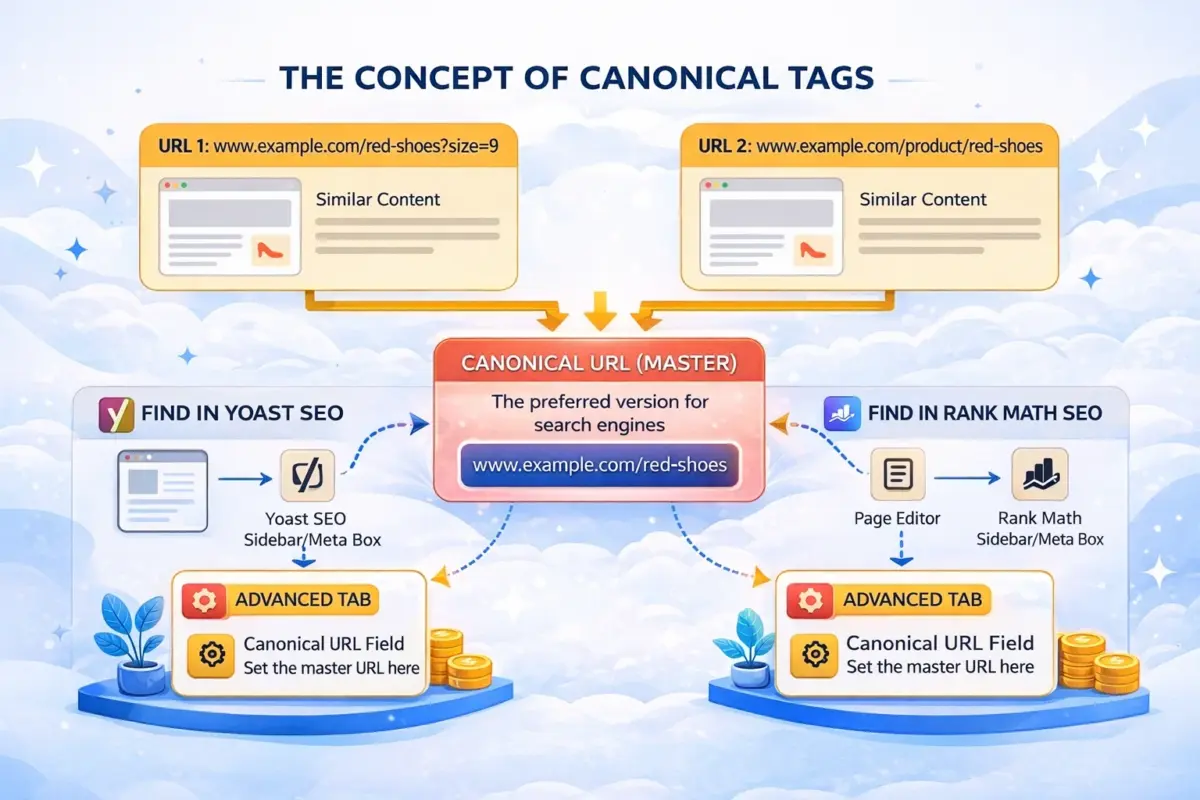
A word of caution: what Google’s “duplicate without user-selected canonical” report means is not always the same as having two literal <title> tags. Sometimes it means Google found two URLs with near-identical content and titles, but no canonical tag telling it which one to prioritise. In that case, fixing the title alone isn’t enough. You also need to add or confirm a canonical tag.
You can do this via your SEO plugin. In Yoast, open the affected post or page, scroll to the Yoast SEO block, click Advanced, and confirm the Canonical URL field points to the correct page. In Rank Math, the same option is under the Advanced tab in the Rank Math block on each post or page.
How to Prevent Duplicate Title Tags from Coming Back
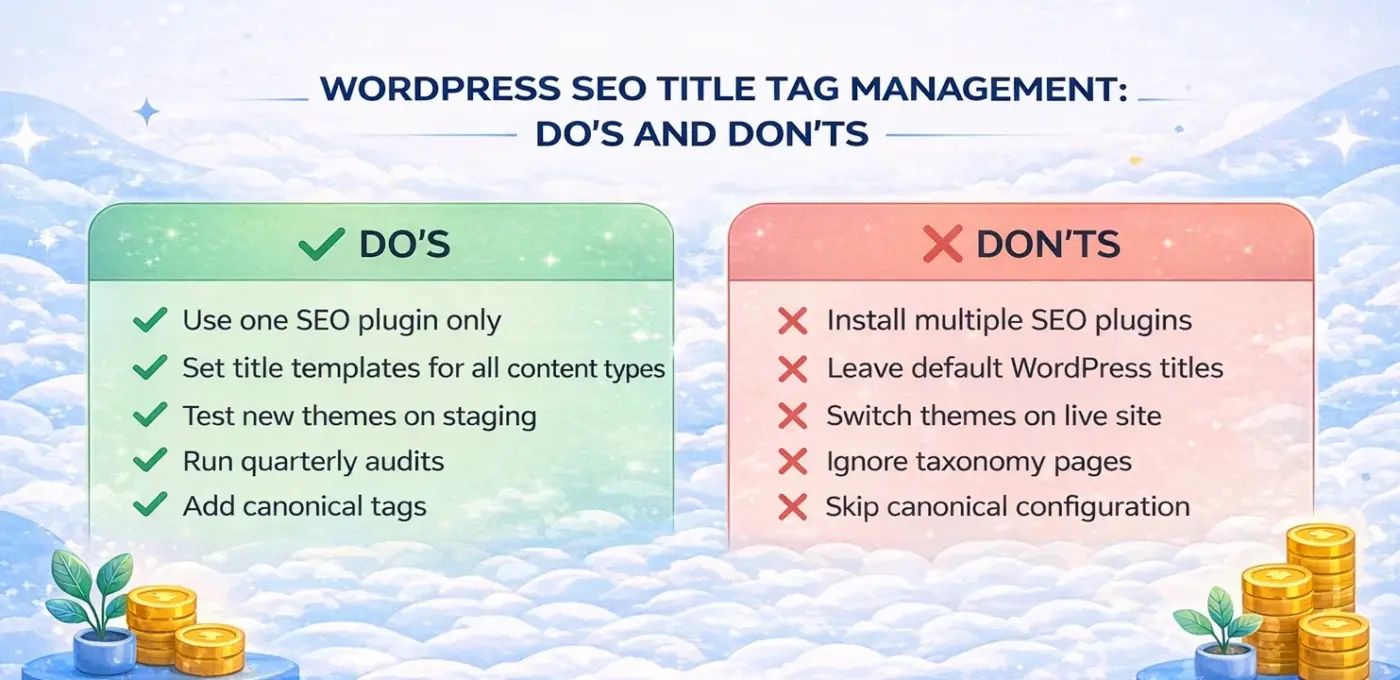
Fixing the problem once is good. Keeping it fixed is better. Here are the habits that stop this from coming back.
- Use only one SEO plugin: This is the single most important rule. Yoast, Rank Math, and All in One SEO all do essentially the same job. Pick one and stick with it. When you evaluate new plugins, check whether they include any SEO or meta tag management before activating them on a live site.
- Set unique title templates for every content type: Don’t leave any content type using the WordPress default title (which is just the site name). Go into your SEO plugin settings and set a specific title template for posts, pages, products, categories, tags, and archives. Use variables like
%title%,%category%,%page%, and%sitename%to create templates that generate unique titles automatically. - Test new themes on a staging site first: Before you switch themes on a live site, check whether the new theme outputs its own title tag. Install the theme on a staging environment, view the source, and search for
<title>. If it appears twice after your SEO plugin is active, resolve it before going live. - Run regular SEO audits: You don’t need to do this weekly, but a quarterly crawl with Screaming Frog or a similar tool will catch title tag issues before they compound. Understanding how WordPress tags affect your SEO, including how taxonomy pages like tag archives generate their own title tag, helps you set up the right templates from the start.
Also, keep in mind Google’s guidance on consolidating duplicate URLs using canonical tags. A canonical tag doesn’t replace a unique title, but it’s an additional signal that tells Google which version of a URL is the authoritative one. Your SEO plugin adds these automatically when configured correctly just make sure it’s actually doing so by spot-checking the source on a few key pages.
Conclusion
Duplicate title tags in WordPress are almost always caused by one of three things: two plugins trying to manage the same <title> element, a theme that outputs its own title tag on top of your SEO plugin, or paginated and archive pages that haven’t been given unique title templates. Start with the diagnostic table, identify which situation applies to your site, and apply the right fix for that specific cause.
A clean title tag structure is one of the foundations of a well-optimised site. Once you’ve fixed this issue, run through our on-page SEO checklist to make sure the rest of your on-page signals are working as hard as your titles now will.
If you’d rather have someone handle this properly from end to end, including a full SEO audit of your WordPress or WooCommerce setup, take a look at our WordPress SEO services.
Frequently Asked Questions
Q1. Can duplicate title tags get my site penalised by Google?
Google doesn’t issue a manual penalty specifically for duplicate title tags. What happens instead is more gradual: Google gets confused about which page to rank for a given query, splits your ranking potential across multiple URLs, and often rewrites your title to something it considers more appropriate. The result is lower click-through rates and inconsistent rankings rather than an outright penalty.
Q2. How many title tags are too many duplicates before it becomes a serious problem?
There’s no official threshold from Google, but if more than 10% to 15% of your indexed pages share title tags, it’s worth treating as a priority fix. A small number of duplicates on a large site is unlikely to cause major harm. A site where every archive page, pagination page, and product page shares the same title is a different story.
Q3. Does adding a canonical tag fix duplicate title tags?
A canonical tag and a unique title tag solve different problems. A canonical tag tells Google which URL is the primary one when multiple URLs have similar content. A unique title tag tells Google what each individual page is about. You often need both. Fix the title tag content first, then confirm your canonical tags are in place.
Q4. Why does Google Search Console still show duplicate title errors after I fixed them?
GSC doesn’t update in real time. After making changes, clear your site cache, then use the URL Inspection tool to request re-indexing for the affected pages. The report can take anywhere from a few days to two weeks to reflect your fixes. If errors persist after that timeframe, recheck the page source to confirm the fix actually applied to the live page.
Q5. Do duplicate title tags affect WooCommerce product rankings specifically?
Yes, and this is often overlooked. WooCommerce creates several archive layers for products — the main Shop page, category archives, tag archives, and paginated versions of all of them. If your SEO plugin isn’t configured with unique title templates for WooCommerce post types, many of these pages will share titles. Product category pages in particular are often strong ranking targets, so getting their title tags right has a direct impact on how they perform in search.
Q6. What’s the difference between a duplicate title tag and duplicate content?
They’re related but separate. Duplicate content means two or more pages share the same body text. A duplicate title tag means two or more pages share the same <title> element, regardless of what the body content says. You can have unique content on every page, but still have duplicate title tags if your templates aren’t set up correctly which is common with pagination and taxonomy archives in WordPress.