To sell music online with WooCommerce, create a product, tick Virtual and Downloadable, and attach your audio file. WooCommerce then takes the payment and emails the buyer a protected download link. No extra plugin is needed.
I built a small music store this way in October 2026 on a test site running WordPress 7.1.3 and WooCommerce 11.2. I used a 30 second test tone as the track in place of a real song. Then I bought it with a test customer and downloaded it until the limit kicked in.
This guide walks through the same setup step by step, with a screenshot of each screen. You also get the real results of that purchase test, plus how to sell albums, beats and MP3 or WAV versions.
Can You Sell Music Online With WooCommerce?
Yes, you can sell music online with WooCommerce using only its built-in features. A downloadable product holds the audio file, WooCommerce protects it from direct access, and each buyer gets a private link. You can limit downloads, set an expiry and add a free preview with the audio block.
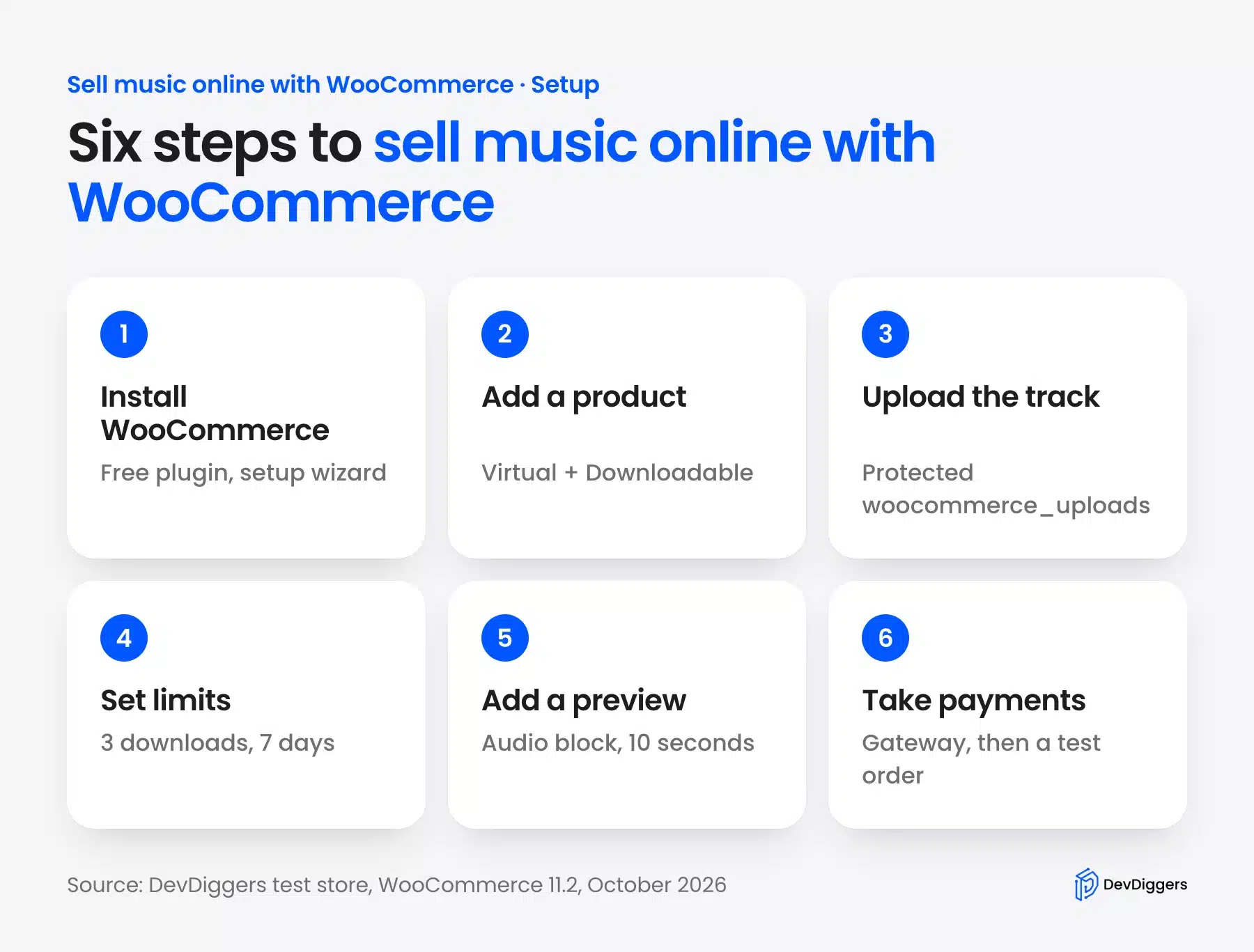
Here is the full setup in six steps:
WooCommerce is free. You pay for hosting, a domain and the card fees from your payment provider.
You keep the full price of each sale apart from those card fees. Your own store also keeps the customer list. You can email buyers about your next release.
The same setup scales from one single to a full catalog. Every track is a product. Search, categories and coupons work for music the way they do for any shop.
WooCommerce also sends the buyer an order email with the download link. If the email goes missing, the buyer can find the same link under My account > Downloads.
What You Need to Sell Music on WordPress
To sell music on WordPress, you need a WordPress site on a real host, the WooCommerce plugin and a payment gateway. Add your audio files in MP3 or WAV, a short preview clip for each track and cover art. A block theme like Twenty Twenty-Five works with no setup.
- Hosting: Pick a host with enough storage for your files. Our WAV test file was 5.0 MB for 30 seconds, about seven times the MP3.
- Audio files: MP3 at 192 kbps for most buyers, WAV or FLAC for producers and DJs who want full quality.
- Preview clips: A short, lower bitrate copy of each track. Our 10 second preview at 128 kbps was 157 KB.
- Payments: A card gateway such as WooPayments, Stripe or PayPal.
- Rights: Only sell music you own or have licensed. Samples and covers need clearance first.
- Cover art: Set a square product image for each release. It shows in the shop grid, the cart and the order emails.
A test tone was enough for our setup test. Use one real track for your own final check to hear the actual file a buyer gets.
How to Sell Music Online With WooCommerce
To sell music online with WooCommerce, install the plugin and pick a payment method first. Then create a virtual, downloadable product and upload the track to protected storage. Set a download limit and expiry, add an audio preview and check the download settings before your first sale.
Step 1: Install WooCommerce and Pick a Payment Method
Install WooCommerce from Plugins > Add Plugin and run the setup wizard. Then open WooCommerce > Settings > Payments.
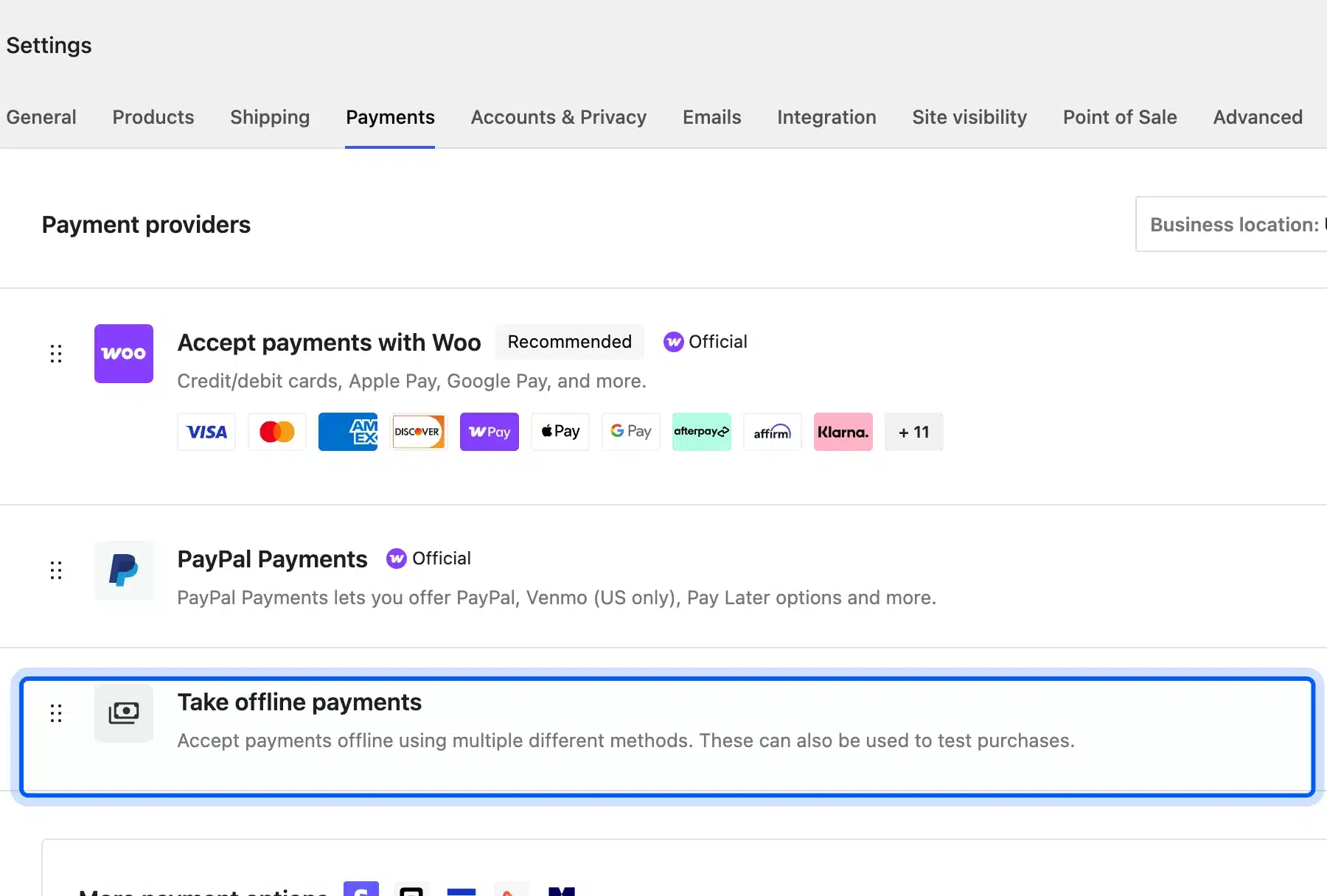
WooCommerce 11.2 listed WooPayments, PayPal Payments and an offline payments group. The offline group says it can be used to test purchases, which is how we ran our test order.
Set up a real card gateway before launch. Music buyers expect to pay by card or wallet in one click.
Step 2: Create a Downloadable Music Product
Go to Products > Add New Product. Type the track name and price and tick both Virtual and Downloadable in the Product data box.
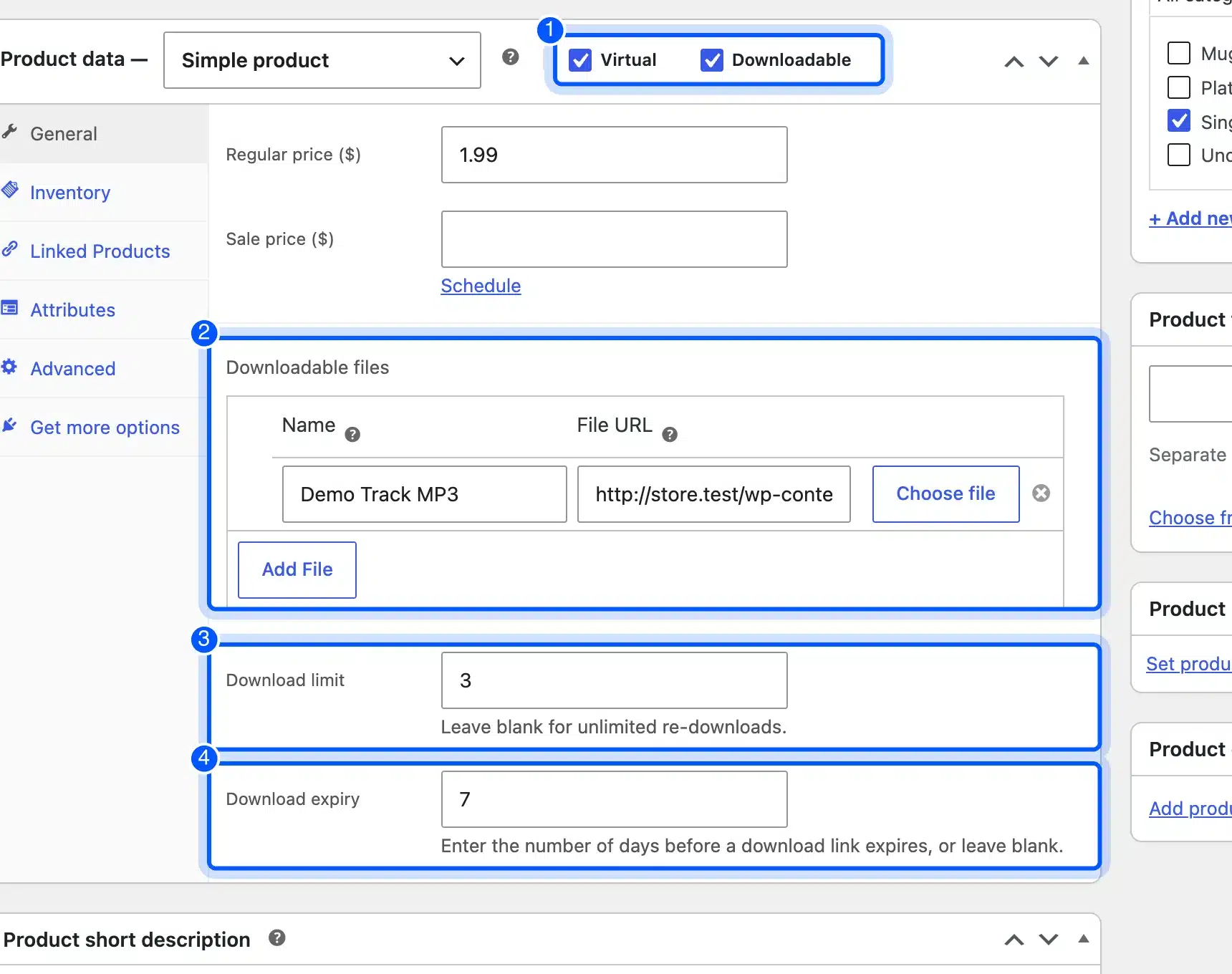
Virtual removes the shipping fields, because nothing is posted. Downloadable adds the Downloadable files table, the download limit and the download expiry.
Our test track sold for $1.99. Put singles in a Singles category and albums in an Albums category so buyers can browse them.
Step 3: Upload the Track to Protected Storage
Click Choose file in the Downloadable files table and upload the audio. WooCommerce puts it in a woocommerce_uploads folder that blocks direct access.
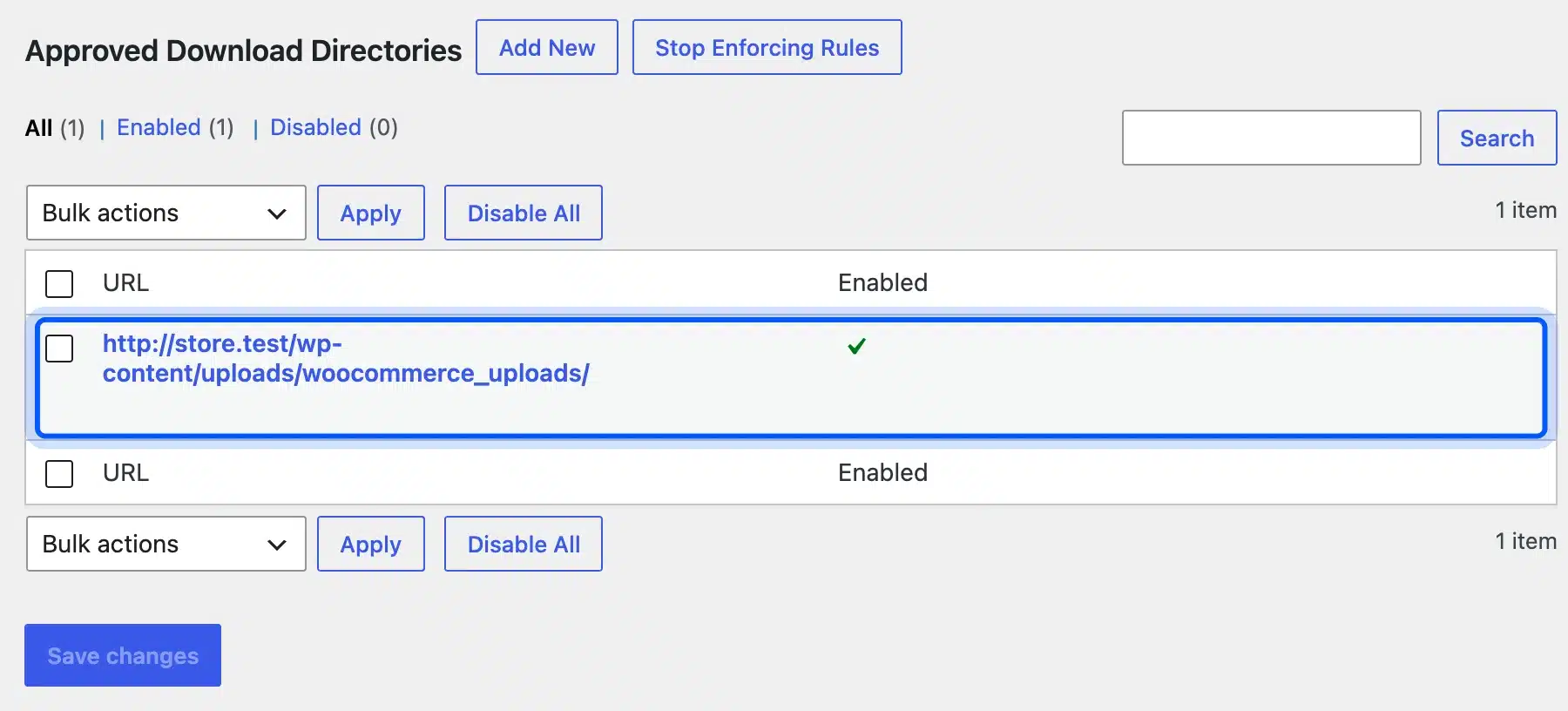
We tested that protection. Opening the file’s direct URL returned HTTP 403, because the folder holds a deny from all rule. Only the buyer’s private link served the file.
WooCommerce also keeps a list of approved download directories. Our store listed its woocommerce_uploads folder as enabled, and files outside the list are refused. The approved download directories guide explains how to add your own.
Step 4: Set Download Limits and Expiry
In the same Product data box, set Download limit and Download expiry. We used 3 downloads and 7 days.
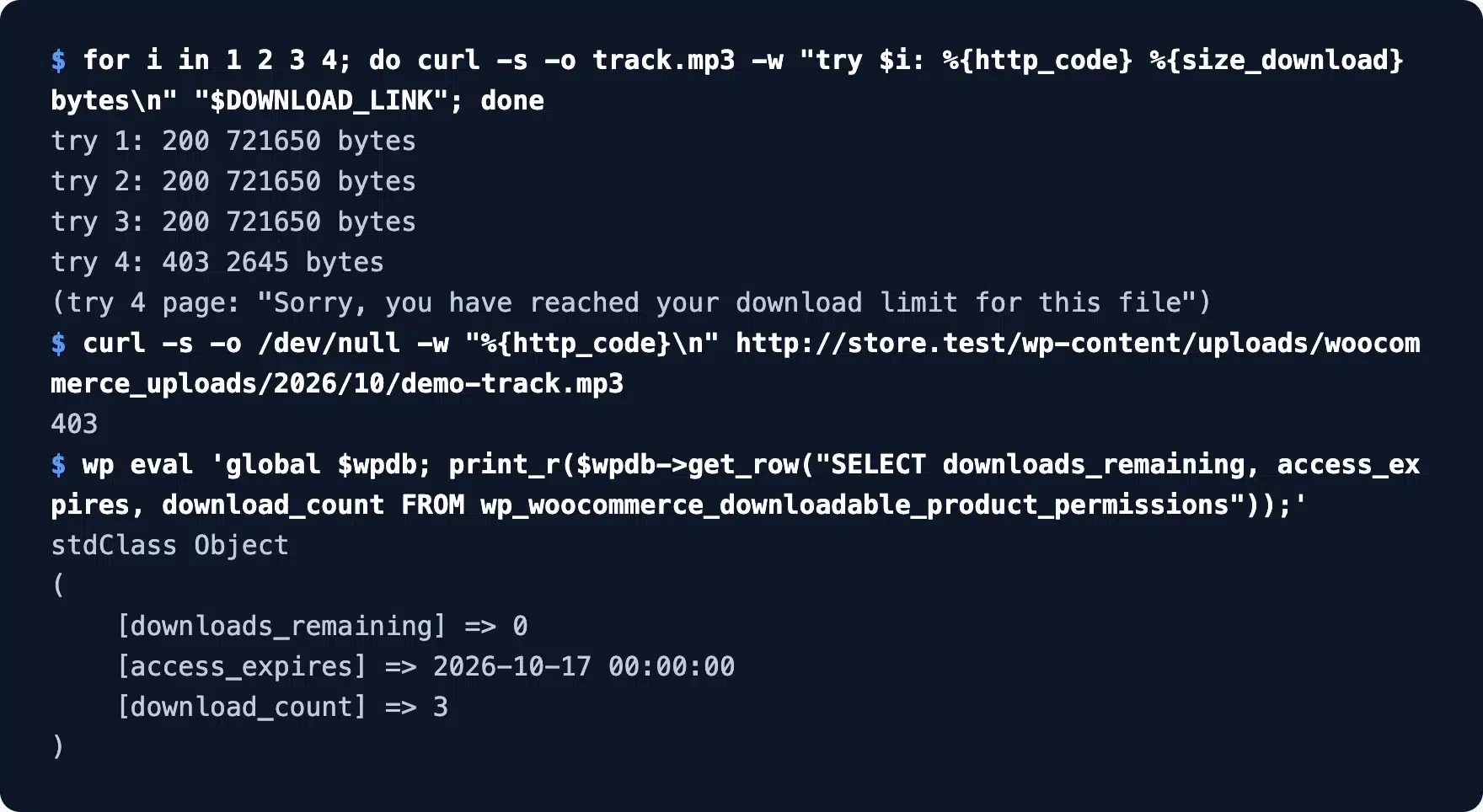
The test buyer downloaded the track three times with HTTP 200 and the full 721,650 bytes each time. The fourth try returned 403 with “Sorry, you have reached your download limit for this file”.
The permission record then showed 0 downloads remaining and an expiry date seven days after the order. Leave both fields blank if you want unlimited downloads with no expiry.
Step 5: Add an Audio Preview
Buyers want to hear a track before they pay. Edit the product description, add an Audio block and upload the short preview clip.
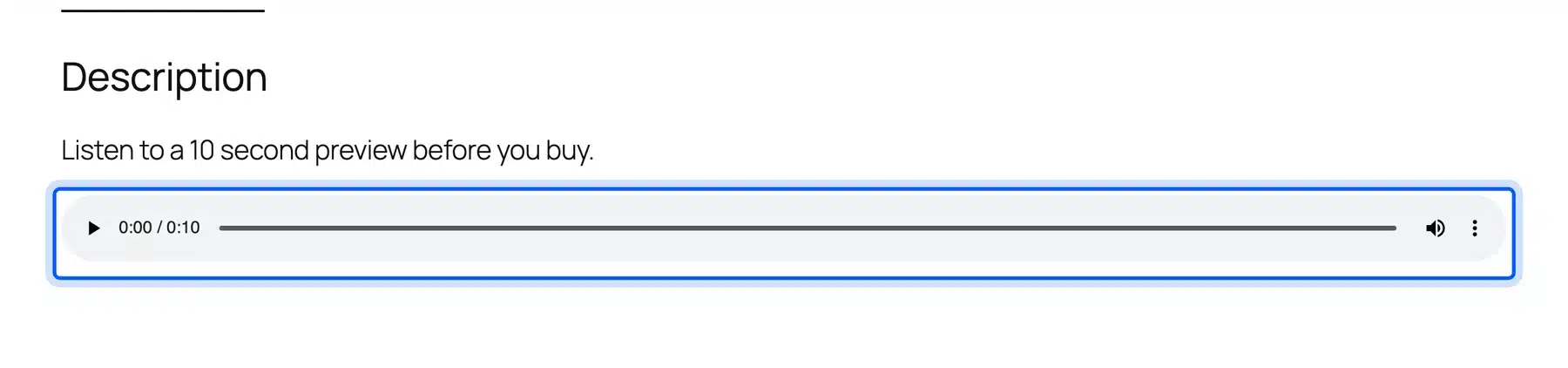
Upload the preview to the normal Media Library and keep the full track in the protected folder. Our preview loaded with HTTP 200 for every visitor, while the full track stayed locked.
Keep previews short and at a lower bitrate. The WordPress audio block guide covers autoplay, looping and captions.
Step 6: Offer MP3 and WAV as Variations
Many buyers want a choice of format. Set the product type to Variable product, add a Format attribute with MP3 and WAV, and create a variation for each.
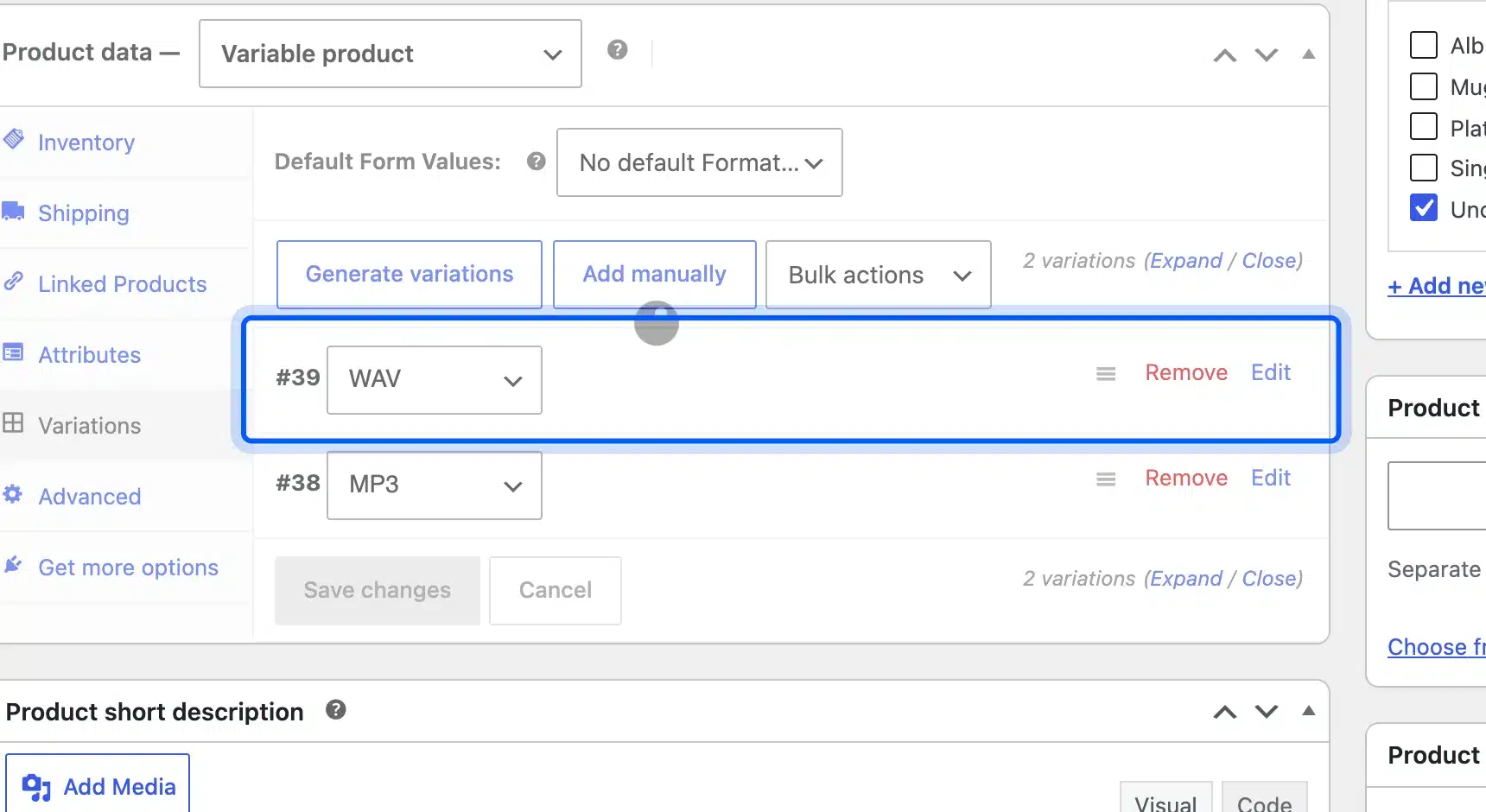
Each variation can be virtual and downloadable with its own file and price. On our test store, the MP3 cost $1.99 and the WAV cost $3.99.
The same method works for licenses. Make variations such as Basic and Exclusive, each with its own file and price. See WooCommerce’s variable product guide for more options.
Step 7: Check the Download Settings
Open WooCommerce > Settings > Products > Downloadable products. These settings apply to every file in the store.
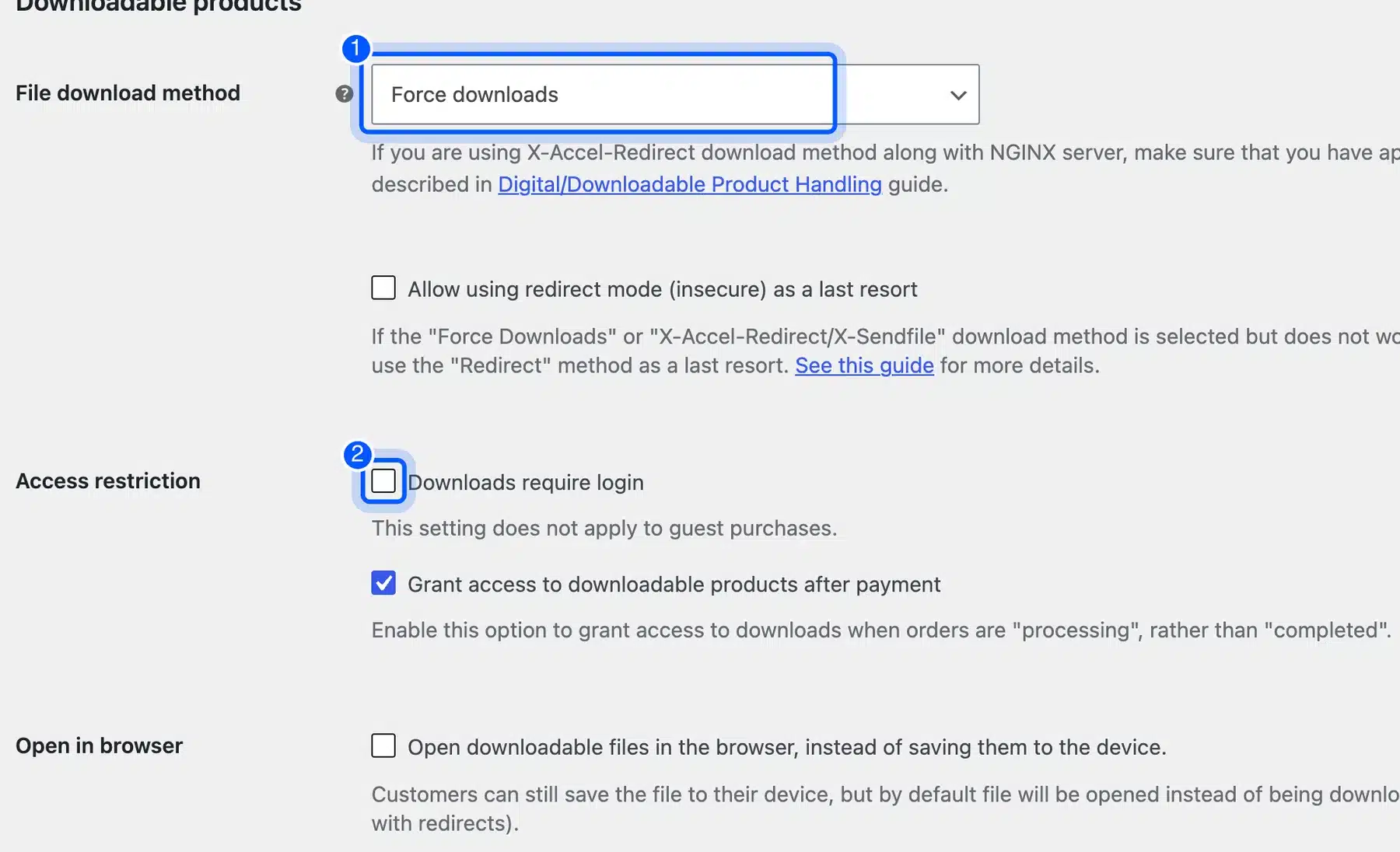
On our fresh store, the file download method was Force downloads, and Downloads require login was off. Grant access after payment was on, and a unique string was added to file names.
Force downloads is the safest default on most hosts. On a busy NGINX server, X-Accel-Redirect is lighter. The digital product handling guide explains each method.
What Happened When We Bought Our Own Track
Our test purchase showed that WooCommerce handles music sales well with no add-ons. The order completed, the buyer got one download link, and the third download was the last one allowed. The direct file URL stayed blocked the whole time, and the preview stayed public.
Here are the numbers from the October 2026 test:
- Order total: $1.99 paid with an offline test method.
- Downloads: 3 served at 721,650 bytes each and the 4th refused with 403.
- Expiry: Access ended seven days after the order.
- Direct URL: 403 for the protected file and 200 for the preview.
- File name: Served as
demo-track.mp3in aContent-Disposition: attachmentheader.
Because Grant access after payment was on, the link would appear as soon as payment cleared. A buyer does not have to wait for you to mark the order complete.
One result surprised us. The download link held the order key and the buyer’s email address, and it worked without a login. That is why the limit and expiry matter, because anyone with the link can use it until they run out.
If that worries you, turn on Downloads require login. The link then only works for the account that bought the track.
How to Sell Albums, Beats and Licenses
To sell albums, beats or licenses, use the same downloadable product with a different setup. An album is one product with several files or one ZIP, and a beat is a variable product with license tiers. A pre-release album can take orders before the files exist.
- Albums: Add every track as a separate file in the Downloadable files table, or upload one ZIP. Separate files are easier for buyers on phones.
- Beats and licenses: Use variations named after each license, with the license PDF added as a second downloadable file.
- Pre-orders: Take orders for an album before release day. DevDiggers sells WooCommerce Pre-Order, with yearly plans from $79. Our comparison of pre-order plugins shows other choices.
- Bundles: Sell a discount for buying the whole album by pricing it below the sum of its singles. Buyers who want two or three tracks often take the album.
Keep each release on its own product page. A page per release can rank in search for the album name, which a single catalog page cannot.
The same downloadable product setup also works for other files. Our guides on how to sell ebooks online and how to sell fonts online with WordPress use it too.
Mistakes to Avoid When Selling Music With WooCommerce
The most common mistakes are putting the full track in the public Media Library, skipping download limits and testing only as an admin. Each one either leaks the file or hides a problem from you. A five minute test order with a customer account catches all three before launch.
- Public files: A track uploaded to the normal Media Library has a public URL. Always use Choose file in the Downloadable files table.
- No limits: Unlimited links get shared. Three downloads and seven days worked in our test.
- Admin-only testing: Place a test order as a customer to see the real emails and links.
- Huge files: Very large WAV or ZIP files can time out on cheap hosting. Test the biggest file you plan to sell, and switch the download method if it fails.
- Broken shop links: After a sale, buyers return to your shop page. Our guide to change the return to shop link in WooCommerce shows how to send them somewhere better.
If your test store gets messy, our steps on how to reset WooCommerce clear it. Developers building music add-ons should also read our guide to making a WooCommerce plugin HPOS compatible.
Conclusion
You can sell music online with WooCommerce using only its own features. Create a virtual, downloadable product, upload the track to protected storage and set a download limit and expiry. Add a short preview with the audio block.
Our test proved the protection works. The direct file URL returned 403, the buyer got exactly three downloads, and the preview stayed free to play.
Run one test order as a customer before launch. Then add your real tracks.
Frequently Asked Questions (FAQs)
Q1. Can I sell music on WooCommerce for free?
Yes. WooCommerce and its downloadable products are free. You only pay for hosting, a domain and the card fees from your payment gateway.
Q2. How do I stop people from sharing my music download links?
Set a download limit and an expiry on each product. You can also turn on Downloads require login to let only logged-in buyers use the link.
Q3. Which audio format should I sell?
Sell MP3 for most listeners and add WAV as a higher priced option. Our WAV file was about seven times larger than the MP3.
Q4. Can buyers listen before they buy?
Yes. Add an Audio block with a short preview clip to the product description. Keep the full track in the protected download folder.
Q5. Do I need a special plugin to sell music with WooCommerce?
No. WooCommerce handles files, payments and download links by itself. Plugins only help with extras like streaming players, memberships or pre-orders.