


You can submit your website to Google News in under 30 minutes, but there’s one thing most guides won’t tell you upfront: the process changed significantly in March 2025. Google no longer accepts manual publication pages or RSS feed submissions. What used to be a straightforward Publisher Center setup is now mostly handled automatically by Google’s algorithms.
That doesn’t mean there’s nothing left to do. A Google News sitemap, clean technical setup, and the right content signals still matter a lot. Skip any of them, and you’re leaving your chances up to Google’s crawler with no help from your end.
This guide covers what Google actually checks before featuring your site, a full step-by-step tutorial for submitting your WordPress site to Google News today, how to set up a news sitemap using Rank Math, and what the 2025 changes mean for publishers right now.
What Is Google News and Why Does It Still Matter for Your Site

Google News is a news aggregator that pulls articles from across the web and surfaces them across several Google products. Getting featured there isn’t just about appearing on news.google.com.
Your content can show up in four places:
- The Google News tab in search results
- The Top Stories carousel in standard Google Search
- The Google News app on iOS and Android
- Google Discover, which serves content to users based on their interests before they even search
That last one is often underestimated. Google Discover can send large volumes of traffic to content that has nothing to do with breaking news, including evergreen posts and tutorials. Getting your site into Google News surfaces puts you in a position to appear there, too.
For WordPress publishers, bloggers, and SEO professionals, the traffic and authority benefits are real. Sites featured in Top Stories get prominent placement above standard organic results. That kind of visibility is hard to replicate through any other SEO tactic.
What Google Checks Before Featuring Your Site
This is the part most guides treat as a quick checklist. It deserves more than that.
Google does not manually review every site. Its crawlers automatically identify news content, then rank it based on signals such as relevance, authoritativeness, freshness, language, and location. Meeting the baseline requirements means removing the barriers that would cause Google to ignore or disqualify your content.
Content Requirements
Your articles need to be original and timely. Google News is not a place for evergreen “how-to” content or product descriptions. The content that gets featured covers recent events, industry news, research findings, or commentary on current topics. Publish consistently. Sites that publish only a few articles per month are less likely to be picked up than those with a regular cadence.
According to Google’s News content policies, your content must also follow Google Search’s spam policies and avoid deceptive practices. That means no misleading headlines, no thin content built to generate clicks, and no sponsored articles presented as editorial coverage without clear disclosure.
Technical Requirements
Google’s news crawler needs to be able to read your content. A few things it specifically needs:
- HTML text for all article content: Video or audio without a text companion cannot be crawled.
- Clean, crawlable URLs: Each article should have its own unique URL with no session IDs or tracking parameters in the path.
- Mobile-friendly pages: Most Google News readers are on mobile. A page that breaks on smaller screens is a signal against quality.
- Fast load times: Slow pages hurt both user experience and crawler efficiency.
- NewsArticle schema markup: Adding structured data tells Google’s systems exactly what type of content you’re publishing. Rank Math and Yoast can add this automatically.
Transparency Requirements
This one trips up a lot of bloggers who cover industry news. Google expects clear authorship, a named contact, and evidence of editorial accountability.
That means named author profiles on every article, a visible About page, and a working Contact page. Sites with anonymous bylines or no clear editorial ownership are harder for Google to trust.
The URL Structure Problem Nobody Mentions
If your WordPress site mixes news articles, WooCommerce product pages, and blog tutorials under the same URL path, Google’s crawler may have trouble identifying which content qualifies as news. A separate section for news content, ideally under a consistent path like /news/ or /industry-news/, makes it much easier for the crawler to categorize what you publish.
This won’t apply to every site. If you run a dedicated news site, your structure is probably fine already. But if you run a mixed WordPress or WooCommerce site and want to get news content featured, keeping that content in its own section is worth the effort.
You should also make sure your WordPress tags and categories are clean and not generating duplicate or thin archive pages. Our post on whether WordPress tags help SEO covers that in more detail.
How to Submit Your Website to Google News: Step by Step
This section is the core of the guide. The steps below reflect the current process as of 2026, after Google’s March 2025 changes. A few of these steps look different from older tutorials you may have read.
The full process takes about 20 to 30 minutes. Most of that time is waiting for Search Console verification.
Step 1: Create a Sitemap for Your WordPress Site
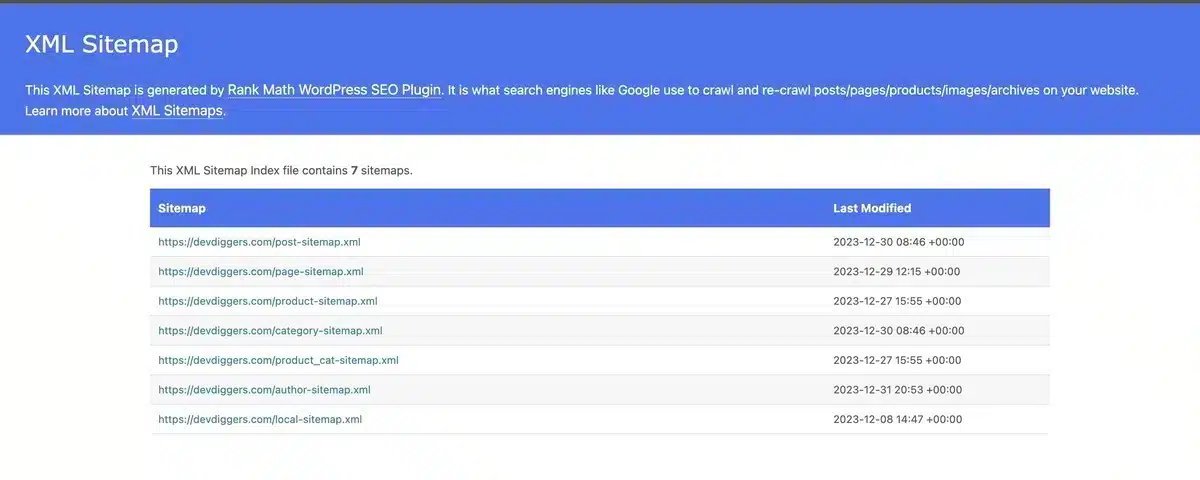
Before you do anything in Publisher Center, set up a news sitemap. This is separate from your regular XML sitemap and only includes articles published in the last 48 hours. Google’s news crawler checks it frequently to find fresh content.
Skip ahead to the “How to Create a Google News Sitemap in WordPress” section below for the full setup. Come back here once it’s done.
Step 2: Submit Your News Sitemap to Google Search Console
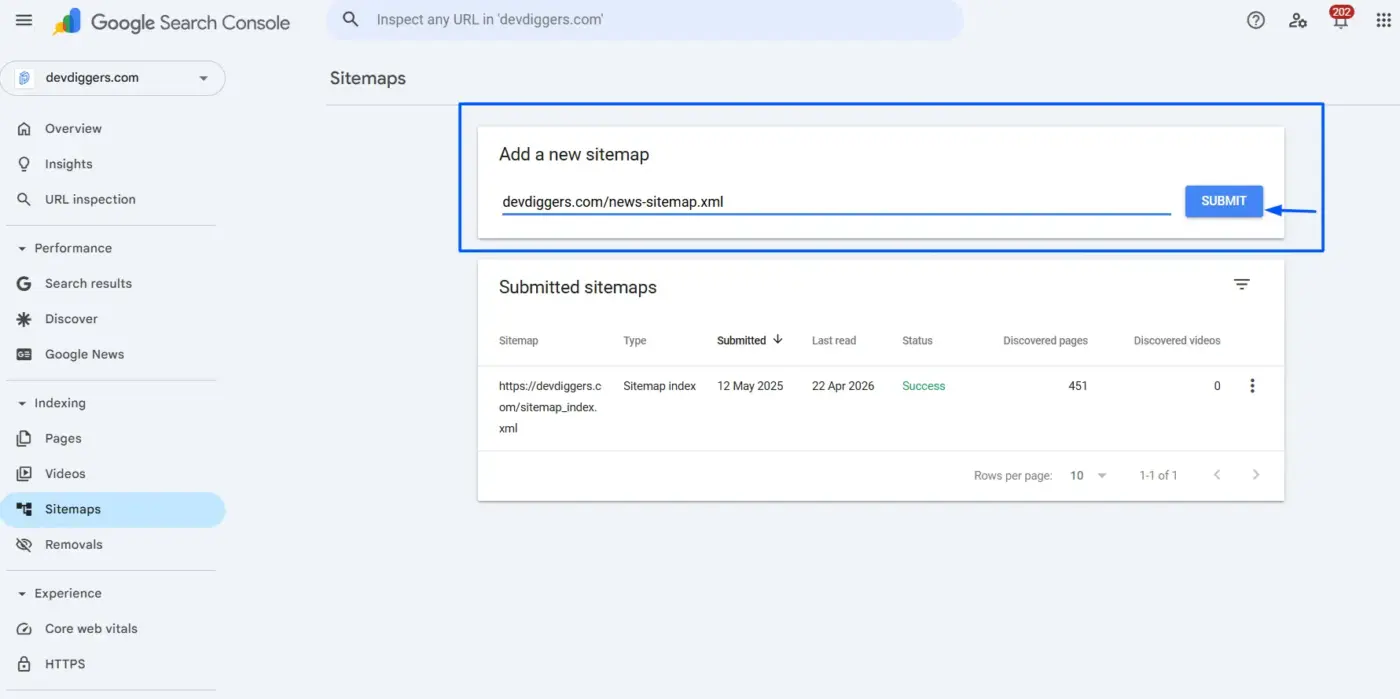
Log in to Google Search Console and select your property. Go to Indexing > Sitemaps. Enter your news sitemap URL (it will look something like yoursite.com/news-sitemap.xml) and click Submit.
If your site isn’t verified in Search Console yet, do that first. Google offers several verification methods, including an HTML tag you can add via Rank Math or Yoast, a DNS TXT record, or a Google Analytics code snippet.
Step 3: Open Google Publisher Center
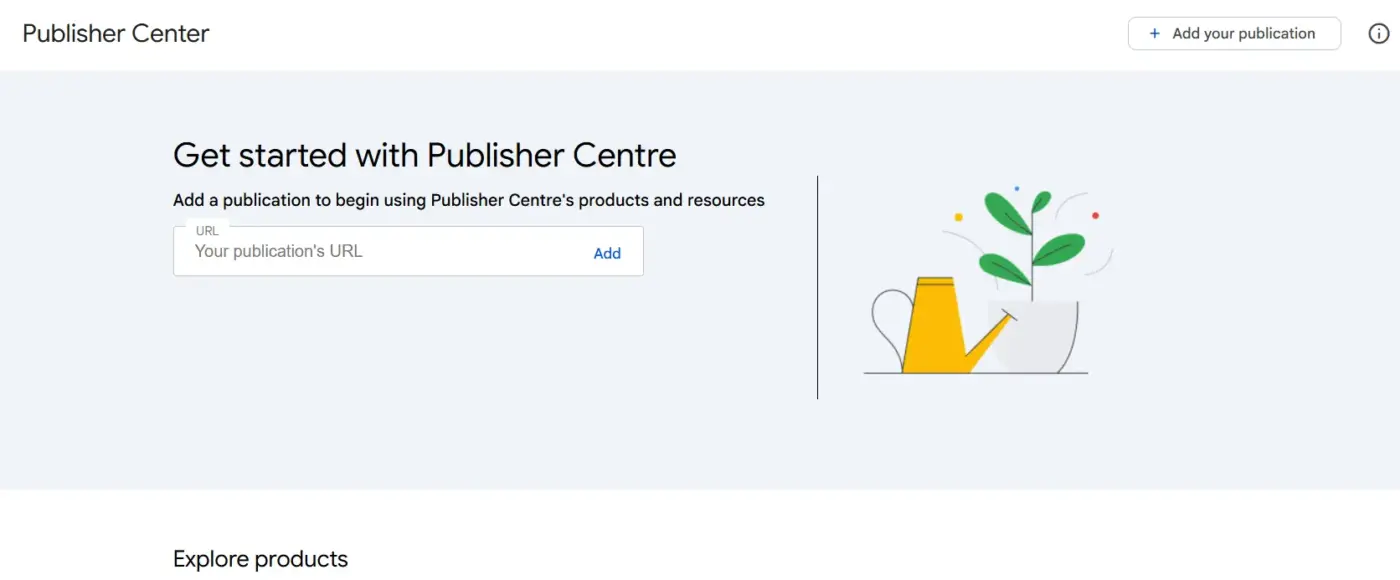
Go to publishercenter.google.com and sign in with the same Google account you use for Search Console. This makes verification much faster.
Click Add publication or type your website URL into the field and click Add.
Step 4: Fill in Your Publication Details
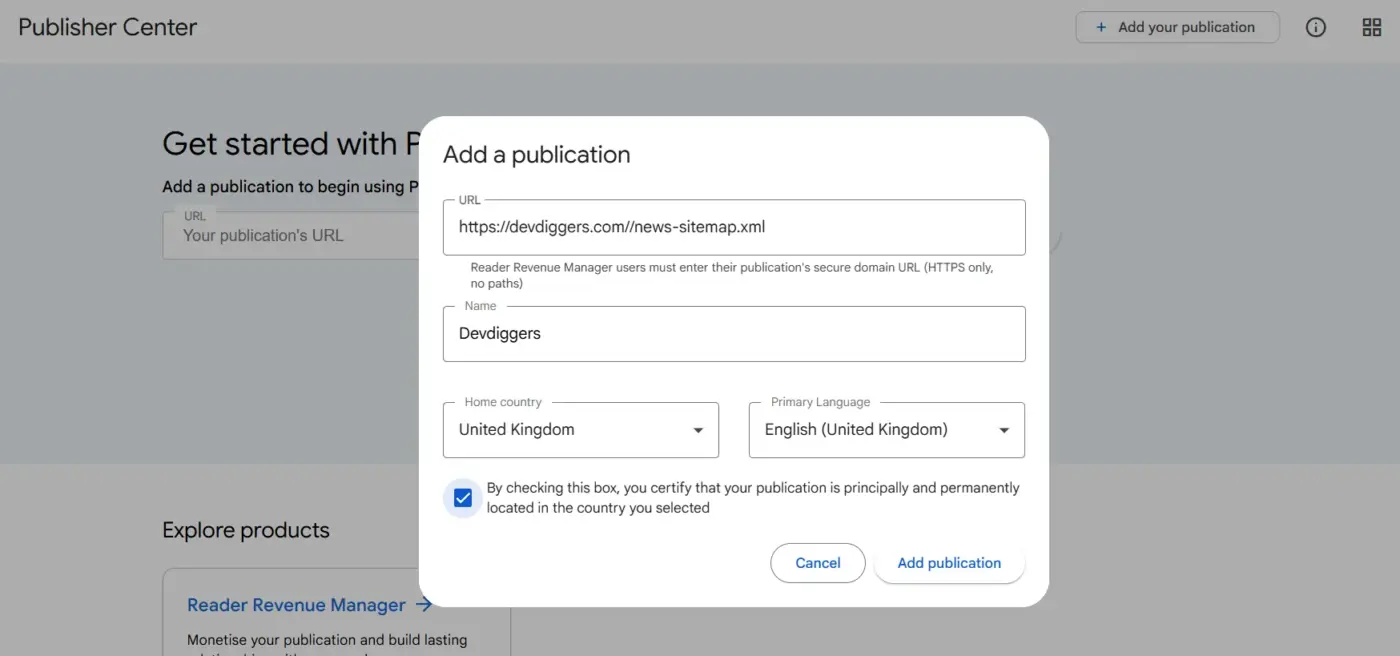
A form will appear asking for:
- Publication name — enter this exactly as you want it to appear in Google News
- Primary country — where your publication is based
- Primary language — the main language of your content
- Website URL — your homepage
Check the box confirming your publication is permanently based in the country you selected. Click Add publication to continue.
Step 5: Verify Your Site
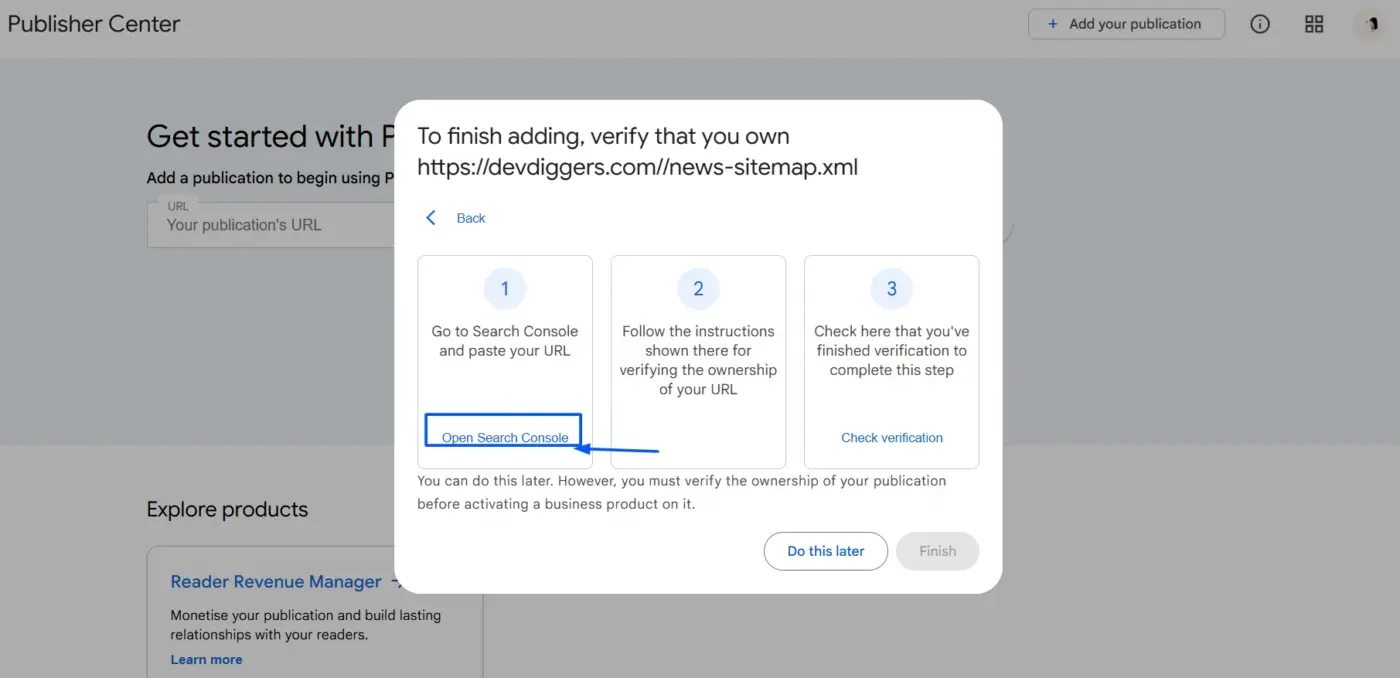
After adding your publication, go to Publication Settings and scroll to Primary website property URL. Click Verify in Search Console. If you used the same Google account, your site may already show as verified. If not, follow the steps in Search Console to complete verification.
This step links your Publisher Center account to your Search Console data, which helps Google confirm ownership and match your site’s performance data.
Step 6: Add Content Labels Where Needed
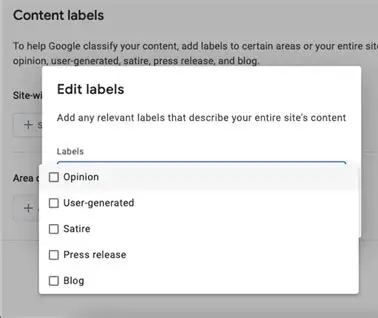
If any section of your site publishes opinion pieces, press releases, satire, or user-generated content, you need to label it. Go to Content settings in Publisher Center, click Add content labels, and enter the URL path for each content type.
This is a step most guides skip entirely. Missing content labels doesn’t automatically disqualify you, but it means Google’s crawler makes its own determination about your content type. Getting it wrong can hurt your eligibility for Top Stories.
Step 7: Wait and Monitor
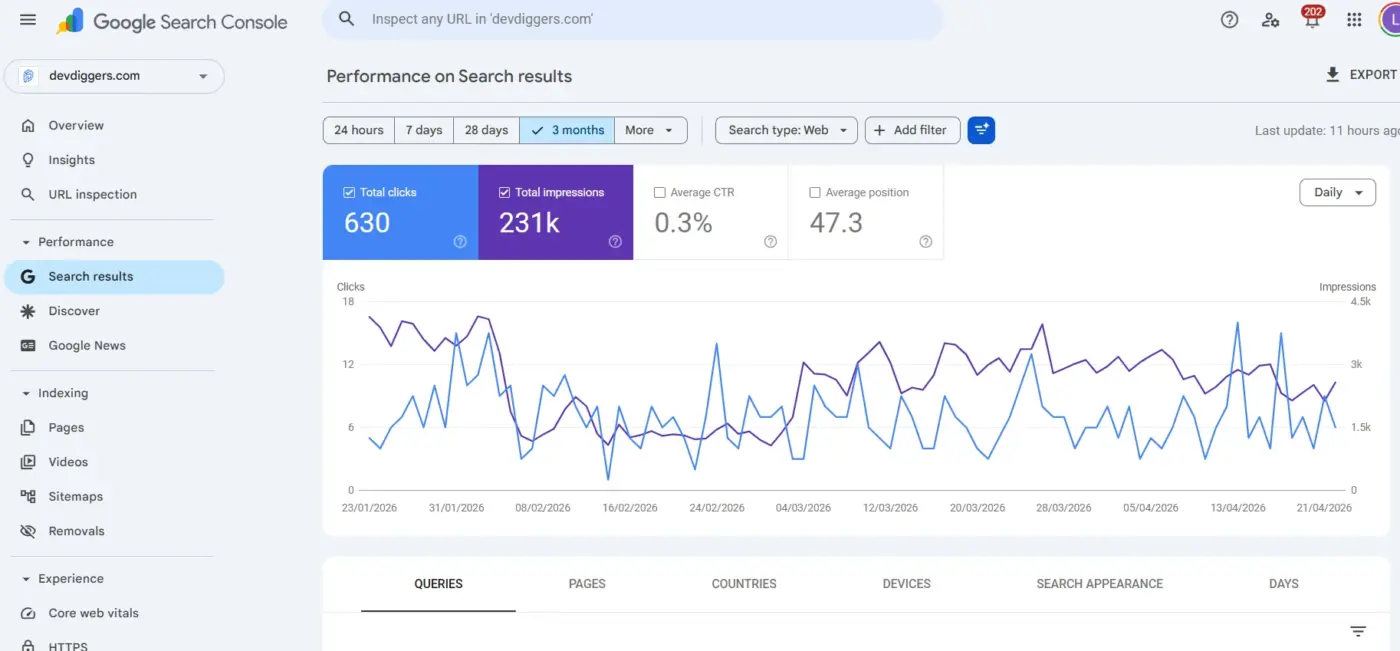
Once submitted, allow two to four weeks for Google’s systems to evaluate your site. In some cases, it can take longer, especially for new sites or niches with high competition.
Check the Google News performance report in Search Console under Search results and filter by Search type: Google News. That report is the clearest indicator of whether your content is appearing in Google News surfaces.
Worth knowing: Approval is not guaranteed, and Google does not send a formal confirmation email. The performance report is how you find out.
What Changed in 2025 (And What It Means for You Now)
This section matters if you tried setting up Google News before and are wondering why things look different.
In March 2025, Google completed a full transition to automatically generated publication pages in Google News. Google confirmed the change in February 2025, noting that publication pages previously created by publishers manually would no longer appear to users.
Here’s what that means in plain terms:
- RSS feed submissions no longer work: Google News will not use RSS feeds or web locations you submitted in Publisher Center to build your publication page.
- Manually created pages are gone: If you set up a custom publication page before March 2025, it no longer shows to users. Google’s algorithm builds the page automatically.
- Custom sections in Publisher Center are discontinued: The Google News tile in Publisher Center has been removed.
Barry Schwartz of Search Engine Roundtable confirmed the transition was complete by March 31, 2025.
What Publisher Center is Still Useful For
Publisher Center isn’t dead. It still matters for three things:
- Google News Showcase: If you want to apply for this paid partnership program with Google, you still do that through Publisher Center
- Reader Revenue Manager: for publishers running subscription models
- Favicon and site name signals: Google now uses your site favicon as your logo in Google News. Make sure your favicon is at least 48×48 pixels, and your site name is configured correctly via Google Search
What This Means For Your Strategy
The shift puts more weight on content quality, structured data, and technical signals than on anything you manually configure in Publisher Center. Your news sitemap, NewsArticle schema, named authors, and consistent publishing schedule are now the primary levers you control.
This is a more level playing field than the old system. Google now treats your content the same way it treats content from established publishers at the crawl level. The site that publishes better, more timely, more trustworthy content wins more visibility. That’s worth knowing before you start.
How to Create a Google News Sitemap in WordPress
A Google News sitemap is not the same as a regular XML sitemap. A standard XML sitemap lists all your important pages to help Google find and index them. A news sitemap is a much narrower file that only includes articles published in the last 48 hours, formatted with specific tags that Google’s news crawler reads.
It is worth understanding this difference before you set anything up. If you want a broader overview of the different sitemap types for WordPress, our guide on creating a sitemap for WordPress explains the basics well.
The required tags in a Google News sitemap include: the publication name, publication language, article title, and publication date. As Rank Math’s documentation explains, posts are only included in the sitemap for 48 hours after publication, then removed. Google may keep the post in its index for up to 30 days after that, but the sitemap window is tight.
Using Rank Math to Create a Google News Sitemap
Rank Math makes this simple. Here’s the setup:
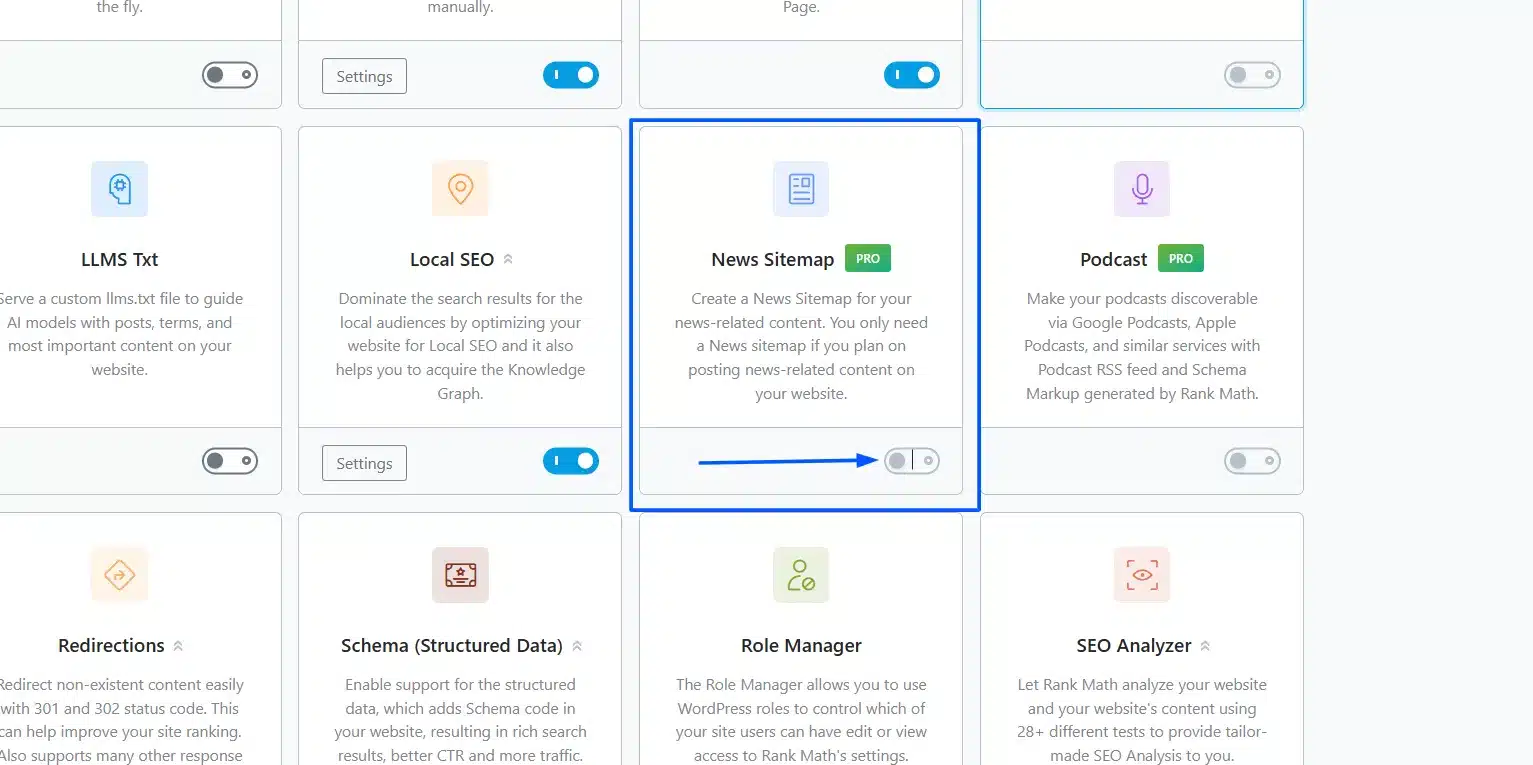
- In your WordPress dashboard, go to Rank Math SEO > Dashboard
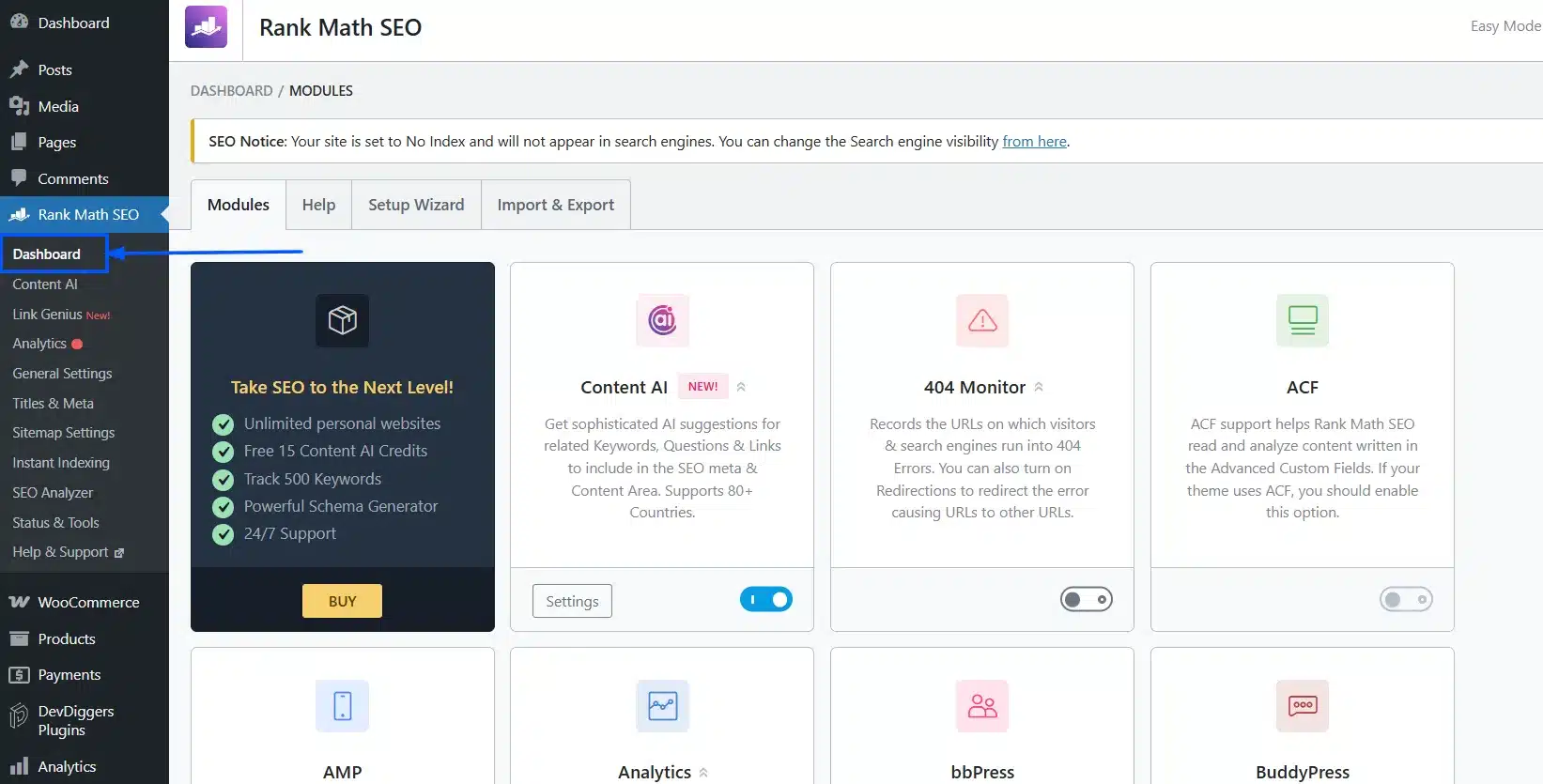
- Scroll to the Modules section and confirm the News Sitemap module is turned on. The news sitemap module requires the main sitemap module to be active first.
- Go to Rank Math SEO > Sitemap Settings > News Sitemap and enter your publication name exactly as it should appear in Google News, also select which post types to include. For most sites, this is just Posts. Do not include product pages or pages.
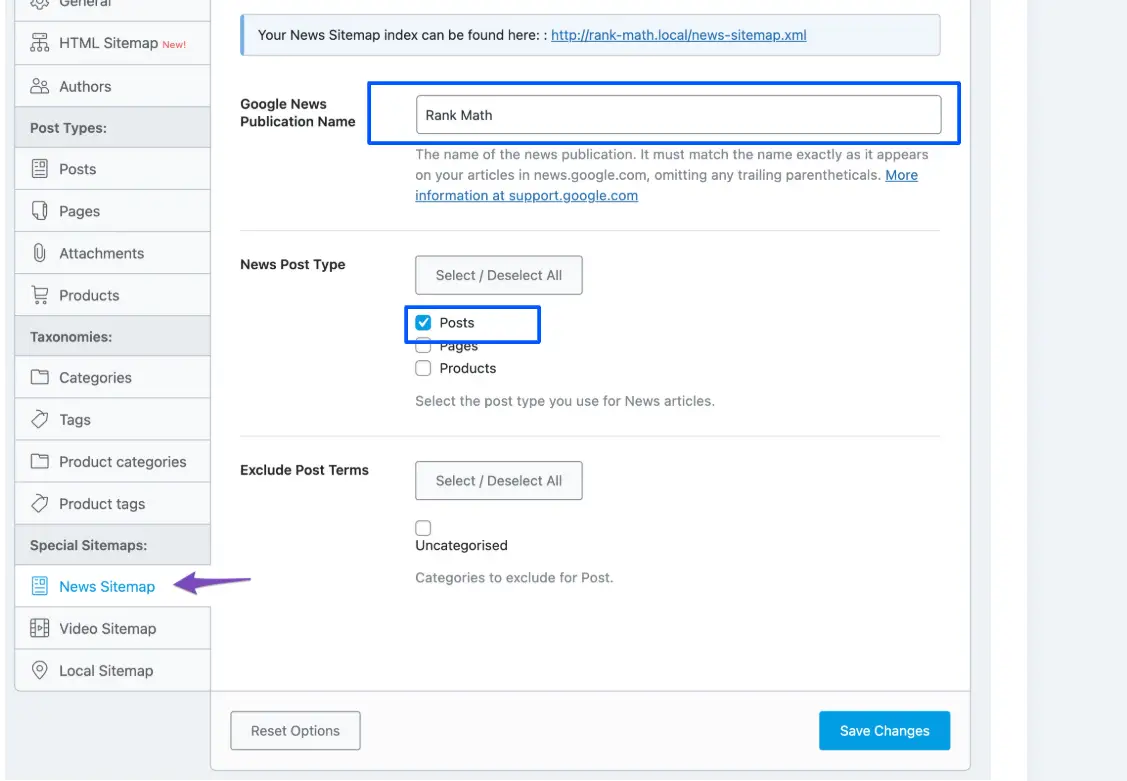
- Click Save Changes.
Your news sitemap will now be accessible at yoursite.com/news-sitemap.xml. Rank Math updates itself automatically when you publish new posts.
A note from working with this configuration: if you publish a post and it doesn’t appear in the news sitemap, check the publication timestamp. Rank Math only includes posts published in the last 48 hours. A post that was backdated or published during a plugin conflict window may not appear, regardless of your settings.
Using Yoast SEO as an Alternative
If you use Yoast SEO, install the separate Yoast News SEO plugin (it’s a premium add-on). Once active, go to Yoast SEO > News SEO and enter your publication name. Yoast will generate a news sitemap at yoursite.com/news-sitemap.xml automatically.
Both plugins produce compliant news sitemaps. The choice comes down to which SEO plugin you already use.
Tips to Increase Your Chances of Getting Featured
Getting into the sitemap and Publisher Center is the minimum. These steps improve your actual chances of appearing in Top Stories and Google Discover.
- Publish on a consistent schedule: Google’s systems favor sites that publish regularly. That doesn’t mean you need to post daily. But a site that publishes two or three news-relevant articles per week, consistently, signals more authority than one that publishes ten articles in one week and goes quiet for a month.
- Set up NewsArticle schema on every post: NewsArticle schema markup tells Google’s crawlers that a piece of content is a news article, not a blog post or product page. In Rank Math, this is set under Rank Math > Titles & Meta > Posts > Schema Type. Set the default schema to Article and then switch individual news posts to News Article where relevant. Yoast handles this similarly under the schema tab in the post editor. This small step is often overlooked. Missing structured data means Google has to infer your content type on its own.
- Get your images right: Google News requires at least one image per article for the article to appear with a visual in the news feed. The image should be at least 1200 pixels wide and use a 16:9 ratio where possible. Set the featured image on every post, use descriptive file names, and add alt text. Google’s systems use the og: image tag to pull the image for news surfaces, so make sure your SEO plugin sets this correctly.
- Name your authors and build their profiles: Every article should have a named author with a byline. Set up an author archive page for each writer that includes a short bio, area of expertise, and a profile photo. This supports Google’s E-E-A-T signals (Experience, Expertise, Authoritativeness, Trustworthiness) and helps Google’s news ranking systems assess the credibility of your content.
- Avoid these common mistakes: Most sites that don’t get featured make one of three errors: thin or duplicate content on article pages, an excessive number of ads relative to editorial content, or mixing promotional content and news content in the same URL path without clear separation. If you’ve recently fixed duplicate title tags across your site, also check your article pages specifically. A post about fixing duplicate title tags in WordPress is worth reading if you suspect that’s a factor in your crawl performance.
Getting the technical foundation right isn’t glamorous. But it’s what separates sites that get featured from sites that wait months for results that never come. For a broader view of search optimization on WordPress and WooCommerce sites, our WooCommerce SEO guide covers the fundamentals in depth.
Conclusion
Submitting your website to Google News comes down to three things: a clean technical setup, a properly configured Google News sitemap, and content that meets Google’s current standards.
The March 2025 changes removed a lot of the manual control publishers used to have. Google now auto-generates publication pages and no longer relies on RSS feeds or manually submitted web locations. That shift puts more weight on your sitemap, your schema markup, your author signals, and the consistency of your publishing.
Set up your news sitemap in Rank Math, submit it to Search Console, add your publication to Publisher Center, and then focus on publishing original, timely content with proper structure. That’s the process that actually works.
If your WordPress site needs a stronger technical SEO foundation before you start, our technical WordPress SEO services team can help you get there.
Frequently Asked Questions
Q1. Do I still need to use Google Publisher Center to get into Google News?
Publisher Center is now optional for appearing in Google News. Since March 2025, Google has auto-generated publication pages and no longer relies on manual submissions. You can still use Publisher Center to apply for Google News Showcase, manage Reader Revenue Manager, and signal your site’s favicon and name. But your content’s eligibility is determined by Google’s crawlers, not your Publisher Center setup.
Q2. How long does it take to appear in Google News after setting everything up?
Most sites see results within two to four weeks. Some take longer, especially newer domains or sites in competitive niches. There is no approval email from Google. Check the Google News performance report in Search Console under Search results, filtered by Search type: Google News, to see if your content is appearing.
Q3. What is the difference between a Google News sitemap and a regular XML sitemap?
A regular XML sitemap lists all the important pages on your site to help Google find and index them over time. A Google News sitemap is much more specific. It only includes articles published in the last 48 hours and uses special tags that Google’s news crawler reads. Both serve different purposes, and you should have both active on your WordPress site.
Q4. Can a blog or WooCommerce store get into Google News, or is it only for news publishers?
Any site can be considered for Google News as long as the content is original, timely, and follows Google’s content policies. You don’t need to be a traditional news organization. That said, product pages, promotional content, and evergreen tutorials don’t qualify. If you want news coverage, keep that content in a separate section of your site with a consistent URL structure, named authors, and regular publishing.
Q5. What happens if Google doesn’t generate an automatic publication page for my site?
Some smaller publications may not receive an auto-generated page in Google News after the March 2025 transition. This does not mean your articles won’t appear in Google News search results or Top Stories. The publication page is a browsable destination for your brand in the news app. Your individual articles can still surface independently across news surfaces based on relevance and quality signals.