


To submit my site to Google, add it to Google Search Console, verify that you own it and submit your XML sitemap. The whole job takes about 10 minutes and costs nothing. Google then crawls the site, and Google’s recrawl guide says that can take a few days to a few weeks.
Most guides start in Search Console. We start one step earlier, because one WordPress checkbox can hide an entire site from Google, and no submission fixes that. We also pulled real sitemap and URL Inspection data for devdiggers.com through the Search Console API, so the screens below match what you will see.
This guide covers the WordPress checks, six submission steps, how to submit a single URL and how to read the results. It ends with the reasons Google still skips pages after you submit them.
Do You Need to Submit Your Site to Google?
You do not have to submit a site, but you should. Google says it automatically looks for sites to add to its index, usually through links from other sites. Submitting a sitemap tells Google where every page lives, which helps most on new sites that have no links yet.
Website submission to Google is not a ranking tool. It gets your pages discovered, and nothing more. Whether they rank depends on content, links and how well the page answers the search.
Three things speed up discovery, and you control all three:
- A verified Search Console property: It shows what Google found and what it skipped.
- A working sitemap: It lists every page you want indexed.
- Internal links: Google follows links, so a page with no links pointing to it is easy to miss.
Before You Submit: Check WordPress Is Not Blocking Google
Two settings can stop Google before you start: the WordPress search engine visibility checkbox and your robots.txt file. Check both first, because a blocked site cannot be crawled no matter what you submit. If either one blocks crawling, every step after this one is wasted time.
The search engine visibility checkbox
Go to Settings, then Reading, and find “Discourage search engines from indexing this site”. The box must be unchecked. It is meant for sites under development, and it often stays ticked after launch.
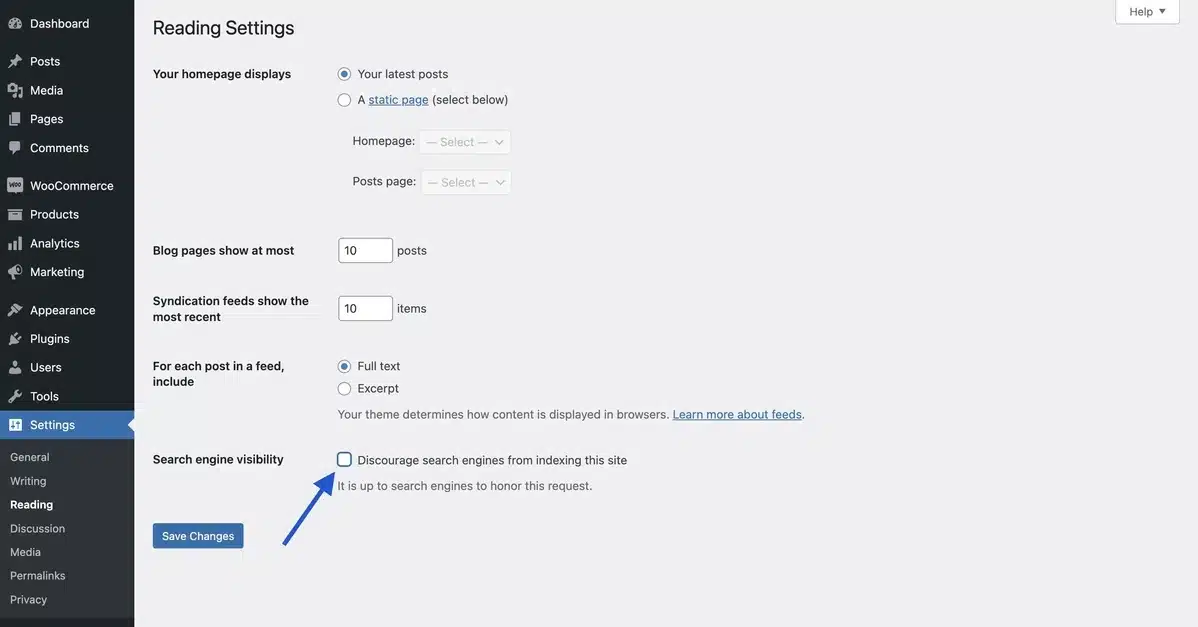
When this box is ticked, WordPress does not write a Disallow: / line into robots.txt, as older guides claim. In the WordPress 7.1.2 source, the wp_robots_noindex() function adds a noindex and nofollow robots meta tag to every page when blog_public is off. So you find the problem in the page source instead of robots.txt.
To check a live site, run this command and look for the robots line:
curl -s https://yourdomain.com/ | grep -i "name='robots'"
A healthy site shows index in that tag. A blocked site shows noindex, nofollow. Rank Math and Yoast can also add a noindex tag, so a clean Reading screen does not clear you completely.
Your robots.txt file
Open yourdomain.com/robots.txt in a browser. A safe file has a User-agent: * line and no Disallow: / line. Ours lists a User-agent: * group and a Sitemap: line that points to https://devdiggers.com/sitemap.xml.
If you see Disallow: /, Google is blocked from every page. Remove that line, or find the plugin or server rule that adds it. If you recently finished setting up WooCommerce on WordPress and nothing appears in search, check both of these first.
Check whether Google already knows your site
Search Google for site:yourdomain.com. If pages appear, Google has already indexed part of the site. If nothing appears, the site is not indexed yet, and the rest of this guide is the fix.
How to Submit My Site to Google Search Console in 6 Steps
To submit your website to Google, you create a Search Console property, verify ownership, find your sitemap and submit it. Search Console is Google’s free tool for this. Whatever you call it, every Google submit step runs through that tool, and the steps below follow the order the screens appear.
Step 1: Sign in with a Google account
Go to Google Search Console and sign in. Use an account your company controls instead of a personal one that one person owns. Adding teammates later is easy, but recovering a lost account is not.
Step 2: Add your property
Click the property selector, then Add property. Search Console offers two types. Google’s help page says a Domain property includes all subdomains and multiple protocols, while a URL prefix property covers only the exact address you type.
Choose Domain if you can edit DNS, because it needs DNS verification and shows all your traffic in one place. Choose URL prefix if you cannot.
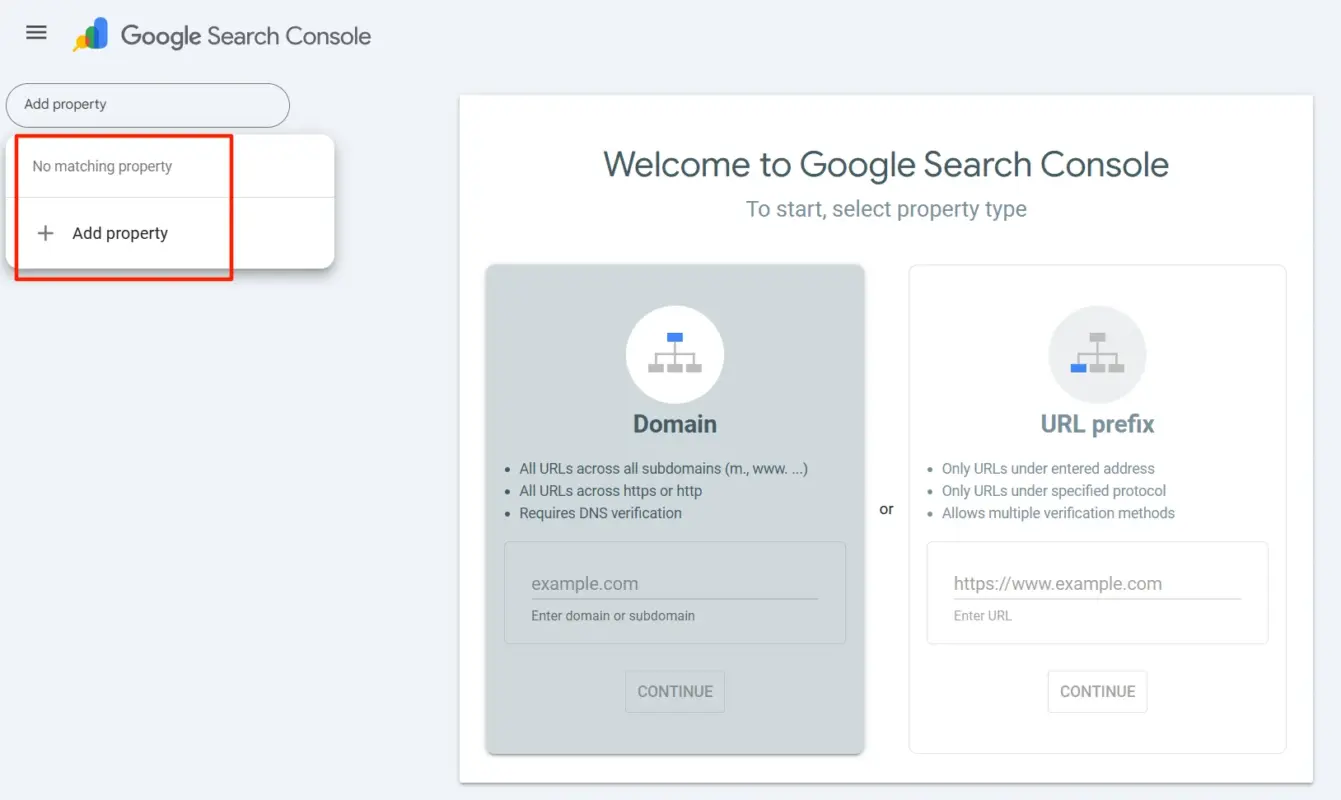
Step 3: Verify that you own the site
Google asks you to prove ownership. For a Domain property, copy the DNS TXT record and paste it into your domain registrar’s DNS settings. Click Verify once the record is live, which can take a few minutes.
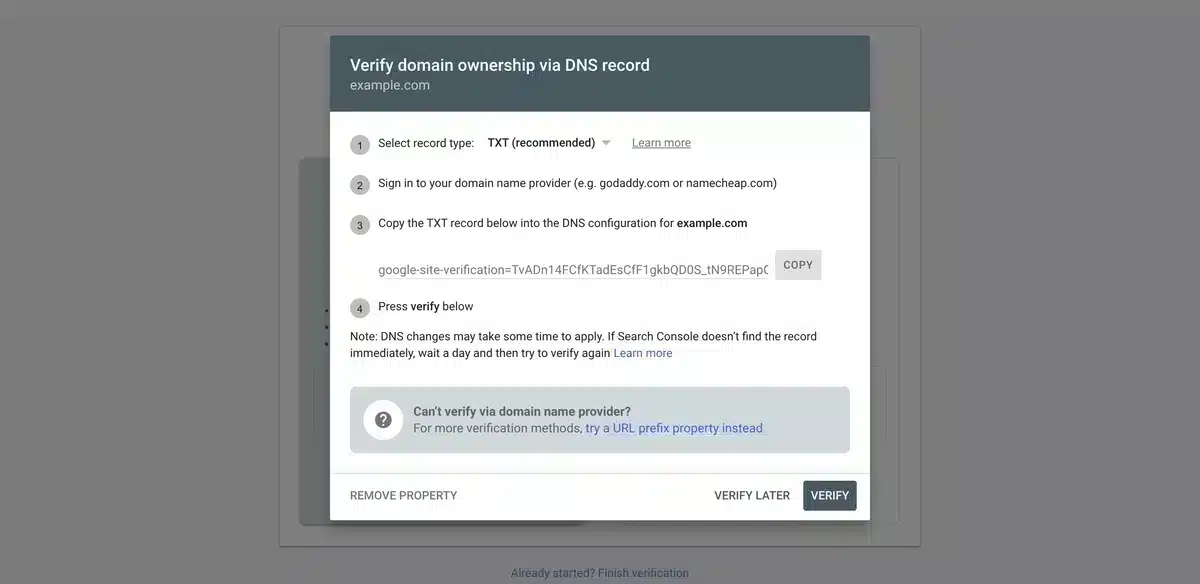
A URL prefix property offers other methods, such as an HTML file upload or a meta tag. The DNS record adds no code to your site, and it stays valid until you remove it.
Step 4: Find your sitemap URL
A sitemap is an XML file that lists the pages you want indexed. With Rank Math or Yoast SEO installed, WordPress creates it for you. The usual address is yourdomain.com/sitemap_index.xml.
We checked our own site. https://devdiggers.com/sitemap.xml returns a 301 redirect to sitemap_index.xml. That index file lists seven child sitemaps, including post-sitemap1.xml, post-sitemap2.xml, page-sitemap.xml and product-sitemap.xml.
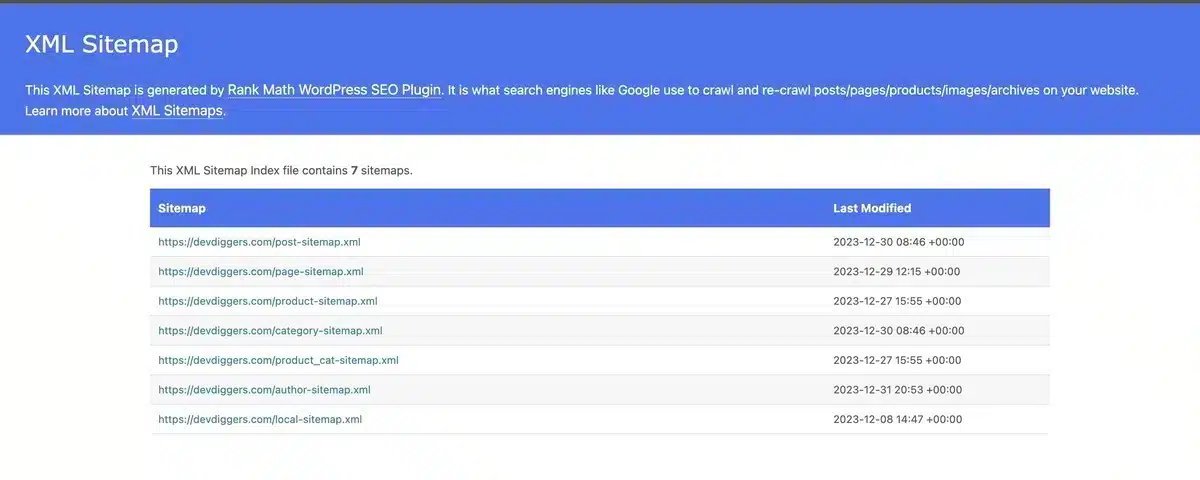
Without an SEO plugin, you will not have a sitemap. Install Rank Math or Yoast SEO, then open the address above to confirm it loads. Google’s documentation says a single sitemap is limited to 50MB uncompressed or 50,000 URLs, which is why plugins split large sites into several files.
Step 5: Submit the sitemap
In Search Console, open Sitemaps in the left menu. Type your sitemap path, such as sitemap_index.xml, into “Add a new sitemap” and click Submit. Submit the index file only, because it already points to every child sitemap.
Google’s sitemap documentation lists Search Console and a Sitemap: line in robots.txt as the ways to tell it about a sitemap. Doing both is safe.
Older guides mention a “ping” URL. Google announced the end of its sitemaps ping endpoint in 2023, so do not rely on it.
Step 6: Read the result
Refresh the Sitemaps page after a few minutes. A status of Success means Google fetched the file. The discovered pages number should match roughly what you expect.
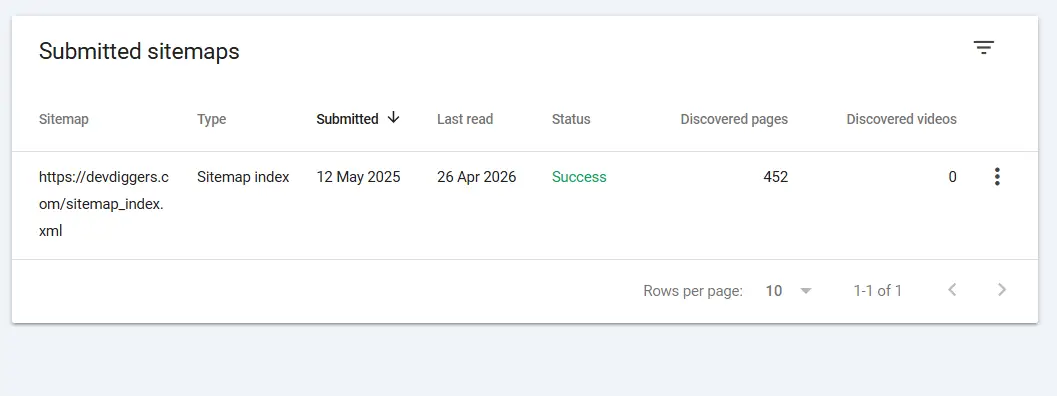
We pulled this report for devdiggers.com through the API. It listed three sitemaps with zero errors and zero warnings. The index showed 337 URLs, post-sitemap1.xml showed 201 and post-sitemap2.xml showed 63.
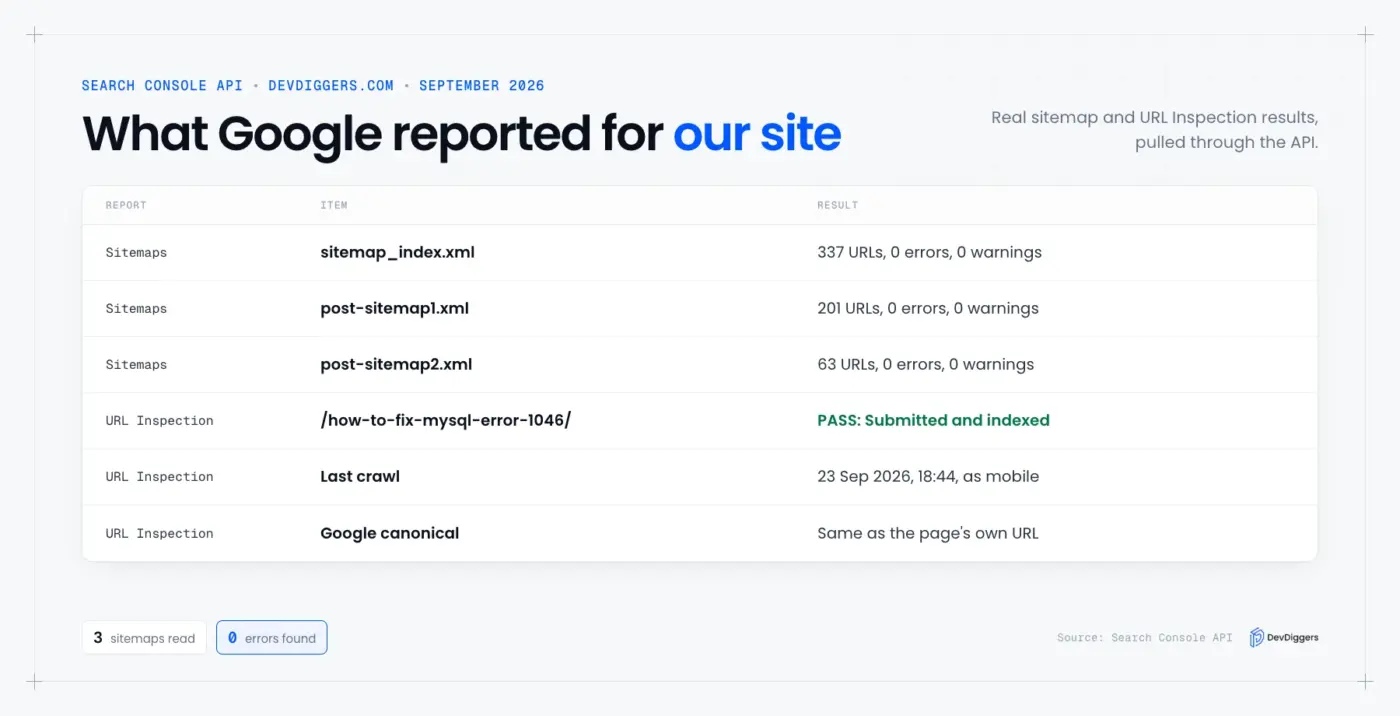
If the count is zero or far too low, Google could not read the file. Open the sitemap URL in a private window and confirm it loads without a login. Then look for a plugin or firewall that blocks Googlebot, which is a common source of a 403 Forbidden error.
What the Sitemap Statuses Mean and How to Fix Them
The Sitemaps report shows one of three statuses for each file you submit: Success, Has errors or Couldn’t fetch. Google defines each one on its Sitemaps report help page. Success is the goal, and the other two point to a specific fix.
| Status | Google’s meaning | What to do |
|---|---|---|
| Success | The sitemap loaded and processed with no errors | Nothing |
| Has errors | Google fetched it but found one or more errors | Open the report and fix the listed lines |
| Couldn’t fetch | Google could not fetch the sitemap | Check the URL, robots.txt and your server |
For Couldn’t fetch, Google’s help page lists causes worth checking in order. A robots.txt rule may block the file. The URL may be wrong, so open it in a browser.
The server may be failing, in which case you wait and watch the next attempt.
The same page suggests testing the sitemap URL with the URL Inspection tool. That shows whether Googlebot can reach it, and it answers the question faster than guessing.
Tip: Submit sitemap_index.xml and stop. A common mistake is to submit each child sitemap as well, which creates duplicate rows in the report and adds nothing.
How to Submit a URL to Google
To submit a URL to Google, paste it into the URL Inspection tool at the top of Search Console. Run the live test, then click Request Indexing. Use this for one new page or one page you just fixed, and use a sitemap when you have many pages.
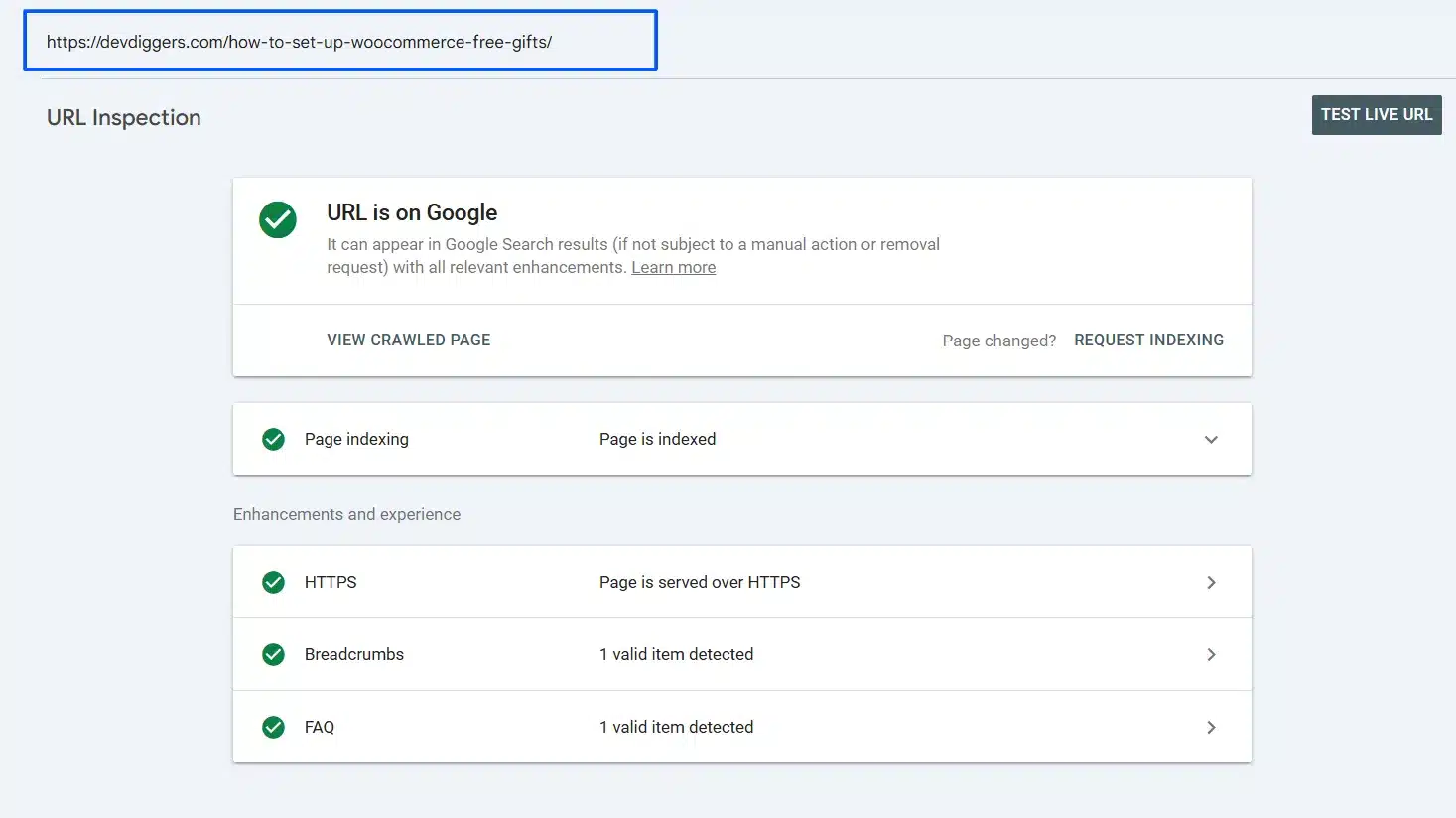
Click Test Live URL first. It shows whether Googlebot can fetch the page right now. If the result says the URL is available to Google, click Request Indexing.
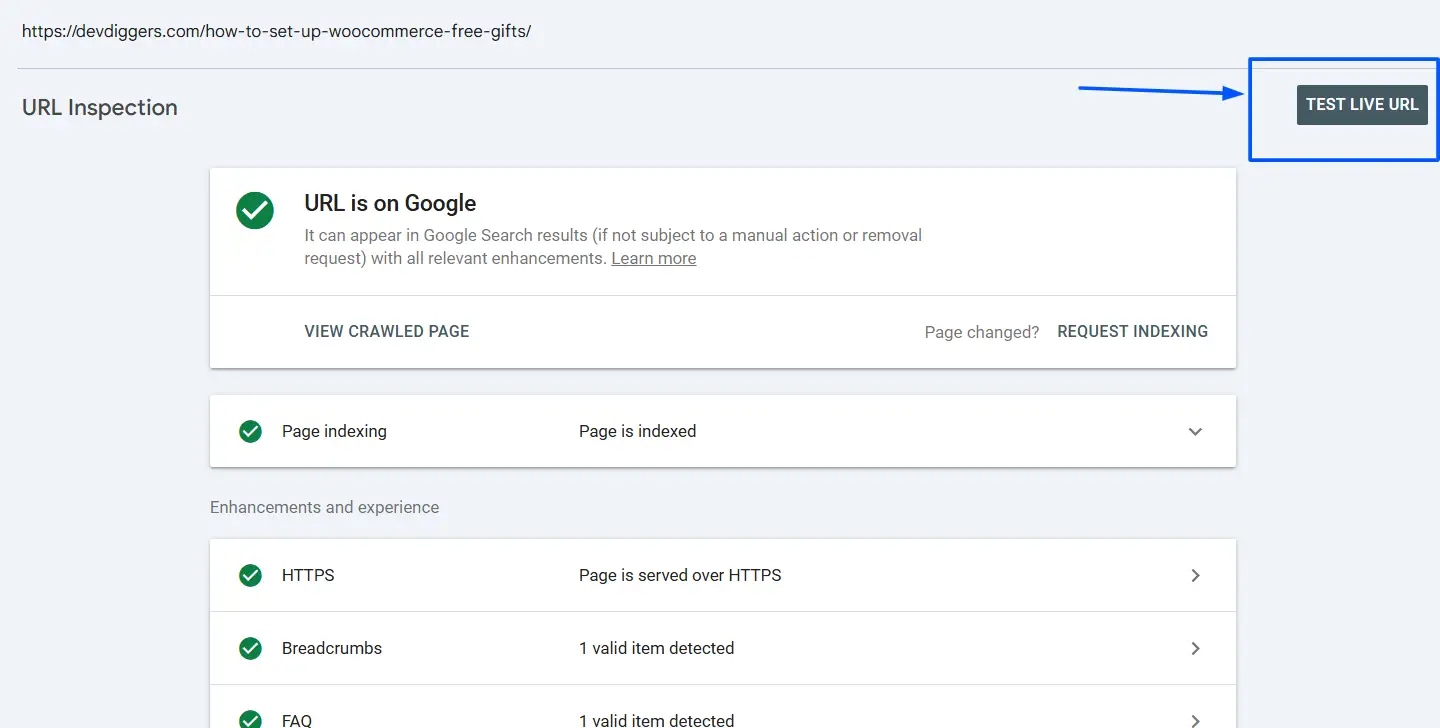
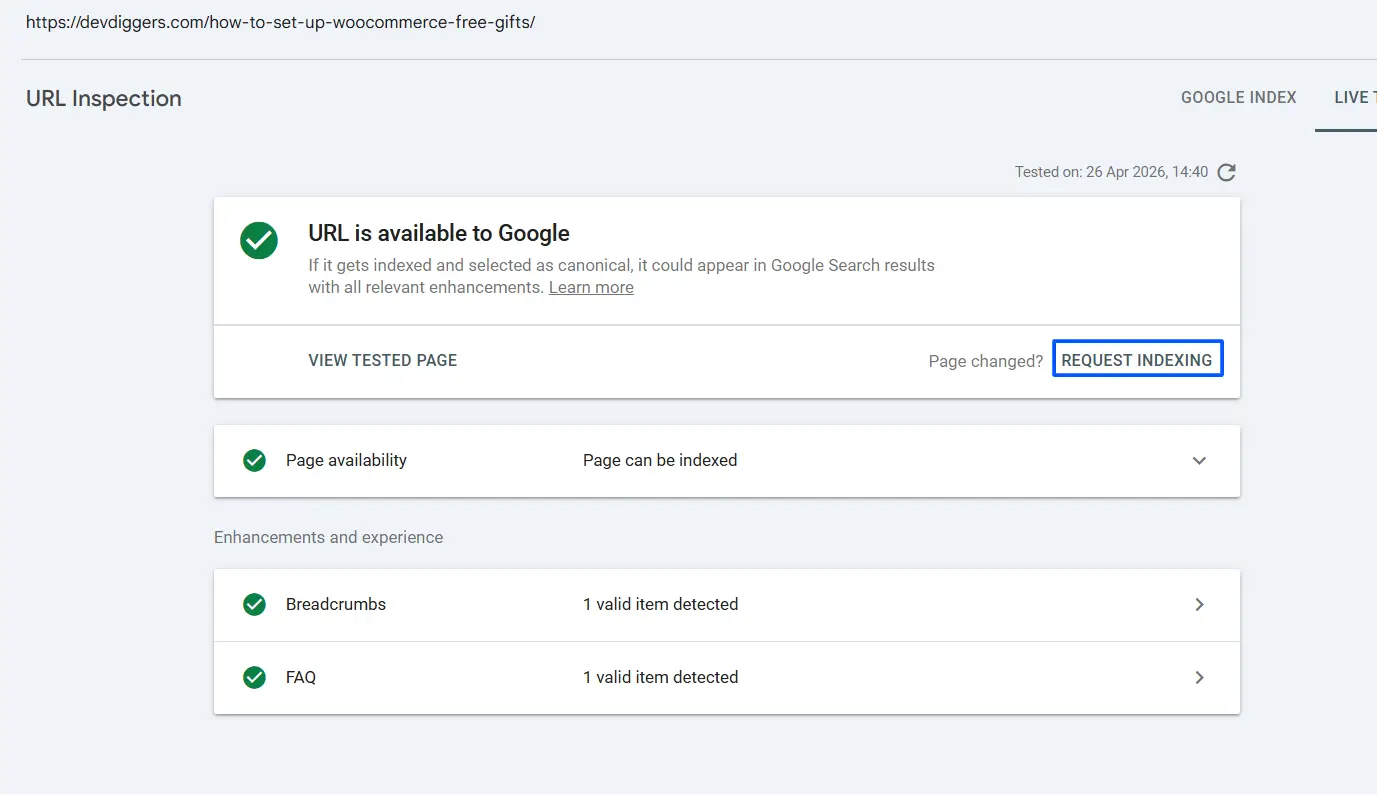
Google’s recrawl documentation sets the limits. It says there is a quota for individual URLs, and that repeat requests for the same URL do not get it crawled any faster. It does not publish the quota number, so treat any figure you read elsewhere as a guess.
Note: Google’s recrawl page says you must be an owner or full user of the property to request indexing. If your button is missing, check your permission level under Settings, then Users and permissions.
What the URL Inspection API returned
Search Console also exposes URL Inspection through an API. We ran it on our MySQL 1046 guide, which had been rewritten a few days earlier. The verdict was PASS and the coverage state was “Submitted and indexed”.
The same result listed the last crawl as 23 September 2026, crawled as mobile, robots.txt allowed, and the Google-selected canonical matching the page’s own URL. It also named the sitemap as a referring URL. That is what a healthy result looks like, and it is worth comparing with yours.
Do plugins that ping Google work?
Some SEO plugins offer instant indexing. Google’s Indexing API documentation says it can only crawl pages with JobPosting or BroadcastEvent markup. A blog post or a product page is neither, so that API is not a shortcut for normal WordPress content.
Rank Math’s instant indexing feature works through IndexNow, which Rank Math documents in its knowledge base. It notifies participating search engines about new and updated URLs, so it is a Bing-side helper more than a Google one.
How Long Does It Take Google to Index a Site?
Google says crawling can take days to weeks. New sites with no links sit at the slow end, and sites with sitemaps and internal links move faster. Progress shows up in the Pages report under Indexing in the left menu, one status per URL.
Do not read a quiet first week as a failure. Check the Sitemaps report for errors, confirm one page with URL Inspection and keep publishing. Refreshing a site: search every hour tells you nothing useful.
Track progress under Indexing, then Pages in Search Console. The report groups every URL Google knows about into a status. Google explains each one in its Page indexing report documentation.
| Status | What it means | What to do |
|---|---|---|
| Indexed | Google stored the page | Nothing |
| Discovered, currently not indexed | Google knows the URL and has not crawled it yet | Wait, and add internal links |
| Crawled, currently not indexed | Google fetched it and chose not to index it | Improve the page, then request indexing |
| Excluded by noindex tag | You told Google to skip it | Remove the tag if this is wrong |
Indexing and ranking are different jobs. An indexed page is in Google’s database, and ranking is where it appears for a search.
That depends on the content, links and the work covered in our guide to what compound SEO is.
How to Submit Your Website to Bing and Other Search Engines
Bing has its own free tool, Bing Webmaster Tools, where you add your site and submit a sitemap. It takes a few minutes and uses the same sitemap file you gave Google. A Sitemap: line in robots.txt also lets any engine that reads it find the file on its own.
Bing and Google keep separate indexes, so a page can appear in one and not the other. Check both tools when a page seems missing. If you run a news site, submitting to Google News is a separate process, which our guide to submitting a website to Google News covers.
Why Google Still Does Not Index Your Pages
If pages stay at “Discovered” or “Crawled” for weeks after you submit them, the cause is usually on your site. Five causes account for most cases: a stray noindex tag, crawl traps, orphan pages, a security plugin that blocks Googlebot, and thin or duplicate content.
A noindex tag you did not mean to add
An SEO plugin can mark a whole post type as noindex through one wrong setting. In Rank Math, review Titles & Meta for each post type. In Yoast SEO, open Search Appearance and check “Show in search results”.
Test one affected URL with the URL Inspection tool, which reports whether indexing is allowed.
Crawl traps
WordPress creates extra URLs that add nothing for search: tag archives, attachment pages and deep pagination. Google can spend its crawl time on them instead of on your real content. Set low-value archives to noindex in your SEO plugin, and turn off attachment pages.
Orphan pages
An orphan page has no internal links pointing to it. Google follows links, so it may never find the page unless the sitemap lists it. Link to every important page from at least one related post or category page.
Security tools that block Googlebot
A firewall or security plugin can return a 403 to Googlebot while your own browser loads the page fine. The URL Inspection live test shows the real answer. If it reports a fetch error, check your firewall rules and host settings.
Thin or duplicate content
Google skips pages that add little. Short product pages that copy a supplier’s text are a common example. Our guide on writing product descriptions using ChatGPT covers how to write descriptions that stand apart, and each one still needs a human review.
Conclusion
To submit my site to Google, I would check the WordPress settings first, then verify a Search Console property and submit the sitemap index. Use Request Indexing only for single pages that matter.
Then wait, and check the Pages report instead of resubmitting. Google says repeat requests for the same URL do not speed anything up. If pages stay unindexed, look for a noindex tag, an orphan page or a firewall before you change anything else.
If you want a second pair of eyes on a stubborn site, our WordPress SEO services include an indexing review.
Frequently Asked Questions (FAQs)
Q1. How do I submit website to Google for free?
Add your site to Google Search Console, verify ownership and submit your sitemap. Search Console is free, and submitting website to Google costs nothing. Anyone who asks you to pay for it is selling something you can do yourself.
Q2. How do I submit URL to Google for a single new page?
Use the URL Inspection tool in Search Console. Paste the full URL, run the live test and click Request Indexing. For many pages, submit a sitemap instead, since Google recommends sitemaps for large numbers of URLs.
Q3. How long does it take for a submitted site to appear on Google?
Google says crawling can take days to weeks. New sites with no links take longest. Check the Pages report in Search Console instead of searching Google over and over.
Q4. Is website submission to Google the same as ranking?
No. Submission gets a page discovered and, if it passes quality checks, indexed. Ranking depends on how well the page answers a search, on its links and on competing pages.
Q5. Do I need to keep submitting my website to Google after new posts?
No. Once your sitemap is submitted, Google re-reads it and finds new URLs on its own. Use Request Indexing only for an important page you just published or fixed.
Q6. Why does Google say “Discovered, currently not indexed”?
Google knows the URL but has not crawled it yet, which is common on new sites. Add internal links to the page, keep it in your sitemap and wait. If the status stays for weeks, improve the page.
Q7. Can I submit my site to Google without a Google account?
No. Search Console needs a Google account, and you only need it to see data and submit requests. Google can still find your site on its own through links, which is slower.