
If you’ve been in the digital marketing game long enough to get the hang of SEO, or search engine optimization, the art of getting a page to rank high enough to be surfaced by a search engine results page, then you’ve probably heard of GEO at this point – Generative Engine Optimization. And you’d better believe GEO isn’t a fad.
With generative AI building things like ChatGPT, Perplexity, and Google’s Search Generative Experience (SGE) – tools that will soon visit your screen on a regular basis – it is changing the way users seek and consume information forever; the old school way of incorporating SEO is no longer acceptable.
These are not tools that simply provide website URLs that you can click on to find information; they flesh out the information and provide the user with answers.
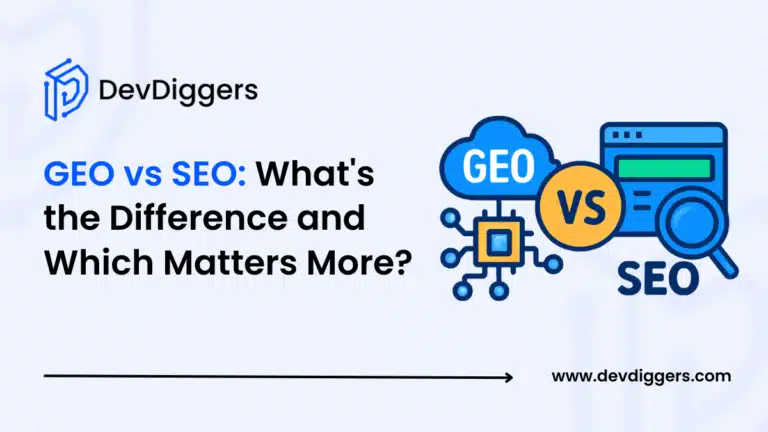
So that brings us to the question of the hour: GEO vs SEO? What is the difference between the two, and what should you invest in developing at this time?
Short answer? Both. However, understanding the differences and how they can work together is the secret to owning both AI-generated search traffic and traditional search traffic
In this comprehensive guide to GEO, we will cover:
- What Generative Engine Optimization (GEO) is and how it works.
- A quick reminder about SEO (Search Engine Optimization).
- A side-by-side comparison of GEO vs SEO.
- The workflows of each.
- How GEO and SEO can work hand-in-hand for content optimization going forward.
No matter if you are a marketer, blogger, SaaS founder, or an eCommerce store owner, this playbook will help you better understand the evolving search landscape so you can optimize your content for humans and machines alike.
Now, let’s jump in.
GEO vs SEO: A Simple Overview of Two Powerful Strategies
Riding the leaps in search behavior means we can also rethink how we think about content optimization. In this segment of the report, let’s very clearly differentiate GEO vs SEO – what they are, how they work, and why they matter for 2025 and beyond.
What is GEO (Generative Engine Optimization)?
GEO, also known as Generative Engine Optimization, primarily means optimizing your content for AI-powered search tools and large language models (LLMs) – like ChatGPT, Google SGE(Search Generative Experience), Perplexity, and Anthropic’s Claude.
GEO does not focus on traditional ranking factors such as backlinks or keyword volume; instead, it focuses on conveying simple, structured information that the generative AI systems can refer to when formulating their answers.
Key Points About GEO
- Targets AI-generated answers, not traditional website rankings.
- Clarity, context, and trust are the paramount factors.
- Structured in ways that LLMs will take information from for citation.
- Heavily weighted towards E-E-A-T principles (Experience, Expertise, Authority, Trust).
- Optimized for zero-click search visibility.
Think of GEO as formatting and optimizing your content in the form of the ideal answer, so whenever someone asks an AI assistant a question, your site gets referenced as the source.
Example: You write a factual, step-by-step guide on “How to Set Up WordPress Using Local WP: Ultimate Tutorial.” When somebody asks ChatGPT or Perplexity that same question, it references your site as part of the generated answer. That is GEO.

What is SEO (Search Engine Optimization)?
SEO, or Search Engine Optimization, is the process of optimizing content on your website for traditional search engines such as Google, Bing, and Yahoo.
SEO’s technical goal is to drive organic traffic by positioning high on the search engine results pages (SERPs) for searchers’ relevant search inquiries. The SEO process encompasses keyword optimization, technical optimization, backlinks, and user experience.
Key Points About SEO
- Keyword usage in titles, URLs, headers, and in body content.
- Optimized meta tags and alt tag attributes.
- Backlinks to build domain authority.
- Technical experience for speed and mobile friendliness.
- User signals such as low bounce rates and high time on page time that indicate user satisfaction.
Pro Tip: Make good use of an on page SEO checklist to help you identify the basics, such as headings, optimized keyword usage, links to related page content, and mobile formatting. It’s a fast way to help you identify standard mistakes before you publish!
While GEO is only about being quoted, SEO is about being clicked. And that difference impacts how you create and format your content in your writing.
Example: You write a blog post titled “Improve eCommerce Customer Experience with Visual Guides.” The correct keyword research, technical optimization, and internal linking allow your blog to rank in the top three organic results in Google.
As a result, the post is seen by more people consistently to drive regular traffic, but they’re used for different reasons in the blended search environment today.

GEO vs SEO: A Simple Comparison that Makes it Clear
Now that we reviewed GEO and SEO, let’s go one step further with a side-by-side comparison. Use this table to see the major differences in purpose, audience, strategy, and results – to see where they differ (and where they are the same).
Reminder: It’s not GEO vs SEO in a fight – it’s knowing when you can use each to help maximize visibility in a legacy search world and in an AI-generated search world.
Comparison Table: GEO vs SEO
| Feature / Element | SEO (Search Engine Optimization) | GEO (Generative Engine Optimization) |
|---|---|---|
| Primary Objective | Rank higher in traditional search engine results (Google, Bing) | Be cited or referenced in AI-generated answers (ChatGPT, SGE, Perplexity) |
| Search Channel | Search engines with SERPs (Search Engine Results Pages) | Generative AI engines & Large Language Models (LLMs) |
| Target Audience Behavior | Users clicking on blue links | Users reading direct, summarized responses from AI |
| Optimization Focus | Keyword placement, backlinks, UX, technical SEO | Structured, factual content; authority & trustworthiness |
| Content Format | Keyword placement, backlinks, UX, and technical SEO | Answer-focused content, FAQs, how-tos, explainer snippets |
| Performance Metrics | Click-through rate, bounce rate, organic traffic, keyword rankings | Blog posts, product pages, and landing pages |
| Ranking Signals | Keywords, content length, backlinks, mobile-friendliness | E-E-A-T, accuracy, source trustworthiness, clarity |
| Tools & Platforms | Google Search Console, SEMrush, Ahrefs, Moz | ChatGPT, Claude, Perplexity AI, Google SGE Labs |
| Time to See Results | Medium to long term (weeks to months) | Potentially faster via real-time citations, but less predictable |
| Zero-Click Potential | Citation frequency, mentions in AI responses, and brand exposure | High users may never click, but still see your content cited by the AI engine |
| Best Use Case | Driving traffic to your website | Limited – still depends on the user clicking through to a site |
GEO vs SEO: Understanding the Workflow
It is one thing to know what GEO and SEO are. But it is an entirely different experience to understand how GEO and SEO can function in real-world content and strategy.
In this section, we will explore the workflows of both GEO and SEO step-by-step, allowing you to see the practices occurring for each. By understanding how both strategies function, you’re better prepared to use them separately – or better yet – together.
Let’s dive in.
How GEO Works: The Generative Engine Optimization Workflow

As opposed to traditional SEO, which is most concerned with the algorithmic signals, GEO is about creating content that is useful and meaningful to AI models — it needs to be clear, structured, and valuable enough to become referential content to be used in AI-generated responses.
Here’s a typical GEO content workflow:
Step-by-Step GEO Workflow
- Identify AI Search Platforms: Identify the generative AI platforms where your audience is searching—ChatGPT, Google SGE, Perplexity, Claude, and other LLM-based tools. Think about the digital platforms where user queries are getting answered summarily instead of being searched like traditional keyword searches.
- Perform your Prompts and identify AI Outputs: Run your targeted keywords or common user questions directly in the AI tools. Take note of websites or sources where the AI references to get to its’ prompt responses. Note the structure of its responses; are they generated as lists, steps, or summaries?
- Structure the content in a factual format: Now that you know what the AI is referencing, prepare the content to be published neatly, cleanly, and accurately. Use smaller paragraphs, bullets, and structured subheadings to help the AI understand emphatic structure. Stick to factual and reliable content by not making blanket statements.
- Show E-E-A-T (Experience, Expertise, Authority, and Trust) in your content: Cite your content as credible, whether by experience, certification, or industry background, to meet the E-E-A-T criteria. Use bios, testimonials, quoted experts, real-world data, and link to factors of authority such as government websites, research papers, or trusted organizations to help develop trustworthiness.
- Publish on High Authority Domains: AI models are much more likely to trust and cite content from trusted domains. When possible, focus on domains with strong domain authority, HTTPS encryption, the right URL format, walkable navigation, internal links, and a tidy content hierarchy, as this will provide the best opportunity for citations.
- Check Citations in Generative Engines: To assess how your GEO strategy is performing, try testing queries again in generative AI platforms like Perplexity or ChatGPT and see if you are being cited. Look for wordings like “according to [your domain]” or direct excerpts from your content in responses from AI.
GEO Example Workflow

You want to rank for: “How to build a product launch checklist.”
- You run that question in ChatGPT and realize it is referencing HubSpot and Asana.
- You create a really well-structured blog post with bullet points, checklists, actual launch examples, and expert tips.
- You format it as a question-answer, maintain fact-based, and reference industry stats.
- A few weeks later, ChatGPT begins using your post in its replies.
Boom, that’s GEO for you.
How SEO Works: The Search Engine Optimization Workflow

SEO is usually more predictable, technical, and data-driven in a way that aims to rank your content on search engine result pages (SERPs).
Step-by-Step SEO Workflow:
- Research Keywords: The first step is researching keywords and potential opportunities through keyword research tools such as Ahrefs, SEMrush, or Ubersuggest. Look for keywords with moderate volume, manageable keyword difficulty, and good alignment with user intent based on your audience’s keywords. Use variations of your primary and secondary keywords.
- SERP analysis: Upon determining your target keywords for your content, the next step is to analyze the top ten results for the keyword(s). Analyze the types of content showing up in the top 10, e.g., are pages appearing that are long-form blogs, list-form, or tutorials? Determine the length of the content, the structure of the headlines, and if there are any repeated patterns by page.
- Draft the Outline: Now, draft your content below an outline that will follow SEO best practices. Break down the article into sections of content using H1, H2, and H3 headers that fall within your keyword clusters. Decide where you want to position internal links, where CTAs will be, where multimedia might belong, and where schema markup would best fit.
- Write SEO Best-Practice Content: Craft high-quality, valuable, and engaging content that contains your target keywords naturally. Use title tags, meta descriptions, presence of image alt text, and so on, that you find in SEO best practices; and, utilize internal links pointing to related blog posts, as well as external links pointing to authority sites. Readability and user experience should always be a focus.
- Optimize Technical SEO: Check that your website is technically sound; it is fast, responsive on screens of all sizes, and has clear-cut URLs and pages. Your XML sitemaps are submitted, ie, no broken links, no duplicate content, the robots.txt file is present, etc. The technical side of SEO will help search engines crawl and index your website pages.
- Create Quality Backlinks: Backlinks still rank as one of the top 3SEO factors. Develop a link acquisition strategy; guest posting, digital PR, resource page outreach, linkable assets, and getting quality links, such as infographics or writing original research publications, are good bets for getting quality inbound links.
- Review and Analyze Performance: Once published, use Google Search Console and Google Analytics to track organic traffic, keyword ranking, and potentially user behavior, ie, bounce rate, average time on page, and conversions, when appropriate. You’ll want to periodically update your content, if not regular content writing with new blogs, you need to regularly optimize content, ie, keywords, and evaluate potential trends of favorable or unfavorable performance.
SEO Example Workflow

You are going to target the keyword: “Best CRM tools for startups in 2025.”
- You do some research and find some related keywords such as: “affordable CRM for small business” and “startup CRM comparison.”
- You then write a 2000-word blog post comparing 10 tools along with pros and cons, screenshots, and pricing.
- You optimize the title tag, URL, headers, and internal links.
- The article eventually ranks at #3 in Google and provides consistent traffic every month.
That is typical SEO doing its thing.
How GEO and SEO Work Together
While GEO vs SEO illustrates the differences between the two, the real power is in using both strategically and simultaneously. They are not exclusive; in fact, they work together splendidly.
By leveraging the power of SEO to deliver traffic while GEO earns citations in AI-generated answers, you broaden your exposure across search engines and AI.
This combination gives you the ability to capture both discoverability and referenceability!
Here is how they can be used in concert:
- Use SEO first to optimize content like title, meta-tags, and technical aspects to rank well in Google results.
- Use GEO to structure your content so that it is clear, uses an answers-first format, and accepts trustworthy sources that an AI model can see, read, and cite.
- Use frequently asked questions, how-to, and short answers that will serve featured snippets (SEO) as well as AI summaries (GEO).
- Use E-E-A-T (Experience, Expertise, Authority, Trust) to satisfy Google and AI quality standards.
When you achieve both, your content does more than rank. It resonates!
Final Thoughts: GEO vs SEO
The digital search world is shifting rapidly. As AI-generated responses become a regular user experience and traditional search engines keep deploying over 80 billion queries every day, the question should not be whether to use GEO vs SEO, but how to combine both to be most relevant and competitive.
SEO will always be valuable for organic growth through Google and Bing. SEO processes require planning keywords, technical performance, and creating content. At the same time, GEO is taking an important role in the new AI age of search — addressing that content is structured, factual, and trusted enough to be referenced by ChatGPT, Perplexity, and Google SGE.
Utilizing both GEO and SEO together is not only logical, but it is necessary. SEO helps users find you. GEO helps spotlight you. By using both, you maximize reach, authority, and brand awareness.
So, when devising your 2025 content roadmap, don’t choose. Choose both. Be excited that there is a need for both SEO and GEO – we will call it an incredible opportunity. Search is being revolutionized by how humans and machines find answers.
Frequently Asked Questions (FAQs)
Q1. What is the difference between GEO and SEO?
GEO (Generative Engine Optimization) is the process of getting your content cited by AI-driven tools such as ChatGPT. SEO (Search Engine Optimization) is the process of getting your content ranked on traditional search engines, such as Google.
Q2. Is GEO going to replace SEO?
GEO is not replacing SEO; it is enhancing it. SEO will generate traffic to your content through search rankings; GEO will enhance how your content gets visibility in AI-generated answers. Both will be a necessary part of a modern content strategy.
Q3. How do I optimize content specifically for GEO?
When writing, focus on writing clearly with factual accuracy, present information in an authoritative voice, and provide information in a way that is easy for AI to interpret (using FAQs or How-Tos, or being brief in your conclusions).
Q4. Do I have to write different content for SEO and GEO?
You will be able to use basically the same content, and there will be a slight tweak. For SEO purposes, what is most important is to optimize the keywords and ensure that your technical setup meets the requirements; with GEO, the most important features are clarity, credibility, and a presentation format that is friendly to most AI.
Q5. How do I know if GEO is providing value for my content?
One way to assess whether GEO is supporting valuable exposure for your content is to check AI-based tools (like ChatGPT or Perplexity) to see whether your content was cited when responding to a prompt. You can also assess for branded mentions and brand citations in AI-generated documents as well.