

Exporting a single page in WordPress means using the built-in Tools menu, a plugin, or a command-line tool to extract one specific page’s content into a file you can back up, transfer, or reuse elsewhere.
Most guides skip two of the four methods entirely, which means a lot of developers and store owners end up using the wrong tool for the job.
In this guide, you’ll learn how to export a single page in WordPress and exactly what each export method produces, what it doesn’t include, and when to use each one, covering the built-in WordPress export tool, a dedicated plugin, static HTML export, and WP-CLI for developers.
Why Export a Single Page in WordPress?
Before jumping into the methods, it’s worth knowing the common situations where this comes up.
The most obvious reason is content migration. You might be moving a landing page, an About page, or a product page from a staging site to a live site, or from one WordPress install to another. Exporting that one page saves you from rebuilding it from scratch.
Backup is another reason. Not everyone wants to run a full-site backup just to save one important page they spent hours building. Exporting a single page gives you a lightweight snapshot of that content.
Some users need the page in a format that lives completely outside WordPress. A client might need a PDF version of a proposal page. A developer might need a static HTML file to host on a CDN or include in a deployment pipeline. And if you’re migrating content to WordPress from another platform, knowing how the export and import flow works in both directions is useful.
Finally, agencies often export pages for testing. You build a page on a staging site, export it, and import it to the client’s live site once approved. Clean and low-risk.
What Does the WordPress Export File Actually Contain?
This is the section most guides skip, and it causes real confusion after export.
What’s Included in the XML/WXR File
When you export content using the built-in WordPress tool, it generates a WXR file, which stands for WordPress eXtended RSS. It’s an XML file that contains your page’s title, content, slug, publication status, custom fields, categories, tags, page attributes (like parent page and template), and author information.
In short, it captures everything that lives inside the WordPress database for that page.
What is Not Included
This is where people find themselves trapped in a system of rules. WXR files do not actually include your media files; they only include references to media files. Media files can include images, PDFs, video files, etc. For example, images are only referenced; there are no actual images within the XML to be imported.
So when you transfer the XML into a new site, WordPress will attempt to retrieve the media files from where it originally created them (the media URL) on the original server. If the original server is now down, or if the media URLs have changed since the original site was created, there will be no media images imported into the new site. The pages will be created, and the content will be imported, but the images will not render on the new pages.
Moreover, the exported XML file does not include your theme, plugins, widgets, or any site-wide settings. If a page imports to a new site and it uses the template for a particular theme on the original site, that template will not come over with the exported XML file. The imported content will exist, but will render with whatever template the site you are posting to currently has.
Knowing this information up front will save you a lot of headaches as this process proceeds.
Method 1: Using the Built-In WordPress Export Tool
Using the simplest method of transferring or backing up page content to another WordPress site does not require any additional plugins. This option should only be used if you plan to import the page content once or only want to back up the page(s)’ content. You would not use this option for any other situations.
Steps:
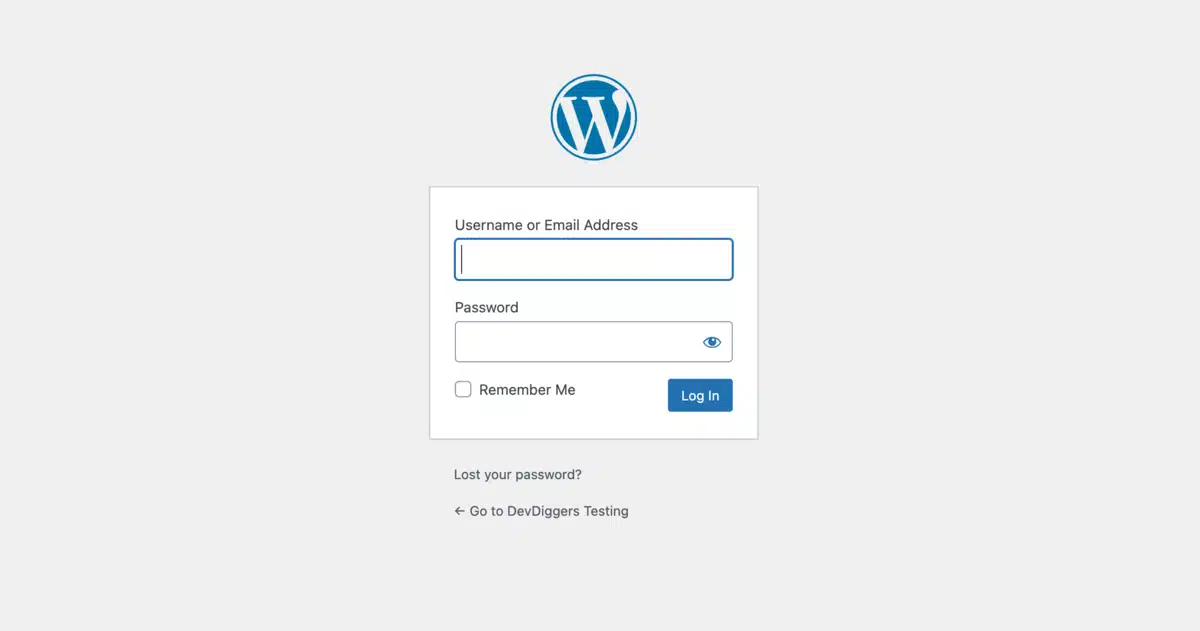
- Log in to your WordPress account.
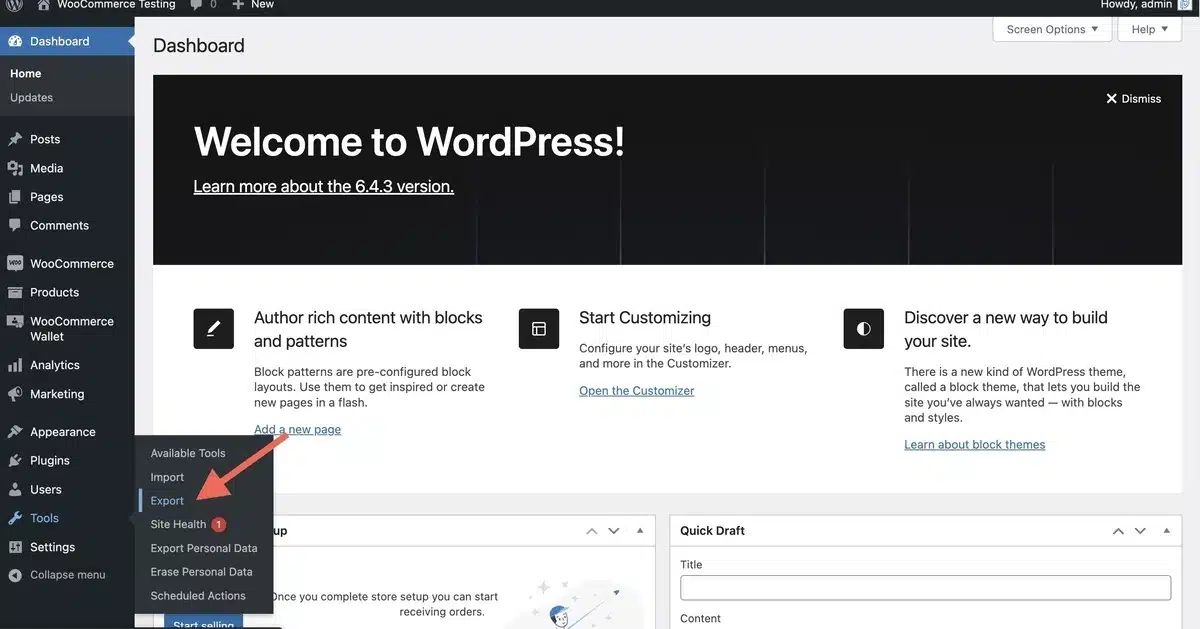
- From the left navigation panel, click Tools > Export.
- On the Export screen, select the Pages option.
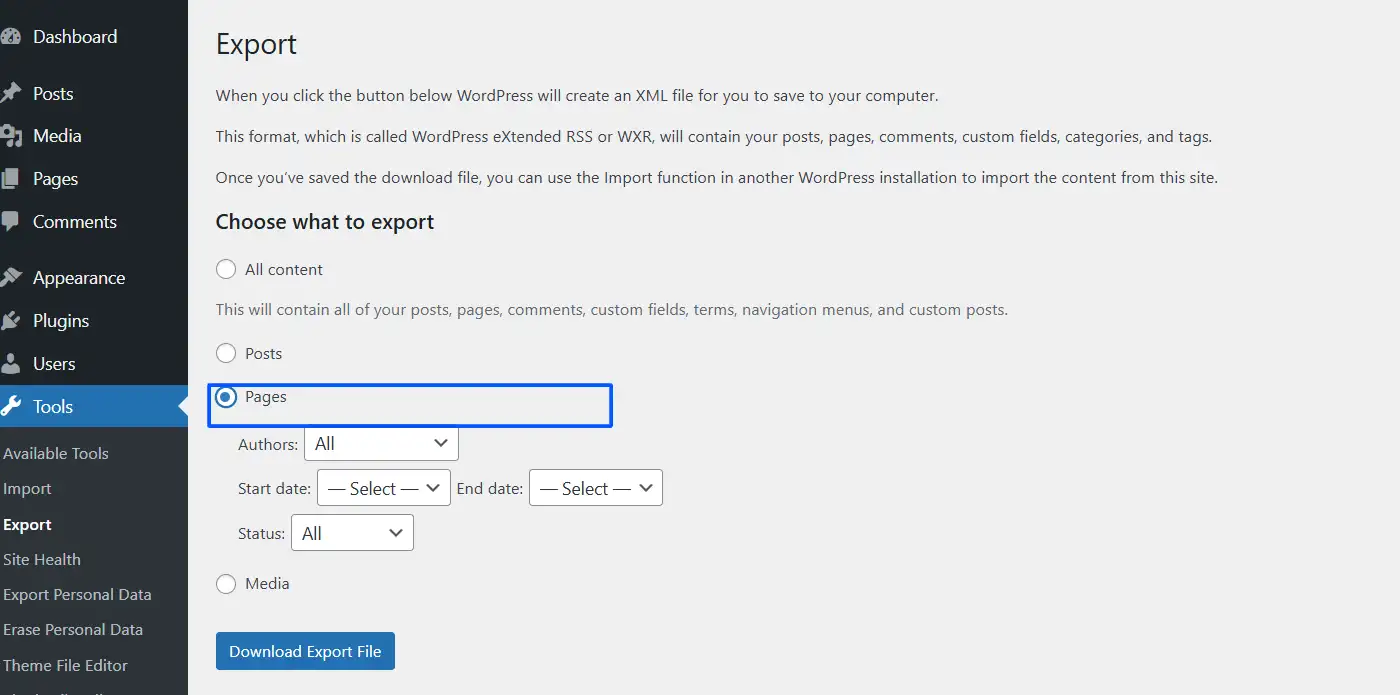
- The filter options will now appear below the content to export section. Use the filters located below the content to export the section to refine your export.
- Click Download export file.
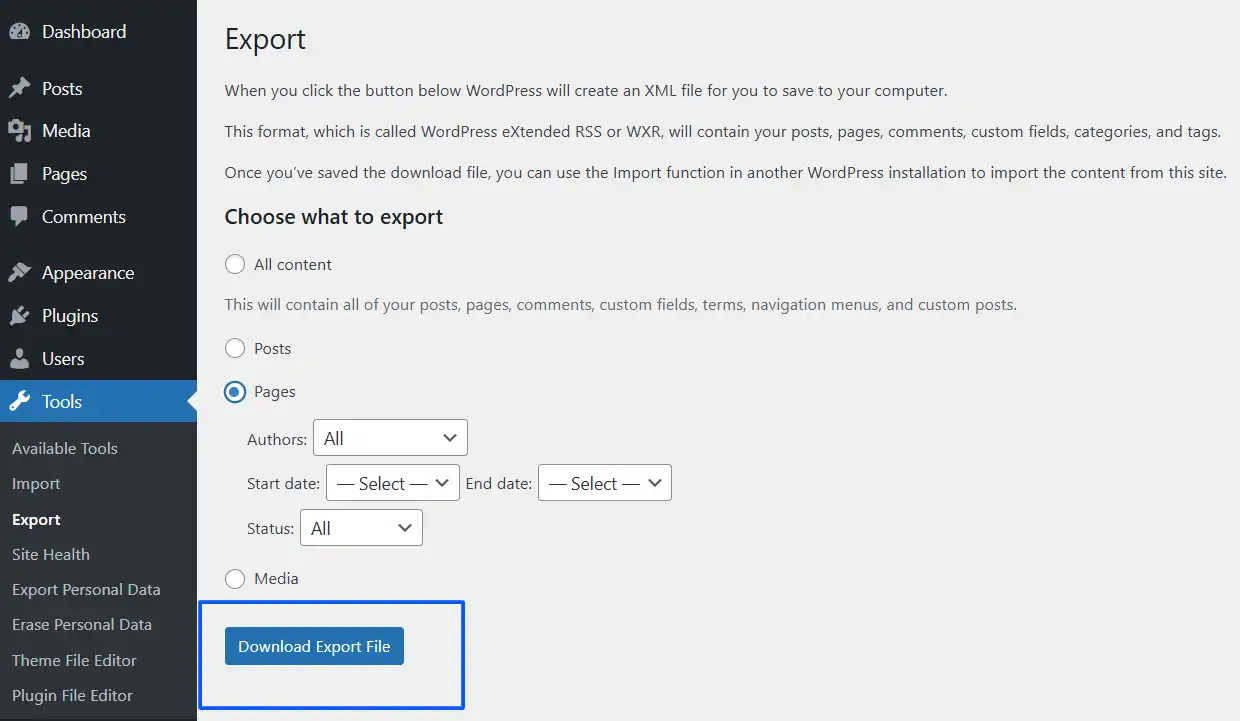
This will generate a downloadable .xml file of your selected pages’ content for you to use on another site.
Filtering for a single specific page
The filtering option is often missed by new users when exporting pages. After you have selected the Page option in the Content to export section, there are additional options available to further refine your page content export.
The 4 filter options are:
- All Pages or a specific page
- Status (Published, Draft, Pending)
- Author
- Start date / End date
Select the Page filter if the goal is to only export your exact page. If you use All Pages, you will export all pages.
Set the dropdown to your specific page, then hit Download Export File. The resulting XML will contain only that page’s content.
One important note: If you use custom post types instead of standard WordPress page types, then you will not be able to export them this way. In that case, you’ll either need to select “All Content” and filter manually after import, or use Method 2 below.
Method 2: Using the Export Single Post Page Plugin
For those who regularly need to export single pages or who want an easy way to do this quickly without having to use the Tools menu every time, using a plug-in is a better solution.
Installing and Activating the Plugin
- Go to Plugins > Add New.

- Search for the Export Single Post Page plugin.
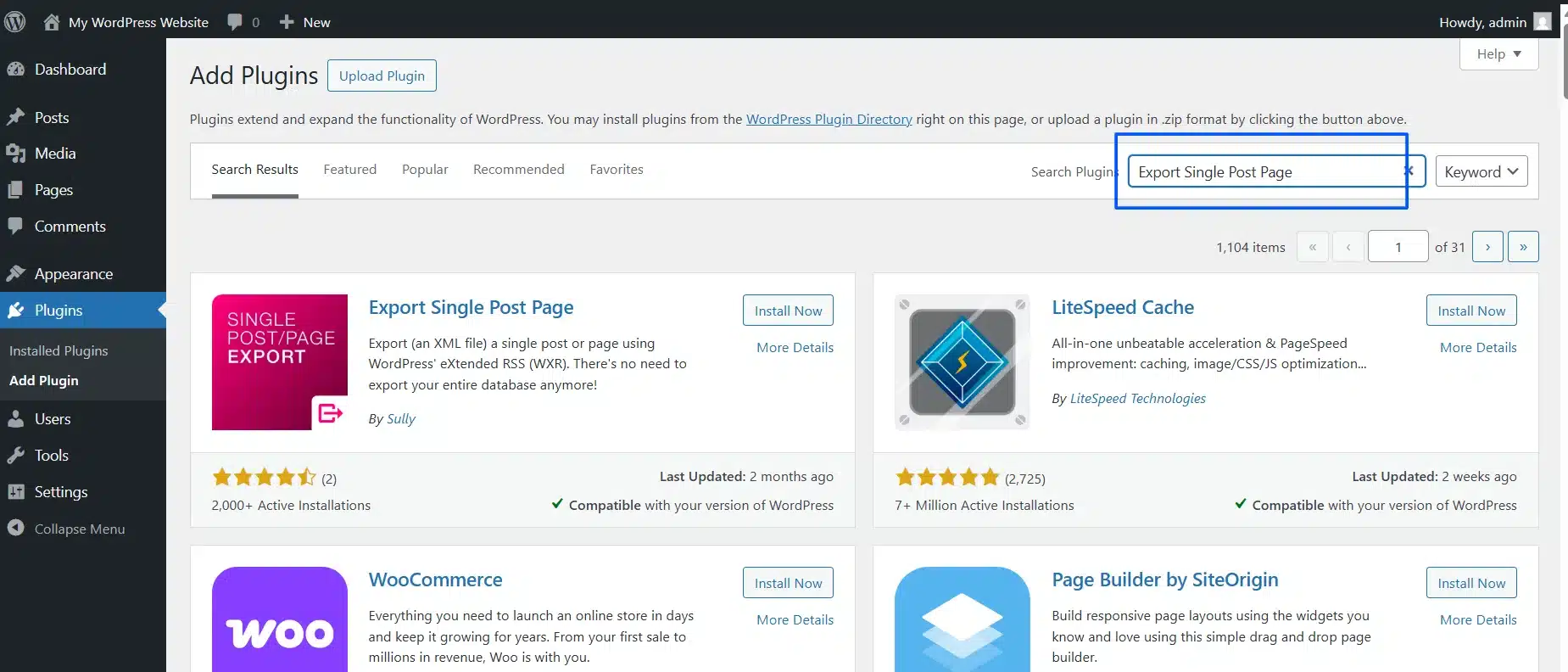
- Click Install Now, and then Activate.
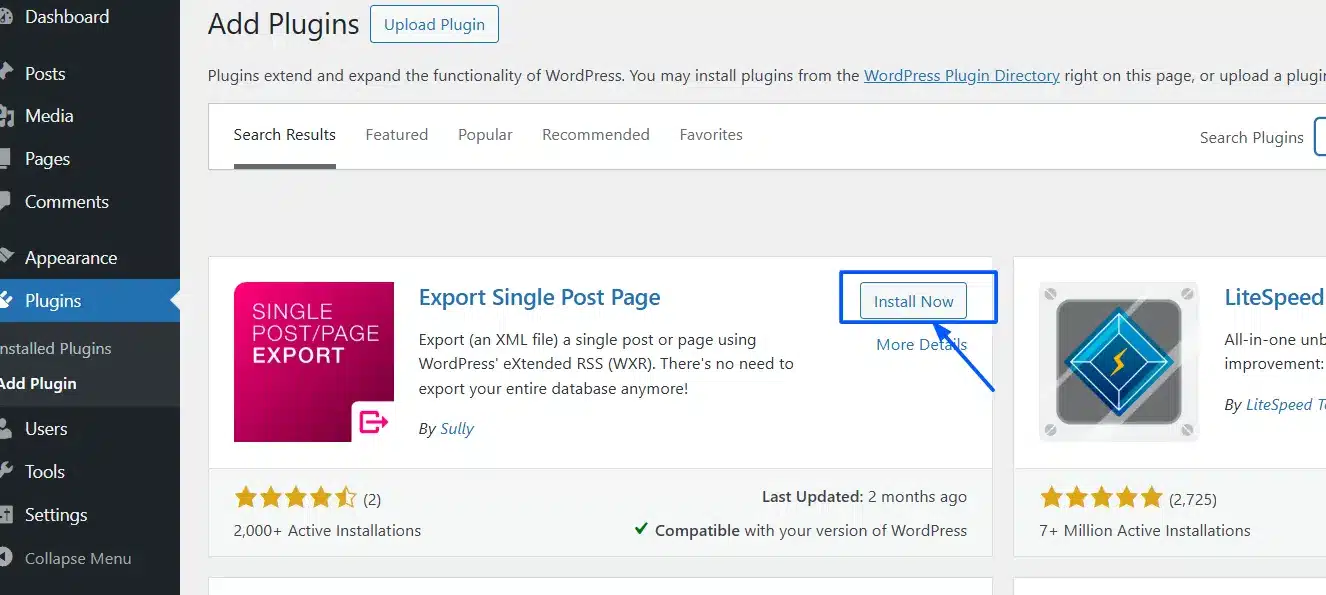
The Export Single Post Page plugin is a free plugin that you can download directly from the WordPress.org repository.
Exporting the Page in One Click
Once the Export Single Post Page plugin is active:
- Go to Pages > All Pages
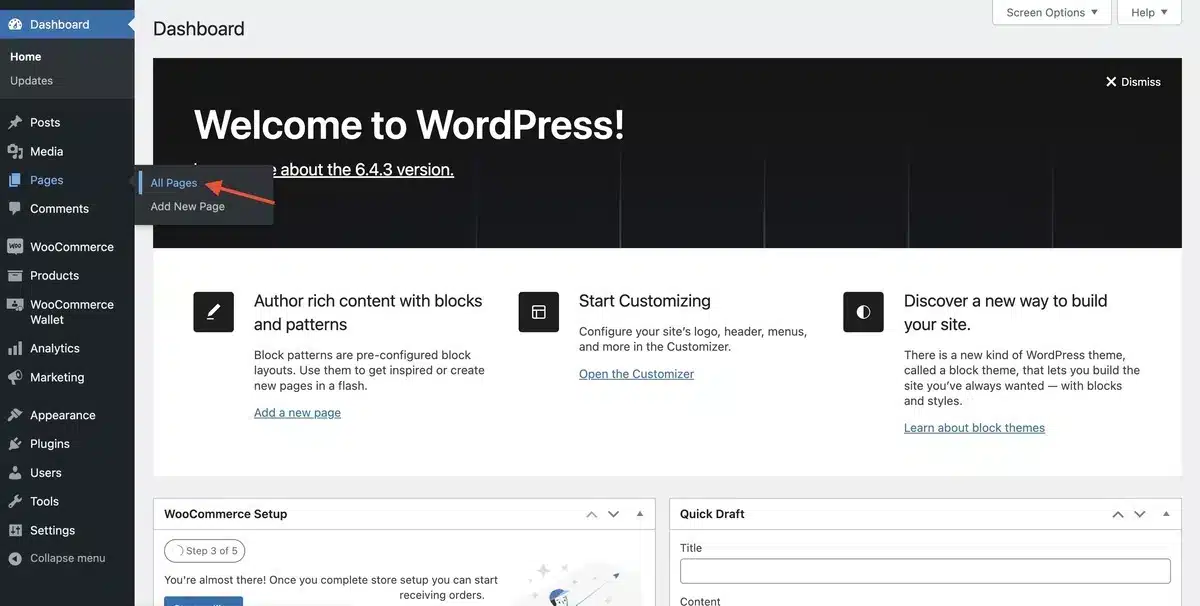
- Locate the page you want to export and hover over that page, and you should see the Export option appear underneath the page title, along with the Edit, Quick Edit, and Trash options. Then click on Export.
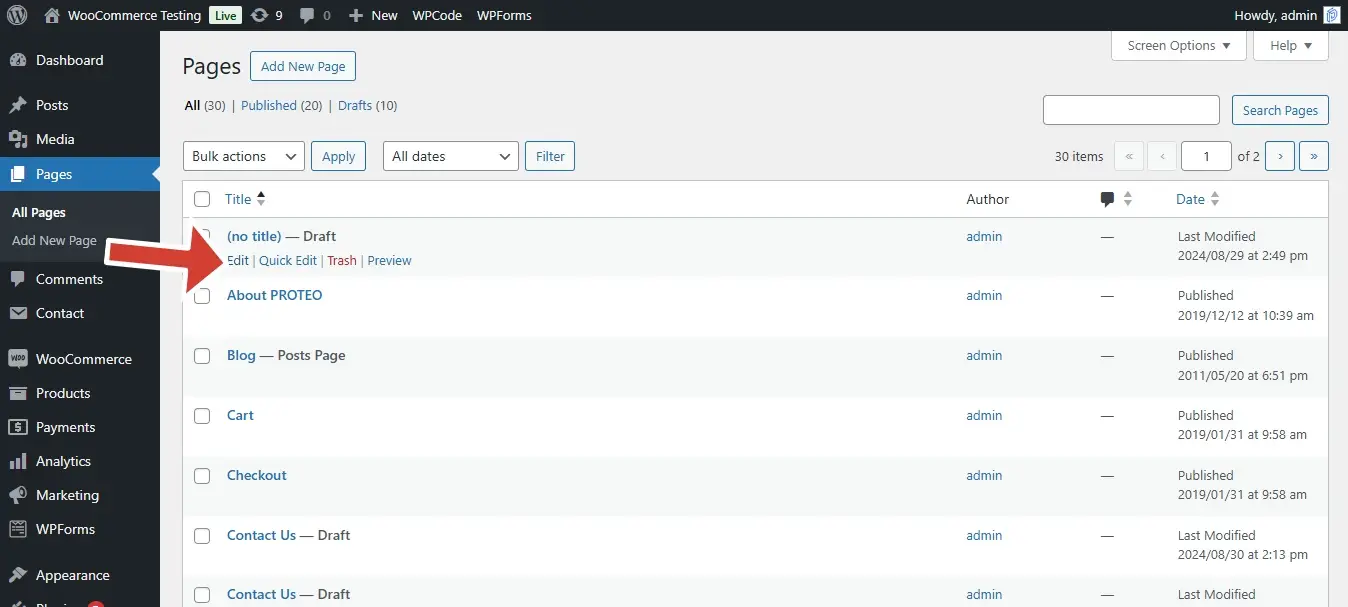
Once the Export option is clicked, the page will be downloaded as an XML file immediately, with no filters, extra screens, or additional configuration steps like with Method 1.
The export process with the plugin uses WXR XML as well, so the same image limitations exist with this method, just like with the Method 1 process, where images are referenced and not embedded.
Method 3: Export a WordPress Page as Static HTML
This method that we’re about to describe is a way that many WordPress guides omit, and it’s designed for a very different set of uses.
When You Might Want To Export Pages in HTML Instead of XML
The only time it makes sense to export a page using the XML/WXR format is when you’re going to import that page back into another WordPress site; it is truly a transfer format that was created by WordPress.
So what are some scenarios where you might want to use the rendered HTML version of an exported page rather than the raw WordPress export version:
- Sending a standalone file of the exported page to my client, who does not have access to WordPress.
- Archiving the exported page in a specific format, so it looks exactly as it did at a specific point in time.
- Going to host the exported page on a static server or CDN.
- Sending the rendered HTML to my developer for their review.
In these examples, you need the rendered HTML output rather than the raw WordPress export output, since this exports the exported page exactly as it appears in a web browser, including the HTML markup, all inline styles, and content that you can open in any number of places with no need for a WordPress installation at all.
Using the Export WP Page to Static HTML Plugin
The Export WP Page to Static HTML plugin is the simplest way to go about this.
- Visit Plugins > Add New and search for Export WP Page to Static HTML, install, and activate it.
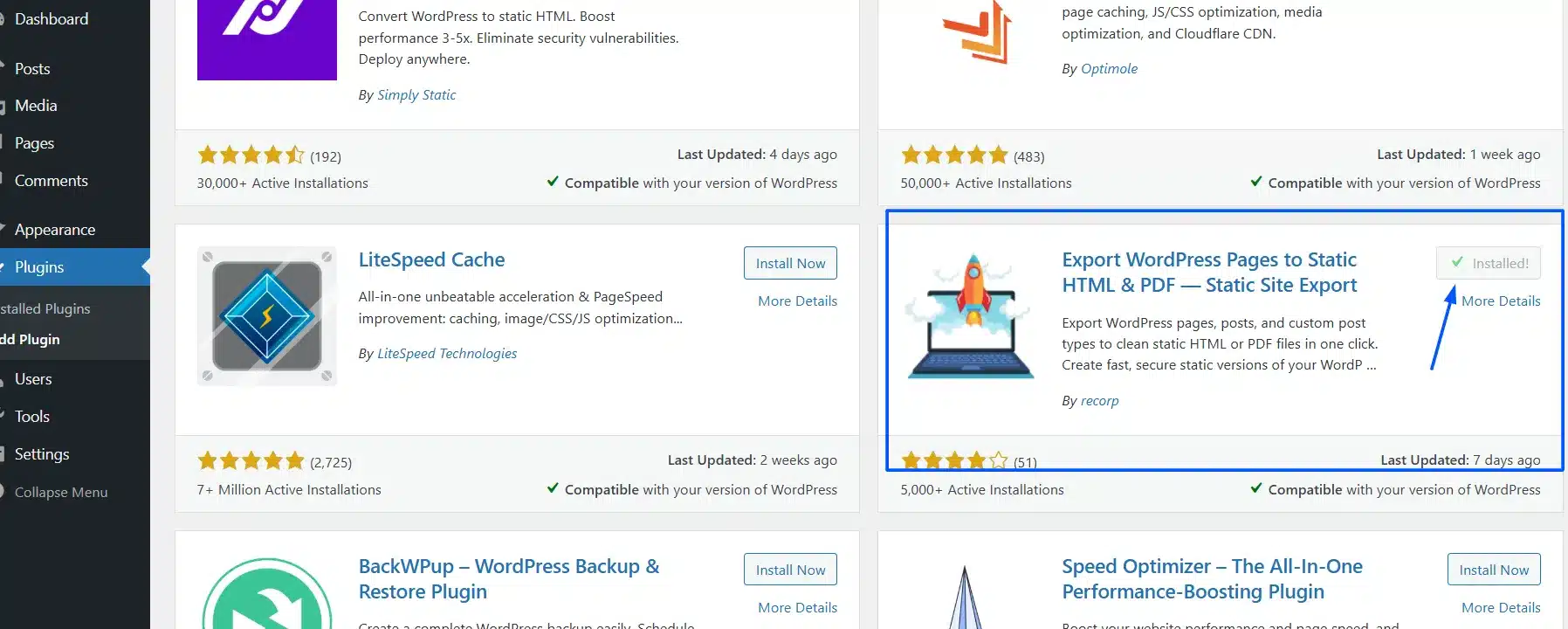
- Now, visit the page you would like to export.
- The plugin adds a button titled Export HTML, clicking on which will download the specified page as a
.htmlfile that can be opened in any browser.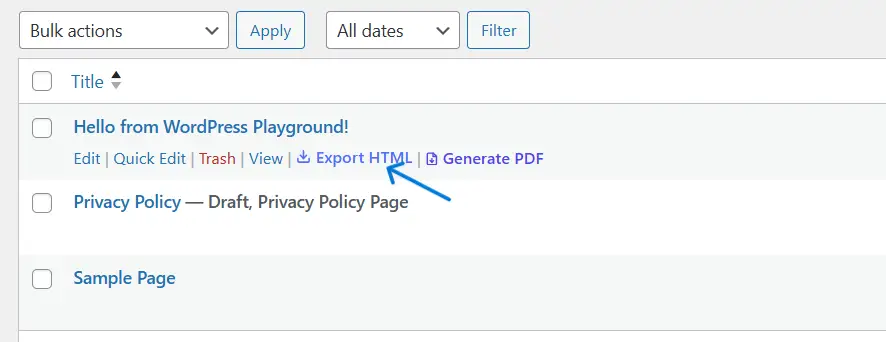
If you are looking for an alternative solution to creating a PDF, consider using our “WordPress Content to PDF” plugin, which automatically generates a downloadable PDF version of any WordPress page or post that can have the desired format customised. If you are using the PDF as the export medium to solicit/recommend the page as a document via e-mail, I typically find this to be cleaner than a custom export.
Method 4: WP-CLI Export for Developers
If you are using a command-line interface or working with numerous WordPress sites programmatically, WP-CLI should be your go-to solution! You don’t have to be in the admin dashboard.
The WP-CLI Export Command for a Single Page
There is an export command already built into WP-CLI called wp export. Use the --post__in option to export a single page from the command line, where you will substitute the page’s ID for the option.
To locate the page ID, hover over the page in your admin area on WordPress and check the URL in the status bar of your web browser. The number that follows post= in the URL, will be your page’s ID number.
Once you have obtained the page ID number, you can run WP-CLI through a command line access on your server:
wp export --post_type=page --post__in=42 --dir=/path/to/export/
Here, you would replace 42 with the actual page ID number you are exporting from, and /path/to/export/ with the directory where you would like your XML file to be exported to.
The command will generate the same WXR XML file as the first and second methods without having to click through the admin dashboard. This is an excellent way to automate the export of certain pages on a scheduled basis and the creation of backup scripts for specific pages or deployment scripts.
When This Method Makes Sense
WP-CLI export is the appropriate tool for exporting your WordPress data in a server-side environment (not a web browser). Use it when you want to automate/export processes on a regular basis, or if you are creating a script for moving pages between sites during a deployment process. The remaining methods (Method 1 and Method 2) will likely be easier for most users.
How to Import the Exported Page to Another WordPress Site
Once you have your XML file, importing it to a new site takes just a few steps.
- Log in to the destination WordPress site.
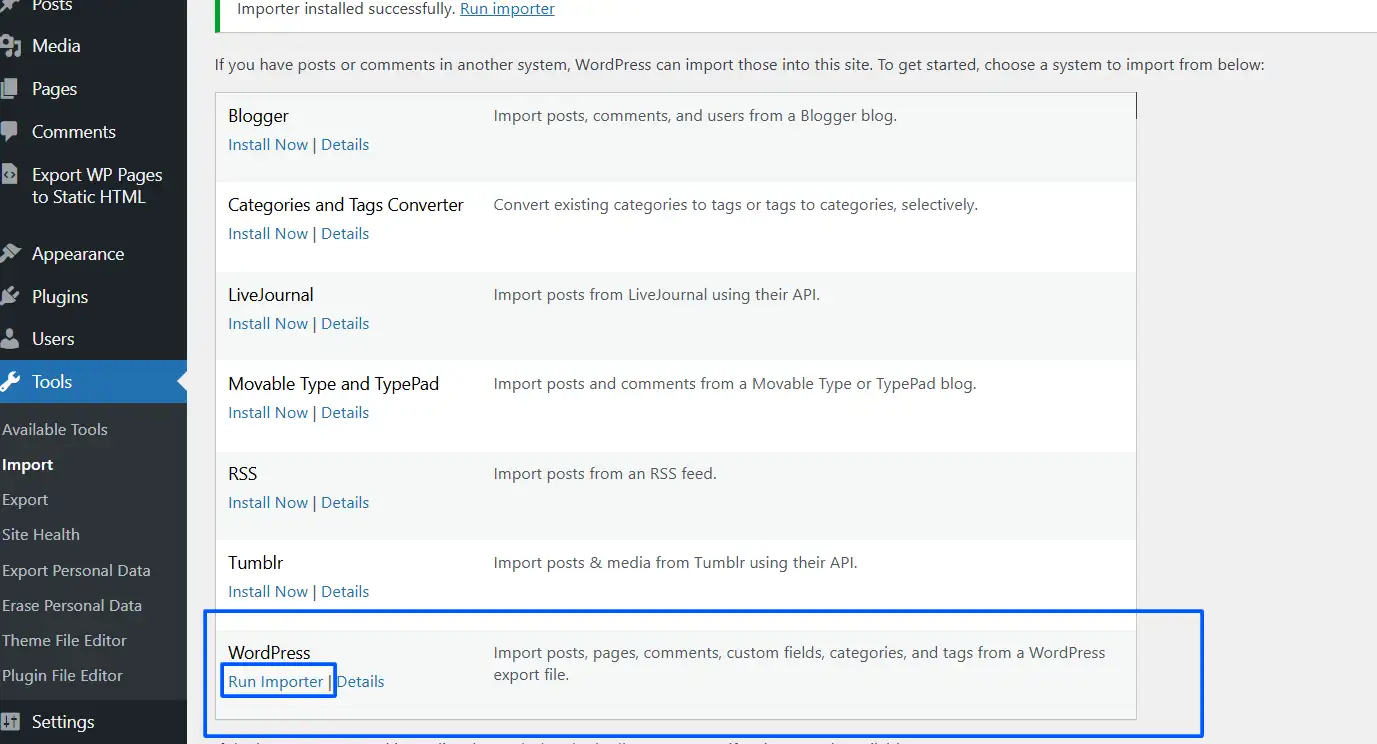
- Go to Tools > Import.
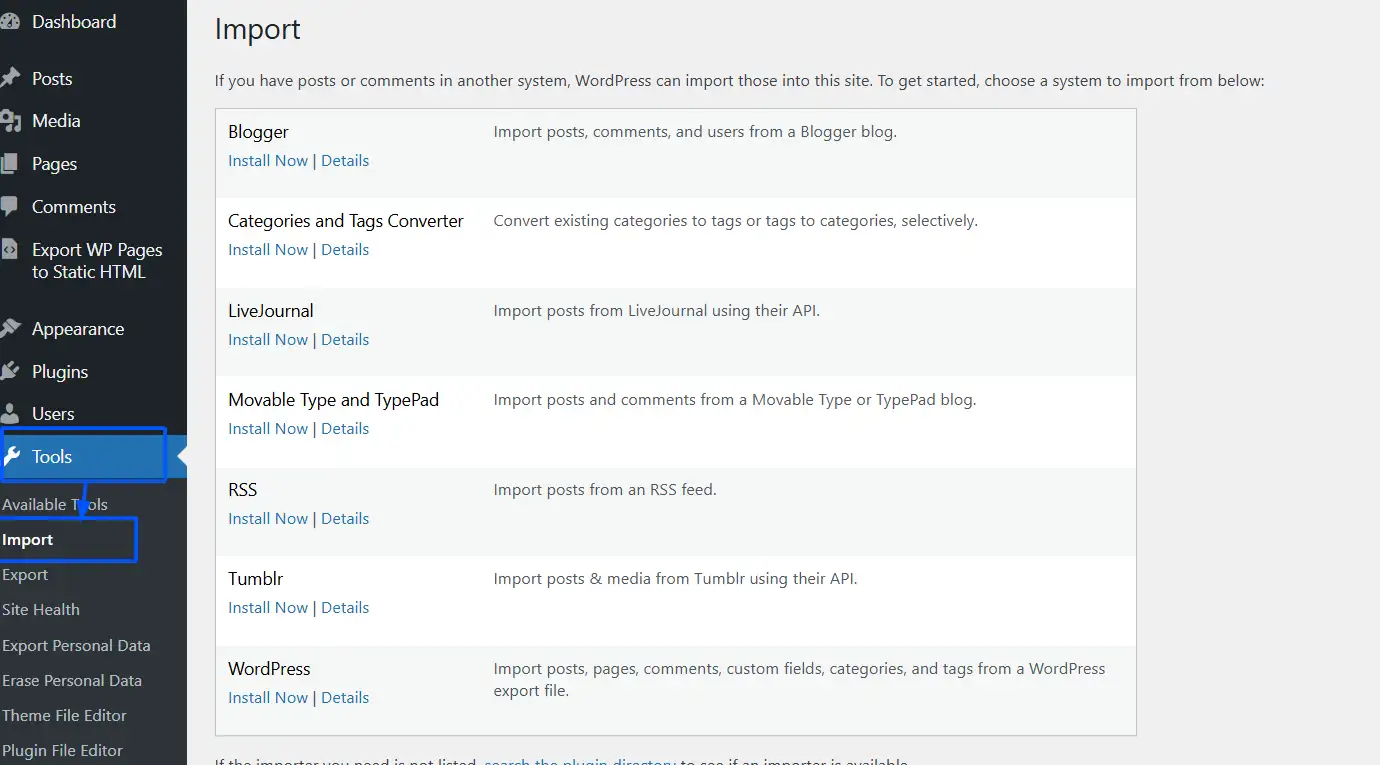
- Under WordPress, click Run Importer. If you haven’t installed the WordPress Importer plugin yet, click Install Now first, then Run Importer.
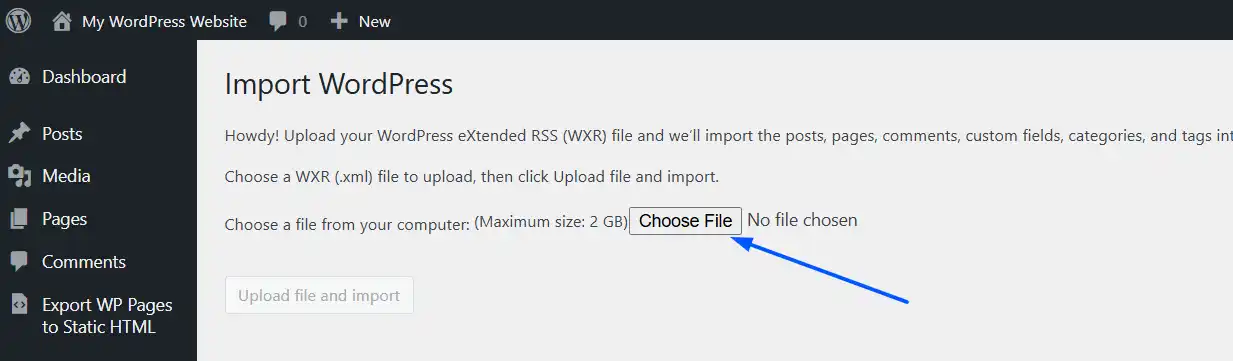
- Click Choose File and upload your XML file.
- On the next screen, assign the content to an existing author or create a new one. Check the box to Download and import file attachments and Submit it
After import, go to Pages > All Pages and verify that the imported page looks correct. Check images and links carefully. If images are missing, it’s because the media files weren’t accessible from the original URL, which is the limitation explained in the “What’s NOT Included” section above.
For a broader look at managing your WordPress pages after migration, including reordering and organising them, that’s covered in a separate guide.
Which Method Is Best For You?
In summary:
- If you want to do a one-time export, don’t mind a few extra steps, and do not want to install a new plugin, then use the Built-In Export Tool (Method 1).
- If you want to export single pages frequently and want a quick, one-click option from the Pages page, then use the Export Single Post Page Plugin (Method 2).
- If you need the page as a standalone file that can be used apart from WordPress (for example, for client deliverables, archiving purposes, sending via static host, or for HTML review), then use the Static HTML Export (Method 3).
- If you are a developer managing WordPress through the command line or need to automate an export for use in a script or deployment process, then use WP-CLI (Method 4).
All four methods will result in exporting the content of the page; however, the format of the export and the way you use the export are where they differ. Also, if your primary purpose of exporting is to share the page with someone as a document (as opposed to just sharing it online), the PDF route may be worth using. You could use our WordPress Content to PDF plugin as an alternative to the HTML export option.
Conclusion
Knowing how to export a single page in WordPress is one of those practical skills that saves time in ways you don’t always anticipate. The built-in export tool works for most people, the plugin makes the process faster, the HTML export serves non-WordPress use cases, and WP-CLI gives developers full control.
The key thing to remember across all methods is that the XML file contains your content but not your media files, so always plan for that during import.
If you’re working on a larger WordPress project and need hands-on help, our WordPress development services cover everything from content migration to custom plugin builds. And if you need to take your content completely outside WordPress, the WordPress Content to PDF plugin makes that easy, with full layout control and a clean download every time.
Frequently Asked Questions
Q1. Will exporting a WordPress page give me my images?
No, if you export a WordPress page, the XML file only has the reference to where your images are located (the URL), but not the actual image files. When you go to import the file into a different website, WordPress will attempt to retrieve those image files from the URLs above. However, if that original site is no longer there or the URL has changed, you will not have those images included with your import. So make sure that you double-check your media after you import it.
Q2. Can I export a WordPress page as a PDF?
No, not using the built-in WordPress export tool. The only thing that you can export from the built-in tool is an XML file. In order to be able to export a WordPress page as a PDF, you would need a specific plugin to do that. Our WordPress Content to PDF plugin makes it very easy to create a PDF file for download from any page or post with different styling options.
Q3. What is the difference between exporting All Content and Exporting Pages from WordPress?
Exporting pages will only export the pages that you have created, and you can use the filter to only give you one page. Exporting all content will export everything: posts, pages, custom post types, comments, and taxonomy terms. Always choose Pages if you only want to export an individual page and filter the individual page by page.
Q4. Is it possible to preserve the page template and design when exporting?
No! The export file contains only the content of your pages, which includes text, headings, shortcodes, custom fields, and metadata, but not the theme, page builder settings, or any of the design elements that are outside of the page content. Therefore, once you import this content into the destination site, it will render according to the theme that is active on that destination site.
Q5. Can I export a WordPress page when I do not have admin access?
No! All four of the methods for exporting WordPress pages that we discussed above require Administrator-level access to the WordPress dashboard or server. If you don’t have Administrator-level access, you will need to contact your site administrator and have them run the export for you.