


Have you ever wondered why some eCommerce stores charge ahead with ads, whilst others barely break even? In a lot of cases, the answer is a single measurement: ROAS (Return on Ad Spend). ROAS is not a marketing buzzword — it is the clearest indication of whether your ad spend is hard at work or hardly at work.
However, many store owners get stuck on understanding this question: What is a good ROAS for eCommerce? If you are a store owner, is 2:1 ROAS good? Should you be aiming for 4:1 ROAS, or even higher?
The answers are a lot more complicated than you think — they depend on your profit margins, how you compare to industry benchmarks (like 4:1), and what your growth strategies are.
In this ultimate guide, we are going to take you through:
- What ROAS is and how to calculate it.
- Why ROAS is critical to your eCommerce success.
- What benchmarks constitute a “good” ROAS in 2025?
- Five tried and true methods for increasing your ROAS (with concrete advice).
By the end of this, you will have a concrete understanding of how to measure your ad performance – and more importantly, how to improve it for maximum profitability.
What is ROAS?
ROAS (Return on Ad Spend) is one of the most important metrics in eCommerce marketing. It tells you exactly what you earn in revenue for each dollar you spend on advertising.
In simple terms, it simply answers the question: “Are my ads profitable, or am I throwing my money into some black hole?”
The formula is easy to remember:
ROAS = Total Ad Spend / Total Revenue from Ads
For example, if I spend $1,000 on Facebook ads and have $4,000 in revenue, my ROAS is 4:1. This indicates that every time I spend $1, I am generating $4 in sales.
But, keep this in mind – ROAS measures revenue only, not profit. A ROAS of 4:1 sounds great, but if I have a very low profit margin (say 20%), I might as well be breaking even. That’s why it is important to have context when assessing ROAS.
Why ROAS Matters in Ecommerce?
In the quickly evolving domain of eCommerce, ad spend has transitioned to possibly your biggest controllable cost. And without tracking ROAS (return on ad spend), you are flying blind. Here’s why tracking ROAS matters:
- It lets you know your profitability in real-time – You know if the campaign is making money or wasting your budget.
- It helps you prioritize the campaigns that are winning – You can scale up what works and cut out what doesn’t.
- It provides a benchmark for scaling – You can clearly understand when it is safe to increase your ad spend, and therefore capture more sales.
- It allows you to make smarter decisions – ROAS lets you measure everything from creative testing to audience targeting and shows you what is providing you the best ROI.
Example:
Let’s say you have two campaigns:
- Campaign A: $2000 spent → $8000 revenue → 4:1 ROAS
- Campaign B: $3000 spent → $7500 revenue → 2.5:1 ROAS
Neither campaign is “bad.” Campaign B is generating more revenue overall; however, Campaign A is considerably more efficient and more likely to be profitable.
How to Calculate ROAS for Ecommerce
Calculating your ROAS is simply a formula using math, but true and accurate tracking is where a lot of store owners misstep. Here is a breakdown for how to calculate your ROAS:
- Measure ad spend: Includes everything such as cost of clicks (CPC), impressions, and cost of creative (if applicable).
- Measure revenue attributed to ads: Use Google Analytics 4, Facebook Ads Manager, or Shopify reports.
- Apply the formula, ROAS=Total Ad Spend/Total Revenue from Ads
Example Calculation:
- Total Facebook Ad Spend: $5,000
- Revenue from Facebook Ads: $20,000
- ROAS = 20,000 / 5,000 = 4:1 (Every $1 spent brings $4 back)
Pro Tip: Don’t only pay attention to single purchase dollars. Think about Customer Lifetime Value (CLV) – if a customer is likely to make repeat purchases, a low ROAS could still be very profitable.
What is a Good ROAS for Ecommerce?
We’ve defined ROAS as well as discussed its relevance — now we come to the big question: What is a good ROAS for eCommerce?
The short answer is: It depends. There are many factors that go into what “good” means to you; profit margins, product type, industry, and even your marketing objectives can all influence what “good” is. That said, there are benchmarks and frameworks you can use to determine when to expect a good ROAS, and you can use them to analyze your campaigns.
Defining “Good” in Context
Good ROAS does not necessarily mean the highest ROAS — a good ROAS is ultimately profitable and sustainable. For example:
- If your store sells digital products with 80% profit margins, a 2:1 ROAS can be quite profitable.
- If you sold low-margin physical goods (e.g., apparel with a 20% margin), you might need a ROAS of 5:1 or higher to break even.
Break-Even ROAS = 1 / Profit Margin
Example:
- Profit Margin = 25%
- Break-even ROAS = 1 / 0.25 = 4:1
This means that if your break-even ROAS is 4:1, you will never lose money until you don’t reach a ROAS of at least 4:1.
Industry Benchmarks for Ecommerce ROAS
While every store is unique, here’s what studies from Shopify, BigCommerce, and WordStream reveal about average ROAS benchmarks:
| Industry | Average ROAS | What’s Considered “Good”? |
|---|---|---|
| General Ecommerce | 3:1 – 4:1 | 4:1 and above |
| Fashion & Apparel | 4:1 – 6:1 | 6:1+ for healthy profit |
| Consumer Electronics | 3:1 – 5:1 | 5:1+ for strong returns |
| Health & Beauty | 2.5:1 – 4:1 | 4:1+ ideal |
| Digital Products | 2:1 – 3:1 | 3:1+ solid due to margins |
| Luxury Goods | 2:1 – 4:1 | 4:1+ ideal (high ticket) |
Data compiled from Shopify reports and WordStream PPC benchmarks 2024
Factors That Influence a Good ROAS
- Profit Margins – Higher margins allow for a lower ROAS to achieve profits.
- Customer Lifetime Value (CLV) – Higher CLV stores could remain profitable, selling products that require lower ROAS to make sales.
- Ad Type – Search ads naturally have a higher ROAS than social ads since there is more purchase intent.
- Stage of Business – New Startups can work with lower return opportunities to acquire customers and obtain a return on ad spend, whereas mature stores or brands would focus on hotter products for their bottom line.
- Competition & Seasonality – ROAS is typically not as high during holidays, sales events, or when competitors are spending more or have more visibility.
How to Improve ROAS for an Ecommerce Store: 5 Effective Strategies
Maximizing Return on Ad Spend (ROAS) is not only about cutting ad costs but rather about making each dollar work harder. Once you understand what a good ROAS for eCommerce is in your niche (and likely modeled ROAS), the next step is determining how to hit (and hopefully exceed) that benchmark.
Here are five proven, real-world strategies to consider, no matter what size of Shopify store or multi-channel operation you run.
1. Optimize Your Product and Landing Pages

If customers leave the page, a great ad is worthless, so focus on conversion rate optimization (CRO) to ensure you are not wasting your Google ad dollars.
Actionable Tips:
- Speed is important: Set a target page load time of <3 Seconds (use Google PageSpeed Insights).
- Clear CTAs: ‘Buy Now’ or ‘Add to Cart’ should visually stand out.
- High-quality visuals: use professional images, videos, and even 360° views.
- Trust Elements: customer reviews, return policies, secure checkout notifications.
- Mobile-first design: Over 70% of eCommerce traffic comes from mobile devices.
Example: A beauty brand went from 2.5:1 ROAS to 4:1 ROAS by simply adding customer testimonials and improving page speed for mobile.
2. Refine Your Audience Targeting

Great ads to the wrong audience equals wasted money! Use data-driven advertising and audience targeting to reach buyers who are most likely to convert.
Some Ideas for Audience Targeting:
- Lookalike Audiences: Build a lookalike using data.
- Retargeting Advertising: Retarget customers who abandoned their cart or engaged with your site previously with personalized retargeting ads.
- Exclusion Lists: Save money on wasted ads by developing exclusion lists to exclude existing buyers who have already purchased.
- Behavioral Segmentation: Target customers using behavioral segments like browsing behavior, location, or purchase intent.
Pro Tip: Many advertising platforms like Facebook Ads Manager and Google Ads support detailed targeting ad options, including users based on specific events like “Add to Cart” or “Viewed Product.” These can be combined with your email lists to increase targeting effectiveness.
3. Test, Improve & Recreate Ad Creatives

Ad fatigue is real, and audiences fatigue and lose interest in display ads that they have already seen and interacted with. High-quality, new, engaging, bold creative can result in a significant lift in ROAS.
Here are some creative ideas you may want to try:
- Short scroll-stopping videos (think TikTok/Reels).
- Lifestyle photos of products in use.
- Headlines that emphasize how it helps the customer (“Get 50% More Storage While Paying the Same”).
- Seasonal themes (holiday sales, back-to-school sales, etc.).
- User Generated Content (UGC) – Authentic Testimonials do very well.
A/B Testing: You can run two of the same ads, varying the split test of the headlines or visuals. Compare and contrast which version works best for your audience.
4. Increase Average Order Value (AOV)
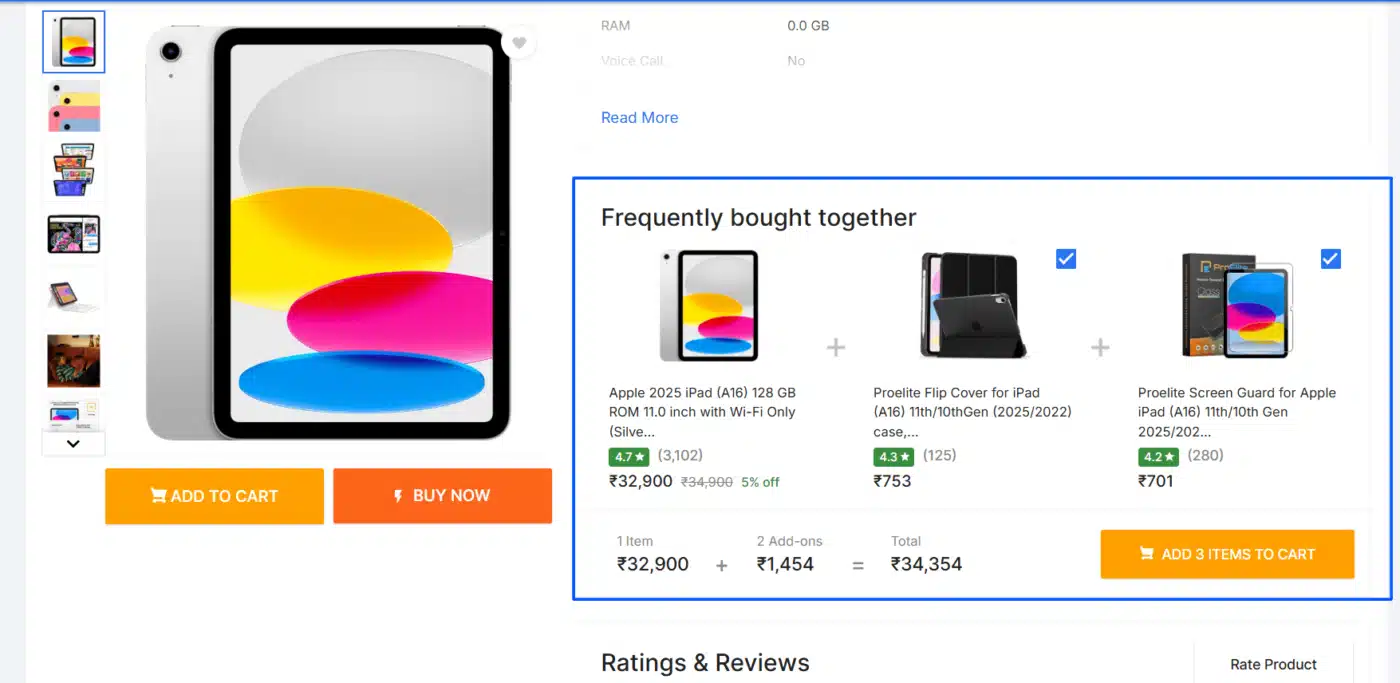
A higher AOV means more revenue per conversion — immediately increasing your ROAS without any additional ad spend.
Ways to Increase AOV:
- Upselling: Recommend higher-end versions of products.
- Cross-selling: Bundled products, “Frequently bought together.”
- Threshold discounts: “Free shipping on orders over $50.”
- Bundling products: Sell discounted bundles for purchase (i.e., skincare sets).
Example: An apparel brand increased its AOV by 30% simply by advertising bundle deals at checkout, which in turn increased their ROAS 1.5x.
5. Continuously Monitor and Optimize

ROAS is not “set it and forget it.” Successful eCommerce brands monitor and optimize on a continuous basis.
Optimization Checklist:
- Pause ads that are performing poorly (weekly).
- Reallocate the budget towards campaigns that are producing high ROAS.
- Make bid adjustments for high-converting times (weekends, etc.).
- Test new platforms (Pinterest Ads, TikTok Ads, etc.) to further diversify your reach.
- Utilize automated rules (Google Ads scripts or Meta rules) for real-time adjustments.
Pro Tip: People should be tracking the ROAS and profit — sometimes, slightly lower ROAS can lead to total profit being higher if total volume goes up.
Final Takeaways
If you’ve read this, you now have an answer to the question we all want an answer to: what is a good ROAS for eCommerce? The reality is there is no cookie-cutter number for every store, but by knowing your profit margins, customer lifetime value (CLV), and average ROAS in your industry, you can identify an ROAS that is appropriate.
Here are a few things to keep in mind:
- ROAS gets confused with profit — it’s a measure of revenue efficiency, and if you have a margin, then always keep it in mind.
- A good ROAS for most eCommerce stores is probably between 3:1 and 4:1; however, high-margin products can perform at a 2:1 ROAS, and low-margin products may require a minimum ROAS of 5:1.
- The secret to sustainable, successful growth is constant improvement (improved targeting, better product page content, more compelling creative, and increasing average order value).
- Don’t blindly chase the “highest” ROAS. Sometimes, growing your business with a slightly lower ROAS will yield a higher total profit than just going for the highest ROAS.
What do you do now? Audit your existing campaigns:
- Work out your break-even ROAS.
- Look at your current ROAS relative to your break-even ROAS.
- Implement one tactic proposed in this guide this week (retargeting tactic or AOV tactic, for example).
After reading this article today, you should be able to identify that very small changes (whether it’s strategic or tactical) can be the difference between a profitable business and an unprofitable business.
FAQs on ROAS for Ecommerce
Q1. What is a good ROAS for eCommerce?
ROAS, or Return on Ad Spend, is considered good for eCommerce between 3:1 and 4:1, meaning that you are earning $3 – $4 for every $1 you spend on ads.
Q2. How do I calculate ROAS?
ROAS = Revenue from Ads / Cost of Ads. Example: $5,000 revenue / $ 1,000 ad spend = 5:1 ROAS.
Q3. Is 2:1 ROAS profitable?
Profitability depends on your margin. You can profit at 2:1 on a high margin product, but may need 4:1 or better with a lower margin product.
Q4. What variables affect eCommerce ROAS?
Margins, Customer lifetime value (CLV), Ad platform, Targeting, and conversion rates.
Q5. How can I improve my eCommerce ROAS?
Page optimizing product pages or optimizing checkout page, audience targeting, testing creatives, increasing order value, and remarketing retargeting people who visited your product pages.