Is WooCommerce safe? Yes, WooCommerce is safe to run a store on when you keep it updated and lock down logins, roles and the server. The plugin is open source and patched quickly.
I tested this in October 2026 on a fresh store running WordPress 7.1.3, WooCommerce 11.2 and the Twenty Twenty-Five theme. I ran WP-CLI checks, read Site Health and walked through every security setting WooCommerce ships with. One check caught a broken install that looked perfectly normal in the dashboard.
Below you get the short answer, what WooCommerce secures for you, and the risks it leaves to you. Then come nine steps to secure a store, each with the real screen or command output from that test store.
Is WooCommerce Safe? The Short Answer
The answer to is WooCommerce safe is yes, because the core plugin is mature, open source and patched fast by a security team. Most store breaches start somewhere else, like an outdated extension or a weak admin password. A shared login or a cheap host can also let attackers in.
Those parts are yours to secure.
Think of WooCommerce security as two halves. WooCommerce and WordPress handle the code, the order storage and the warnings. You handle updates, logins, roles and the server.
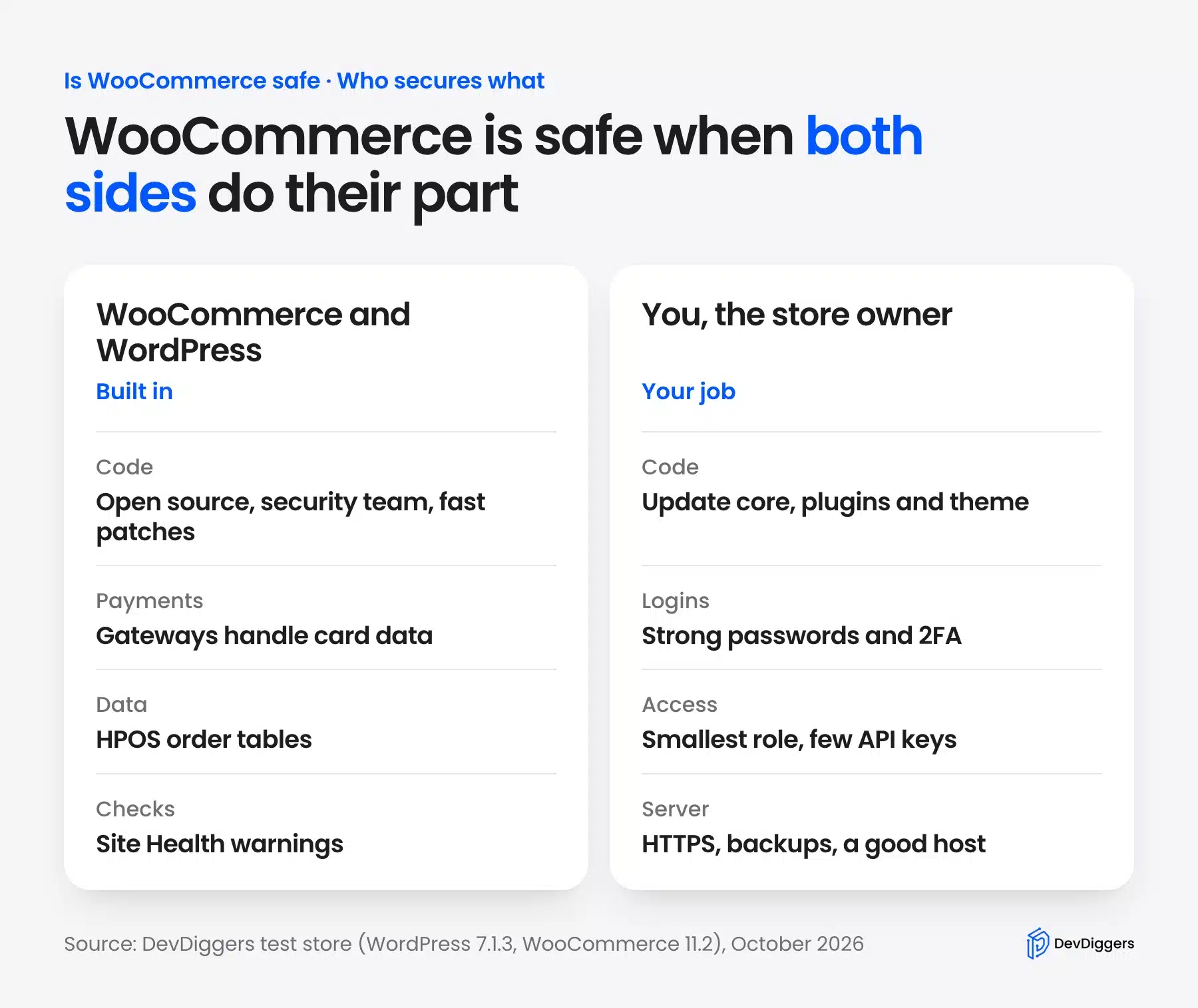
- Built in: Open source code, fast security releases, payment gateways that keep card numbers off your server, and Site Health checks that flag problems.
- Your job: Updates, strong logins with two-factor, small user roles, few API keys, HTTPS, backups and a host that patches its servers.
The WordPress hardening guide says the same thing in more detail. Security is a process you keep up every month.
Is WooCommerce Secure for Payments?
WooCommerce is secure for payments because the common gateways never let card numbers touch your server. Stripe, PayPal and WooPayments collect the card in their own hosted fields or pages. Your store only keeps a token and the order record, which keeps most stores in the simplest PCI DSS scope.
WooCommerce explains this split in its PCI DSS compliance guide. The gateway carries the heavy card data rules, and you still answer a short self-assessment form.
That does not mean payments need no care. Card testing bots hit checkout pages with stolen numbers to find which ones work. Each failed attempt can cost you gateway fees and hurt your account standing.
WooCommerce 11.2 has a fix for that, and it is off by default. Step 8 below shows where to turn it on.
Common WooCommerce Security Risks
The common WooCommerce security risks are outdated plugins, weak or shared admin logins, too many users with full access, and API keys that never expire. A missing HTTPS setup and a theme file editor left on round out the list. Almost all of them come from setup choices around WooCommerce core.
- Outdated extensions: Plugins and themes add far more code than core, and an abandoned extension stops getting fixes. That makes it an easy way in.
- Weak logins: Bots try common passwords on wp-login.php and the My Account page all day. One reused password is enough.
- Too much access: Every admin account can install code. A shop assistant with an admin login is a second front door.
- Forgotten API keys: Keys made for an old app or agency keep working until someone revokes them.
- No HTTPS: Logins and checkout data travel in plain text without it.
- Editable code: The built-in file editor lets anyone with an admin login change PHP from the browser.
The OWASP Top 10 lists broken access control as the top web risk. On a store, that means roles, logins and keys.
WooCommerce Security Tips: How to Secure a Store
To secure a WooCommerce store, update everything, verify core files, force HTTPS and add two-factor login. Then shrink user roles, review API keys and turn off the file editor. Finish with checkout rate limiting, HPOS and data retention rules for customer data.
These nine WooCommerce security tips take about an hour on most stores.
Keep WordPress, WooCommerce and Plugins Updated
Updates are the single biggest security fix. Go to Dashboard > Updates and check what WordPress does on its own. On our test store, WordPress 7.1.3 was set to install every new version automatically.
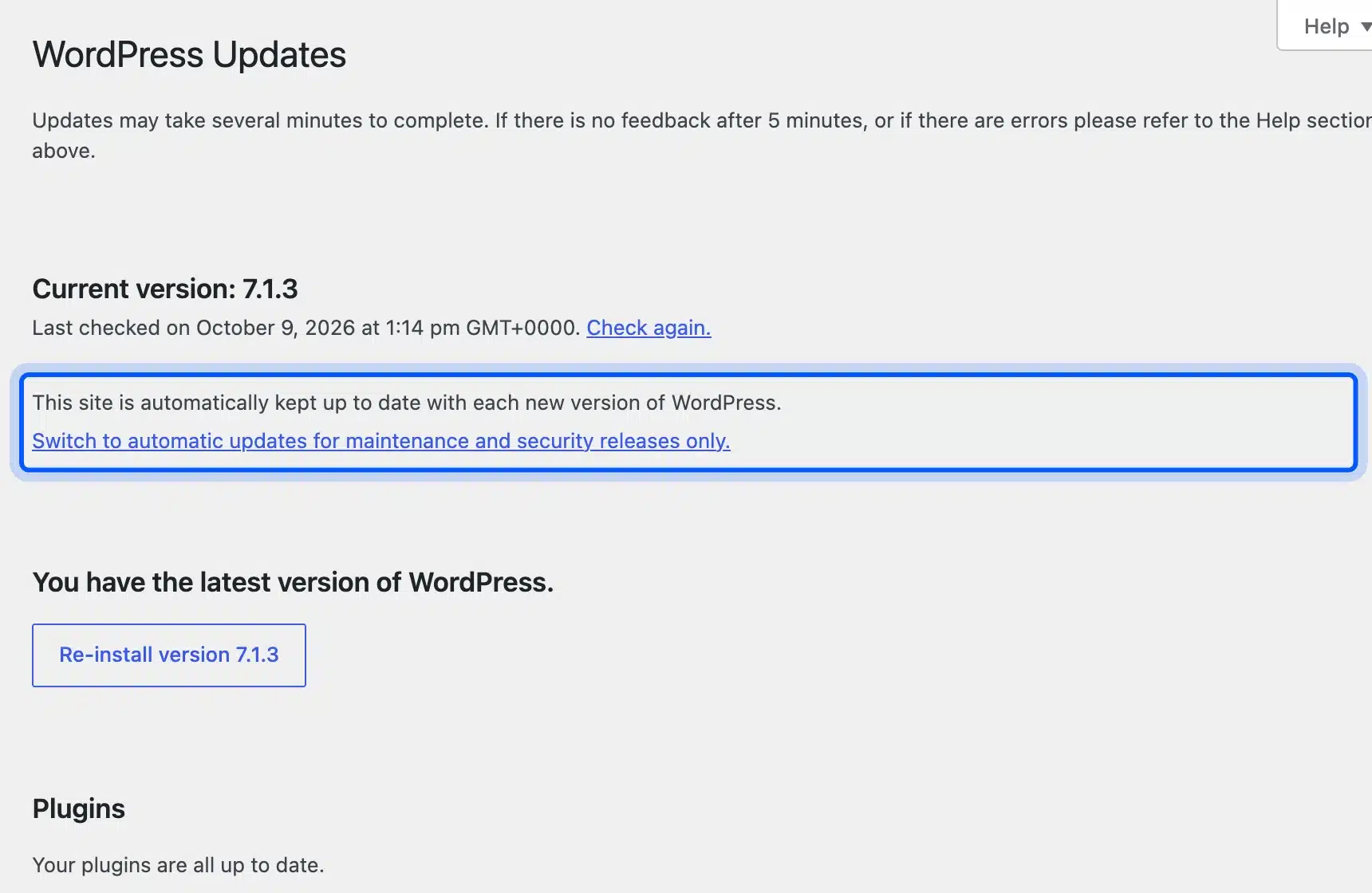
For plugins, turn on auto-updates in the Plugins list for anything small and trusted. For WooCommerce and big extensions, test on staging first and then update within a few days of a security release.
Delete plugins and themes you do not use. Site Health flagged our inactive default themes as a security item, because unused code still gets attacked.
Verify Core Files With WP-CLI Checksums
WP-CLI can compare every core file against the official checksums from WordPress.org. Run wp core verify-checksums and wp plugin verify-checksums woocommerce. Any changed, missing or extra file shows up at once.
This check found a real problem on our test store. The core install failed with 25 missing files and 21 files that should not exist.
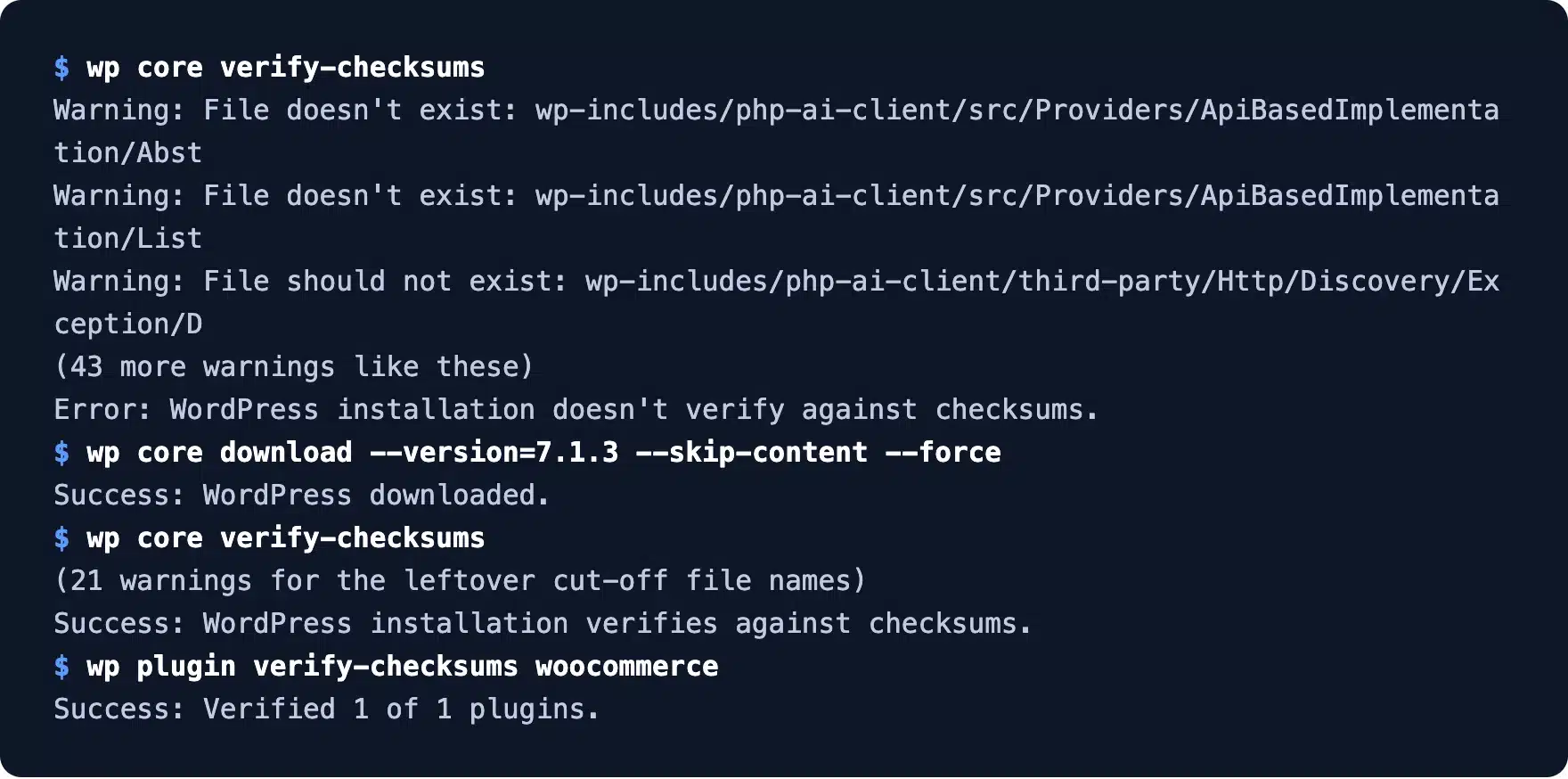
The cause was a backup archive that cut long file names at 100 characters. The dashboard showed nothing wrong.
After wp core download --force, both checks passed. Read more in the WP-CLI command docs.
Run it after every restore, migration or suspected hack. Injected code often hides in core files that look normal.
Force HTTPS and Read Site Health
HTTPS encrypts logins, checkout and account pages as long as you renew your SSL certificate before it expires. Get a certificate from your host, set both URLs in Settings > General to https:// and redirect all HTTP traffic at the server.
Then open Tools > Site Health. WooCommerce adds its own security test here.
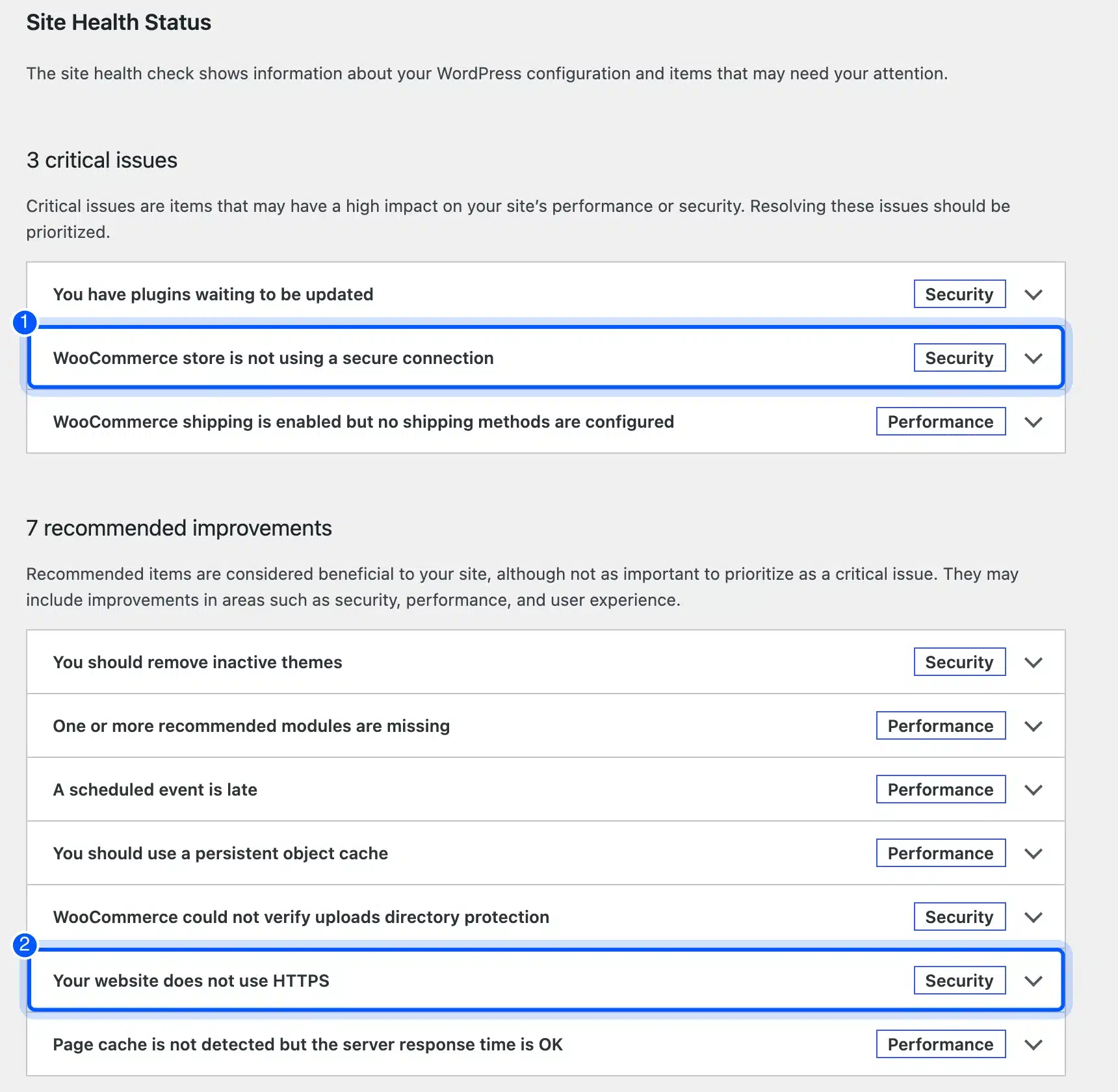
Our local store had no HTTPS. Site Health listed 2 critical issues and 5 recommended ones. “WooCommerce store is not using a secure connection” sat at the top as critical. Clear every Security item in this list before launch.
Turn On Two-Factor Login
Two-factor login stops most password attacks, because a stolen password is no longer enough. Every admin and shop manager account should use it.
We installed the free Two Factor plugin from WordPress.org, version 0.17.0. It adds a Two-Factor Options section to each user profile.
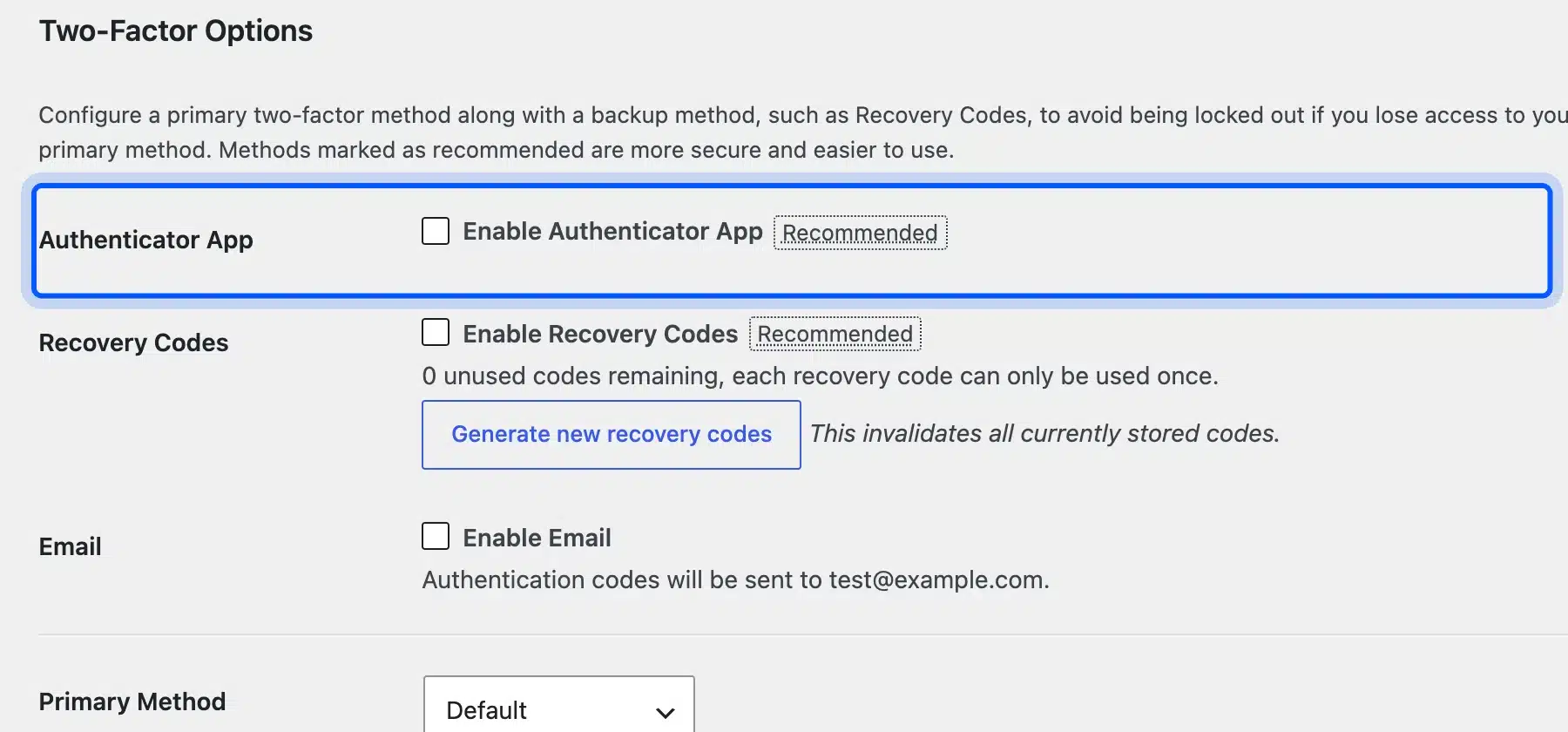
Pick Authenticator App as the main method and generate recovery codes as the backup. Save the codes offline. Then set strong, unique passwords for every staff login.
For a WooCommerce-focused option, DevDiggers sells WooCommerce Google Authenticator for two-factor authentication, with yearly plans from $19. Pair it with a login CAPTCHA if bots hit your forms. For checkout forms, see how to add Google reCAPTCHA to the WooCommerce checkout.
Give Staff the Smallest Role
Every role carries a set of capabilities. Give each person the smallest role that still lets them do their job. We counted the capabilities on the test store with get_role().
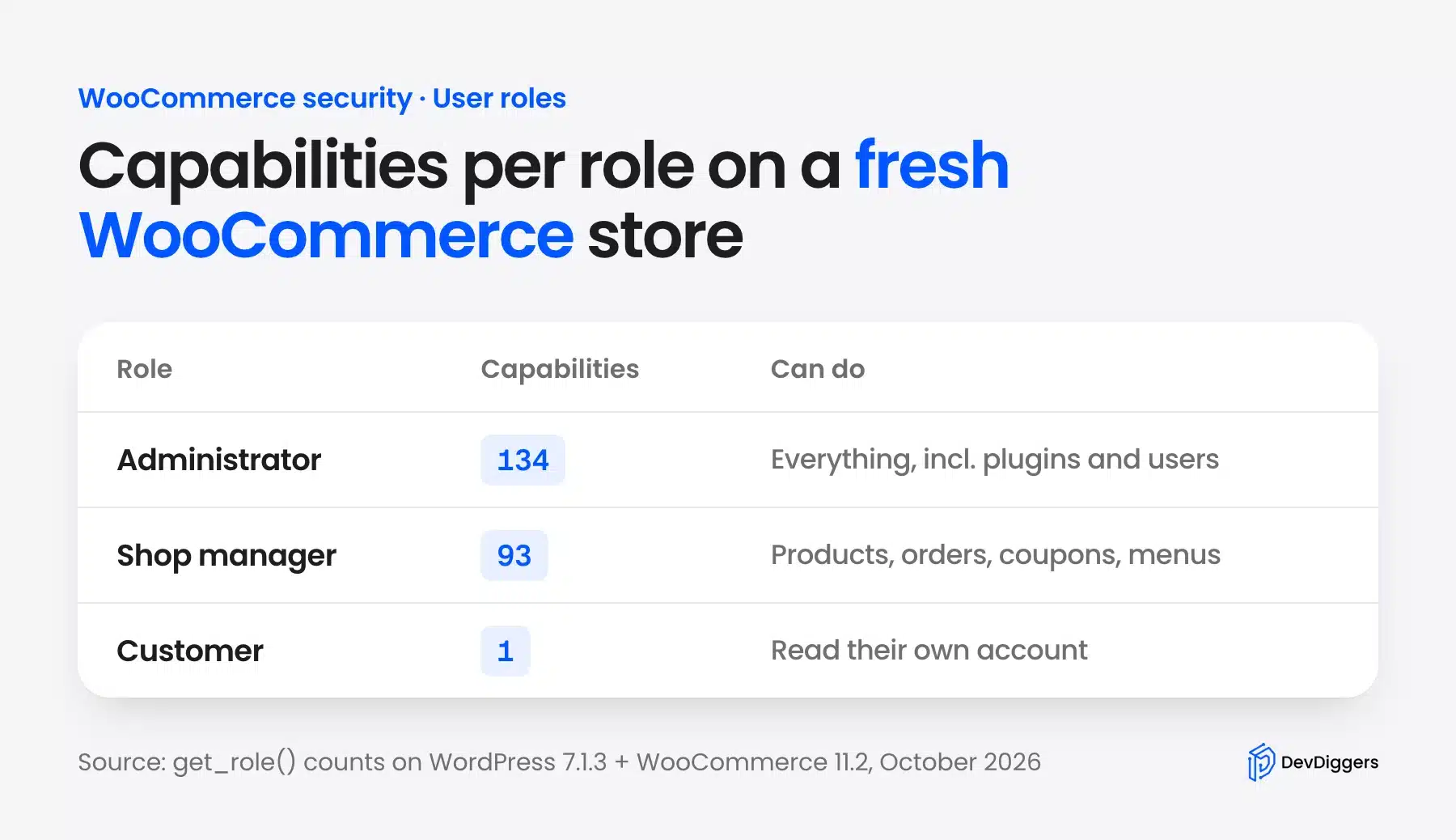
An administrator has 134 capabilities, including plugin installs and user management. A shop manager has 93 and can run products, orders, coupons and menus. A customer has exactly 1, read.
So most staff only need Shop manager. Keep one or two administrator accounts, and remove logins for people who have left.
Review WooCommerce REST API Keys
REST API keys let apps read or change store data without a password. Go to WooCommerce > Settings > Advanced > REST API keys.
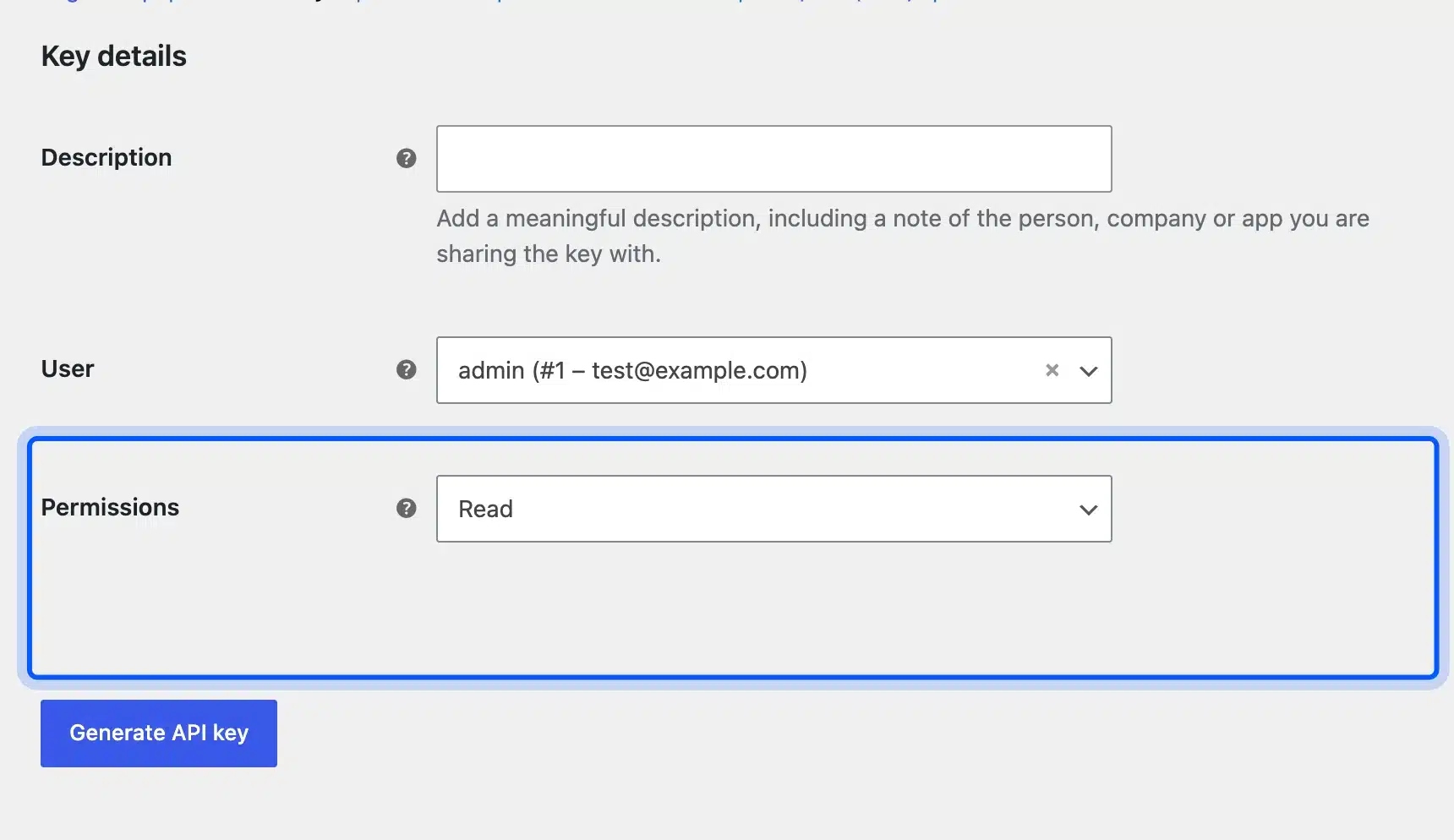
Give every key a clear description, the right user and the lowest permission. Read is the default on WooCommerce 11.2, and a reporting app needs nothing more. Revoke any key you cannot match to a working app.
Our fresh store had no keys at all. The screen showed “Create an API key” until we opened the form.
Turn Off the Theme and Plugin File Editor
WordPress lets admins edit theme and plugin PHP from the browser. If an attacker gets an admin login, that editor runs their code. Add one line to wp-config.php to remove it.
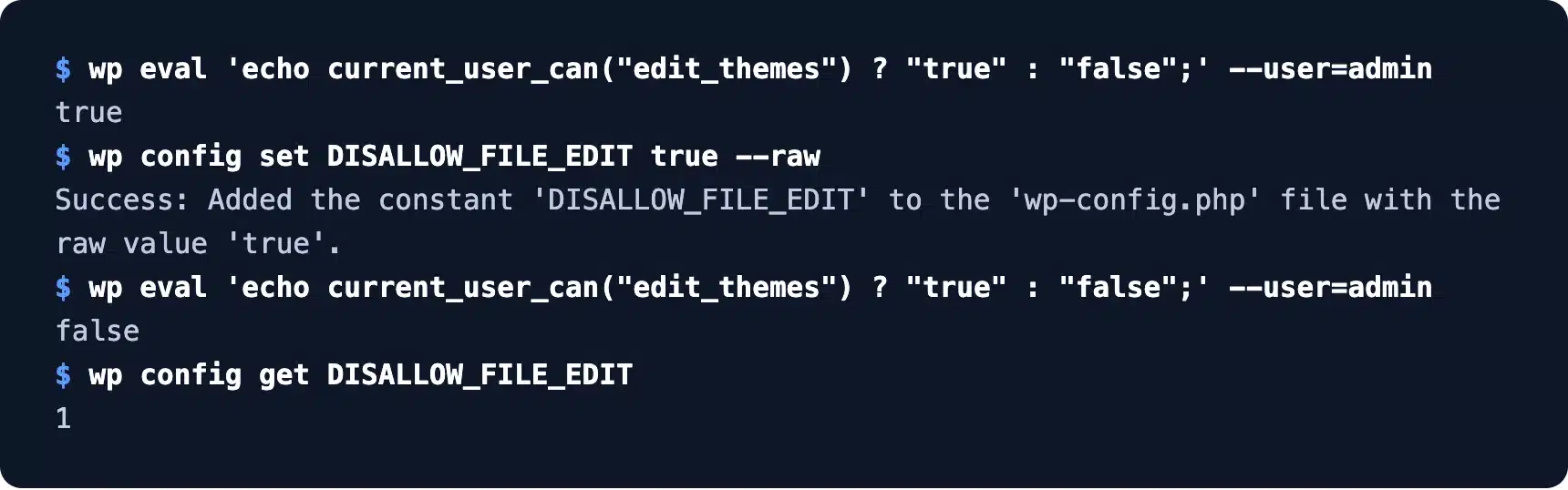
We tested it. Before the change, current_user_can("edit_themes") returned true for our admin. After wp config set DISALLOW_FILE_EDIT true --raw, it returned false; edit_plugins turned false too.
Make code changes through Git, SFTP or a staging site instead. That also leaves a record of who changed what.
Turn On Checkout Rate Limiting and HPOS
WooCommerce 11.2 has a “Rate limit Checkout” setting under WooCommerce > Settings > Advanced > Features. It throttles repeated orders from one source and slows down card testing bots. It was off on our fresh store.
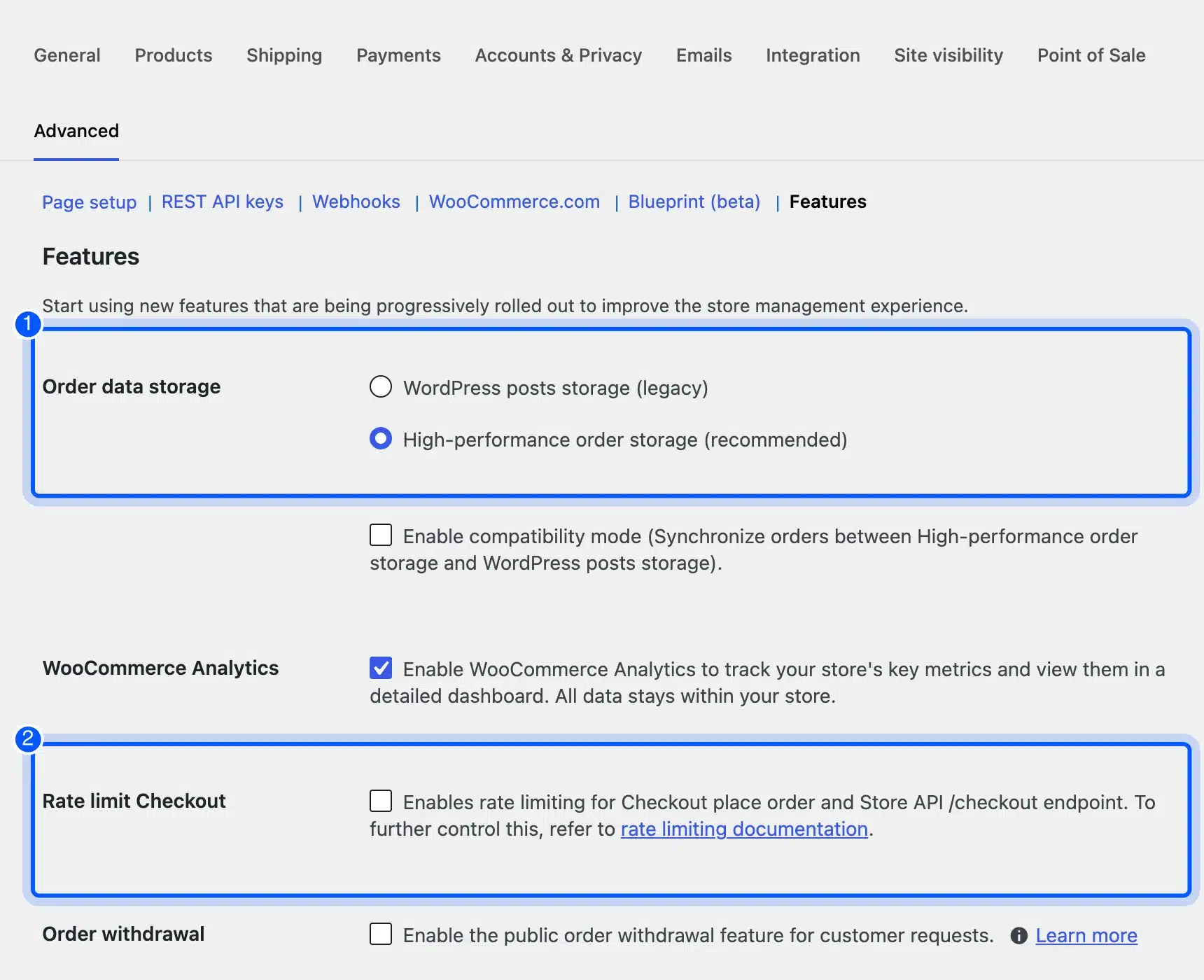
On the same screen, keep High-performance order storage selected. It was already on by default. HPOS keeps orders in their own tables instead of the shared posts table.
The WooCommerce rate limiting docs explain the default limits and how a developer can change them.
Set Data Retention Rules
The less customer data you keep, the less a breach can expose. WooCommerce can delete old accounts and orders for you. Go to WooCommerce > Settings > Accounts and Privacy > Personal data retention.
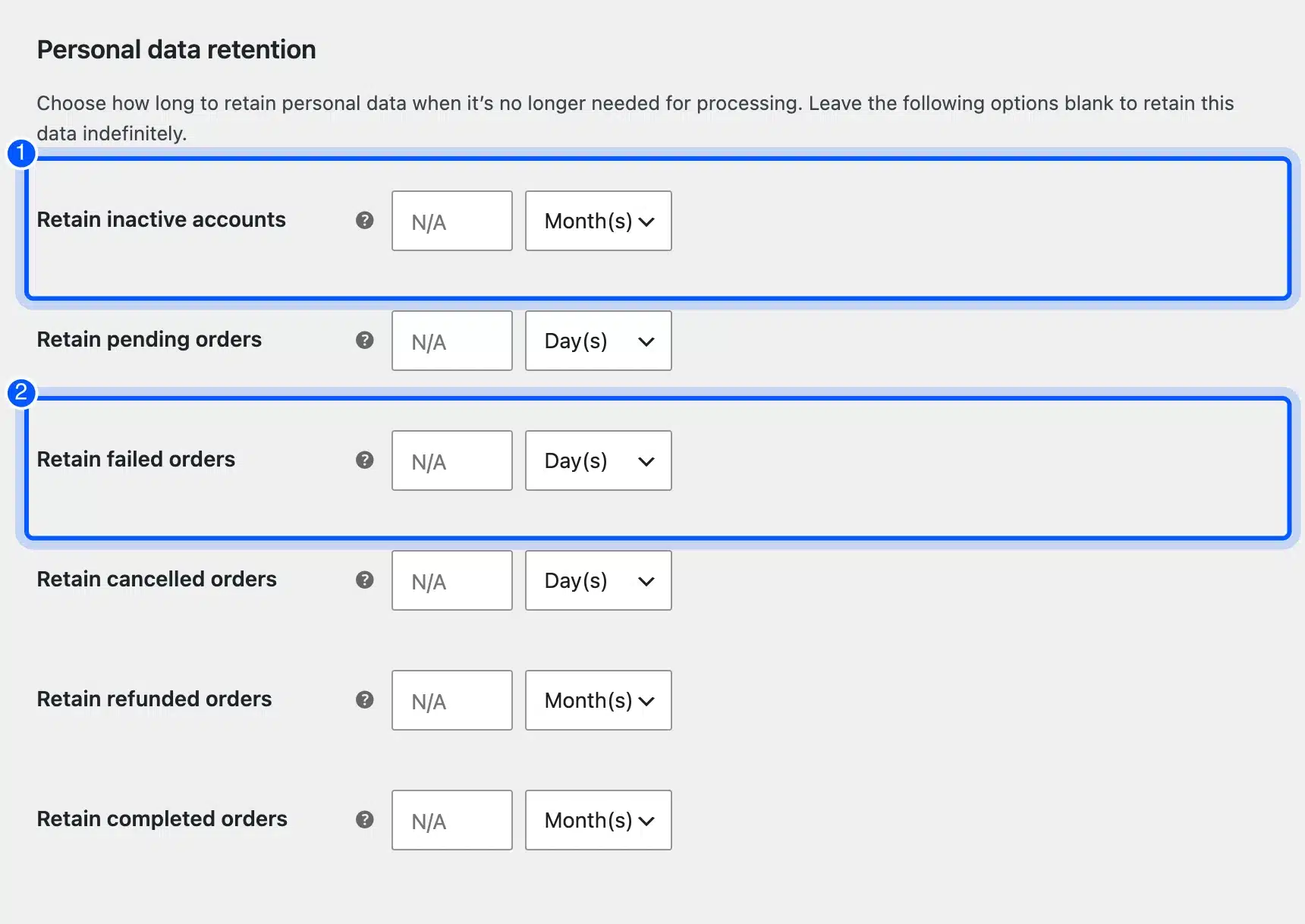
Every field was blank on our store. WooCommerce keeps all of it forever. Set inactive accounts to delete after 24 months and failed or pending orders after 30 days. Keep completed orders as long as tax law in your country requires.
What Our WooCommerce Security Test Found
Our WooCommerce security test found a store that was safe by default in most places. The code verified, HPOS was on and API access was empty. The gaps were all settings: checkout rate limiting off, no data retention rules, and an admin able to edit PHP.
Here are the numbers from the October 2026 test:
- Checksums: 25 missing and 21 extra core files from a bad restore, found only by WP-CLI.
- Site Health: 2 critical issues and 5 recommendations (3 of them security).
- Roles: Administrator 134 capabilities, Shop manager 93 and Customer 1.
- Defaults: Rate limit Checkout off and all six retention fields blank.
- File editor: On until
DISALLOW_FILE_EDITwas set.
We also checked the response headers on devdiggers.com. It sends HSTS, X-Frame-Options, X-Content-Type-Options and a Referrer-Policy. Those come from the server and Cloudflare and not from WooCommerce. Ask your host about them.
If you build your own extensions, follow our guide on how to create a WooCommerce plugin, which covers nonces and capability checks. For a longer list of hardening items, use our WooCommerce security checklist.
Is WooCommerce Safer Than Shopify?
WooCommerce is not safer or less safe than Shopify by default, because the two split the security work differently. Shopify runs the servers, updates and PCI scope for every store on its platform. WooCommerce leaves those jobs with you and your host.
WooCommerce gives you full control of the code and data. That control is a real advantage when you keep up with it. You choose the host, the firewall, the backup schedule and every extension.
It is a risk when nobody owns the job. A Shopify store cannot run an outdated plugin on an unpatched server. A WooCommerce store can.
If you add features through shortcodes, keep them to trusted sources. Our list of WooCommerce shortcodes only uses the ones built into the plugin. The same goes for loyalty tools: pick from maintained options like the ones in our best WooCommerce points and rewards plugins roundup.
Conclusion
So, is WooCommerce safe? Yes, when the setup around it is solid. Our test store passed the core checks.
It shipped with checkout rate limiting off, no data retention rules and the file editor on. Each fix took a minute.
Run the nine steps above once and then repeat the checksum check and the Site Health review every month. Keep updates small and frequent.
If you would rather have someone else own this, our WordPress security services team can audit and harden your store.
Frequently Asked Questions (FAQs)
Q1. Is WooCommerce safe for beginners?
Yes. A beginner can run a safe store by picking a good managed host, turning on HTTPS and two-factor login, and keeping updates on. Avoid installing many small plugins from unknown authors.
Q2. Does WooCommerce store credit card numbers?
No, the common gateways do not. Stripe, PayPal and WooPayments collect card details in their own fields. Your database keeps only a payment token and the order.
Q3. Do I need a security plugin for WooCommerce?
It helps but does not replace the basics. A firewall or login protection plugin blocks bot traffic. Updates, two-factor login, small roles and backups still matter more.
Q4. How often should I check WooCommerce security?
Check updates weekly and run Site Health and wp core verify-checksums monthly. Review user accounts and REST API keys every quarter, and after any staff change.
Q5. Is WooCommerce secure without HTTPS?
No. Without HTTPS, logins and checkout data travel in plain text. WooCommerce Site Health marks a store without a secure connection as a critical issue.