

You can duplicate a page in WordPress with the Copy all blocks option or with a free plugin that adds a Clone link. WordPress 7.1.3 has no Duplicate button of its own. Either route takes about a minute once you know where to click.
We tested every method in October 2026 on a WordPress 7.1.3 site running WooCommerce 11.2 and Rank Math. The test page had a parent page, a custom template, a featured image, a custom field and its own SEO title. Then we opened each copy and checked which of those survived.
Below you will find what core can and cannot do, four tested methods, and the Elementor and WooCommerce routes. A table shows what each copy kept. A checklist covers what to change before the copy goes live.
Can You Duplicate a Page in WordPress Without a Plugin?
You cannot duplicate a page in WordPress 7.1.3 with one click unless you add a plugin. We checked the Pages list, the editor’s Actions menu and the Site Editor Pages screen, and none of them shows Duplicate. Core only lets you copy the blocks and paste them into a new page.
This trips people up because some tutorials show a Duplicate item in the editor. That item exists in the WordPress code, yet the core build switches it off for pages and posts and keeps it only for templates. It shows up when the Gutenberg plugin is active, which Method 4 covers.
The Duplicate option you do see in the block toolbar works on single blocks. Its shortcut is Ctrl+Shift+D on Windows or Cmd+Shift+D on a Mac, and it copies only the selected block within the same page.
The Pages List
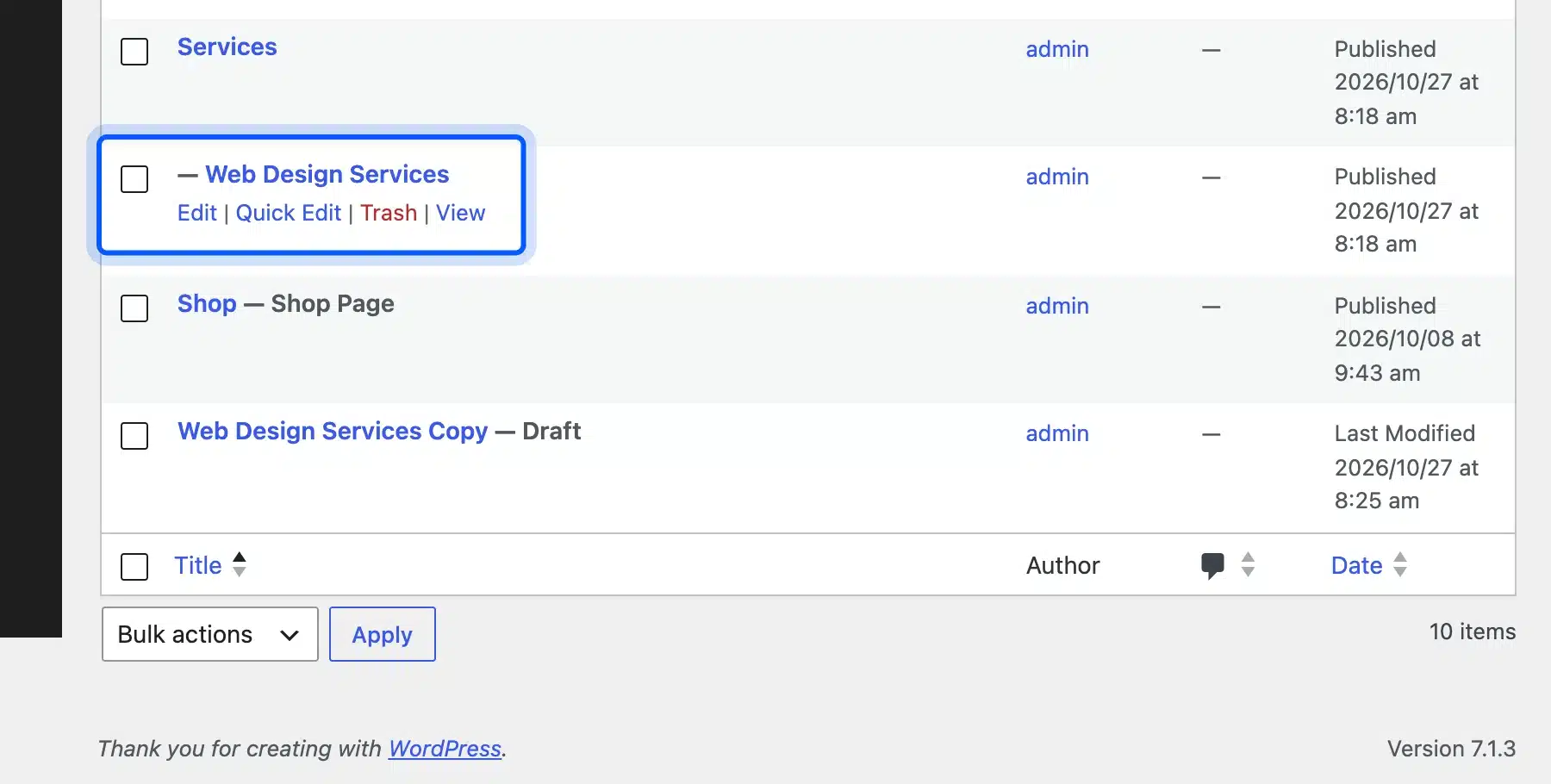
The Pages > All Pages screen is where most people look first. Hover over a page title and WordPress shows four links: Edit, Quick Edit, Trash and View. The Bulk actions menu holds only Bulk edit and Move to Trash.
The Block Editor Actions Menu
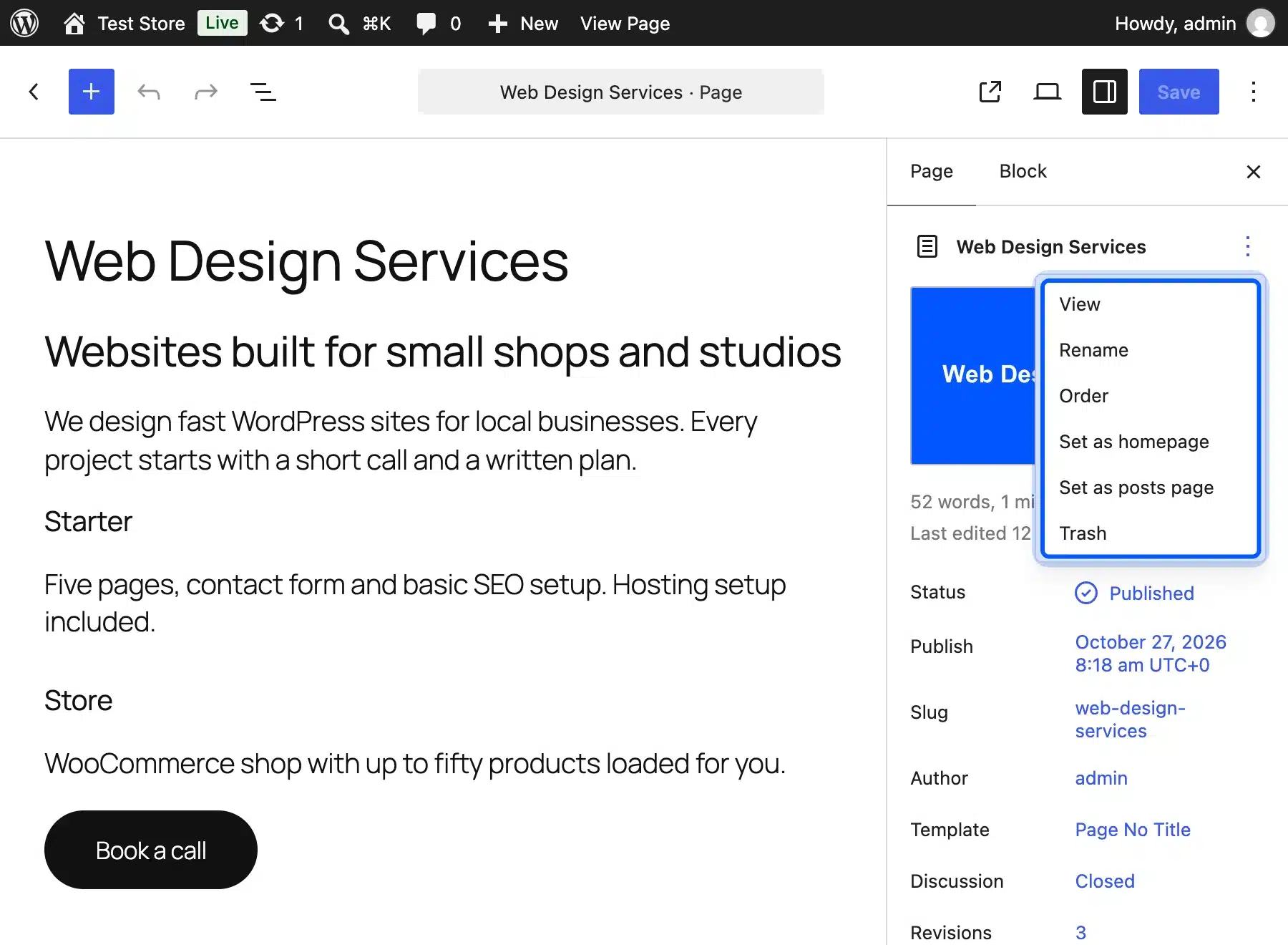
Open the page in the editor and click the three dots next to its title in the Page sidebar. The Actions menu lists View, Rename, Order, Set as homepage, Set as posts page and Trash. There is no Duplicate item in core.
The Site Editor Pages Screen
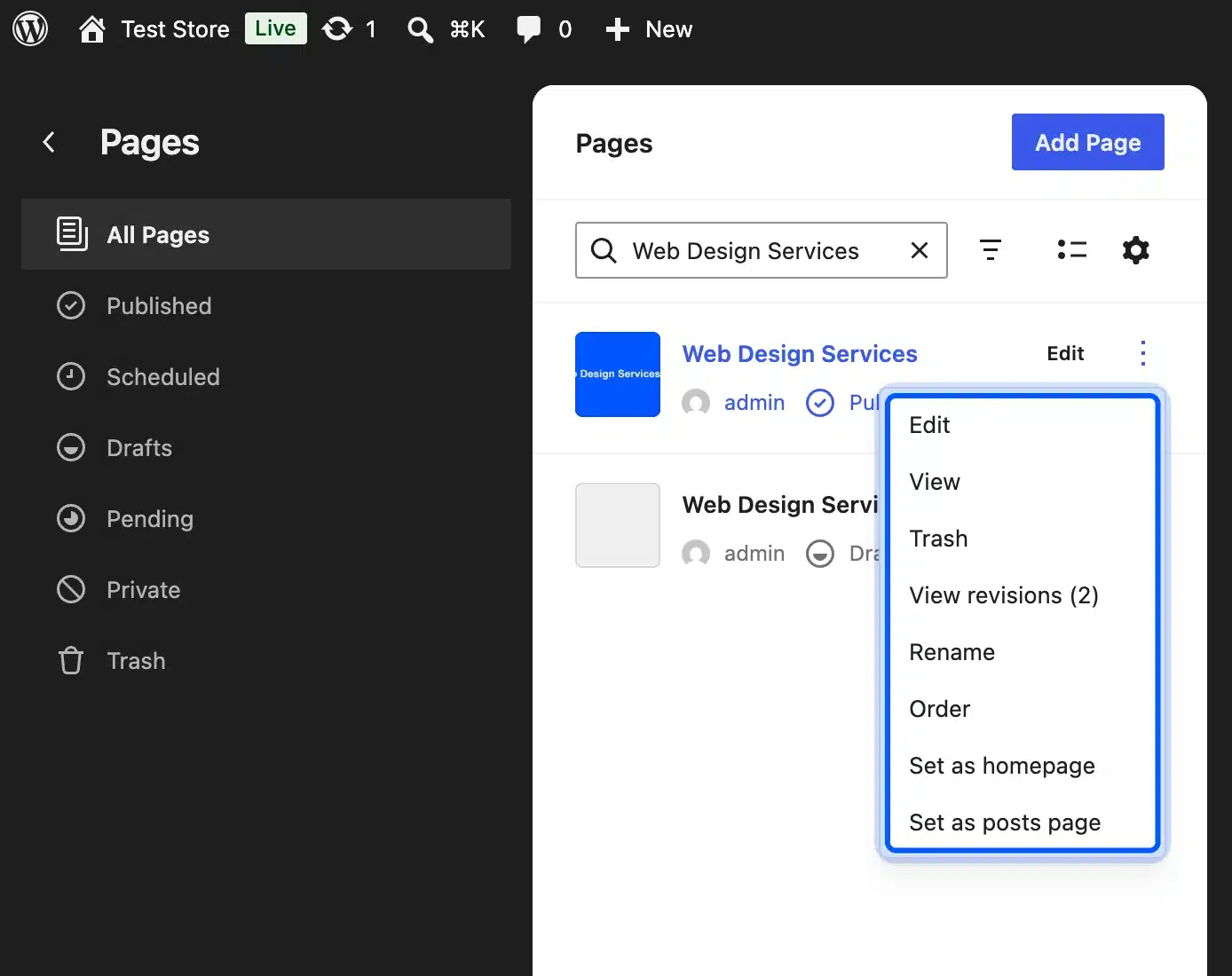
Block themes such as Twenty Twenty-Five also list pages under Appearance > Editor > Pages. The three dot menu next to a page offers Edit, View, Trash, View revisions, Rename, Order and the two homepage settings. Duplicate is missing here too.
Method 1: Copy All Blocks Into a New Page
The fastest way to copy a page in WordPress without a plugin is the Copy all blocks tool in the block editor. It copies every block of the page to your clipboard. You then paste them into a new page and set everything else by hand.
- Open the page: Go to Pages > All Pages and click the title of the page you want to copy.
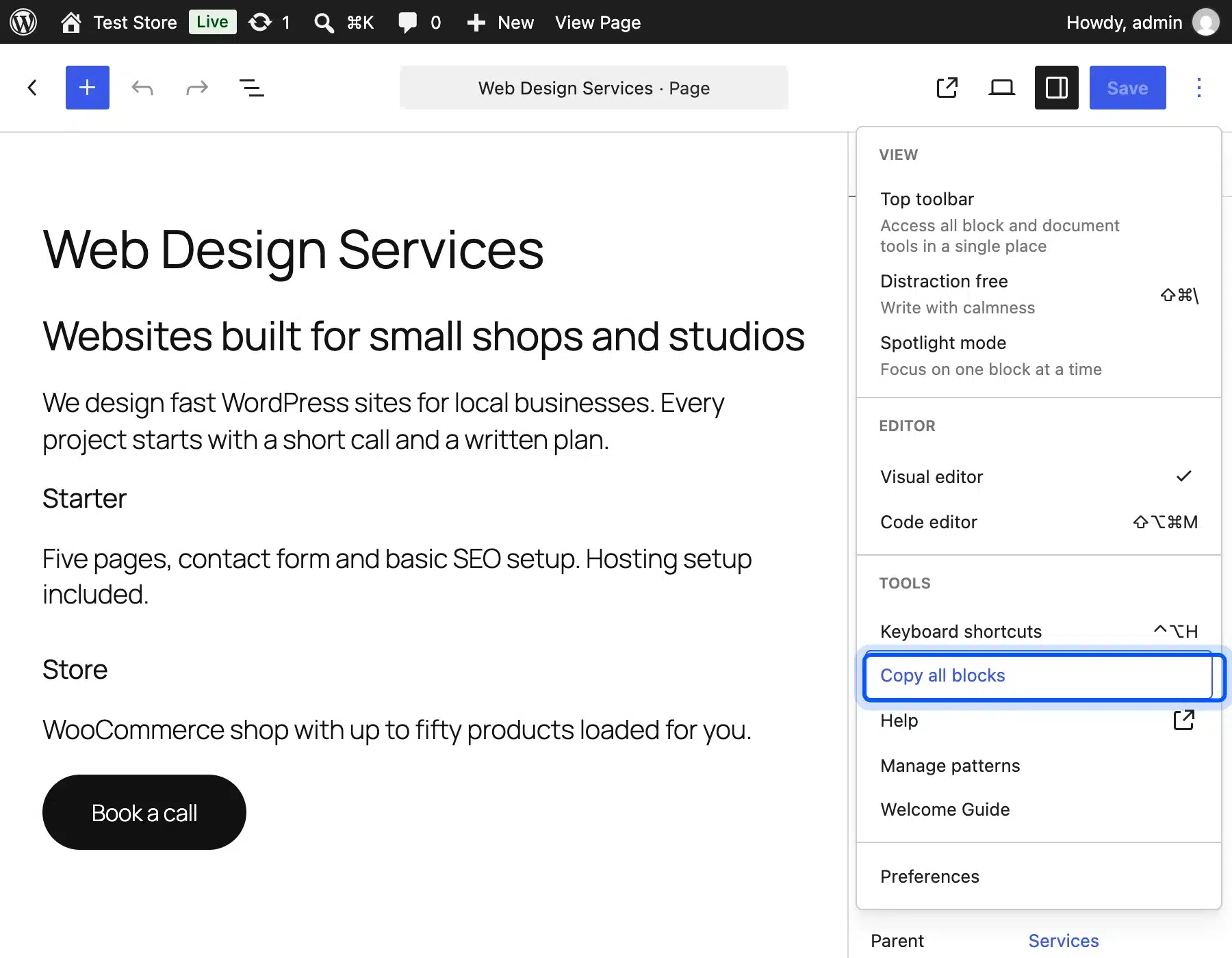
- Copy the blocks: Click the three dots at the top right of the editor and choose Copy all blocks under Tools.
- Create the new page: Go to Pages > Add Page and type a title. Press Enter and paste with Ctrl+V or Cmd+V.
- Set the page details: Add the featured image, excerpt, template and parent page again. Save the draft when they are set.
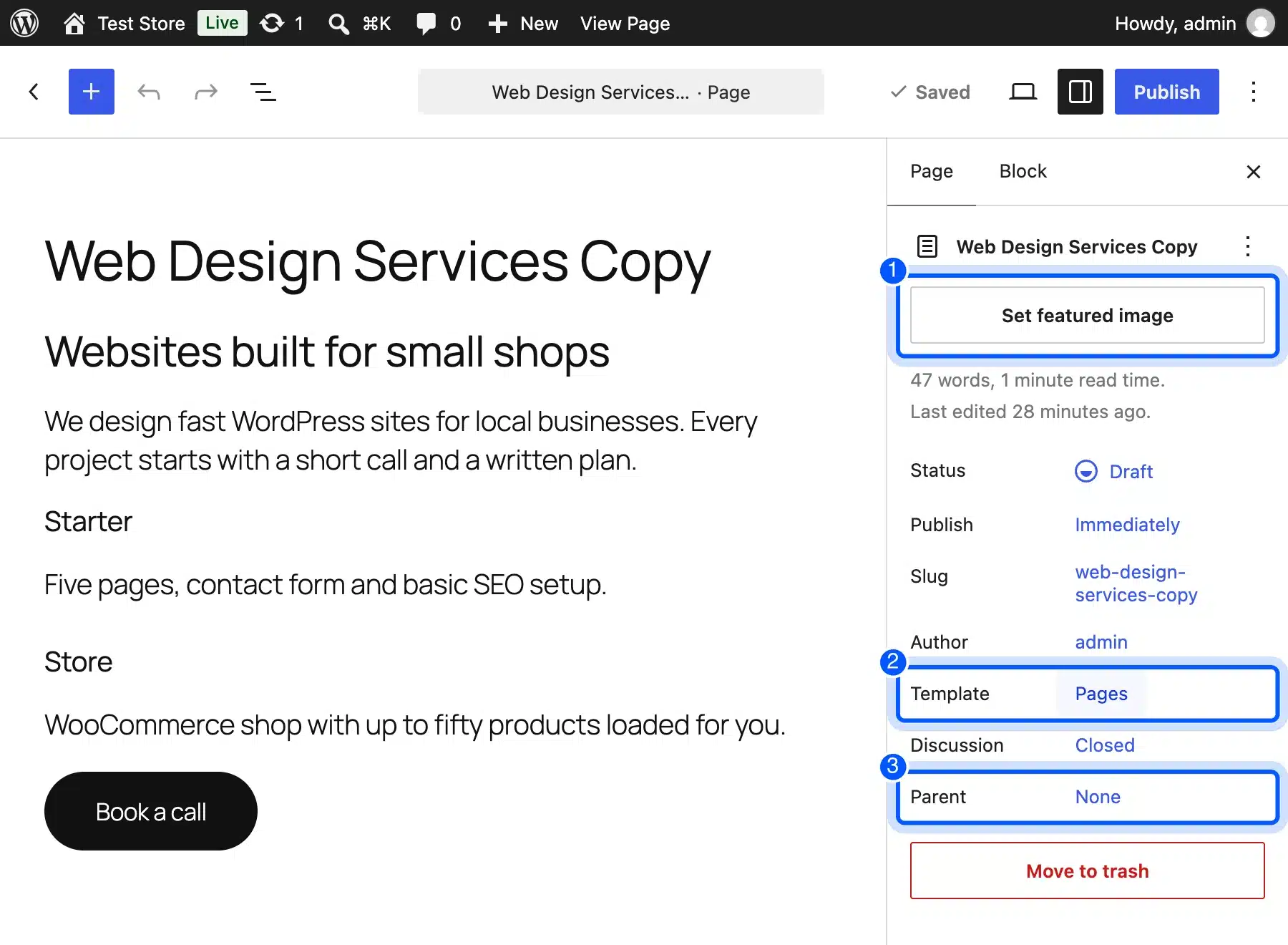
On our test the blocks arrived exactly as they were. The sidebar showed no featured image, the default Pages template and no parent page. The excerpt, menu order, custom field and Rank Math title were gone as well. Set the order again with how to reorder pages in WordPress.
Use this method for a short page you plan to rewrite anyway. If you are starting from scratch, our guide on how to add pages in WordPress covers the basics first.
Method 2: Duplicate a Page With Yoast Duplicate Post
Yoast Duplicate Post is one of the two most installed duplicate plugins, with 3+ million active installs on WordPress.org. It adds Clone, New Draft and Rewrite & Republish links under every page. The plugin page shows version 4.7, tested up to WordPress 7.1.3, as of October 2026.
- Install the plugin: Go to Plugins > Add Plugin, search for Yoast Duplicate Post and click Install Now. Click Activate when it finishes.
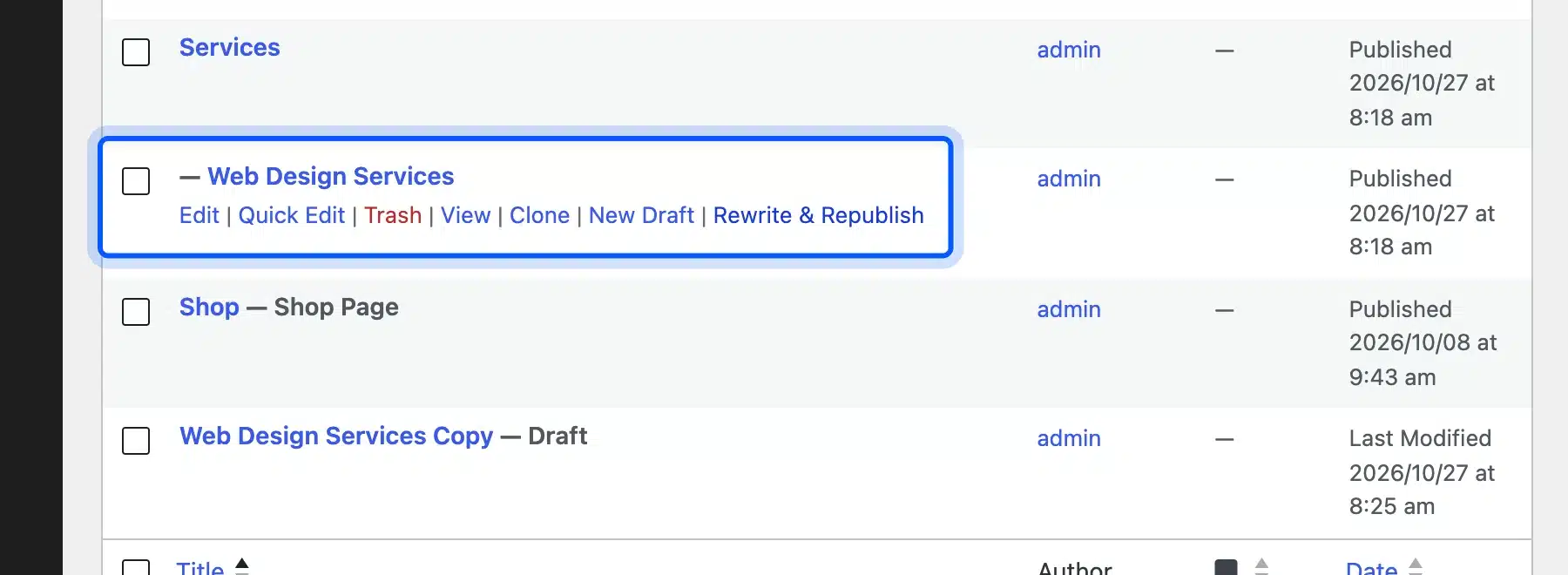
- Pick the copy type: Hover over a page in Pages > All Pages. Click Clone to make a draft and stay on the list, or New Draft to open the copy in the editor.
- Check what gets copied: Open Settings > Duplicate Post and stay on the What to copy tab.
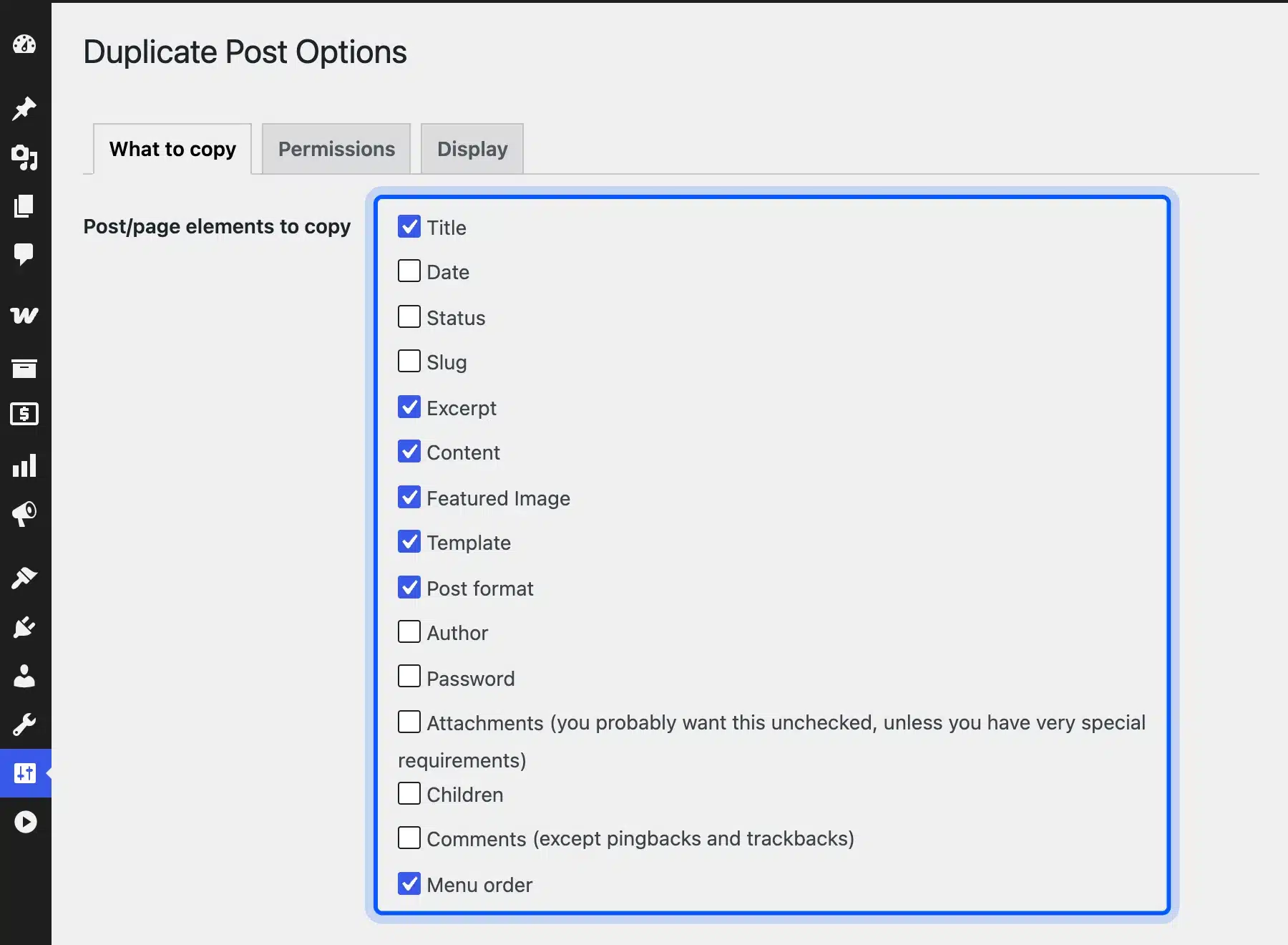
The defaults copy the title, excerpt, content, featured image, template, post format and menu order. They skip the date, status, slug, author, password, child pages and comments. Our clone arrived as a draft with the same title and the same parent page.
It also carried every custom field, including the Rank Math SEO title, description, focus keyword and canonical URL. The canonical still pointed at the original page. Publish that copy as a new page and you tell Google the original is the one to index.
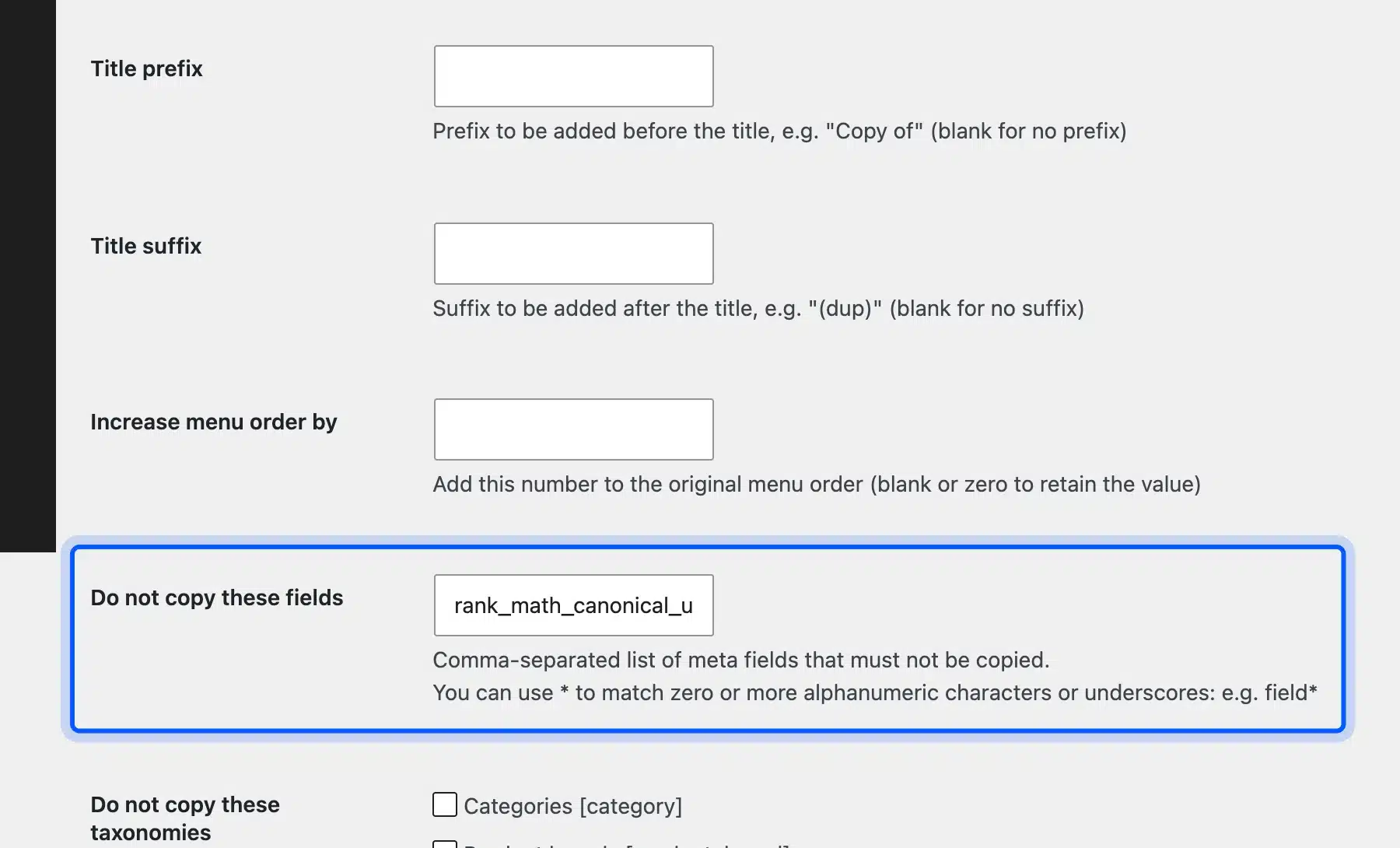
To stop that, type rank_math_canonical_url into the Do not copy these fields box and save. We cloned the page again and the canonical field stayed behind. The SEO title and description still came across for you to rewrite.
The plugin works with posts and pages out of the box. Other post types, such as WooCommerce products, are switched on under the Permissions tab.
Rewrite & Republish for a Live Page
Rewrite & Republish lets you edit a live page in a private copy and merge the changes back later. The Yoast help page says you can rewrite a page “without taking it offline”. We tested the whole loop on our sample page.
- Start the rewrite: Hover over a published page and click Rewrite & Republish. The copy opens in the editor with a yellow notice.
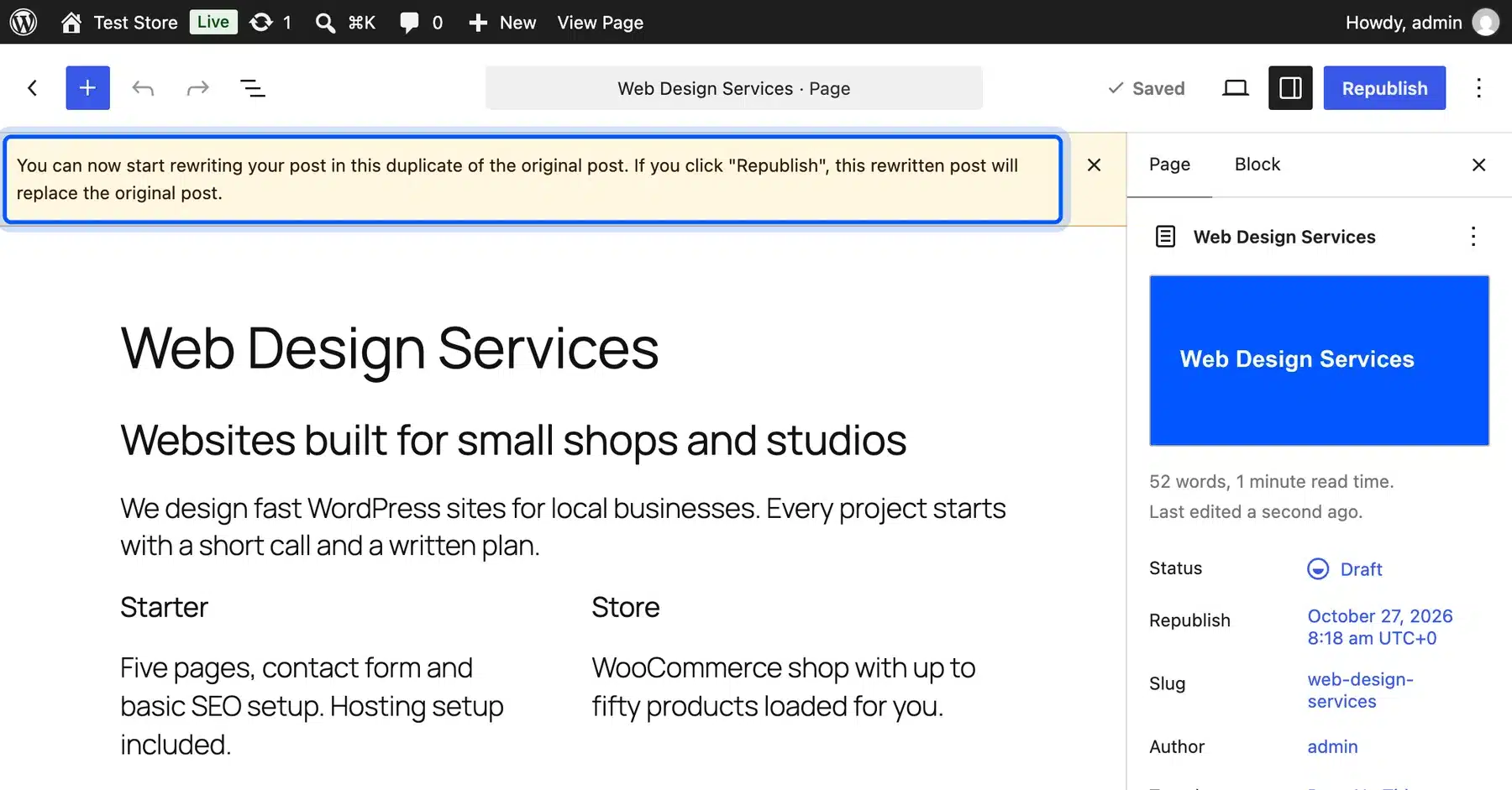
- Make your changes: Edit the text, images or settings in the copy. Visitors keep seeing the old page while you work.
- Republish: Click Republish at the top. A panel asks if you are ready and offers Save changes and compare.
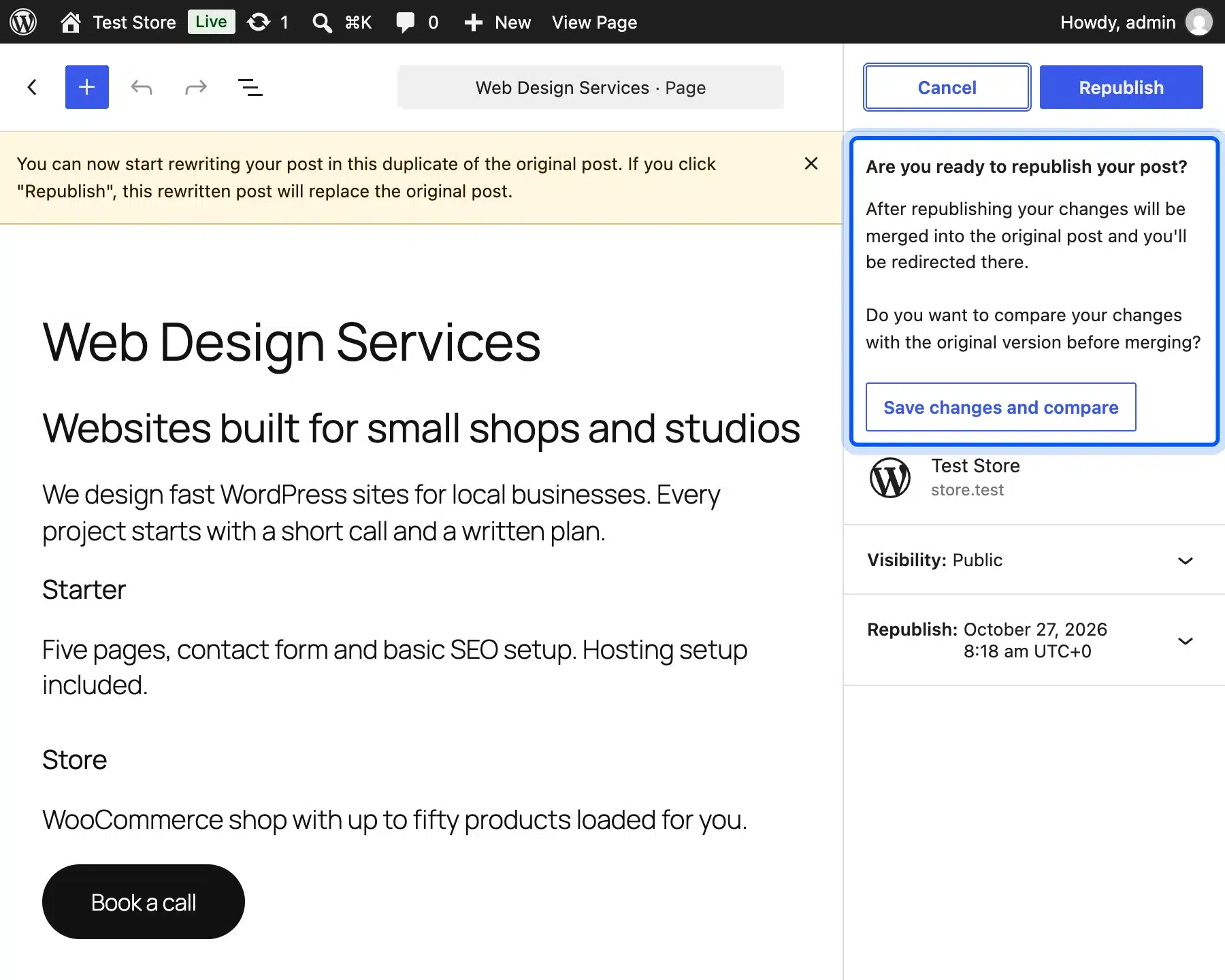
After we clicked Republish the edited text showed on the original page. The URL and slug did not change, and the copy was deleted rather than moved to the trash. That makes this the safest way to clone a page in WordPress just to update it.
Method 3: Duplicate a Page With the Duplicate Page Plugin
Duplicate Page adds one Duplicate This link under each page and post title. The plugin page shows 3+ million active installs and version 4.5.9 as of October 2026. Its listing says it was tested up to WordPress 6.9.10, yet it worked on our 7.1.3 site.
- Install the plugin: Go to Plugins > Add Plugin, search for Duplicate Page and click Install Now. Click Activate when it finishes.
- Click Duplicate This: Hover over the page in Pages > All Pages and click Duplicate This.
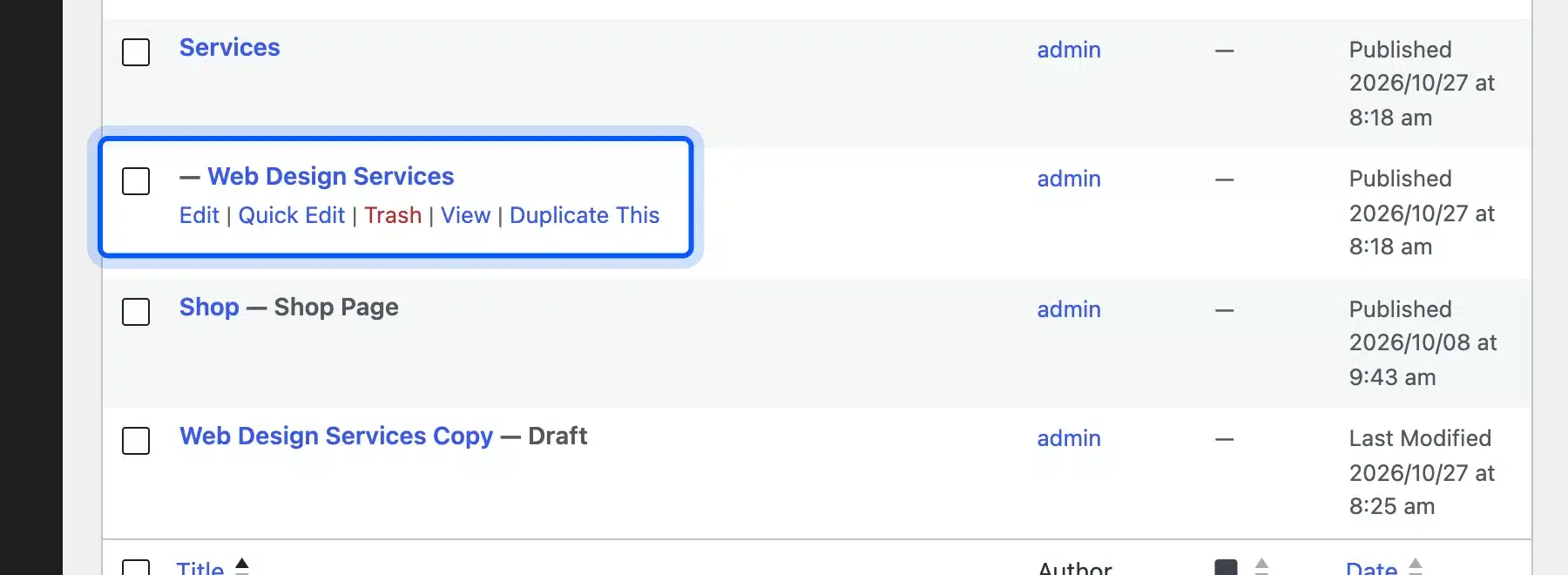
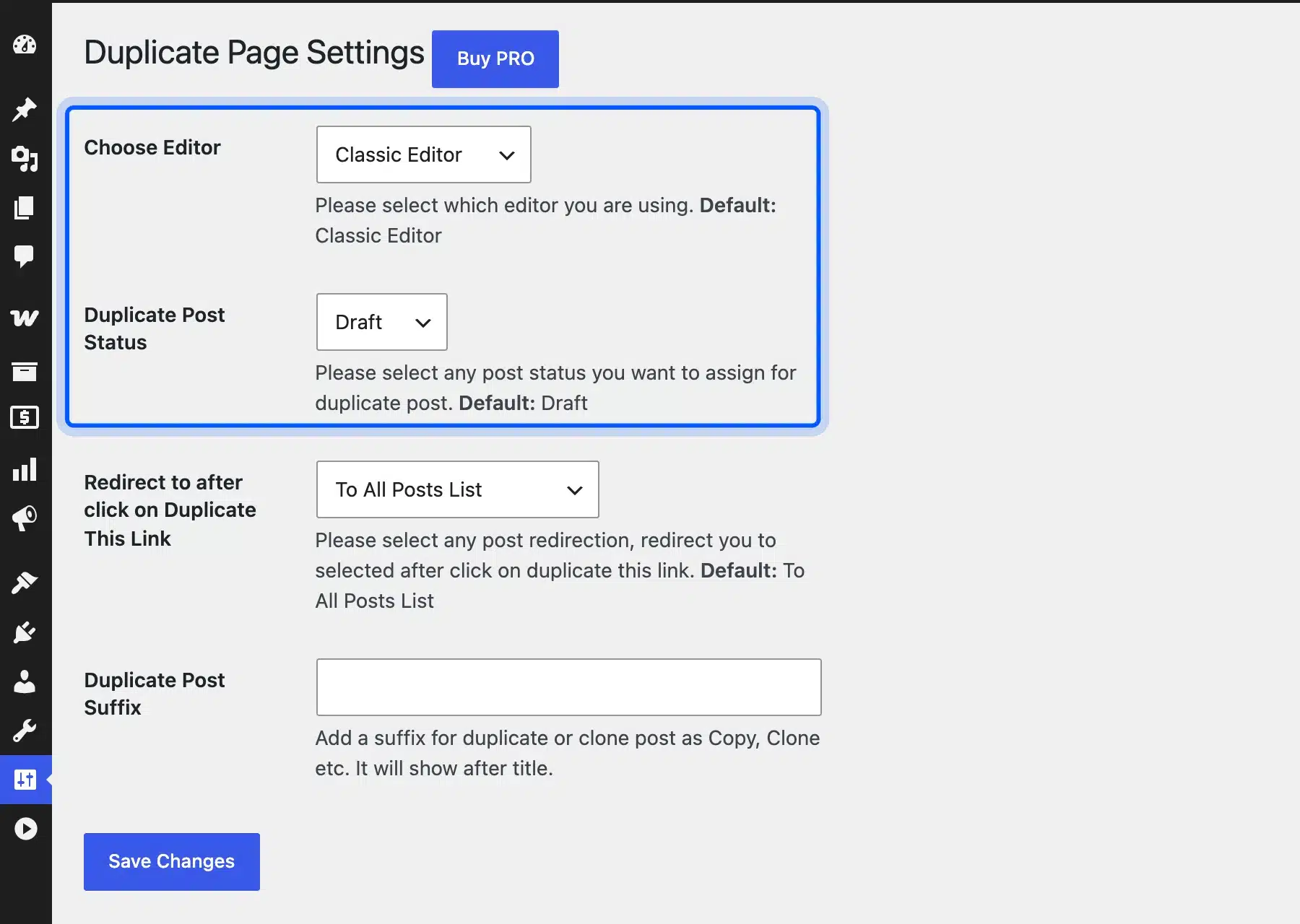
- Review the defaults: Open Settings > Duplicate Page and check the editor, status, redirect and suffix fields.
The copy was a draft with the same title, excerpt, featured image, template, parent and custom field. It also copied every Rank Math field, including the canonical URL. Unlike Yoast, the free version has no field to exclude a key.
Choose Editor defaults to Classic Editor, but our block editor copy still came out right. After the click the plugin sends you back to the Pages list. Set the Redirect field to To Duplicate Edit Screen to open the copy in the editor instead.
The suffix field is blank by default. Both pages then share one title in the list until you rename the copy.
Method 4: Use the Duplicate Action in the Gutenberg Plugin
The Gutenberg plugin turns on the Duplicate item that core hides for pages. With version 24.2 active, the editor Actions menu showed Duplicate between View and Rename. It asks for a title and then creates a draft named after the original plus “(Copy)”.
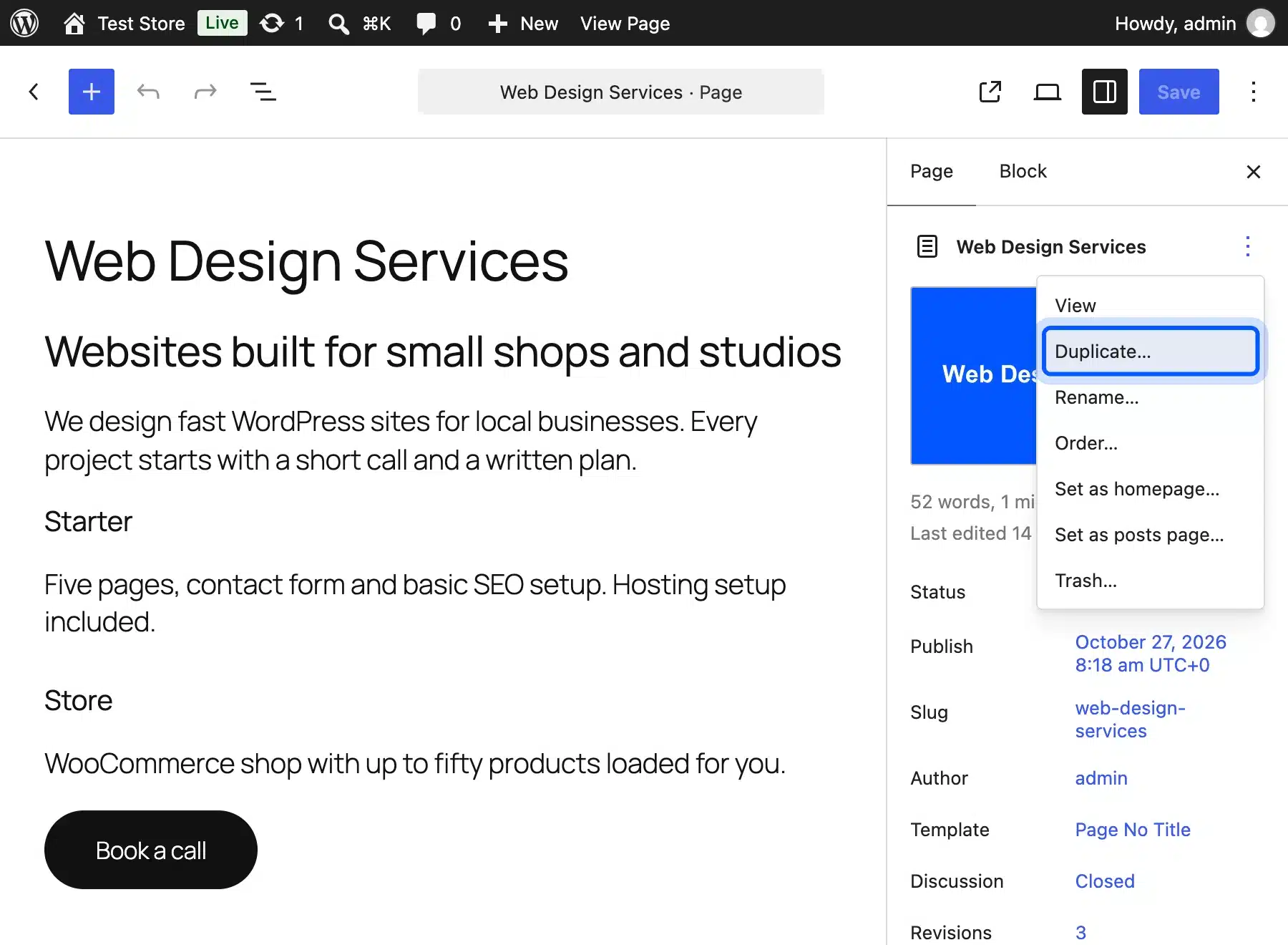
Click Duplicate and keep or change the title in the dialog. Click the Duplicate button in the dialog to create the draft.
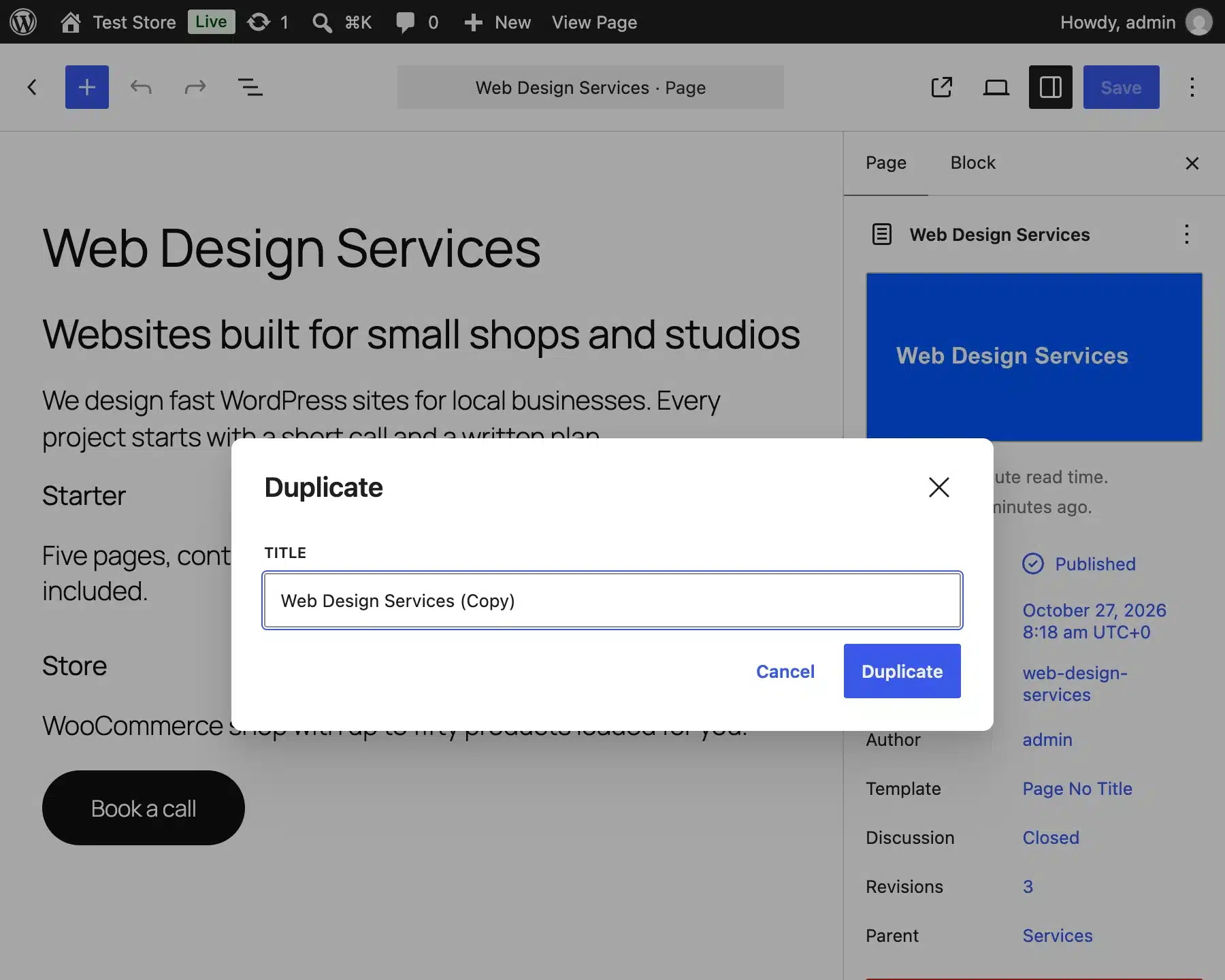
The copy kept the content, excerpt, featured image, template, parent and menu order. It also got its own slug, web-design-services-copy. It did not copy our custom field or any Rank Math SEO field.
Think twice before adding it to a live site for this one feature. The Gutenberg plugin page calls it a beta plugin for testing new editor features before they reach core.
How to Duplicate an Elementor Page
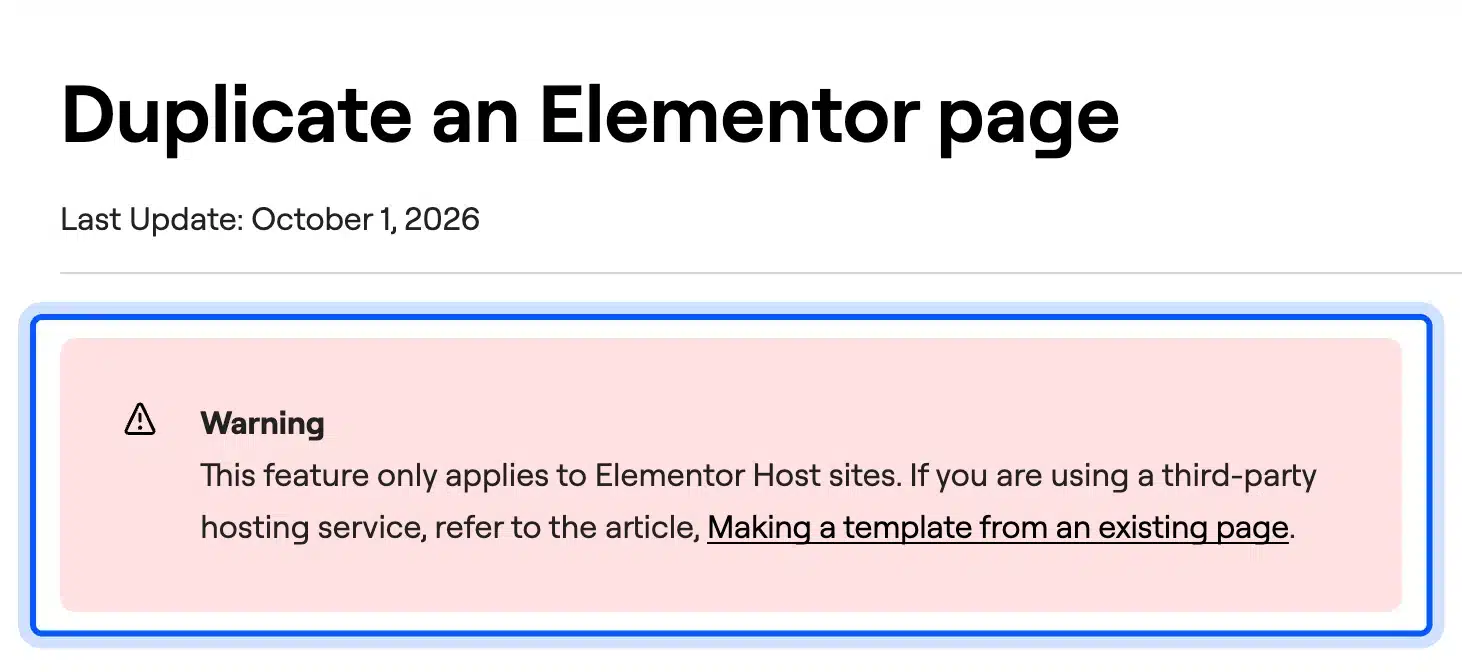
Elementor has its own Duplicate Page option, but only on sites hosted by Elementor. The Elementor help center says this feature only applies to Elementor Host sites. Everyone else saves the page as a template or uses one of the plugins above.
On Elementor Host you first set Improved Page Actions Layout to Active under the Features tab. Then hover over a page, click More Options and choose Duplicate Page.
This route needs a paid Elementor Host plan. The steps here come from Elementor’s own help page.
How to Duplicate a WooCommerce Product
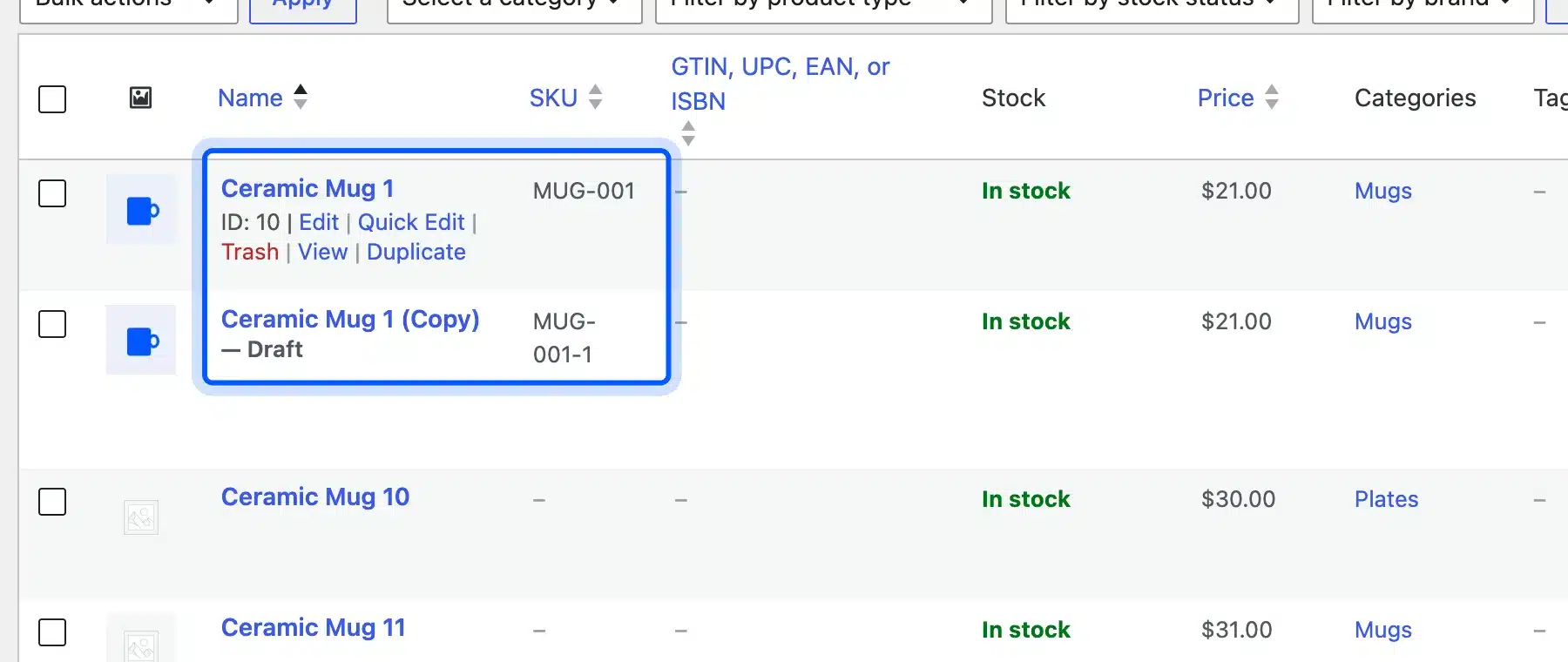
WooCommerce has its own Duplicate link, and you need no extra plugin to duplicate a WooCommerce product. The copy is saved as a draft with “(Copy)” added to its name. The WooCommerce guide says WooCommerce creates a copy of the product as a draft.
- Open the products list: Go to Products > All Products and find the product.
- Click Duplicate: Hover over the product name and click Duplicate in the row of links.
- Edit and publish: Change the name, price and stock. Click Publish when the copy is ready.
We duplicated Ceramic Mug 1, which had the SKU MUG-001. The copy kept the price, image, category and Rank Math fields. Its SKU became MUG-001-1 so two products never share one.
Sales count and reviews reset to zero on the copy.
For a variable product, the duplicate code in WooCommerce 11.2 also copies every variation and adds a suffix to any variation SKU. Inside the product editor the same job sits in the Publish box as Copy to a new draft. For products with options, see our guide to WooCommerce variable products.
What Each Method Copies
Plugin clones keep almost everything, while Copy all blocks keeps only the content. We checked each copy on WordPress 7.1.3 in October 2026, field by field. The Rank Math rows matter most, because a copied canonical URL points the new page back at the original.
| What we checked | Copy all blocks | Yoast Duplicate Post | Duplicate Page | Gutenberg plugin |
|---|---|---|---|---|
| Block content | Yes | Yes | Yes | Yes |
| Featured image | No | Yes | Yes | Yes |
| Excerpt | No | Yes | Yes | Yes |
| Page template | No | Yes | Yes | Yes |
| Parent and menu order | No | Yes | Yes | Yes |
| Custom field | No | Yes | Yes | No |
| Rank Math title and description | No | Yes | Yes | No |
| Rank Math canonical URL | No | Yes (can exclude) | Yes | No |
| Title of the copy | You type it | Same as original | Same as original | Adds (Copy) |
| Status of the copy | Draft | Draft | Draft | Draft |
Every copy started as a draft, and none of the plugins copied the slug. WordPress gives a copy its own slug when you publish it. The original URL is never overwritten.
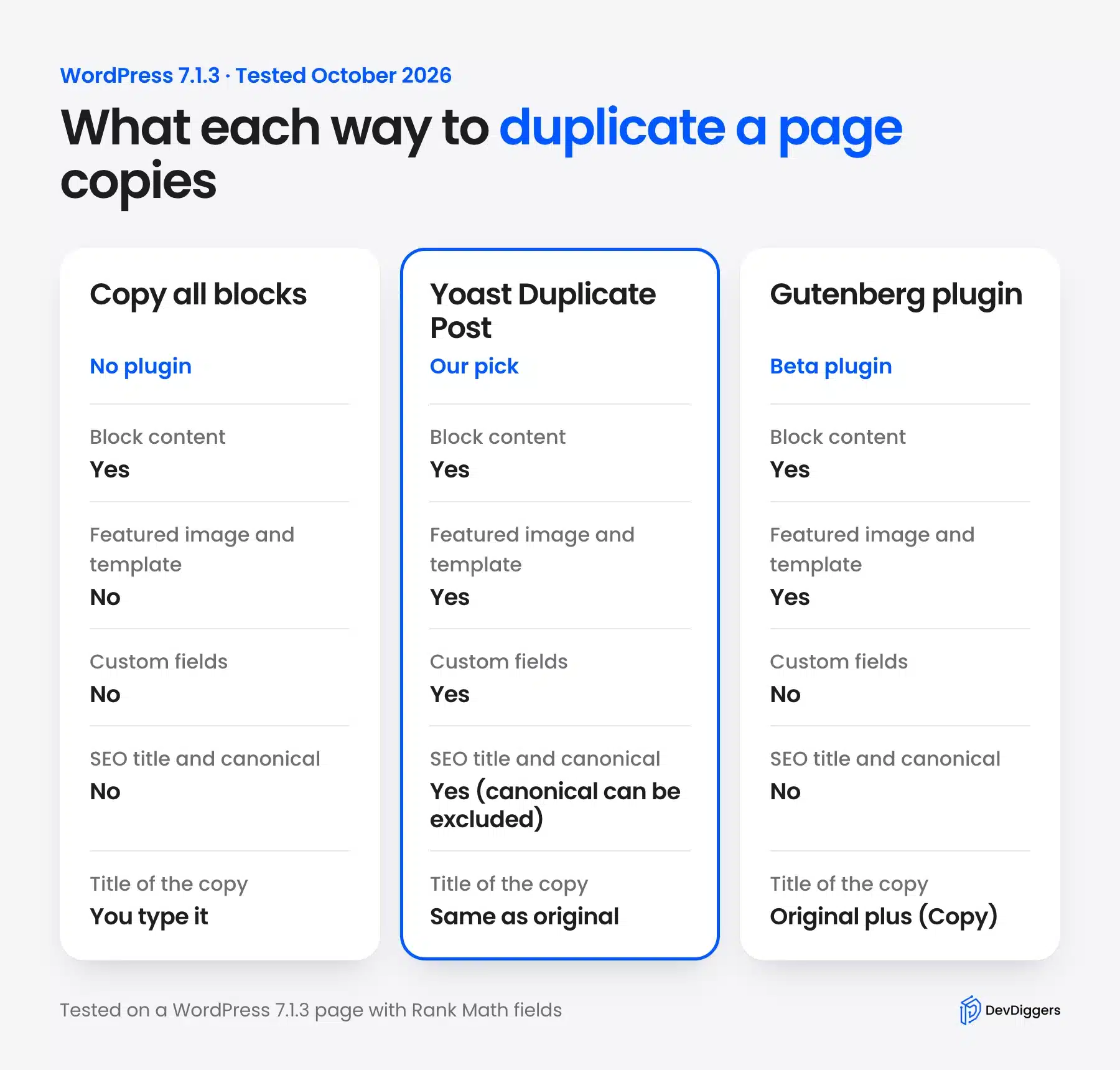
Pick by job. Copy all blocks suits a quick layout reuse, and Yoast Duplicate Post suits regular cloning and live edits.
Duplicate Page gives the same result as Yoast with fewer settings. The Gutenberg plugin is fine on a test site, but it drops custom fields and SEO fields.
What to Check After You Duplicate a Page
A duplicate stays a draft that visitors cannot see until you publish it. On our test site a logged-out visit to a draft copy returned a 404 page. Before publishing, give the copy its own slug, SEO fields and canonical to keep it from competing with the original.
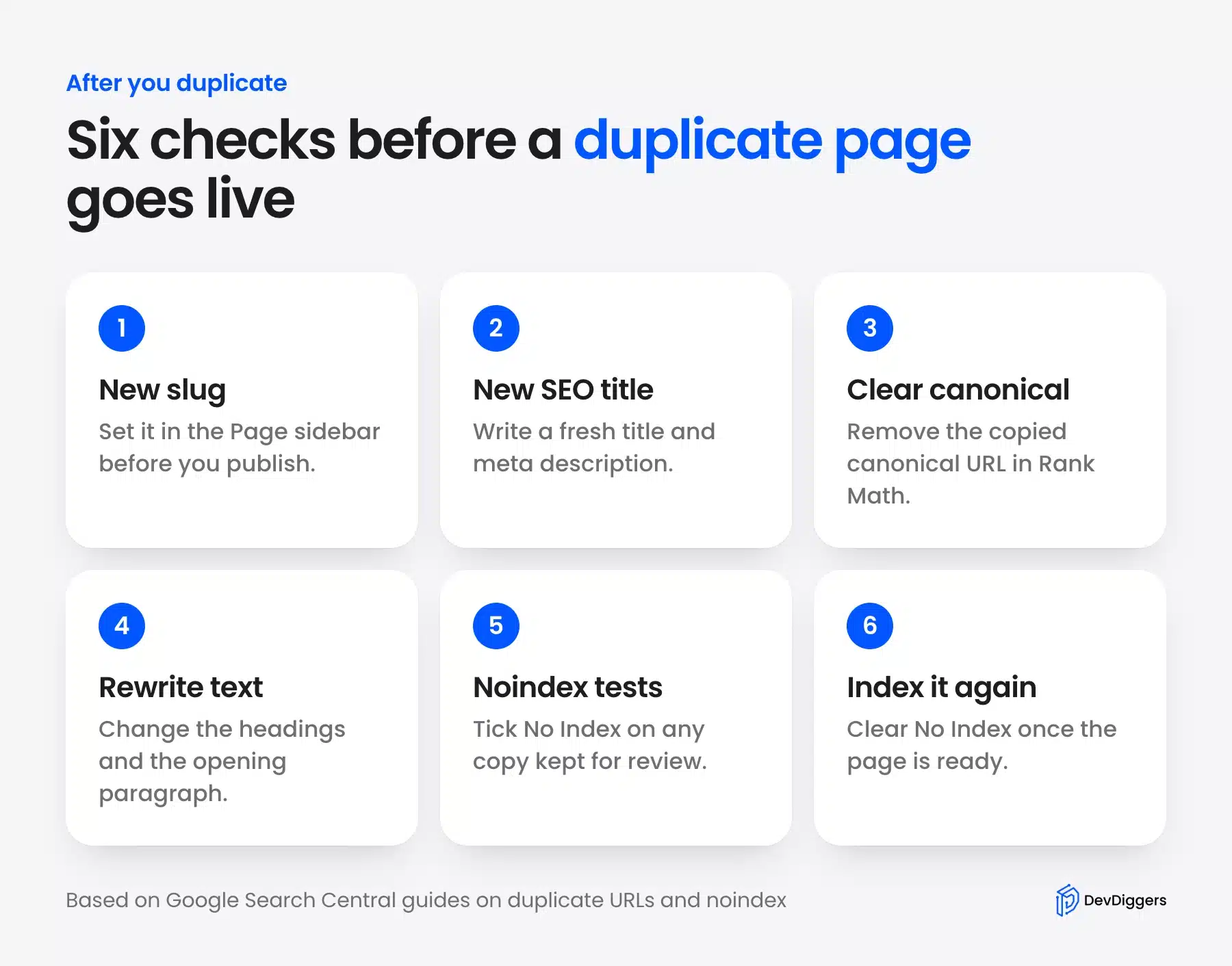
Run through this list on every copy:
- Slug: Set a new slug in the Page sidebar. A plugin copy has none until publish, and the title decides it.
- Title and SEO fields: Write a new page title and a new SEO title and description. Two pages with one title compete, as our guide to remove duplicate title tags in WordPress explains.
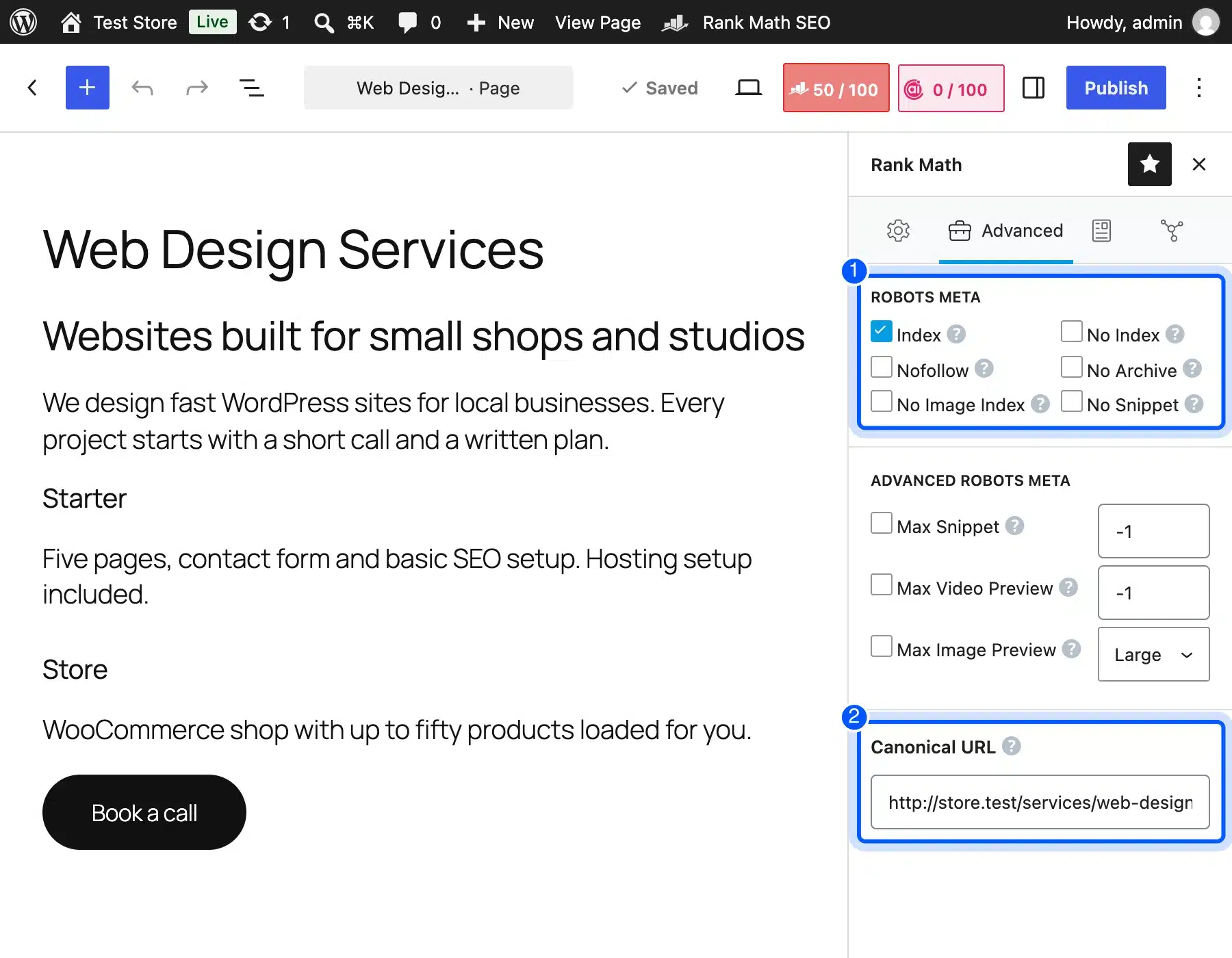
- Canonical URL: Clear the copied canonical in Rank Math > Advanced, or the copy points to the original. Our guide shows how to add a canonical tag in WordPress.
- Noindex for test copies: Tick No Index if a copy must stay published for a review. You can also hide a page in WordPress from menus and search.
- Content: Rewrite the headings and the opening paragraph so the copy says something new.
- Index again later: Clear No Index once the page is ready, or it never ranks. See how to remove the noindex tag in WordPress.
Google decides which pages are duplicates “based on similarity of content”, says its guide to duplicate URLs. The same guide calls a canonical link a strong signal. Its noindex guide says Google will drop a noindexed page from Search results entirely.
Conclusion
You can duplicate a page in WordPress 7.1.3 with Copy all blocks, but only the content comes along. For a full copy, Yoast Duplicate Post is the pick, and Rewrite & Republish is the cleanest way to edit a live page.
Whatever you use, check the copy before it goes live. Plugin clones carry the SEO title and the canonical URL of the original.
Change the slug and the SEO fields, and clear the canonical. A copy that says something new will not compete with the page it came from.
Frequently Asked Questions (FAQs)
Q1. Can I copy a page from one WordPress site to another?
Yes. Copy all blocks puts the block markup on your clipboard, and you can paste it into a page on any WordPress site. Image blocks still point to files on the first site until you upload them again.
For a full move, export a single page in WordPress and import it.
Q2. Is Yoast Duplicate Post free?
Yes. The plugin page on WordPress.org lists it as a free plugin with 3+ million active installs as of October 2026. Every feature in this guide, including Rewrite & Republish, worked in the free version.
Q3. Does duplicating a page hurt SEO?
Not while the copy is a draft, because visitors and search engines cannot open it. Two published pages with almost the same text compete, and Google picks one to show according to its duplicate URL guide. Rewrite the copy or set a canonical.
Q4. Does a duplicated page keep the same URL?
No. In our tests every copy was a draft, and WordPress gave it a new slug based on its title. The Gutenberg plugin set web-design-services-copy at once, while the other plugins left the slug empty until publish.
Q5. Can I duplicate a blog post the same way?
Yes. Yoast Duplicate Post and Duplicate Page add the same links under Posts > All Posts, and Copy all blocks works in any post. The checklist above applies to posts too.
Q6. How do I duplicate several pages at once?
With Yoast Duplicate Post active, tick the pages in the Pages list and choose Clone from the Bulk actions menu. Core WordPress has no bulk duplicate option, as its Bulk actions menu holds only Bulk edit and Move to Trash.
Q7. What happens to the old page after Rewrite & Republish?
The original page keeps its URL and takes the new content. The rewrite copy is deleted after it merges. If you ever retire a page instead, redirect a page in WordPress to its replacement.